Mendocino County supervisors back hunting with hounds

http://www.pressdemocrat.com/article/20140311/articles/140319928

By GLENDA ANDERSON

Photo Copyright Jim Robertson

Photo Copyright Jim Robertson

THE PRESS DEMOCRAT

March 11, 2014

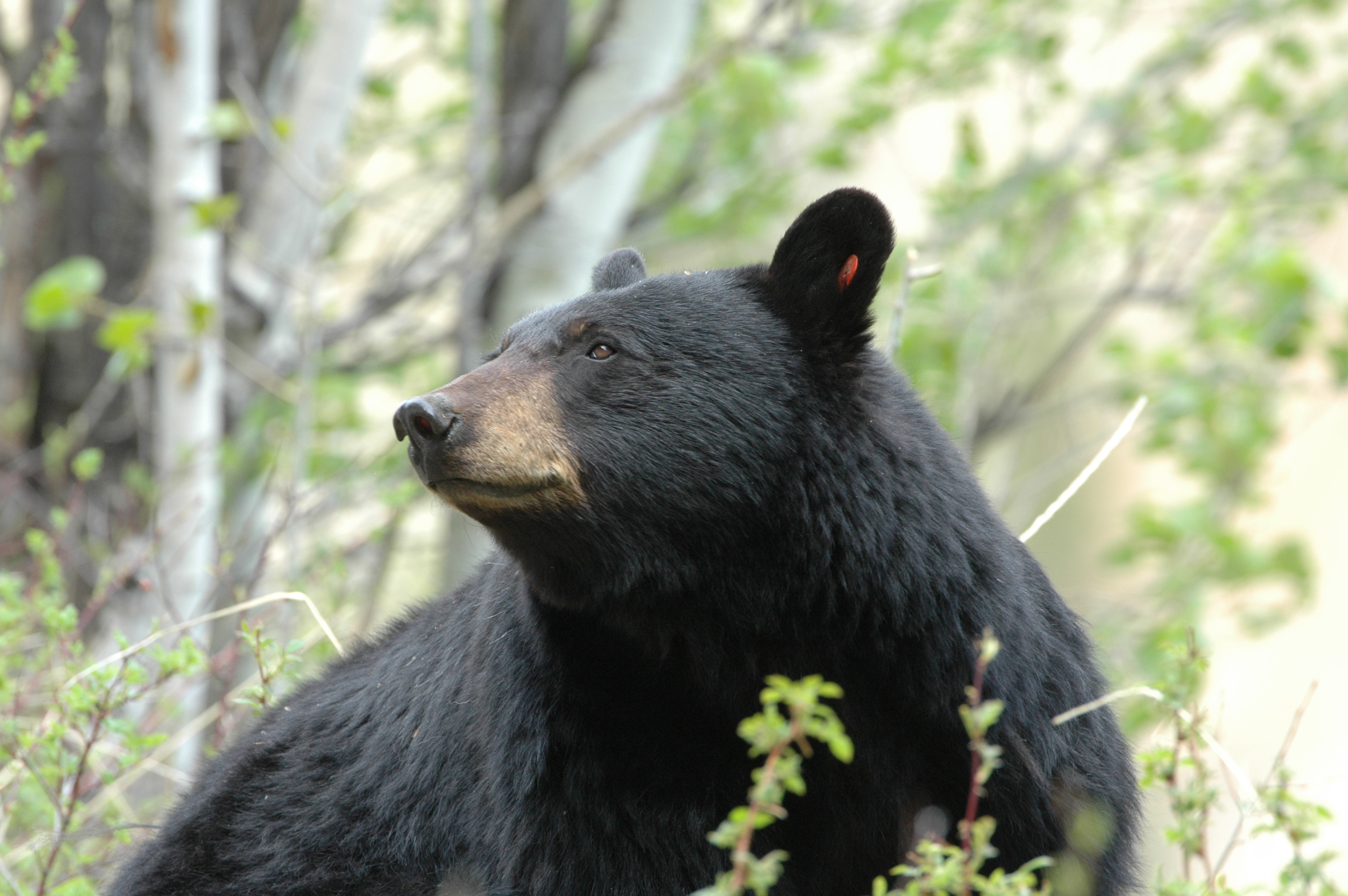
Mendocino County supervisors on Tuesday unanimously voted to support a bill that would overturn a year-old state ban on hunting bears and bobcats with hounds.

Assembly Bill 2205 would allow individual counties to decide whether to ban the use of hunting dogs to chase down and kill those animals.

“I think you guys should have the authority,” not somebody from Los Angeles or San Francisco, said Daniel Davis, a local member of California Houndsmen for Conservation, the bill’s sponsor.

The bill was introduced late last month by Assemblyman Tim Donnelly, a Republican candidate for governor and gun-rights advocate. Supervisor John Pinches asked that a letter of support for the bill be placed on the board’s agenda.

“This is an issue where we can basically take control,” he said Tuesday.

California’s ban on hounds for sports hunting has been in effect since January 2013. It continues to allow the use of hounds to hunt errant bears that cause property damage.

The ban was sponsored by the Humane Society of the United States.

No one at Tuesday’s meeting spoke in opposition to the newly proposed bill but national Humane Society officials said they are dismayed by the attempt to revive hound hunts. They called it “unsporting, cruel and unnecessary.”

Four Mendocino County residents, including Davis, his mother and father, and Steve Johnson spoke in favor of overturning the ban.

Johnson, a winemaker, said he moved to a rural area because “I want to have my dogs, I want to hunt bears,” he said. “It’s what I like to do.”

“Me and my dad, this is our passion,” Davis said.

Supervisor Carre Brown said allowing houndsmen to hunt bears reduces the number of bears that get into trouble and must be killed by federal trappers.

“Management of marauding wildlife I think is very important,” she said.

Pinches said hound hunting also draws tourism dollars.

“You’ve got to give people things to do,” he said.

The other three supervisors did not comment.

You can reach Staff Writer Glenda Anderson at 462-6473 or glenda.anderson@pressdemocrat.com

MN Senate panel favors suspending wolf hunt, gathering more data

http://www.twincities.com/politics/ci_25322800/senate-panel-favors-suspending-wolf-hunt-gathering-more

By Don Davis
Forum News Servicecopyrighted wolf in river
3/11/2014

A state Senate committee decided more information is needed about Minnesota’s 2-year-old wolf hunt, so voted Tuesday to suspend the hunt.

The 8-6 vote in the Senate Environment and Energy Committee favors a milder version of bills wolf proponents want to permanently end wolf hunting and trapping. Even with the vote, changing the state’s wolf hunting law is far from passing.

The issue pits hunters and cattle producers who favor the hunt against those who want to end it.

“When you disrupt the pack, you now have chaos,” testified Maureen Hackett, Howling for Wolves founder.

She said that killing one wolf could force others to go on lengthy hunts for prey, which could be livestock.

Farmers did not buy her argument.

“We are concerned about the loss of livestock with our cattle,” said Thom Peterson of the Minnesota Farmers’ Union, supporting existing law that allows a hunting season.

Sen. Foung Hawj, DFL-St. Paul, said that he brought the bill forward because not enough information is known about how the hunting season affects wolves. The bill would order the Department of Natural Resources to conduct a comprehensive study of all known wolf kills, ranging from hunting to car accidents.

The “wolf data bill,” as it is titled, calls for an annual wolf population census and creation of an advisory wolf task force. It also would close tribal lands to the hunting and trapping of wolves if tribal leadership requests it.

The DNR opposed the bill, saying more studies like the bill demands are not needed.

“Minnesota has more data on the wolf population than almost any other hunted species in the state,” the DNR’s Dan Stark told senators.

“We feel all of the things in the bill are being covered at this time,” added Assistant DNR Commissioner Bob Meier.

Stark said that hunting “poses no long-term threat to the wolf population.”

Without the law, Stark said, the DNR plans to update the state wolf management plan beginning this year. That could affect the number of wolves allowed to be killed by hunters.

The committee approved the measure only after a parliamentary maneuver. The first vote was 6-6, which would have stopped the measure, but when Democratic Sens. Katie Sieben of Cottage Grove and Matt Schmit of Red Wing arrived at the meeting late, a new vote was called and they voted for the suspension.

The original vote was mostly along party lines, although Sen. Lyle Koenen, DFL-Clara City, joined Republicans in opposing the suspension.

A similar bill in the House has not been acted upon and no hearing is scheduled.

Minnesota held its first managed gray wolf hunting and trapping seasons the past two years after the wolf was removed from the federal Endangered Species List. Some groups and individuals protested the hunt and filed lawsuits trying to prevent it. None of those lawsuits was successful.

Biologist Timm Kaminski, who has spent years studying wolf and grizzly bear interaction with livestock, said that livestock producers he knows often oppose wolf hunts if wolves are not attacking their livestock.

Peterson, however, said that in numerous Farmers’ Union meetings in wolf country, farmers indicated are united in supporting a hunt.

Sen. Julie Rosen, R-Fairmont, said she wants to make sure that if Hawj’s bill continues to advance that it contains provisions to involve all interested parties, ranging from American Indian tribes to livestock producers to hunters.

“We’re adamantly opposed to the legislation,” said Executive Director Mark Johnson of the Minnesota Deer Hunters Association. “It refuses to acknowledge the research and study that’s gone into wolves, not just here in Minnesota but internationally.”

Hawj’s bill must pass other committees before reaching a full Senate vote.

Bill allowing gun silencers while hunting passes out of committee

By Jim Siegel
The Columbus Dispatch • Wednesday March 12, 2014

Despite opposition from the League of Ohio Sportsmen, which called it a “bad bill with good intentions,” a House committee yesterday passed a bill that would allow Ohio hunters to use silencers.

Larry Mitchell Jr., executive director of the organization, said the goal of allowing hunters to use silencers should be accomplished through the Ohio Division of Wildlife’s rulemaking process. He said that route would be quicker and more flexible than passing legislation and putting it into law.

The bill, he said, “opens the door to the General Assembly to take away the authority of the wildlife professionals to write rules that address both the safety of our angling and hunting community but also address wildlife management principles.”

“With a few calls … this could all be handled in a few weeks,” he said. Asked if talks with the Division of Wildlife about changing the silencer rule could continue if the bill passes, Mitchell said the agency is generally reluctant to take on a new rule if a bill is moving.

Follow @OhioPoliticsNow for more news from the Statehouse

Supporters say the use of silencers will help protect hunters from hearing damage.

Also yesterday, about 50 members of the Ohio Coalition Against Gun Violence marched to the Statehouse to lobby for action on another piece of legislation, House Bill 31, which would set standards for safe storage of firearms. The bill stalled after just two hearings.

Rep. Bill Patmon, D-Cleveland, sponsor of the bill, said losing one child killed by an unsafely stored gun is unacceptable. “If you don’t trust your child with knives, hot water, lawnmowers and running cars, why would you trust them with a .45?” A violation of the law would be a third-degree misdemeanor.

On the silencer bill, the Buckeye Firearms Association played host to about 20 lawmakers and legislative aides in February at the Black Wing Shooting Center in Delaware to demonstrate the effect of placing a silencer on a .45-caliber pistol and .308-caliber rifle.

Some lawmakers were unfamiliar with the impact of a silencer and were concerned their use would make it difficult to know if someone is hunting nearby, or illegally hunting on private lands.

An audiologist from Ohio State University recorded a 15 percent or more reduction in volume with a silencer. It was enough, he said, to protect ears from damage but still loud enough to be heard from several hundred yards away.

Asked by Rep. Gary Scherer, R-Circleville, whether the bill addresses what happens if silencer technology improves, Mitchell said approving silencers by rule would allow for more flexibility to deal with such changes. Scherer voted no on the bill.

Knox Williams, president of the American Silencer Association, said the equipment will never be able to suppress the sound a bullet makes when it breaks the sound barrier.

Williams said 29 states allow game hunting with a silencer, including Pennsylvania, West Virginia, Kentucky and Indiana.

Mitchell said the bill would affect fewer than 1 percent of hunters, but Williams argued that once silencers are approved, that number will rise. Silencer sales in recent years have been booming, he said, and Ohio is now the fourth-largest silencer market in the country.

http://www.dispatch.com/content/stories/local/2014/03/11/Bill-allowing-gun-silencers-during-hunting.html

E95688ABF88792AE42A8914230F586_h316_w628_m5_cBUxDElwb

A Hunter Weighs in

Here’s a nuisance, pro-kill comment I received this morning on the post, “What’s the Difference Between a Poacher and the Owner of Jimmy John’s Gourmet Sandwiches?” It is quoted here, verbatim, to share some insight into how these kind of people think:

“Apart from the elephants and rhinos, a lot (not saying all) of the big cats hunted in Africa are typically neucense animals to local tribes, farms, and villages. The hunters are the ones who pay the money for the guided hunt (by locals) and almost all of the animal is utilized for it’s furs, meats, and bones. It doesn’t just go to waste. On top of that it also removes the neusence animal from the area; which in turn makes life for the locals a little bit easier. Or I’m wrong and he likes to murder awesome animals. Either way, I am for it.”

1794802_600379583390084_2056398278_n

Government-funded wolf slaughter continues‏

From: Defenders of Wildlife/www.defenders.org

The 23 Idaho wolves shot from a helicopter last month were just the latest in a decades-long trail of carnage and indiscriminate bloodshed. And Idaho Wildlife Services admitted to their plan only after all the wolves werecopyrighted-wolf-argument-settled dead.

It has to stop.

Of the literally millions of animals killed in recent years by the Wildlife Services agency of the U.S. Department of Agriculture, wolves are a favored target.

Wolves are killed for the convenience of ranchers and hunters. In most instances, essential non-lethal methods are never tried. And the slaughter is funded in part by you.

From the agency’s own records, an accounting of more than 500 wolves killed in one year alone reads like something from a horror movie:

•64 wolves gunned down from helicopters
•316 killed in foothold traps
•30 killed using neck snares
•37 shot from fixed wing aircraft

These were all deliberate killings. Two more wolves were “accidentally” killed by cyanide poison left for other “target” animals.

Wildlife Services is currently being audited by the USDA Office of the Inspector General. But the killing continues.

Wildlife Services has operated for years as killers for hire serving private and state interests, using cruel and indiscriminate methods, covering up gross errors, and resisting all calls for accountability.

Rethinking predators: Legend of the wolf

http://www.nature.com/news/rethinking-predators-legend-of-the-wolf-1.14841?WT.ec_id=NEWS-20140311

Predators are supposed to exert strong control over ecosystems, but nature doesn’t always play by the rules.

by Emma Marris 07 March 2014

copyrighted wolf in water

The return of grey wolves to the western United States has sparked debate over their role in structuring ecosystems.

In 2008, Kristin Marshall was driving through Yellowstone National Park in Wyoming. Marshall, a graduate student at the time, had come to the park to study willow shrubs — specifically, how much they were being eaten by elk.

She pulled to the side of the road and was preparing to hike to one of her study plots when she ran into two sisters from the Midwest, who were touring the park. The women asked what Marshall was doing and she said, “I am a researcher. I am working in that willow patch down there.”

The tourists gushed: “We watched all about the willows on this nature documentary. We hear that all the willows are doing so much better now because the wolves are back in the ecosystem.” That stopped Marshall short. “I didn’t want to say, ‘No, you are wrong, they aren’t actually doing that well.’”

Instead, she said: “The story is a probably a little more complicated than what you saw on the nature documentary.” That was the end of the conversation; the tourists seemed uninterested in the more-complicated story of how beavers and changes in hydrology might be more important than wolves for willow recovery. “I can’t say I blame them,” says Marshall, now an ecologist with the US National Oceanic and Atmospheric Administration in Seattle, Washington. “What you see on TV is captivating.”

On television and in scientific journals, the story of how carnivores influence ecosystems has seized imaginations. From wolves in North America to lions in Africa and dingoes in Australia, top predators are thought to exert tight control over the populations and behaviours of other animals, shaping the entire food web down to the vegetation through a ‘trophic cascade’. This story is popular in part because it supports calls to conserve large carnivores as ‘keystone species’ for whole ecosystems. It also offers the promise of a robust rule within ecology, a field in which researchers have yearned for more predictive power.

But several studies in recent years have raised questions about the top-predator rule in the high-profile cases of the wolf and the dingo. That has led some scientists to suggest that the field’s fascination with top predators stems not from their relative importance, but rather from society’s interest in the big, the dangerous and the vulnerable. “Predators can be important,” says Oswald Schmitz, an ecologist at Yale University in New Haven, Connecticut, “but they aren’t a panacea.”

Predators on top

In the early years of ecology, predators did not get so much respect. Instead, researchers thought that plants were the dominant forces in ecosystems. The theory was that photosynthesis from these primary producers determined how much energy was available in an area, and what could live there. Bottom-up control was all the rage.

Interest in top-down trophic cascades emerged in 1963, when ecologist Robert Paine of the University of Washington in Seattle started to exclude predators from study plots at his coastal research site. He pried predatory starfish off intertidal rocks and hurled them into deeper waters. Without the starfish to control their numbers, mussels eventually carpeted the plots and kept limpets and algae from taking hold in the region. A new ecosystem emerged (see Nature 493, 286–289; 2013).

After this and other aquatic studies, the conventional wisdom in the field was that top-down trophic cascades happened only in rivers, lakes and the sea. An influential 1992 paper1 by Donald Strong at the University of California, Davis, asked: “Are trophic cascades all wet?” As if in answer, ecologists began looking for similar carnivore stories on land.

SOURCE: 1 & 2: Ref. 5; 3: Ref. 7

Expand

They soon found them. In 2000, a review2 tallied 41 terrestrial studies on trophic cascades, most of which showed that predation had significant effects on the number of herbivores in an area, or on plant damage, biomass or reproductive output. These studies were all on small plots involving small predators: birds, lizards, spiders and lots of ants.

Research on terrestrial trophic cascades moved to much larger scales with the work of John Terborgh and William Ripple. In 2001, Terborgh, an ecologist at Duke University in Durham, North Carolina, reported3 on dramatic ecosystem changes that came after a dam was built in Venezuela. Flooding from the dam created islands that were too small to support big predators such as jaguars and harpy eagles. The population densities of their prey — rodents, howler monkeys, iguanas and leaf-cutter ants — boomed to 10–100 times those on the mainland. Seedlings and saplings were devastated.

In the same year, Ripple, an ecologist at Oregon State University in Corvallis, published a key paper4 on the most famous, and probably the best-studied, example of a terrestrial carnivore structuring an ecosystem: Yellowstone’s wolves. The ecosystem offered a natural experiment because the US National Park Service had the park’s exterminated wolves (Canis lupus) by 1926 and then reinstated them in the 1990s, after public sentiment and ecological theory had shifted. In 1995, 14 wolves from Alberta, Canada, were introduced into the park. Seventeen from British Columbia followed in 1996. By 2009, there were almost 100 wolves in 14 packs in the Yellowstone area. (That number is now down to 83 in 10 packs.)

During the years when there were no wolves, ecologists grew increasingly worried about the aspen trees (Populus tremuloides) in the park. It seemed that intensive browsing by Rocky Mountain elk (Cervus elaphus) was preventing trees from reaching adult height, or ‘recruiting’. In the early twentieth century, aspen covered between 4% and 6% of the winter range of the northern Yellowstone herd of elk; by the end of the century, they accounted for only 1% (ref. 4).

“Predators can be important, but they aren’t a panacea.”

When Ripple and his co-authors checked aspen growth against the roaming behaviour of wolves in three packs, they found that aspen grew tallest in stream-side spots that saw high wolf traffic. That pattern hinted at an indirect behavioural cascade: rather than limiting browsing by reducing elk populations throughout the park, wolves apparently made elk more skittish and less likely to browse in the tightly confined stream valleys, where prey have limited escape routes (see ‘The tangled web’). A 2007 study5 by Ripple and Robert Beschta, also of Oregon State, seemed to strengthen the behavioural-cascade hypothesis. It found that the five tallest young aspen in stream-side stands where there were downed logs — a potential trip hazard for elk — were taller than the five tallest young aspen in stands away from streams or without downed logs.

Similar evidence of indirect wolf effects emerged from a study of willows. In 2004, Ripple and Beschta found6 that the shrubs were returning in narrow river valleys, where the researchers thought that the chances of wolves attacking elk were greatest.

More recently, Ripple has been documenting the regrowth of cotton­wood trees. “When we look around western North America, we see a big decrease in tree recruitment after wolves were removed. And when wolves returned to Yellowstone, the trees started growing again. It is just wonderful to walk through that new cottonwood forest.”

Tales from trees

But some ecologists had their doubts. The first major study7 critical of the wolf effect appeared in 2010, led by Matthew Kauffman of the Wyoming Cooperative Fish and Wildlife Research Unit in Laramie. When researchers drilled boreholes into more than 200 trees in Yellowstone and analysed growth patterns, they found that the recruitment of aspen had not ended all at once. Some trees had reached adult size as late as 1960, long after the wolves had gone. And some stands had stopped growing new adults as early as 1892, well before the wolves left. The aspen petered out over decades, as elk populations slowly grew, suggesting that the major influence on the trees is the size of the elk population, rather than elk behaviour in response to wolves. And although wolves influence elk numbers, many other factors play a part, says Kauffman: grizzly bears are increasingly killing elk; droughts deplete elk populations; and humans hunt elk that migrate out of the park in winter.

When Kauffman and his colleagues studied7 aspen in areas where risk of attack by wolves was high or low, they obtained results different from Ripple’s. Rather than look at the five tallest aspen in each stand, as Ripple had done, they tallied the average tree height and used locations of elk kills to map the risk of wolf attacks. By these measures, they found no differences between trees in high- and low-risk areas.

Questions have also emerged about the well-publicized relationship between wolves and willows. Marshall and two colleagues investigated the controls on willow shrubs by examining ten years’ worth of data from open plots and plots surrounded by cages to keep the elk out. Her team found8 that the willows were not thriving in all the protected sites. The only plants that grew above 2 metres — beyond the reach of browsing elk — were those in areas where simulated beaver dams had raised the water table.

If beavers have a key role in helping willows to thrive, as Marshall’s study suggests, the shrubs face a tough future because the park’s beaver populations have dropped. Researchers speculate that the removal of wolves in the 1920s allowed elk to eat so much willow that there was none left for the beavers, causing an irreversible decline.

“The predator was gone for at least 70 years,” says Marshall. “Removing it has changed the ecosystem in fundamental ways.” This work suggests that wolves did meaningfully structure the Yellowstone ecosystem a century ago, but that reintroducing them cannot restore the old arrangement.

Arthur Middleton, a Yale ecologist who works on Yellowstone elk, says that such studies have disproved the simple version of the trophic cascade story. The wolves, elk and vegetation exist in an ecosystem with hundreds of other factors, many of which seem to be important, he says.

Dingo debate

Another classic example of a trophic cascade has come under attack in Australia. … More: http://www.nature.com/news/rethinking-predators-legend-of-the-wolf-1.14841?WT.ec_id=NEWS-20140311

Elephants recognize the voices of their enemies

[This is true of many other animal species as well…]

African elephants can distinguish human languages, genders and ages associated with danger.

  1. An African elephant listening intently. Elephants can recognize which humans are more likely to pose a danger depending on what they sound like.

    Karen McComb

  2. A matriarch reacts with alarm after the play-back of a Maasai voice.

    Karen McComb

  3. An elephant family group on the move.

    Graeme Shannon

    Humans are among the very few animals that constitute a threat to elephants. Yet not all people are a danger — and elephants seem to know it. The giants have shown a remarkable ability to use sight and scent to distinguish between African ethnic groups that have a history of attacking them and groups that do not. Now a study reveals that they can even discern these differences from words spoken in the local tongues.

Biologists Karen McComb and Graeme Shannon at the University of Sussex in Brighton, UK, guessed that African elephants (Loxodonta africana) might be able to listen to human speech and make use of what they heard. To tease out whether this was true, they recorded the voices of men from two Kenyan ethnic groups calmly saying, “Look, look over there, a group of elephants is coming,” in their native languages. One of these groups was the semi-nomadic Maasai, some of whom periodically kill elephants during fierce competition for water or cattle-grazing space. The other was the Kamba, a crop-farming group that rarely has violent encounters with elephants.

The researchers played the recordings to 47 elephant family groups at Amboseli National Park in Kenya and monitored the animals’ behaviour. The differences were remarkable. When the elephants heard the Maasai, they were much more likely to cautiously smell the air or huddle together than when they heard the Kamba. Indeed, the animals bunched together nearly twice as tightly when they heard the Maasai.

More: http://www.nature.com/news/elephants-recognize-the-voices-of-their-enemies-1.14846?WT.ec_id=NEWS-20140311

How to Kill a Wolf

[Note: I chose to start this piece part way into it in order to spare the reader the gory detail of its title question.]

An Undercover Report from the Idaho Coyote and Wolf Derby

By Christopher Ketcham

…After digging into the wolf-hate literature featured on Idaho for Wildlife’s website, I wondered whether the residents of Salmon were looking to kill wolves out of spite. They hated these creatures, and I wanted to understand why.

Besides killing wolves, one of the group’s core missions, according to its website, is to “fight against all legal and legislative attempts by the animal rights and anti-gun organizations who are attempting to take away our rights and freedoms under the Constitution of the United States of America.” The website also suggested that media coverage of the event was not welcome. The only way I’d be able to properly report on the derby, I figured, was to go undercover as a competing hunter. So I showed up in Salmon a few days before the event, paid the $20 sign-up fee, and officially became part of the slaughter.

The derby called for hunters to work in two-person teams. In the weeks leading up to the competition I recruited pro-wolf activists Brian Ertz and his sister Natalie Ertz, native Idahoans who have worked for local conservation groups. Rounding out our teams was Brian’s friend Bryan Walker, a gnarled former Marine and an Idaho lawyer who has studied shamanism and claims to have an ability to speak with animals.

The nice old man in the bar, whose name was Cal Black, bought the four of us a round of drinks when we told him we were in town for the derby. Cal had grown up on a ranch near town, and his thoughts on wolves reflected those of most other locals we met. Salmon is livestock country—the landscape is riddled with cows and sheep—and ranchers blame wolves for huge numbers of livestock deaths. Therefore wolves needed to be dispatched with extreme prejudice. The derby was a natural extension of this sentiment.

“Gut-shoot every goddamn last one of them wolves,” Cal told us. He wished a similar fate on “tree huggers,” who, in Cal’s view, mostly live in New York City. “You know what I’d like to see? Take the wolves and plant ’em in Central Park, ’cause they impose it on us to have these goddamn wolves! Bullshit! It’s said a wolf won’t attack you. Well, goddamn, these tree huggers don’t know what. I want wolves to eat them goddamn tree huggers. Maybe they’ll learn something!”

We all raised a glass to the tree huggers’ getting their due. I fought the urge to tell Cal that I live in New York part-time, and that in college Natalie trained as an arborist and had actually hugged trees for a living. Her brother, who is 31 and studying to be a lawyer in Boise, Idaho, had warned me about the risks of going undercover when I broached the idea over the phone. As a representative for the nonprofit Western Watersheds Project, which has lobbied for wolf protections, he’d attended numerous public meetings about “wolf management” in communities like Salmon. “Salmon is the belly of the beast,” he told me. “There is not a more hostile place. It’s Mordor.”

Brian’s former boss at the Western Watersheds Project, executive director Jon Marvel, has received death threats for speaking out in favor of wolves and against the powerful livestock industry. Larry Zuckerman, a conservation biologist for the pro-wolf environmental nonprofit Wild Love Preserve, suspects that it was pro-wolf-hunting residents from Salmon who fatally poisoned his three dogs. Many pro-wolf activists across the American West, especially those who have publicly opposed the ranching industry, have reported similar threats and acts of aggression—tires slashed, homes vandalized, windows busted out with bricks in the night. Idaho for Wildlife’s opinion on the situation is made clear on its website: “Excess predator’s [sic] and environmentalists should go first!”

Prepping for the derby, we disguised ourselves according to the local style: camo pants and jackets, wool caps, balaclavas, binoculars, and heavy boots. When he wasn’t mystically communicating with elk, Walker enjoyed hunting them. He didn’t look out of place in Salmon, carrying his M4 rifle with a 30-round magazine and a Beretta .45 on his hip. He loaned me his bolt-action .300 Win Mag with a folding bipod, while Brian carried a .30-06 with a Leupold scope. Natalie, who is tall and good-looking, was armed only with a camera and played the part of a domesticated wife “here for the party,” as she put it.

At the derby registration the night before the killing was to commence, we were so convincing that the organizers didn’t even bother to ask for our hunting licenses or wolf permits. Instead they suggested spots in the surrounding mountains where we could find wolves to shoot illegally.

From left to right: Bryan Walker, Brian Ertz, and Natalie Ertz

In Wolves and the Wolf Myth in American Literature, S. K. Robisch presents the wolf as a “mystical force in the human mind,” one that for thousands of years has been associated with the purity of bloodlust, the unhinged cruelty of nature. The wolf as mythological super-predator brings terror and chaos, devouring our young, our old, the weak, the innocent, and the foolish, operating through trickery and deceit.

From Matthew 7:15: “Beware of false prophets, who come to you in sheep’s clothing but inwardly are ravenous wolves.” Little Red Riding Hood loses her grandmother to a cross-dressing wolf, and the Three Little Pigs pay the price as well. In the late Middle Ages the Roman Catholic Church declared the wolf an agent of the Devil, or possibly the shape-shifting manifestation of Satan himself. And of course the werewolf, a human turned beast by the contagion of a bite, also lived in the imagination as a demonic figure, killing for sport under the light of the full moon, indiscriminate and lunatic.

In Anglo-Saxon and the Germanic languages, certain words for wolf—warg, warc, verag—were also used to describe bandits, outlaws, and evil spirits. In Swedish, the word varg simply meant “everything that is wrong.” Even Teddy Roosevelt, the conservationist president and lover of the wilderness, referred to wolves as “the archtype of ravin [sic], the beast of waste and desolation.”

In reality, Homo sapiens shares a long and intimate relationship with Canis lupus. The gray wolf was the first animal to be domesticated out of the wild, long before the cow, horse, or goat. Its direct descendant is classified as Canis lupus familiaris, better known as the common dog, which, despite its wide subset of breeds, is almost genetically identical to the wolf. The bear, the tiger, the lion—feared predators of the human race, even today far more dangerous to man than wolves—never came out of the dark to join the fire circles of early hominids. The wolf did, though the humans in its midst became food on some occasions.

It’s theorized that wolves and humans, some 20,000 years ago, hunted the same prey—large herbivores—and, like us, wolves worked in packs. We fed at their kills, and they fed at ours. Antagonism gave way to mutualism, symbiosis, cooperation.

Around 8,000 BC, however, humans began to domesticate livestock and gather in villages. The wolf was no longer our friend, as it stalked and devoured the sheep and cows we now kept as property. Hatred of the beast was born, and it grew in proportion to our divorce from the wild.

Western man, armed with gunpowder and greedy for land, proved from the moment he arrived in the New World to be a more capable beast of waste and desolation, as predators of all kinds—the wolf, the cougar, the coyote, the black bear, the grizzly, the lynx, the wolverine—fell before his march. Wolves were shot on sight, trapped, snared, fed carcasses laced with poison or broken glass, their pups gassed or set on fire in their dens. “Such behavior amazed Native Americans,” writes wildlife journalist Ted Williams. “Their explanation for it was that, among palefaces, it was a manifestation of insanity.”

The sprawling roads, farms, towns, and cities of the young republic completed the job by systematically razing the wolf’s habitat. By 1900, wolves had disappeared east of the Mississippi. By the 1950s, they could only be found in isolated regions of the American West, with perhaps a dozen wolves remaining in the contiguous 48 states, compared with a pre-Columbian population estimated at several hundred thousand.

The point of this slaughter was not to protect human beings, although this remains the enduring perception. Only two fatal wolf attacks on Homo sapiens in North America have been reported during the past 100 years, with perhaps a few more over the course of the 19th century (the records prior to 1900 are uncertain and the stories undocumented, often embellished and tending toward the folkloric). A 2002 study conducted by the Norwegian Institute for Nature Research reviewed the history of wolf predation on humans in Europe, Asia, and the US from 1500 to the present and found that wolf attacks were “extremely rare,” that “most attacks have been by rabid wolves,” and that “humans are not part of their normal prey.” Wolves in the United States died at our hands for the most part because of the ancient grievance: They ate our cattle and sheep, representing viscerally that which could not be tamed.

Then, in 1974, wolves in the United States got a reprieve. The passage of the Endangered Species Act the previous year had cleared the path for Congress to declare the animals endangered, making it illegal to hunt them. Wolves had survived by the thousands in the forests, mountains, and prairies of western Canada, and now, protected from widespread slaughter in the US, portions of the population began a slow march of recolonization, dispersing south from Alberta and British Columbia and into Montana. In 1995, Congress expedited this process by mandating the reintroduction of captured Canadian wolves to the mountains of Idaho and Wyoming.

Thereafter, wolves thrived as never before in our recorded history, and ecologists noted with astonishment the beneficial effects on ecosystems in the West. In Yellowstone National Park, a centerpiece of this reintroduction, wolves pared the overabundant populations of elk, which had stripped the park’s trees and grasses. With fewer elk, the flora returned, and the rejuvenated landscape created habitats for dozens of other creatures: beaver in the streams, songbirds in the understory, butterflies among the flowers.

Such was the perception of success that by 2009 the US wolf population was declared fully recovered. In 2011, when Congress rescinded the wolves’ protected status, scores of biologists, ecologists, and wildlife scientists protested the decision. Critics observed that the removal of Canis lupus from the endangered species list had been accomplished mostly due to the lobbying efforts of the livestock industry. For the first time since 1974, wolves across the Northern Rocky Mountains—in Idaho, Wyoming, Montana—were legally hunted, trapped, and shot with vengeance. The winter hunting seasons decimated whole packs. At the behest of ranchers, the US government joined in the slaughter, dispatching predator-control agents from the federal Wildlife Services.

The view of wolves as vermin bent on stealing ranchers’ livelihood has carried through to the present, though little evidence supports this stigma. The number of cattle and sheep lost to wolves and other predators each year is negligible. In 2010, just 0.23 percent of cattle in the US died from “carnivore depredations” (as wolf attacks on livestock are officially categorized).

And it didn’t matter that aggressive “predator management” has no basis in ecological science. “The myth we’ve been fed is that predators like wolves need to be hunted because otherwise they’ll grow out of control, exponentially,” said Brooks Fahy, director of the nonprofit Predator Defense, in Oregon. “But no scientific study backs this up. Wolves self-regulate if left alone.” Wolf management, Fahy said, “is a form of rationalized madness.”

Proud derby contestants displaying a pair of coyotes

More: http://www.vice.com/read/how-to-kill-a-wolf-0000259-v21n3

What’s the difference between a Poacher and the Owner of Jimmy John’s Gourmet Sandwiches

http://catastrophemap.org/wordpress/?p=3180

ANSWER: One does it for money, the other does it for fun Jimmy John Liautaud

Jimmy John’s Owner Jimmy John Liautaud Likes To Kill Large Mammals
NO STUDIES YET AVAILABLE ON COMPENSATION ISSUES FOR BIG GAME HUNTERS WHO OWN COMPANIES THAT MAKE TORPEDO SHAPED SANDWICHES

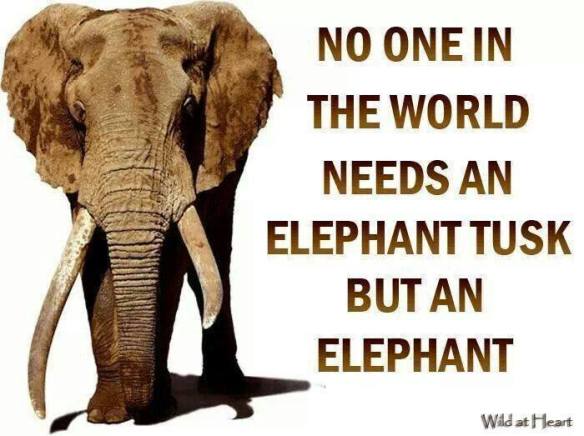
In addition to loss of habitat, elephants, rhinos and big cats are being hunted to extinction globally by humans who need their parts. In the case of elephants and rhinos, the tusks and horns are the booty. These are valuable commodities, used primarily in Asia to make little religious trinkets (ivory tusks) and as aphrodisiacs (rhino horns). The animals are usually alive when the poachers tusks and horns are cut away. The world’s remaining big cat are hunted for their skins.Is heinous as this trade it, the motive is profit, enough profit that poachers are less likely to be individuals and more likely to be warlords, or even members of various African military forces moonlighting. They’re in it for the money and the authorities are losing the battle nearly everywhere. 2012 was a record year for rhino massacres, with four out of five remaining species nearing final extinction.Congo elephant massacre

This is a fundamentally different motivation than that of Jimmy John’s sub sandwich empire Jimmy John Liautaud, who loves to go on safari for the sheer pleasure of killing large animals. Look at the big grin of triumph as he poses with their corpses. This is a happy fellow who has proven once again that he can master nature as long as he has a safari staff and a big fucking gun.

Jimmy participates in the safaris on private game preserves, where the safari companies essentially own the prey whose guaranteed death is their profit center. In fact, here’s a handy link to Johan Calitz Safaris’ photo page, featuring a host of mighty men with their subdued trophies.

In case you are looking for patterns, Johnny is also politically inclined to the right wing. He just hates providing health care for his workers, and publicly announced plans to reduce workers’ hours in order to avoid the Affordable Care Act’s requirement to provide health coverage or pay a penalty.

_____________________________

[As I pointed out in my post “‘Kill ‘Em All Boyz’ Are ‘Ethical’ Hunters Once Again,” Poachers or not, it all ends the same for the animals they killed.]