Five Blood-Chilling Facts About Wildlife “Services”

Here are five blood-chilling facts about this rogue agency that have come to light in recent years:

•According to their own records, Wildlife Services killed 3,352,378 animals in 2012 alone. Among the victims: wolves, coyotes, beavers, bobcats, great blue herons, and sandhill cranes.
•The agency’s lethal methods are varied and indiscriminate. They include aerial gunning, cyanide gas, leg hold traps, poison, and neck snares.
•Unintended killings are common, and include thousands of endangered and other imperiled species, domestic dogs and other house pets.
•Cover-ups are routine. Former agency hunters have admitted to doctoring records and burying golden eagles caught in neck snares under orders from higher-ups. In Idaho, they even refused to admit to aerial gunning operations until after 23 wolves had been killed!
•This wanton slaughter is funded mostly with federal and state taxpayer dollars. At a time when federal conservation programs are being cut to the bone, these wildlife exterminators provide subsidized services to ranchers and others who request their help and will hire out their killing skills to the states.

Federal agents indiscriminately kill more than three million animals – from endangered species to house pets – every year.

The Wildlife Services agency of the U.S. Department of Agriculture is currently being audited by the USDA Office of the Inspector General. But the killing continues.

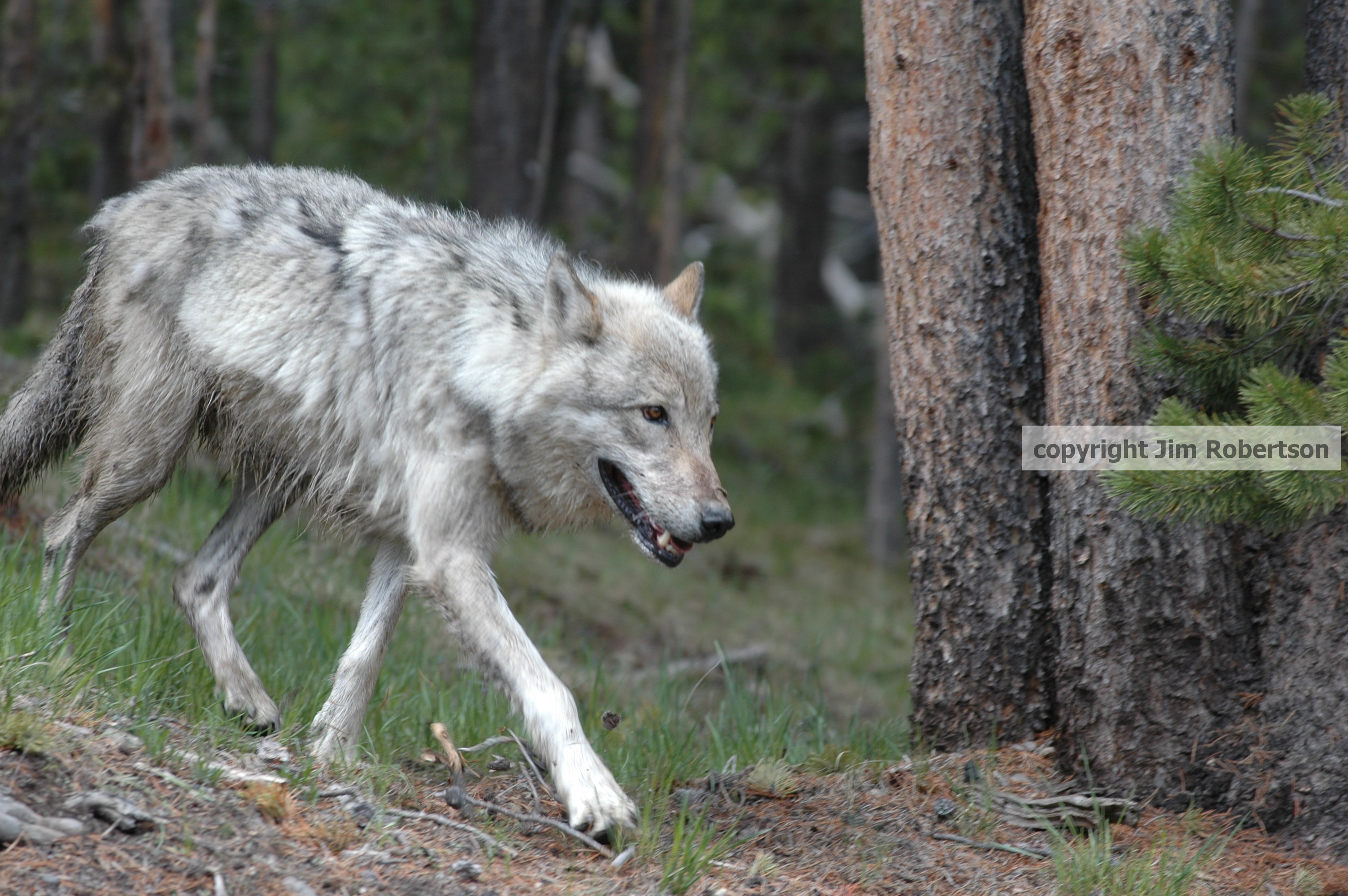
Just last week, Wildlife Services sharpshooters killed 23 wolves from a helicopter in a remote area in Idaho.

copyrighted Hayden wolf walking

Jimmy John is a big man. With the photos to prove it.

http://www.smilepolitely.com/splog/jimmy_john_is_a_big_man._with_the_photos_to_prove_it/

        June 10, 2011 / 4:29pm /                   Robert Hirschfeld
.
..for now tales of Jimmy John’s violent exploits are limited to using his (tax-dwindled) funds to live out fantasies of stalking, predation, and slaughter in exotic locales.

Jimmy, I’ll finance your next trip if you think you’re man enough to do it bare-handed.

p.s. Your sandwiches are shit.

——-

An update based on my thoughts in communicating with a few commenters:

Thank you to all who have read, forwarded, and provided insightful commentary or information-and this would include an invitation to and preemptive thanks for anyone who can provide a legitimate defense beyond, “Who cares?”  I think it’s immediately apparent that a lot of people care.

Also, a special tip of the hat to Jonathon Childers, who alerted SP to these photos.

I fully appreciate skepticism and the withholding of support for the targeting and criticism of another human until reason and sense dictate otherwise.  I believe the photos do dictate such responses, though context and additional information are always warranted.

I could have written a longer, investigative piece, and tied in trophy hunting with the ills of our civilization, but I chose not to.  Positive and negative consequences follow.  One of the positives is that, in deferring from framing the discussion analytically, readers have felt inclined to weigh in on important subjects like economic models, animal cruelty, debased human behavior abroad and on-site (if I want to feel apocalyptic I go read internet comment threads), and the need to find constructive solutions.

– See more at: http://www.smilepolitely.com/splog/jimmy_john_is_a_big_man._with_the_photos_to_prove_it/#sthash.pY1dfzRz.dpuf

A Real-Time Map of Worldwide Births

This simulation gives an eerily omniscient vantage on the world as it fills.

James Hamblin Oct 30 2013graph

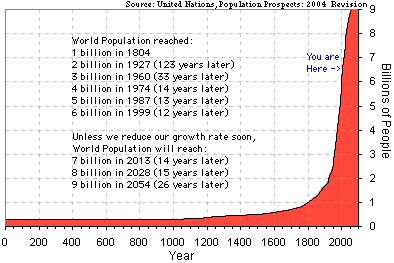
In 1950, there were 2.5 billion humans. Today there are just over 7 billion. In another 30 years, according to U.S. Census Bureau projections, there will be more than 9 billion.

Brad Lyon has a doctoral degree in mathematics and does software development. He wanted to make those numbers visual. Last year he and designer Bill Snebold made a hugely popular interactive simulation map of births and deaths in the U.S. alone—the population of which is on pace to increase 44 percent by 2050. Now, Lyon takes on the world.

Watch if you dare: http://www.theatlantic.com/health/archive/2013/10/a-real-time-map-of-births-and-deaths/280609/

Sierra Club petition: Don’t let Big Oil threaten the last Florida panthers!

The biologists found him in the Florida Panther Wildlife Refugecougar cub — alone and shivering, weighing barely a pound.

The little panther cub never should have survived, but his will to live was strong. He made a miraculous comeback at Tampa’s zoo and is now back to his feisty self! [1, 2]

But no matter how resilient the Florida panthers are, they won’t survive without our help. Down to a population of barely 100, these majestic felines cannot take another blow from Big Oil.

A Texas oilman wants to drill next door to the very refuge where this cub was found — tell the EPA that endangered species matter more than fossil fuels! Stop this dangerous oil project now!

When the Dan A. Hughes Company asked if they could put an oil well right in the middle of critical Florida panther habitat — and only 1000 feet from the nearest house — tea party Governor Rick Scott’s administration was all too happy to oblige. [3, 4] And not only did they issue the permits, they didn’t even require an environmental study!

The good news is that amazing local activists, including Sierra Club members like Marcia Cravens, have convinced the EPA to step in and hold a hearing, scheduled for this Tuesday. We need to stand up for the panthers and get Marcia’s back — will you send your letter to the EPA today, before this week’s hearing?

Let’s send 60,000 letters to the EPA right away! Tell the Obama administration: Florida needs its panthers and clean water more than Big Oil needs more profits!

Oil spills are in the news more and more often. Just last month, a barge spilled 31,000 gallons of crude in New Orleans, closing the Mississippi River for hours. We need fewer fossil fuels, not more — but if oil developers like Hughes get their way, the panthers and local residents could be living in the next oil disaster zone.

The list of protected Florida lands and water these new oil leases threaten is staggering: the Florida Panther Wildlife Refuge, the Big Cypress National Preserve, the Audubon Corkscrew Swamp Sanctuary — it goes on and on. The panthers and the local communities deserve better.

From candlelight vigils to a protest outside the governor’s house, local residents are going all in [6, 7, 8] — and Sierra Club Florida has been with them every step of the way, making great progress by convincing the EPA to hold this week’s hearing. [9] We can ensure that the hearing counts by making sure the EPA hears from 60,000 of us first, showing them how high the stakes really are.

This could be the panther’s last stand. Raise your voice and send a quick comment to the EPA before the hearing: No oil wells in critical panther habitat!

In it together,

Nathan Empsall
SierraRise Senior Campaigner

Sign Petition Here: https://secure.sierraclub.org/site/Advocacy;jsessionid=A0C5633B6DBA8F91F0CBD612EB377ADC.app205a?=display&page=UserAction&id=13070&s_src=414CSRBOA4_NSRSR&s_subsrc=W&utm_source=sierrarise&utm_medium=email&utm_campaign=BO


Idaho Wolf (Eradication) Fund Won’t Receive $2 Million

528624c939a88_preview-620

http://magicvalley.com/news/local/govt-and-politics/bell-wolf-fund-won-t-receive-million/article_3c9a845e-216c-58fe-935d-a3dbfc9000ca.html

By Kimberlee Kruesi – kkruesi@magicvalley.com

BOISE • A bill asking for $2 million to kill up to 500 of Idaho’s wolves won’t get even half of its requested appropriation, said co-chair of the state’s budget committee.

Instead, an unexpected bailout to make up for missing federal e-rate funds to pay for the Idaho Education Network (IEN) broadband program has taken precedence, said state Rep. Maxine Bell, R-Jerome, co-chair of the Joint Finance Appropriations Committee.

“We have some flexibility when it comes to killing wolves,” Bell said. “We don’t have flexibility with IEN.”

JFAC has already approved $6.6 million out of this year’s budget to make up for past-due payments to Education Networks of America, the state’s contractor on the broadband project. It’s money the federal government was supposed to pay for the state’s school broadband program but never did.

The supplemental appropriations bill passed both houses and now just needs the signature of the governor.

“Frankly, based on our discussions with legal counsel, we are obligated for this piece,” said state Sen. Dean Cameron, R-Rupert, while debating the bill on the Senate floor. “I need to inform you that this is the first half. The second half we are still arguing and discussing and re-discussing what we do for fiscal year 2015.”

Ever since the news was announced earlier this session, multiple lawmakers expressed their frustration with the state’s Department of Administration for extending the contract with the Education Networks of America through 2019 without informing lawmakers that the broadband vendor was not receiving the federal e-rate payments.

JFAC is expected to discuss the future of IEN next week, which includes a $7.3 million request from Otter and the Department of Administration to cover the federal payments for fiscal year 2015, Bell said.

This means that the wolf bill will also be discussed next week, Bell said, but it won’t get the requested $2 million.

“It will probably get less than $1 million or closer to the $400,000 that was requested last year,” she said.

Bell was referring to a recommendation a committee submitted to Gov. C.L. “Butch” Otter last summer on how to fund ongoing wolf control efforts. The recommendation asked for $400,000 annually for five years to kill wolves that preyed on livestock.

Instead, Otter ignored the recommendation and requested $2 million of one-time funding to kill wolves during his State of the State speech in January.

The proposed wolf control bill — sponsored by state Sen. Bert Brackett, R-Rogerson — calls for a five-member oversight board that would manage the requested $2 million. The members would be made up of directors from the state Department of Fish and Game and Department of Agriculture, as well representatives from livestock industry, public at large and sportsmen.

Even if the bill makes it to the governor’s desk, it is up to JFAC to determine the final funding amount, Bell said. Budget writers will also decide if the money should come out of one-time or ongoing funds.

“We weren’t expecting to pay this much to IEN … it’s forced us to change a few things,” Bell said.

Is Nowhere Safe? Oregon “Refuge” May Allow Elk Hunting

elk-000-home17300

March 08, 2014 12:45 am
By Bennett Hall, Corvallis Gazette-Times

Half a century ago, when the William L. Finley National Wildlife Refuge south of Corvallis was established to protect migratory waterfowl, sightings of Roosevelt elk were a rare occurrence in the Willamette Valley.

In recent years, however, the majestic animals have made quite a comeback on the valley floor. In the last decade, the Oregon Department of Fish & Wildlife estimates, the population has mushroomed from 100 to at least 600 individuals.

The biggest herd in the region makes its home on the Finley Wildlife Refuge, where an estimated 200-plus elk have become a major draw for visitors — and a growing problem for neighboring landowners.

State and federal wildlife managers say the animals cause extensive damage when they periodically wander off the 6,000-acre refuge, eating or trampling crops and knocking down fences that stand in their way.

Now, to reduce the damage, ODFW and Finley biologists are floating a plan to reduce the herd by opening the refuge to elk hunting for the first time.

If approved by the U.S. Fish & Wildlife Service, the plan would allow a three-month hunting season for antlerless elk (cows and “spikes,” or yearling bulls) in the late summer and early fall.

Five permits would be issued to Willamette Valley elk tag holders each month from August through October for a total take of up to 15 elk, and only bowhunting would be allowed the first year.

“We have a goal to reduce the size of the elk herd by 20 percent over five years,” said Jock Beall, the refuge biologist at Finley.

The plan is being welcomed by most area farmers and duck-hunting clubs, which plant corn to attract waterfowl.

But the idea is not without controversy. A large number of Finley’s 100,000 annual visitors come to the refuge to watch or photograph wildlife. To them, the elk are rock stars.

“Elk are a charismatic species,” Beall acknowledged. “(Visitors) like them and they like the viewing, and they think (the hunt) will change the opportunity or decrease the opportunity to view them.”

You can count Ricardo Small among that group.

A retired Arizona real estate appraiser who now spends most of the year in the mid-valley, he’s a regular at Finley. From his perspective, any damage the elk may be doing on private property shouldn’t be the refuge’s problem.

“The elk are a major magnet for visitors, and there is no information I can find in any Fish & Wildlife report to indicate the elk are doing any damage to resources on the refuge,” Small pointed out.

“My position is there’s no reason to open up the refuge to elk hunting. Let them open up their land to hunting — but I guess that’s not palatable to the private landowners.”

As recently as 1989, there were only about 20 elk on the Finley National Wildlife Refuge. A decade later the tally had jumped to 100, and last year the Finley herd numbered 163 animals.

A second herd of 38 elk has taken up residence since then, according to Beall, and there’s another group of 10 to 15 bachelor bulls that hangs around the fringes of the two established herds.

There’s plenty of forage and tree cover on the refuge, and because hunting currently is not allowed at Finley, it provides a safe haven for the animals during the valley elk season, which runs from August through March.

It’s good habitat for Roosevelt elk, the largest North American subspecies, which can weigh in at half a ton and stand 5 feet tall at the shoulder. In fact, the biggest Roosevelt bull on record was taken just south of the refuge boundary in 2002. The taxidermied trophy is now on display at Cabela’s sporting goods store in Springfield.

Even though the refuge proposal would not allow hunting of mature bulls (which tend to be targeted by off-refuge hunters and are underrepresented in the Finley herd), some wildlife lovers fear any hunting would make Finley’s elk skittish.

“I oppose the plan mainly because of what it would do to the recreational aspect — viewing elk on the refuge,” said Phil Hays, another refuge regular, in an email to the Gazette-Times.

“The (environmental assessment) specifically states that hunting causes elk to remain hidden during the day, and they come out to feed at night,” he added. “The refuge is open dawn to dusk. Seems to me that hunting will make the already elusive herd less visible to visitors at the refuge.”

more: http://www.gazettetimes.com/news/local/refuge-may-allow-elk-hunting/article_c93d5bb6-a665-11e3-befe-0019bb2963f4.html

Hunters: the More you Harvest, the Faster they Breed

1897936_534225470025483_669736540_n

The hunter population has gotten out of control and it’s time to do something about it.

Certain do-gooders have envisioned a policy of targeting only the males and displaying their manly parts above the fireplace or barn door as trophies. Other self-appointed regulators submit that that would unfairly skew the sex ratio of the species, especially in light of the rapidly increasing epidemic of female hunters. They suggest the best way to ease the overpopulation of hunters is to sell tags for both sexes. To recruit more hunter hunters, children aged ten or younger would be encouraged to join in the cull.

But, unfortunately, the notion that we can control their numbers through regulated harvest is a myth. The more you take down, the more their survivors breed to make up for their losses.

One More Wolf in Washington

copyrighted wolf in river

http://www.komonews.com/news/local/Washington-state-wolf-population-grows-by-1-249141411.html

Washington state wolf population grows by 1

By PHUONG LE Associated Press Published: Mar 8, 2014

SEATTLE (AP) – Washington’s wildlife agency reported Saturday that its annual survey tallied 52 endangered gray wolves living in the state at the end of 2013, one more than in 2012. The count’s results come as conservation groups urge the state to pull support from a federal effort to roll back protections for the predators.

The state Department of Fish and Wildlife also found five successful breeding pairs in 2013, the same number as reported in the 2012 count.

The wolf population has been a controversial topic since the predators returned to the state much faster than expected in the past several years. In 2008, there were only a handful of wolves. In March 2013, there were an estimated 50 to 100 animals in 10 confirmed packs, all in central and eastern Washington.

Farmers and hunters in the West blame the returning gray wolf population for killing livestock and reducing elk herds.

Wolves are listed as endangered throughout Washington under state law and as endangered in the western two-thirds of the state under federal law.

But federal wildlife officials want to remove wolves from the endangered species list across much the Lower 48 states, including the western portion of Washington.

State wildlife managers support federal delisting of the wolves, saying it would give the state more control over managing conflicts between wolves and livestock.

Phil Anderson, director of the Washington Department of Fish and Wildlife, has said federal restrictions hamper the state’s ability to resolve those conflicts in the western part of the state.

On Thursday, several conservation groups sent a letter asking Anderson to rescind the agency’s support for federal delisting.

“Wolves are just beginning to recover in Washington and face continued persecution. Federal protection is clearly needed to keep recovery on track,” Amaroq Weiss, with the Center for Biological Diversity, said earlier this week.

Suzanne Stone of Defenders of Wildlife expressed concern for the safety of the wolf population.

“The stability of Washington’s wolf population is good news, but the population is still incredibly vulnerable during these early stages of recovery in Washington and wolves have a long way still to go,” she said.

Stone expressed hope that Washington wouldn’t let anti-wolf sentiment come over the border from Idaho and affect wolf management practices.

“We hope Washington is observing the tragic example being set in Idaho, where wolves are treated like vermin,” she said.

Tension Escalates Over Hunting of Pregnant Bison Outside Yellowstone

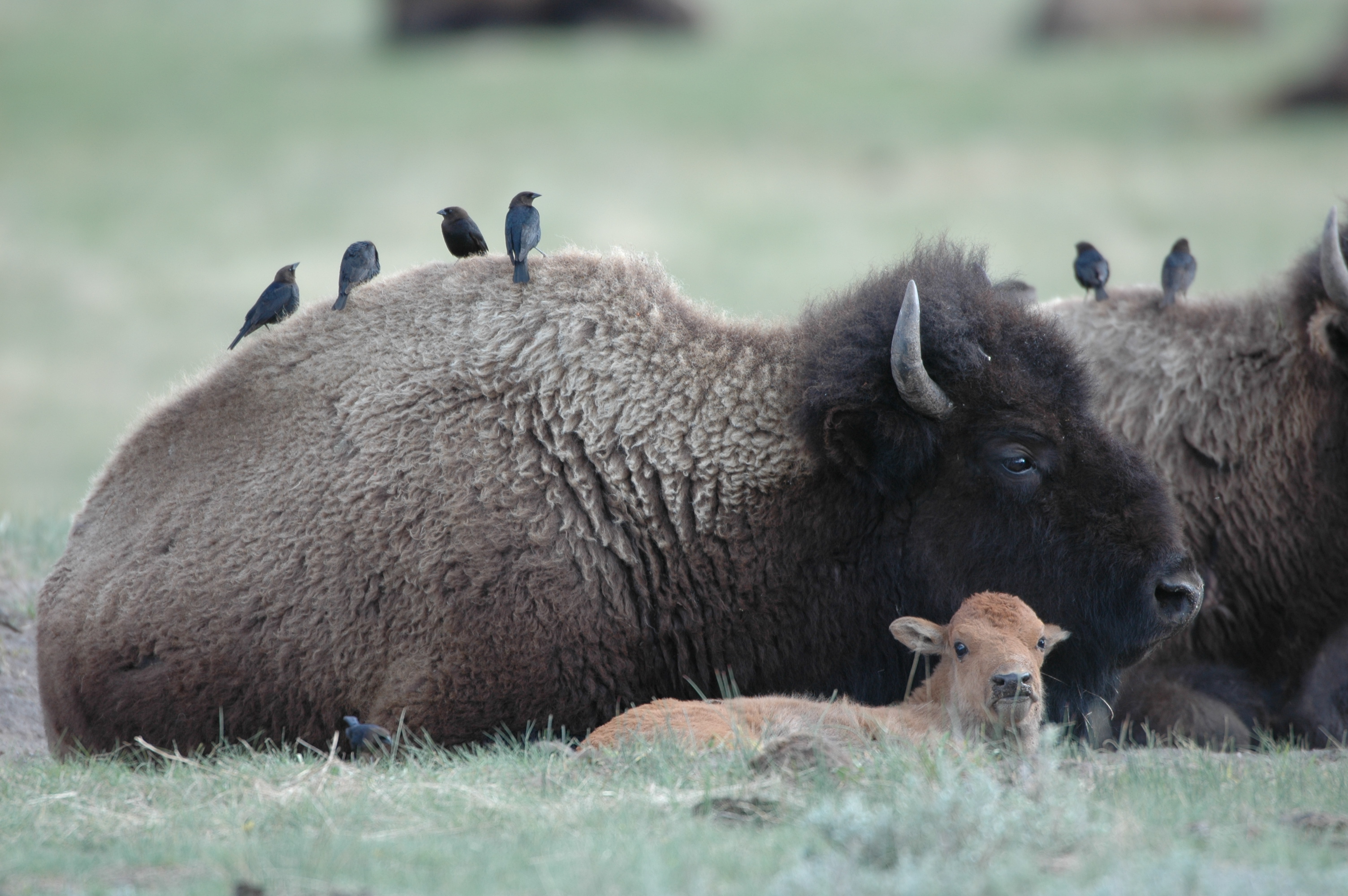
Photo Copyright Jim Robertson

Photo Copyright Jim Robertson

http://www.reuters.com/article/2014/03/07/us-usa-yellowstone-bison-idUSBREA261U520140307

By Laura Zuckerman SALMON, Idaho Fri Mar 7, 2014

(Reuters) – Angered by the killing of pregnant bison outside Yellowstone National Park, a Native American tribal member tried to deliver a bloody bison heart to Montana’s governor this week, the latest skirmish over the management of the iconic animal.

James St. Goddard, a member of the Blackfeet Nation in Montana and former member of the tribe’s governing council, said he found the heart where hunters from another tribe discarded it after gutting a bison killed when many females are well along in their pregnancies. At another location, he said, he found several fully formed fetuses cut out of bison cows.

“These are atrocities. Why are they killing these babies? Are we all ignorant of our own Indian culture?” said St. Goddard, who was prevented by authorities from presenting the bison heart to Montana Governor Steve Bullock at his office in Helena.

St. Goddard’s protest, which was not sanctioned by the Blackfeet Nation, highlighted controversy over practices – which have divided some tribal members – in which bison that stray out of Yellowstone have been killed in extended tribal hunting seasons.

The protest against the actions of other tribes came amid broader tensions about the management of the nation’s last band of wild, purebred bison, or buffalo, over concerns by Montana ranchers that the animals could transmit the cattle disease brucellosis to cows that graze near Yellowstone.

The buffalo at Yellowstone, which cuts through parts of Wyoming, Montana and Idaho, are all that remain of the herds that roamed vast grasslands west of the Mississippi until systematic hunting drove them to the edge of extinction in the 19th century. There are more than 4,000 bison at the park, Yellowstone figures show.

Yellowstone’s bison are prized by visitors as a symbol of the American West and by tribes whose religious, cultural and dietary traditions are centered on the animals.

Tribes have asserted hunting rights granted in 19th century treaties for animals that migrate to traditional hunting grounds, and they largely set their own rules on the timing of their seasons. Some tribal hunting seasons extend into March, ahead of a birthing season that can begin in April.

Yet within the tribes, some members have taken issue with the hunts.

The Nez Perce Tribe in Idaho defended its late season hunting as an ancient custom halted over a century ago by the U.S. government amid Western settlement, near-elimination of the herds and forced relocation of tribes to reservations.

Nez Perce Chairman Silas Whitman faulted St. Goddard, whose own tribal government has not opposed the hunts, for criticizing the exercise of off-reservation hunting rights gained by treaty.

“He’s creating controversy where there is no cause. He’s talking as an old enemy, and we’re not going to bend to the will of our enemies,” he said.

Ervin Carlson, the Blackfeet’s buffalo project manager and a member of a federal, state and tribal team that oversees Yellowstone bison, said St. Goddard’s sentiment did not represent the tribe.

“Those tribes have their treaty hunting rights. We wouldn’t step into their concerns,” he said.

FEARS OF CATTLE DISEASE

Licensed hunting of bison that leave Yellowstone’s snow-covered high country to seek food in lower Montana elevations was sanctioned in 1985, then banned after public outcry as hunters lined up outside the park to shoot bison.

Regulated hunts were reinstituted with “fair chase” provisions in 2005 to help keep a burgeoning buffalo population in check. Four tribes have since asserted their own independent hunting rights spelled out in historic treaties.

Montana currently offers limited licenses, decided by lottery, in a season that ends in mid-February, partly to protect heavily pregnant bison, said Pat Flowers, a regional supervisor at Montana Fish, Wildlife and Parks.

The hunts and a program that sends wandering buffalo to slaughter are in part a response to worries by Montana ranchers that bison will infect nearby cattle with brucellosis, which can cause stillbirths in cows.

About half of Yellowstone’s bison have been exposed to brucellosis, and roughly 300 animals that strayed from the park this winter were sent to slaughterhouses or to the U.S. Department of Agriculture for reproductive experiments. An additional 263 animals have been killed by hunters, most of them tribal hunters, in Montana.

Conflicts over the way bison are managed escalated further on Thursday with the arrest of a man who protested their killing by blocking a road to a park facility where wayward bison are penned, Yellowstone spokesman Al Nash said.

The protest by a man who anchored himself to a 55-gallon drum was celebrated by Buffalo Field Campaign, which opposes the hunts and slaughter, and sends members into Yellowstone to monitor the wintering herd.

In a sign that not all tribal members agree with their governments, James Holt, a Nez Perce member who sits on the Buffalo Field Campaign board, said it was disheartening to see tribes support the activities.

“Buffalo were made wild and free and should remain so. It is painful to watch these tribal entities take such an approach to what should be the strongest advocacy and voice of protection,” Holt said in a statement.

Among tribes with hunting rights, the Confederated Salish and Kootenai Tribes of Montana restricts its season to the end of January to avoid killing pregnant bison cows, which calve in spring, Tom McDonald, the tribes’ wildlife agency manager, said.

“Our regulation is based on the votes of the people, who don’t want big-game animals harvested past the end of January because they’re pregnant. But we don’t point fingers at other tribes for their regulations,” he said.

Carl Scheeler, wildlife program manager for the Confederated Tribes of the Umatilla Indian Reservation in Oregon, said the reality of gutting a two-ton animal means fetuses may be discarded from pregnant bison killed in a tribal hunting season that stretches to mid-March.

“There’s a certain level of public sensitivity to viewing large and persistent gut piles, and hunters are directed to move them out of view to the extent that’s possible,” he said.

(Editing by Cynthia Johnston and Douglas Royalty)

Follow Your Inner Convictions

“[After almost being pressured by other boys to sling rocks at birds.] From that day onward I took courage to emancipate myself from the fear of men, and whenever my inner convictions were at stake I let other people’s opinions weigh less with me than they had done previously. I tried also to unlearn my former dread of being laughed at by my school-fellows. This early influence upon me of the commandment not to kill or to torture other creatures is the great experience of my youth. By the side of that all others are insignificant.” ~ Dr. Albert Schweitzer

Photo Copyright Jim Robertson

Photo Copyright Jim Robertson