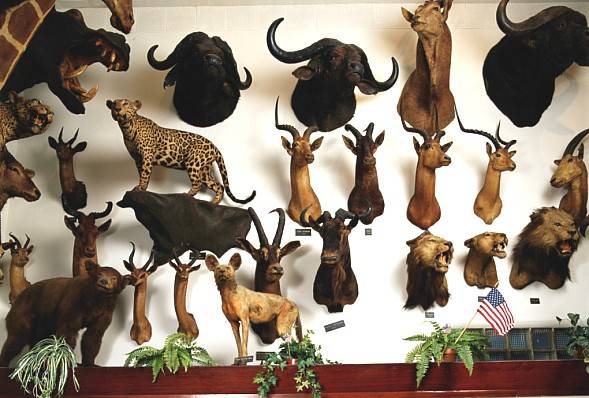
Welcome to Hell, Coyote Hunters

1795706_473627576096881_1329203140_n

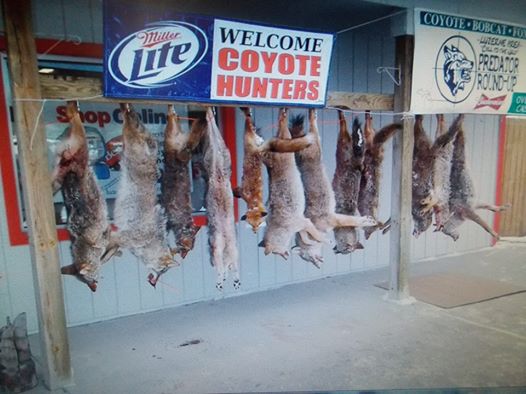
Hundreds of killing contests have taken place all over the USA…Here is a description of a killing contest that just happened in Michigan — This pic and the description are on a public forum.

What is a “tagged coyote”? A tagged coyote is one that was previously trapped, marked in some way and then released, and killed for a prize.

“Just a few weeks ago the “Call of the Wild” Predator Round Up was held near our cabin in Luzerne Michigan. The hunt began at 7:00 p.m. Friday night and ran till 12 noon Sunday. Seventy three (73) hunters signed up comprising 33 different teams. Several teams used coyote dogs and others worked various “sets” while calling. The hunters with the dogs had the advantage, but the first “yote” turned in was by a father and son team who called the 29.7 pound female within range of a flat shooting 223” …..
“Ma Deeters (local bar/restaurant) was the starting point of the hunt, and the Best Hardware store was where the successful hunters displayed their success. There were around $1700.00 dollars in prizes with anyone bringing in a tagged coyote receiving a $1000.00 dollar bonus. Knight and Hale (game calls) donated many of the prizes handed out. First coyote, biggest, (41 pounds) ugliest, and longest awards were all given out at the culmination of the hunt. Two of the dog teams garnered most of the awards.
On Sunday afternoon there were eleven (11) coyote and one fox hanging on the game pole at the hardware store. There was an additional prize to any team that brought in the “trifecta” of predator hunting (a coyote, fox, and bobcat.) No one collected that award this year, but one team came close.”

Montana Outdoors “Weighs in” on Wolves

>snip< Varley and his wife run Yellowstone Wolf Tracker wildlife tours, one of a dozen or so guiding operations sanctioned by park officials. These kinds of services are at the heart of a thriving wolf watching tourism that a University of Montana study found pumps millions of dollars into counties surrounding the park each year.

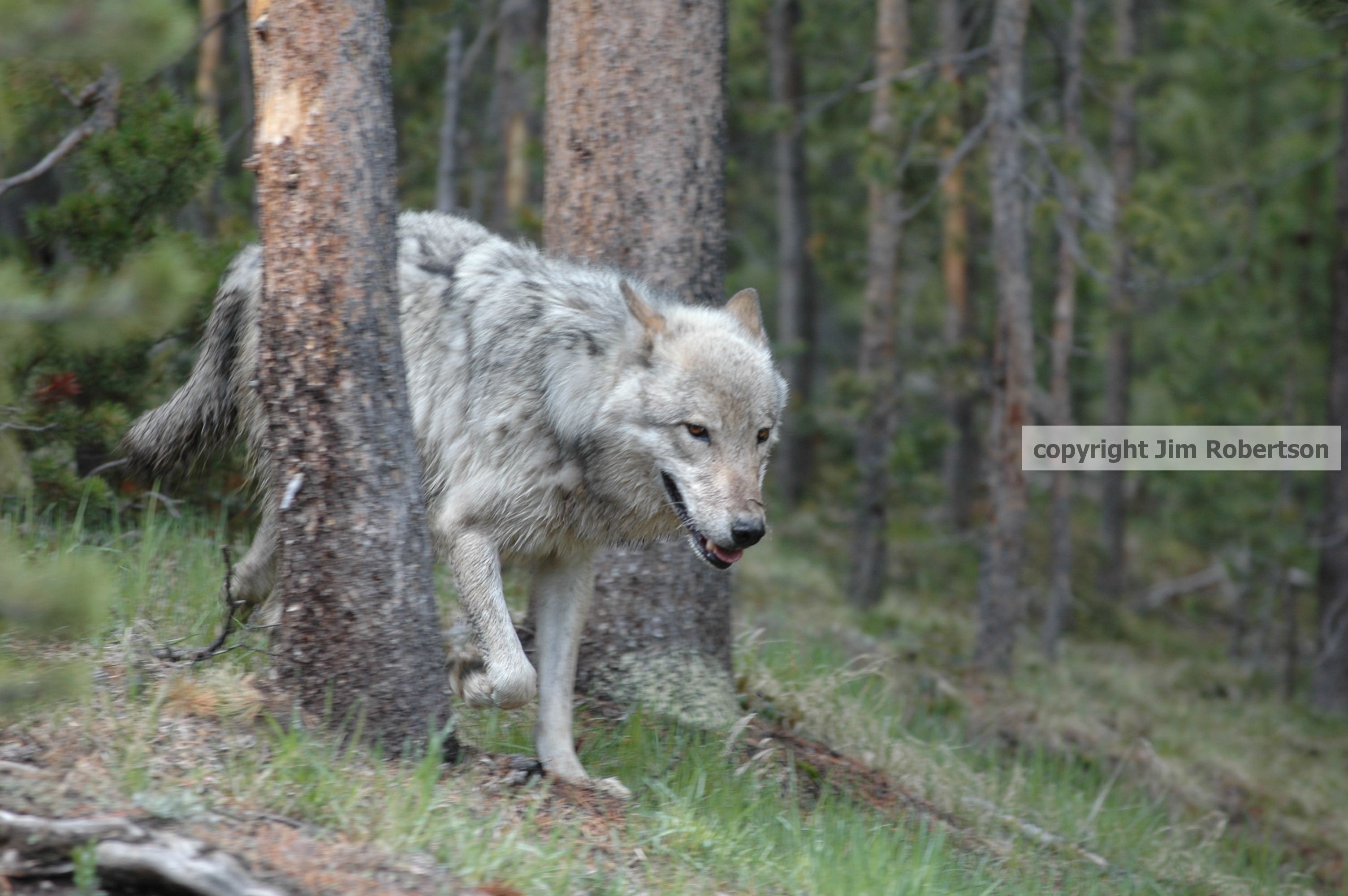
That economic argument is just one used by wolf advocates critical of growing hunter and trapper wolf harvests in Montana, Idaho, and Wyoming. Some are like Varley, who has no gripe with wolf hunting elsewhere but wants a kill-free buffer around Yellowstone. [The old, "not in my back yard" mentality] Others, often from outside the Rocky Mountain West, want to halt all copyrighted Hayden wolf in lodgepoleslethal action on an animal that was classified as federally endangered just a few years ago.

On the flip side are those who demand that Montana kill more wolves, which they say harm ranchers’ bottom line and deplete elk and deer herds. “We’d like the state to take much more aggressive measures in certain areas to bring these predator numbers down to a more tolerable ratio with prey populations,” says Rob Arnaud, president of the Montana Outfitters and Guides Association. “We’ve got hunting outfitters around Yellowstone going out of business because of wolves.”

Full article: http://fwp.mt.gov/mtoutdoors/HTML/articles/2014/wolves.htm#.UxpKmGeYZla

Dog Left Out in March Must Fend Off More Than the Cold

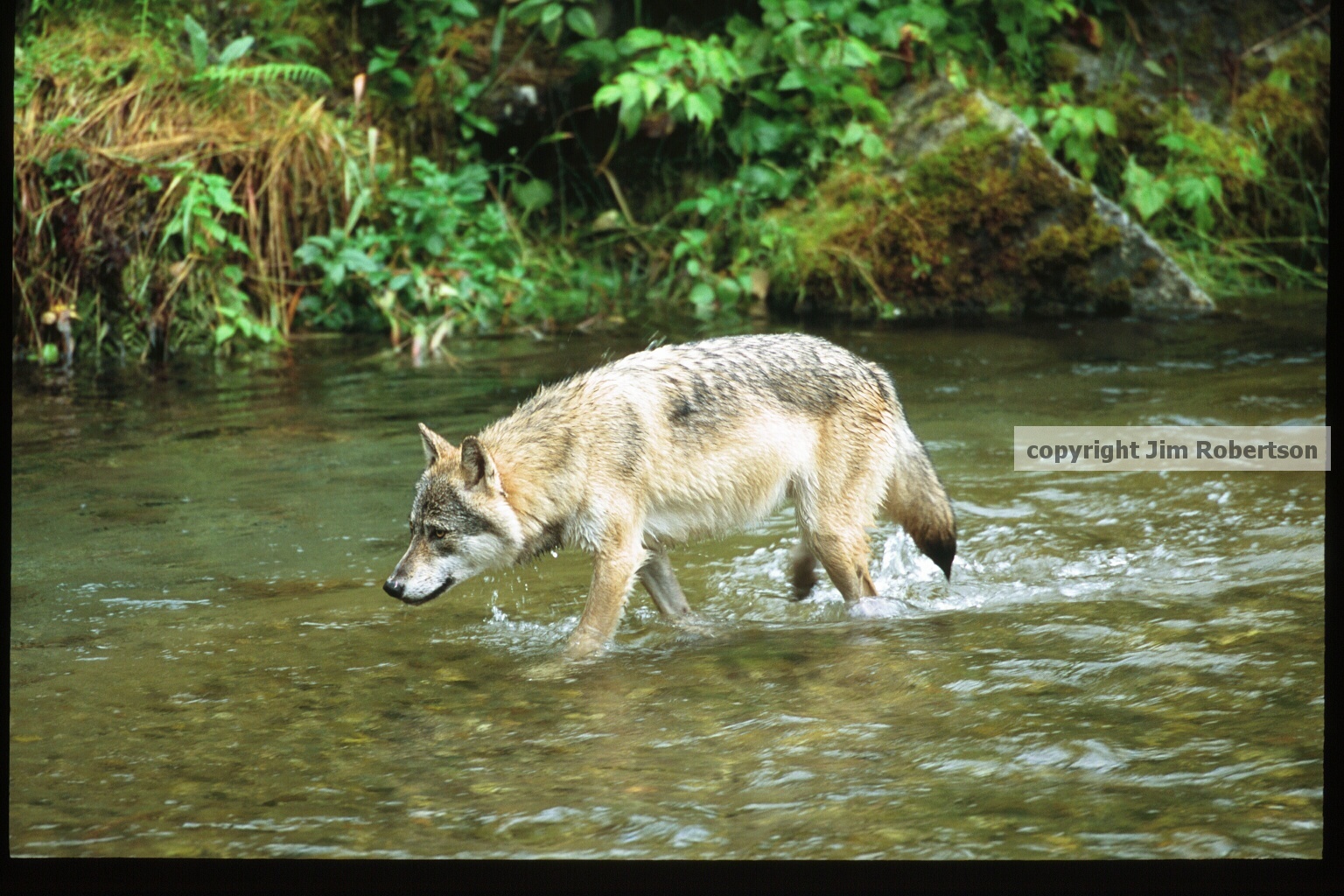
copyrighted wolf in water

One year after wolf attack, dog fends off cougar at Carlton home

One year after wolf attack, dog fends off cougar at Carlton home

[Automatic response? track down and kill the predators.]

by admin on Mar 6, 2014
By Ann McCreary

It’s been a tough year for Shelby, a wolf-husky hybrid dog owned by John Stevie of Carlton. In March 2013 the dog was attacked by a gray wolf just outside her home, and early Monday morning (March 3) she was attacked again — this time by a cougar.

The unlucky dog has been lucky enough to survive both attacks.

Stevie had let Shelby out at about 4 a.m. Monday and soon heard the dog crying, said Sharon Willoya, Stevie’s girlfriend.

“We both raced to the door and she came running in. She wouldn’t let us touch her at first because she was frightened. We finally got her calm and noticed she was bleeding,” Willoya said Tuesday (March 4).

The 68-pound dog had cuts on her shoulder and chest, and required more than a dozen stitches, Willoya said.

Stevie reported the attack, and Washington Department of Fish and Wildlife (WDFW) enforcement officers arrived with hounds a few hours after the attack. They tracked the cougar into a boulder field, but because it was a dangerous situation for the dogs, they left, said Capt. Chris Anderson, WDFW regional enforcement supervisor.

Wildlife officials returned Tuesday morning, found new tracks near Stevie’s home, tracked the cougar and treed it. The cougar, a healthy female, was shot and killed.

Willoya said wildlife officials found evidence that the cougar had “bedded down” not far from the house. “They think when Shelby came around the house, the cougar was there,” she said.

Stevie’s dog made news last year when she was attacked by a wolf on the deck of Stevie’s home at the foot of McClure Mountain. The dog received puncture wounds and lacerations to its head and neck in the attack.

Stevie subsequently took Shelby with him to Olympia, where Stevie testified before the Legislature in favor of a bill allowing citizens to shoot wolves that are attacking pets or livestock. Gray wolves are currently protected as an endangered species under federal and state law.

The cougar killed on Tuesday is the sixth cat shot by wildlife enforcement officers in the Methow Valley since December following attacks on domestic animals. At least four other dogs have been attacked, including a dog killed on Christmas day.

Cougars have also attacked cats, goats, sheep, chickens and calves.

Anderson said a hunter killed a cougar last week in the Pearrygin game management unit north of Winthrop. That brings the total number of cougars killed by hunters in the Methow Valley this winter to six.

Because of the high number of cougar incidents this winter, WDFW has issued special permits allowing hunters to use hounds to hunt cougars in the Methow Valley. Three permits have been issued for the Gardner game management unit, and two have been issued for the Pearrygin unit. Each permit allows one cougar to be killed.

So far, none of the special permit holders has taken a cougar, Anderson said.

“There are different theories bouncing around” about why the valley has seen so many cougar incidents, Anderson said.

“The general feeling is it’s probably because of the weird winter we’ve had,” Anderson said. “Normally we have cats that are visible because they follow the deer herds. Without snow the deer were really spread out and so the cats were spread out more, and that’s why people were seeing them in all parts of the valley.”
a

See more posts related to Cougars in the Methow Valley.

The bear facts; What’s a bunch of starving cubs when there are votes to be had?

Bear

http://www.chroniclejournal.com/content/news/local/2014/02/22/bear-facts-what%E2%80%99s-bunch-starving-cubs-when-there-are-votes-be-had

Saturday, February 22, 2014 – 08:00
in Columns

Commentary
By Barry Kent MacKay
Re Bear Hunt Needs An Economic Angle — editorial, Feb. 11:
Because Kathleen Wynne was a bit of an outsider — Ontario’s first female and openly gay premier — I had hoped that transparency and citizen democracy would benefit, and policy would derive from logic and compassion. I was wrong.
Prior to 1999, in addition to a fall hunt, it was legal in Ontario to hunt black bears in the spring. Bait, often sweet pastry and fats, would be placed in front of blinds or tree stands — and the bears, ravenous from months in their dens without food, would approach. They were easy targets. Although many local hunters opposed the practice, they usually remained silent because it did bring money into the more remote, northern areas.
Hunters were only supposed to shoot males, but too often they shot females.
The Ministry of Natural Resources (MNR) estimated, from the number of females shot, that more than 270 cubs were orphaned each spring. Cubs are dependent on their mothers; so, when orphaned, they tend to die from predation or slowly starve to death. The few who survived were brought to wildlife rehabbers — but most simply died, lost in the bush.
Concerned citizens were able to convince the Ontario government to end the spring hunt. But, the fall hunt was extended, and the overall number of bears killed by hunters was nearly the same as before.
The Ontario Federation of Anglers and Hunters (OFAH) was outraged, and started a massive campaign of bear reporting. In 2003, a Nuisance Bear Review Committee recommended that the MNR take a lead role in responding to “nuisance” bear reports, including threats to human safety. Thus, the MNR’s Bear Wise program was born.
Although the program was successful, OFAH continues to claim it was not. And while there was, on average, no increase in conflicts between humans and bears, attacks on humans by bears, or the size of the bear population, OFAH and others somehow argued that all three increased. The campaign also pushed a very emotive button among people in Northern and central Ontario, suggesting that the government was more responsive to the concerns of the larger population living in the more urbanized south (where bears are rare or absent, but votes are numerous).
In 2008, then-Minister of Natural Resources, Donna Cansfield, wisely ordered an assessment of Bear Wise. Published in January 2009, the assessment presented dozens of suggestions on how it could improve. The next year, then Premier McGuinty removed Cansfield as the minister.
In May 2012, McGuinty quietly, and without consultation, conducted a massive scale-back of the Bear Wise program. Then, in October, he abruptly quit, handing leadership of the party, thus the province, to Kathleen Wynne.
And what did she do? We were promised a better, more open, and transparent government. But instead, the premier began the onerous task of dismantling many of Ontario’s environmental protection laws including the Endangered Species Act, the Planning Act, the Bear Wise Program and re-introducing the spring bear hunt.
Apart from the sad fact that people seem to believe there are more bears and more conflicts (neither contentions supported by the MNR’s own research), there is simply no way that shooting bears attracted to baits in the bush will mean that the same bear that might concern humans later on is the one shot. Shooting, itself, creates the risk of wounding bears, who can become aggressive. Bears tend to avoid humans, and the moms will not attack if their cubs are approached. But, availability of human food conditions bears to search for such foods — ironically exacerbating the problems that concern people.
Now, in the winter, female black bears are in their dens. They are not truly hibernating, but their metabolism has slowed, and they will soon give birth to tiny cubs. Smelling bait, the females will move in, but will tell their cubs to hide. If a mother bear is lucky, she’ll be recognized as a female, and spared; but she may well be shot, and then her cubs are doomed.
And why? Kathleen Wynne may think that, by making it a “test” and restricting the spring hunt to several communities, she will not arouse too much criticism from compassionate voters (while placating those northerners angry at cancellation of the spring hunt back in 1999). What are a few hundred starving baby cubs when there are votes to be had?

Barry Kent MacKay is a founding director of Animal Alliance of Canada and Canadian senior program associate with Born Free U.S.A., a non-profit animal advocacy based in Washington, D.C.

Patricia Randolph’s Madravenspeak: Hunters Want to Legalize Entering Private Property without asking Permission to Retrieve Dogs

dvoight09's avatarWisconsin Wildlife Ethic-Vote Our Wildlife

Madravenspeak Column #85 Entering Private Property to Retrieve Dogs

MADRAVENSPEAK

“ I got caught up in the culture.  I did not think about the animals…I am proud to be working with the Humane Society to get to kids because they’re the ones being taught this and surrounded by this madness.”  ~ Michael Vick on using dogs as weapons http://www.youtube.com/watch?feature=player_embedded&v=e6LRCq5EouA (See how Michael Vick’s dogs were saved)

This year, question number 48 of the DNR/Wisconsin Conservation Congress agenda is:

 “Do you support legislation that would allow the owner of a hunting dog the ability to retrieve their hunting dog without landowner’s permission?”

Monday, April 14, 2014 at 6:30 p.m. in every county in Wisconsin, the 80th annual election of two of five delegates per county will be held.  That night is the only time you can vote on this question, but it does require legislation.

The entire questionnaire and locations in every county are here: http://dnr.wi.gov/About/WCC/springhearing.html   

Please network…

View original post 697 more words

Patricia Randolph’s Madravenspeak: Natural Resources Board Member Proposes White Deer Kill Statewide – Vote April 14

dvoight09's avatarWisconsin Wildlife Ethic-Vote Our Wildlife

Madravenspeak Column # 86 Albino deer-1

MADRAVENSPEAK

“A growing moral dilemma is at what point does one person’s right to hunt and shoot an animal interfere with another person’s right to watch, photograph, and enjoy the living animal.”  MaLenna Smith, Leland 

Wisconsin has a rare and startlingly beautiful treasure gracing just a few areas of the state, including Leland and Boulder Junction. Locals adore them, and tourists flock to lawn chairs waiting to see them. Wisconsin Public Television’s series In Wisconsin filmed a special on them with Patty Lowe,  http://video.wpt.org/video/1510278527/, explaining: “Some call them “the ghosts of the forests”. The animal in question is Wisconsin’s albino or ‘white’ deer and they’ve become an internet and international sensation… So far more than 14 million people have viewed our white deer video online.”  

Fourteen million potential tourists to visit Wisconsin!

The DNR is thrilled – right?

Of course not. Greg Kazmierski, Scott Walker’s political…

View original post 843 more words

FoA challenges Congress’ betrayal of endangered antelope

Today international animal protection organization Friends of Animals filed
a Complaint challenging the constitutionality of a provision that was buried
in the 2014 Federal Budget by Congressman John Carter of Texas that seeks to
eliminate Endangered Species Act protection for three species of African
antelope held captive on U.S. sport-hunting ranches.

“After the better part of a decade on the losing end of Friends of Animals’
efforts to protect these amazing antelope, private hunting ranch operators
that profit on the killing of these animals chose to show their disrespect
for our justice system by turning to their Congressional pawn,
Representative John Carter,” said Priscilla Feral, president of Friends of
Animals. “Fortunately for the antelope, Friends of Animals won’t let them be
killed so easily and will continue to fight on their behalf in the
courtroom.”

Mike Harris, director of Friends of Animals’ Wildlife Law Program, explains
that the provision in the Federal Budget, Section 127, purports to undo
Friends of Animals’ 2009 victory in which a federal judge told the U.S. Fish
and Wildlife Service that it could not exempt these hunting ranches from theHuntingTrophiesJamieKripke600
permitting requirements in Section 10 of the Endangered Species Act. Section
127 also seeks to interfere with Friends of Animals’ 2013 lawsuit
challenging whether USFWS’s permitting of more than 100 of these hunting
ranches violated the Endangered Species Act’s conservation purposes.

“Representative Carter’s attempt to strip legal protections for these
endangered animals reeks of special interest favoritism,” Harris said. “His
budget rider is not only harmful to the antelope, but also to American
democracy. It is now up to the court to stop this misuse of Congressional
power.”

Today, addax and dama gazelles are nearly wiped out in Northern Africa due
to hunting, war, desertification of habitat, human settlement and
agribusiness. FoA has facilitated the reintroduction of the antelope within
Ferlo National Park in northwest Senegal. Through member support, FoA funds
habitat restoration efforts at Ferlo National Park. For example, in fiscal
year 2013, $66,000 went toward expanding the Oryx Fence Project, which
includes dama gazelles. One hundred and 20 oryx and 20 dama gazelles
benefitted, along with other animals, from these funds. FoA has also
collaborated with European and Middle Eastern specialists in captive
breeding of arid ecosystem gazelle species to restore these animals to the
wild.

The full Complaint can be viewed on the Friends of Animals’ website:

http://friendsofanimals.org/sites/default/files/kcfinder/files/Antelope_Ride
r_Complaint%20FINAL.pdf

Urge Georgia Legislators to Oppose Raccoon Torture!

If House Bill (H.B.) 423 passes, it will allow hunters to trap and cruelly confine raccoons for use in field trial competitions. This bill has passed through the House and is now with the Senate Natural Resources and Environment Committee, which may discuss it as early as March 11. Your voice and the voices of everyone you know are desperately needed right now. Please forward this alert far and wide!

Every minute in confinement is already a terrifying eternity for raccoons, who, during field trial competitions, are flung high into trees or hauled across fields and bodies of water as frantic dogs give chase. They must repeatedly endure this hellish ordeal, often for hours on end, and many are badly injured or even killed during the trials. Survivors risk developing chronic and contagious stress-induced disorders, which could eventually prove fatal after their release.

Please urge the members of the Senate Committee  and your senator to oppose H.B. 423. Let them know that field trials are inhumane and harmful to local ecosystems and can spread disease. Tell them that these events should remain illegal in Georgia!

Action Alert Here:  https://secure.peta.org/site/Advocacy?cmd=display&page=UserAction&id=5343

Wildlife Photography Copyright Jim Robertson

Wildlife Photography Copyright Jim Robertson

NRA Campaigns Against The Plan To Save The World’s Elephants

ele-with-tusks-feature
An Animal Rights Article from All-Creatures.org

FROM

By Hayes Brown, ThinkProgress.org
March 2014

“Any firearm, firearm accessory, or knife that contains ivory, no matter how big or small, would not be able to be sold in the United States, unless it is more than 100 years old. This means if your shotgun has an ivory bead or inlay, your revolver or pistol has ivory grips, your knife has an ivory handle, or if your firearm accessories, such as cleaning tools that contain any ivory, the item would be illegal to sell.”

For that reason, the NRA implores its members to flood the White House and Congress with phone calls and emails to “let them know you oppose the ban on commercial sale and trade of legally owned firearms with ivory components.” That desire to resell old — but not antique — weaponry clearly is more important to the NRA than preventing the looming extinction of the species — which is linked closely to the skyrocketing demand for ivory.

The National Rifle Association (NRA) on Friday (February 28) asked its 3.1 million members to call their representative in Congress and urge them to block a rule designed to protect the world’s elephants from being poached into extinction.

Last month, the White House announced a ban on the commercial trade of elephant ivory, placing a total embargo on the new import of items containing elephant ivory, prohibiting its export except in the case of bona fide antiques, and clarified that “antiques” only refers to items more than 100 years old when it comes to ivory. “This ban is the best way to help ensure that U.S. markets do not contribute to the further decline of African elephants in the wild,” a White House fact sheet on the announcement declared.

The NRA is disturbed about provisions of the ban related to domestic resale of items including ivory. “We will finalize a proposed rule that will reaffirm and clarify that sales across state lines are prohibited, except for bona fide antiques, and will prohibit sales within a state unless the seller can demonstrate an item was lawfully imported prior to 1990 for African elephants and 1975 for Asian elephants, or under an exemption document,” the White House said in February.

While many people would make the mistake of assuming that this was about helping save endangered elephants, the NRA understands what the real motivation is. “This is another attempt by this anti-gun Administration to ban firearms based on cosmetics and would render many collections/firearms valueless,” the NRA said in its call to arms.

“Any firearm, firearm accessory, or knife that contains ivory, no matter how big or small, would not be able to be sold in the United States, unless it is more than 100 years old. This means if your shotgun has an ivory bead or inlay, your revolver or pistol has ivory grips, your knife has an ivory handle, or if your firearm accessories, such as cleaning tools that contain any ivory, the item would be illegal to sell.”

For that reason, the NRA implores its members to flood the White House and Congress with phone calls and emails to “let them know you oppose the ban on commercial sale and trade of legally owned firearms with ivory components.” That desire to resell old — but not antique — weaponry clearly is more important to the NRA than preventing the looming extinction of the species — which is linked closely to the skyrocketing demand for ivory. “In 2013 alone an estimated 30,000 African elephants were killed for their ivory, more than 80 animals per day,” Dr. Kerri-Ann Jones, Assistant Secretary of State for Oceans and International Environmental and Scientific Affairs, told the House Foreign Affairs Committee last week.

The commercial ivory ban is only part of a new National Strategy for Combating Wildlife Trafficking announced at the same time as the embargo, which prioritizes “strengthening domestic and global enforcement; reducing demand for illegally traded wildlife at home and abroad; and strengthening partnerships with international partners, local communities, NGOs, private industry, and others to combat illegal wildlife poaching and trade.” In that vein, the United States has been leading the charge in persuading countries around the world to destroy their stockpiles of intercepted ivory, annihilating six tons of it last November. Since then, Togo, China, and France have also followed suit and destroyed seized contraband of their own.

Aside from the conservation concerns, which the NRA doesn’t seem moved by, poaching is increasingly being viewed as a national security issue for the United States. In an interview last year, Robert Hormats, Under Secretary of State for Economic Growth, Energy, and the Environment, said ivory had become a “conflict resource.” An Enough Project report from last year also found that Joseph Kony’s Lord’s Resistance Army has begun poaching ivory from elephant tusks to fund the group’s activities, which include abducting children and forcing them into sex slavery.