Petition: Stop the legal slaughter of Polar Bears by trophy hunters

1975210_217349905127731_192938778_n

https://www.change.org/petitions/the-canadian-government-stop-the-legal-slaughter-of-polar-bears-by-trophy-hunters

Animal First! (www.animalfirst.org)

Petition by

Animal First! (www.animalfirst.org)

Polar Bears are some of the most majestic and beautiful animals in the world. The global population estimate is between 20 000 and 22 000. This classifies the Polar Bear as ‘threatened.’ Polar Bears are threatened by pollution High levels of chemicals and PCBs. Another threat is global warming. Without ice Polar Bears are unable to reach their prey.

But the most immediate threat is hunting. Over 1000 polar bears are hunted annually! This prevents the Polar Bear population from increasing to a healthier number. Canada is the only nation in the world that allows Polar Bear hunting by non-natives and non-citizens. (Polar Bears also live in Alaska, Russia, Greenland, & Norway) Canada sells polar bear hunting licenses to trophy hunters. The main problem with this is that 60% of Polar Bears reside in Canada.

The Canadian government are paying hunters for Polar Bear hides! The government pre-pays hunters for the hides of bears shot in this subsistence hunt, and then sells the hides at auction for up to $11,000 (which also goes to the hunter), it blurs the line between a subsistence hunt and a commercial hunt.

Polar Bears are protected under national law and international treaty, so Canada’s Polar Bears can only be harvested by Inuit hunters for subsistence, OR by trophy hunters guided by Inuit.

The major threat for Polar Bears in Canada is the commercial hunt. Canada is the ONLY nation in the world that allows Polar Bear hunting by non-natives and non-citizens trophy hunters. Why? The answer is easy: MONEY! Pure greed for profit! Canada charges 750 Canadian dollars per Bear!

Allowing hunting by non-natives and non-citizens and selling hunting licenses to trophy hunters creates a bloody business where radical hunters sell hunting tours to Canada and kill Polar Bears. The hunt of one male Polar Bear is offered for 35.000 $ and as we know there are enough rich people who book these tours to get their trophy! There is also an increase in polar bear skin sales!

By booking one of these horrifying tours, the trophy hunters are allowed to go to 5 or 6 day hunting trips in which they chase polar bears with several dogs and after a long chase, when the Polar Bear is exhausted from running, he stops to finally try to make the dogs that are surrounding him go away, at which point the hunter gets closer and shoots several arrows (!!!) until he is finally dead. This means pure torture for the Polar Bear. Cruelty on animals can not be worse than this.

Tell the Canadian government to stop the legal slaughter of one of the highest endangered species in the world. We are horrified and shocked that you sell the life of one of the most majestic and beautiful animals in the world to hunting tour operators like:

http://polarbearhunting.net/ or http://52safari.com/

The irresponsible killing of this threatened species for pure trophy hunting as well as commercial trade in polar bear products must be stopped — now! Before it’s too late!

We need a lot of signatures to put pressure on the Canadian Government! So please share this petition to as many people as possible.

To:
Environment Canada
THE CANADIAN GOVERNMENT
Ministry of Agriculture
Environment Canada Inquiry Centre
Environment Canada National Office
Species at Risk Public Registry
Fisheries and Oceans Canada
Minister of the Environment, Peter Kent
Canadian Wildlife Service Environment Canada

Dear [Decision Maker],

Dear Stephen Harper,

I have learned that Canada is the only nation in the world that still allows Polar Bears to be killed by trophy hunters and for the commercial trade in their skins. Canada sells Polar Bear hunting licenses to non-natives and non-citizens trophy hunters. That creates a bloody business where radical hunters sell hunting tours to Canada and kill Polar…

Read More and sign the petition: https://www.change.org/petitions/the-canadian-government-stop-the-legal-slaughter-of-polar-bears-by-trophy-hunters

Whither the Hunter/Conservationist?

By George Wuerthner On March 5, 2014

Many hunter organizations like to promote the idea that hunters were the first and most important conservation advocates. They rest on their laurels of early hunter/wildlife activist like Teddy Roosevelt, and George Bird Grinnell who, among other things, were founding members of the Boone and Crocket Club. But in addition to being hunter advocates, these men were also staunch proponents of national parks and other areas off limits to hunting. Teddy Roosevelt help to establish the first wildlife refuges to protect birds from feather hunters, and he was instrumental in the creation of numerous national parks including the Grand Canyon. Grinnell was equally active in promoting the creation of national parks like Glacier as well as a staunch advocate for protection of wildlife in places like Yellowstone. Other later hunter/wildlands advocates like Aldo Leopold and Olaus Murie helped to promote wilderness designation and a land ethic as well as a more enlightened attitude about predators.

Unfortunately, though there are definitely still hunters and anglers who put conservation and wildlands protection ahead of their own recreational pursuits, far more of the hunter/angler community is increasingly hostile to wildlife protection and wildlands advocacy. Perhaps the majority of hunters were always this way, but at least the philosophical leaders in the past were well known advocates of wildlands and wildlife.

Nowhere is this change in attitude among hunter organizations and leadership more evident than the deafening silence of hunters when it comes to predator management. Throughout the West, state wildlife agencies are increasing their war on predators with the apparent blessings of hunters, without a discouraging word from any identified hunter organization. Rather the charge for killing predators is being led by groups like the Rocky Mountain Elk Foundation, and others who are not only lobbying for more predator killing, but providing funding for such activities to state wildlife agencies.

For instance, in Nebraska which has a fledging population of cougars (an estimated 20) the state wildlife agency has already embarked on a hunting season to “control” cougar numbers. Similarly in South Dakota, where there are no more than 170 cougars, the state has adopted very aggressive and liberal hunting regulations to reduce the state’s cougar population.

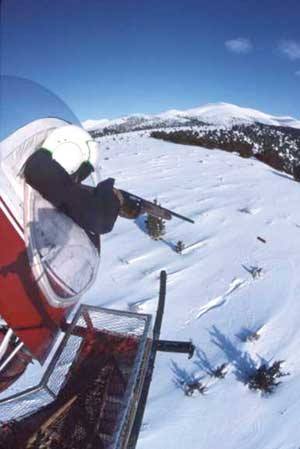
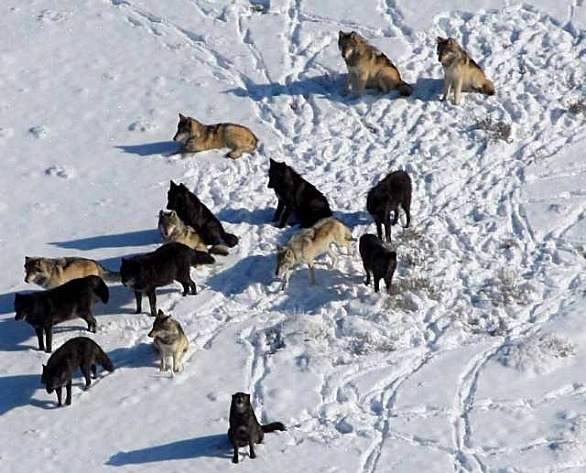
But the worst examples of an almost maniacal persecution of predators are related to wolf policies throughout the country. In Alaska, always known for its Neanderthal predator policies, the state continues to promote killing of wolves adjacent to national parks. Just this week the state wiped out a pack of eleven wolves that were part of a long term research project in the Yukon Charley National Preserve. Alaska also regularly shoots wolves from the air, and also sometimes includes grizzly and black bears in its predator slaughter programs.

In the lower 48 states since wolves were delisted from the federal Endangered Species Act and management was turned over to the state wildlife agencies more than 2700 wolves have been killed.

This does not include the 3435 additional wolves killed in the past ten years by Wildlife Services, a federal predator control agency, in both the Rockies and Midwest. Most of this killing was done while wolves were listed as endangered.

As an example of the persecutory mentality of state wildlife agencies, one need not look any further than Idaho, where hunters/trappers, along with federal and state agencies killed 67 wolves this past year in the Lolo Pass area on the Montana/Idaho border, including some 23 from a Wildlife Service’s helicopter gun ship. The goal of the predator persecution program is to reduce predation on elk. However, even the agency’s own analysis shows that the major factor in elk number decline has been habitat quality declines due to forest recovery after major wildfires which has reduced the availability of shrubs and grasses central to elk diet. In other word, with or without predators the Lolo Pass area would not be supporting the number of elk that the area once supported after the fires. Idaho also hired a trapper to kill wolves in the Frank Church/River of No Return Wilderness to increase elk numbers there.

Idaho hunters are permitted to obtain five hunting and five trapping tags a year, and few parts of the state have any quota or limits. Idaho Governor Butch Otter recently outlined a new state budget allotting $2 million dollars for the killing of wolves—even though the same budget cuts funding for state schools.

Other states are no better than Idaho. Montana has a generous wolf six month long season. Recent legislation in the Montana legislature increased the number of wolves a hunter can kill to five and allows for the use of electronic predator calls and removes any requirement to wear hunter orange outside of the regular elk and deer seasons. And lest you think that only right wing Republican politicians’ support more killing, this legislation was not opposed by one Democratic Montana legislator, and it was signed into law by Democratic Governor Steve Bullock because he said Montana Dept of Fish, Wildlife and Parks supported the bill.

Wyoming has wolves listed as a predator with no closed season or limit nor even a requirement for a license outside of a “trophy” wolf zone in Northwest Wyoming.

The Rocky Mountain West is known for its backward politics and lack of ethics when it comes to hunting, but even more “progressive” states like Minnesota and Wisconsin have cow-towed to the hunter anti predator hostility. Minnesota allows the use of snares, traps, and other barbaric methods to capture and kill wolves. At the end of the first trapping/hunting season in 2012/2013, the state’s hunters had killed more than 400 wolves.

Though wolves are the target species that gets the most attention, nearly all states have rabid attitudes towards predators in general. So in the eastern United States where wolves are still absent, state wildlife agencies aggressively allow the killing of coyotes, bears and other predators. For instance, Vermont, a state that in my view has undeserved reputation for progressive policies, coyotes can be killed throughout the year without any limits.

These policies are promoted for a very small segment of society. About six percent of Americans hunt, yet state wildlife agencies routinely ignore the desires of the non-hunting public. Hunting is permitted on a majority of US Public lands including 50% of wildlife “refuges as well as nearly all national forests, all Bureau of Land Management lands, and even a few national parks. In other words, the hunting minority dominates public lands wildlife policies.

Most state agencies have a mandate to manage wildlife as a public trust for all citizens, yet they clearly serve only a small minority. Part of this is tradition, hunters and anglers have controlled state wildlife management for decades. Part of it is that most funding for these state agencies comes from the sale of licenses and tags. And part is the worldview that dominates these agencies which sees their role as “managers” of wildlife, and in their view, improving upon nature.

None of these states manage predators for their ecological role in ecosystem health. Despite a growing evidence that top predators are critical to maintaining ecosystem function due to their influence upon prey behavior, distribution and numbers, I know of no state that even recognizes this ecological role, much less expends much effort to educate hunters and the public about it. (I hasten to add that many of the biologists working for these state agencies, particularly those with an expertise about predators, do not necessarily support the predator killing policies and are equally appalled and dismayed as I am by their agency practices.)

Worse yet for predators, there is new research that suggests that killing predators actually can increase conflicts between humans and these species. One cougar study in Washington has documented that as predator populations were declining, complaints rose. There are good reasons for this observation. Hunting and trapping is indiscriminate. These activities remove many animals from the population which are adjusted to the human presence and avoid, for instance, preying on livestock. But hunting and trapping not only opens up productive territories to animals who may not be familiar with the local prey distribution thus more likely to attack livestock, but hunting/trapping tends to skew predator populations to younger age classes. Younger animals are less skillful at capturing prey, and again more likely to attack livestock. A population of young animals can also result in larger litter size and survival requiring more food to feed hungry growing youngsters—and may even lead to an increase in predation on wild prey—having the exact opposite effect that hunters desire.

Yet these findings are routinely ignored by state wildlife agencies. For instance, despite the fact that elk numbers in Montana have risen from 89,000 animals in 1992 several years before wolf reintroductions to an estimated 140,000-150,000 animals today, Montana Department of Fish, Wildlife and Parks does almost nothing to counter the impression and regular misinformation put forth by hunter advocacy groups like the Rocky Mountain Elk Foundation or the Montana Sportsmen for Fish and Wildlife that wolves are “destroying” Montana’s elk herds.

I have attended public hearings on wolves and other predator issues, and I have yet to see a single hunter group support less carnivore killing. So where are the conservation hunters? Why are they so silent in the face of outrage? Where is the courage to stand up and say current state wildlife agencies policies are a throw-back to the last century and do not represent anything approaching a modern understanding of the important role of predators in our ecosystems?

As I watch state after state adopting archaic policies, I am convinced that state agencies are incapable of managing predators as a legitimate and valued member of the ecological community. Their persecutory policies reflect an unethical and out of date attitude that is not in keeping with modern scientific understanding of the important role that predators play in our world.

It is apparent from evidence across the country that state wildlife agencies are incapable of managing predators for ecosystem health or even with apparent ethical considerations. Bowing to the pressure from many hunter organizations and individual hunters, state wildlife agencies have become killing machines and predator killing advocates.

Most people at least tolerant the killing of animals that eaten for food, though almost everyone believes that unnecessary suffering should be avoided. But few people actually eat the predators they kill, and often the animals are merely killed and left on the killing fields. Yet though many state agencies and some hunter organizations promote the idea that wanton waste of wildlife and unnecessary killing and suffering of animals is ethically wrong, they conveniently ignore such ideas when it comes to predators, allowing them to be wounded and left to die in the field, as well as permitted to suffer in traps. Is this ethical treatment of wildlife? I think not.

Unfortunately unless conservation minded hunters speak up, these state agencies as well as federal agencies like Wildlife Services will continue their killing agenda uninhibited. I’m waiting for the next generation of Teddy Roosevelts, Aldo Leopolds and Olaus Muries to come out of the wood work. Unless they do, I’m afraid that ignorance and intolerant attitudes will prevail and our lands and the predators that are an important part of the evolutionary processes that created our wildlife heritage will continue to be eroded.

Whither the Hunter/Conservationist?

copyrighted wolf in river

“Sportsmen” donate $15,000 to Wildlife “Services”

http://ravallirepublic.com/news/local/article_2dcae02a-a419-11e3-83ec-0019bb2963f4.html

By Perry Backus

[While you and I hate Wildlife “Services with a passion…] The Montana Sportsmen for Fish and Wildlife recently contributed $15,000 to the federal agency focused on reducing damage to livestock caused by coyotes and wolves.

The sportsmen’s organization made its contribution to the U.S. Department of Agriculture’s Wildlife Services in hopes the funding will have some residual benefit to ungulate herds, said Keith Kubista, president of the sportsmen’s group.

“We are pleased to be able to participate in this way which results in reducing the burden of government on the taxpayer and at the same time is consistent with our policies and mission,” Kubista said. “Primary among them is to focus our efforts and funds to preserve our rights to hunt, trap and fish and to protect livestock and pets from predation.”

Kubista said the group recognizes the need to help landowners and livestock producers who suffer impacts from predators.

“These management actions by USDAWS which are focused on the removal of coyotes and wolves causing predation on livestock will also minimize the potential for predation on wildlife,” said the group’s press release.

Montana Wildlife Services State Director John Steuber views the contribution as a cooperative funding agreement similar to what it shares with livestock organizations, counties and others.

“This one may be a little different from others,” he said. “This sportsmen group apparently wants to show its support for the livestock industry.”

Other sportsmen’s groups – like the Rocky Mountain Elk Foundation – have signed cooperative funding agreements in the past.

With federal funding in decline, Steuber said the cooperative funding agreements have played an important role in augmenting the Service’s annual budget.

Steuber said Wildlife Services has evolved quite a lot in the 27 years that he’s spent with it.

“We encourage people to use more non-lethal methods for protecting their livestock from predators,” he said.

As an example, Steuber said the agency is doing a guard dog study in Montana using breeds that aren’t common to the state. The agency is also encouraging people raising chickens in their backyards to use electric fence as a deterrent to bears, he said.

“There are a lot of things that people can do to keep wildlife out of trouble,” he said. “We certainly encourage people to use those.”

____________________________

Wildlife “Services” in action on the Idaho/Montana border:

1920332_613143138754489_331154733_n

Interview With Project Coyote: Compassionate Coexistence with Predators

Compassionate Coexistence with Predators

March 3, 2014

Hosted by Eli Weiss

Camilla H. Fox
Dr. Robert Crabtree

Episode Description

Coexisting with America’s Song Dog, with Camilla Fox and Robert Crabtree America’s Song Dog, the Trickster, of mythological status to Native Americans; Clever and intelligent, they are critical players in ecosystem health, yet they are the most persecuted. Today I welcome guest experts from Project Coyote: Camilla Fox, Founder and Executive Director and Dr. Robert Crabtree, Scientific Advisory Board member. We learn from Fox and Crabtree why our model of predator management in the form of “coyote killing contests’ and extreme exploitation is not, and will not work- particularly for our Wile E Coyote. We continue hot on the heels unveiling the barbaric practices of our USDA’s secretive killing agency ‘Wildlife Services’, using our tax dollars, on public and private land, to indiscriminately and overkill our wildlife, especially the carnivores – coyotes, wolves, bobcats, and other animals under the mantel of managing human-carnivore conflict toward agricultural and livestock interests.

Listen here: http://www.voiceamerica.com/episode/76154/compassionate-coexistence-with-predators

12 Year Old Montana Girl Murders Her First Mountain Lion

[The oh boy, happy day reporting is about as hard to take as the photo of the dead cougar. Here’s the headline the mainstream paper gave this vile act of murder: ]

Darby girl bags her first mountain lion

                                                                               
 2014-03-03   Two weeks after her 12th birthday, Darby girl bags her first mountain lion                         missoulian.com
March 02, 2014 6:00 pm  •
DARBY – Taylor Wohlers was 3 years old when she experienced her first mountain lion hunt.

It was something she never forgot.

The excitement of the chase through snow, over rocks and up steep mountains. The sound of the dogs baying at the base of the tree. And then finally, the sight of a snarling mountain lion high up in the tree.

From that first hunt seen from a backpack carried by her father, Wohlers has been on well over 20 mountain lion hunts in the past decade.

All through those years, she counted the days until she would actually be old enough to have a hunting license.

She turned 12 on Feb. 12 and bought her first license that very day.

Montana state law required that she wait another five days to actually use her mountain lion tag. By then, the state-set quota for mountain lions in the southern Bitterroot was down to one female.

Her dad, Ben Wohlers, was determined to do his best to help his daughter fill her first tag.

On Wednesday – exactly two weeks after she turned 12 – Taylor was called into the school office and told to grab her snow gear.

Her dad had found a mountain lion near Sula.

“It had come down and crossed in my tire tracks,” Ben Wohlers said. “I knew it was close. When I turned the dogs out, they were on it right away. She’s been on a lot longer chases than this one.”

The longest chase the father and daughter enjoyed covered close to 11 miles as they walked from the lookout tower at Gird Creek to the bottom of the mountain.

*****

After the much shorter hike Wednesday, Taylor remembers seeing the lion snarling up in the tree.

“I stood there and looked at it for a little while,” Taylor said. “And then I used my dad as a rest to take aim.”

Her father sat down on the ground and she placed the barrel of the AR-15 .223-caliber rifle across his shoulder.

A short time later, the mountain lion hunting season in the Bitterroot officially came to an end.

“Ideally, we would have looked for a big tom, but that part of the season was closed,” Ben Wohlers said. “This was the last one in the valley for this year.”

Taylor had only been legally old enough to hunt in Montana for two weeks.

This wasn’t the first time that she’s hunted. In the summer of 2012, she traveled to Alaska to shoot a black bear while being filmed by the Skull Bound TV production company.

She used a .300 Winchester Magnum to kill the bear at 168 yards.

Her dad took her to Canada last year in search of a mountain lion, but they couldn’t find the right one there.

Last week’s hunt was one that neither father nor daughter will ever forget.

“I want a life-size mount,” Taylor told her dad inside his taxidermy shop filled with life-size mounts of a wide variety of critters.

Wohlers looked at his daughter and smiled.

“That’s probably what we’ll do then,” he said. “We’ll probably do a life-size mount for you.”

Killing of entire Alaska wolf pack upsets National Park Service…And Me!

Before admiring the “subsistence” lifestyle, think of wolves that the state of Alaska shoots from planes to provide “game” for their hunters…

1920111_431261803643276_674028611_n

by Nick Provenza

FAIRBANKS, Alaska (AP) — Alaska Fish and Game officials killed an Eastern Interior wolf pack last week, and the National Park Service — which had been studying the animals — is none too pleased.

The Fairbanks Daily News-Miner reports that all 11 wolves in the Lost Creek pack near Yukon-Charley Rivers National Preserve were shot. That included the pack’s alpha pair, which had been fitted with tracking collars as part of an ongoing research project.

Doug Vincent-Lang, acting director for the Alaska Division of Wildlife Conservation, says the wolves were in an area adjacent to the preserve that has been targeted by the state for aerial predator control, which is part of an effort to boost moose and caribou numbers.

But Yukon-Charley Superintendent Greg Dudgeon said the shootings are a setback for a long-term study of wolf behavior that began roughly 20 years ago. He said the Lost Creek pack had been monitored for the past seven years.

http://blogs.seattletimes.com/today/2014/03/killing-of-entire-alaska-wolf-pack-upsets-national-park-service/
___________________________

ALASKA… National Park Service and State Clash over the recent Wolf Pack Killing

An entire wolf pack was shot and killed by aerial gunning for the sole purpose of boosting moose and caribou numbers, discarding the fact that they were part of a twenty year study by NPS!

On Feb. 21, the state agency shot all 11 members of the Lost Creek pack near Yukon-Charley Rivers National Preserve. That included the pack’s alpha pair, which had been fitted with park service collars as part of an ongoing research project.

Yukon-Charley Superintendent Greg Dudgeon said the shootings are a setback for a long-term study of wolf behavior that began roughly 20 years ago. He said the Lost Creek pack had been monitored for the past seven years as part of the study, which looks at wolf migration patterns, denning habits and population changes.

Alaska fully intends to continue it aerial killing of wolves, calling it Predator Control.

TAKE ACTION…

CONTACT ALASKA FISH AND GAME, AND ALSO DIVISION OF TOURISM AND TELL THEM WHY ALASKA IS NOT A TRAVEL OPTION…

TOURISM DIVISION
Kathy Dunn
Tourism Marketing Manager
907-269-5734
kathy.dunn@alaska.gov

ALASKA FISH AND GAME
Online Comment link…
http://www.adfg.alaska.gov/index.cfm?adfg=contacts.emailus

“Kill ‘Em All Boyz” Are “Ethical Hunters” Once Again

Ever since a friend sent me an article from back in 2006 about the poaching ring4cbfbced5cc75_image who gave themselves the narcissistic name the “Kill ‘Em All Boyz,” I’ve been wondering when they would be back in the Washington state “game” department’s good graces and be allowed to hunt again.

I found the answer in an October 20, 2008 article by the Daily Astorian entitled “Tip alerted WDFW officials to poaching gang” which reported that Micky Ray Gordon, ringleader of the “Kill ‘Em All Boyz” (who pleaded guilty to pleaded guilty to charges of first-degree animal cruelty, illegal hunting with hounds, second-degree criminal trespass and third-degree malicious mischief and was sentenced in ‘08 to 13 months in prison, following a seven-month undercover investigation by the Washington Department of Fish and Wildlife) would be eligible to purchase a hunting license again after only five years of suspension.

The other poachers were given even more lenient sentences, with even shorter
suspensions before they could hunt again. According to the article, “Brian Hall, 20, pleaded guilty to second-degree criminal trespass, third-degree malicious mischief and second-degree hunting with dogs. He was sentenced to 30 days in jail and $1,500 in fines, and will not be eligible to purchase a hunting license for two years. Adam Lee, 21, pleaded guilty to hunting with a suspended license and was sentenced to 30 days in jail and $1,850 in fines. And Joseph Dills, 23, pleaded guilty to a variety of charges, ranging from second-degree big-game hunting to using bait to hunt for bear. His total penalties amounted to 65 days in jail and $2,050 in fines.” At their press time, “Dills [was] pending trial in Lewis County on charges of committing other hunting violations.”

The article also states that this “case has provoked outrage among the hunting community in Southwest Washington and Northwest Oregon, in part because of the nature of the crimes but also because Gordon and his gang were initially referred to as “hunters” and not “poachers.” That sentiment was echoed by a comment I received earlier today from a hunter who piously stated, “Please remember. These are poachers, not to be confused with legal, ethical, ‘pay for conservation’ hunters.”

Well, they can go out and buy a hunting license now, just as legally as anyone. Does that make them different people? Are they “ethical” hunters again now that they’re
1800308_664612120267816_1839536551_nallowed to re-up their annual hunting licenses and bear, elk, deer, cougar,
bobcat, etc., etc. tags? How do these former poachers’ mindsets differ from the
average hunters? Is it just a matter of how many they killed at one time; or
the fact that they were not playing fair by the law-abiding hunters?

Poachers or not, it’s all ends the same for the animals they killed.

________________________
Anyone who witnesses a wildlife violation call WDFW’s toll-free Poaching Hotline at (877) 933-9847

More on the Kill ‘Em All Boys

Agent Goes Undercover to Nab a Gang of Poachers

March 2, 2009 12:00 am

By Warren Cornwall The Seattle Times SEATTLE — The body count began the moment Tom Sharpe met Mick Gordon. When Sharpe stepped from his pickup, he found four men and a boy in the garage of Gordon’s Longview duplex stripping the skin from a big bull elk. Gordon retrieved a hunting dog Sharpe was thinking about buying, and they drove toward the woods to test the dog. Along the way, Gordon bragged that he killed lots of bears, cougars and bobcats. He shot four or five bull elk a year. A few months earlier he’d poached a big cougar. He and a buddy tossed dynamite into a creek to kill fish. Gordon declared that “he had poached everything there was to poach.” Shortly after midnight, they turned back, having killed nothing that day. But Gordon invited Sharpe to come hunting again. Gordon wouldn’t have been so welcoming if he’d known who Sharpe really was: an undercover wildlife cop. The investigation that started in 2006 finally ended in November, when the last of four defendants — including Gordon — pleaded guilty to poaching-related charges in Lewis County. Gordon, a one-time hospital nurse at Providence Centralia Hospital who is now serving 13 months in prison, declined to comment. Nothing, it seemed, was too big or too small for the hunters, who took wildlife both legally and illegally. Their claimed victims included house cats, bobcats, mountain lions, elk, deer, bears, a turkey vulture, fish and one of their own hunting dogs. They even had a name for their group: They called themselves the “Kill ‘Em All Boyz.” Going Undercover Rumors of a poaching ring had been circulating in Southwest Washington when Fish and Wildlife got a phone call with a tip in late 2006. Mick Gordon was trying to sell a hunting dog, and he was boasting about his poaching prowess. The tipster offered a tantalizing possibility. Could a wildlife cop posing as someone interested in buying the dog get inside this group of hunters? Poaching is hard to prove. The crimes happen far from witnesses. Evidence is easily destroyed. This case was a rare opening into the tight-knit world of hound hunters, people who use dogs to track game. Gordon “has an extremely ‘high on me’ type of personality that is easily manipulated with some compliments,” one wildlife cop wrote in the investigation files. So it was decided. The state’s main undercover wildlife officer would try to infiltrate the group. To charm his way in, Tom Sharpe — a fake name used by the agent — told Gordon he was a ship captain who periodically sailed rich people’s yachts from port to port and had spare time to hunt. The Times is not using the agent’s real name at the request of Fish and Wildlife Department officials, out of concern it could compromise current investigations. To pump up his poaching credentials, Sharpe told Gordon he was going hunting in Alaska. Then later, he called Gordon and told him he had poached a grizzly bear there, and showed photos of himself with a dead grizzly — one that had been killed by someone else in Alaska. The hook was set. Gordon marveled to one person about what a crazy, hard-core hunter Tom was, according to investigative records. Leader of the ‘Boyz’ Investigators zeroed in on Gordon as the leader of the loosely organized group. A stocky 36-year-old who grew up in northern Idaho, he was portrayed as vulgar and boastful in detailed notes from the undercover agent. He regaled Sharpe with stories of his sexual exploits and his poaching. He declared his hatred of police, vowing at one point that he wanted to “shoot every cop that he sees in the face,” according to the agent’s notes. Gordon was an avid hunter, rounding up friends to join him and driving dirt roads late into the night. He bragged of tricking an old lady into giving him three house cats, then killing them while training his dogs. He was also studying to be a nurse, became licensed during the poaching investigation and got a job at Providence Centralia Hospital. On Jan. 20, 2007, Sharpe went out with several of the Kill ‘Em All Boyz. According to his notes, they tried to live up to their name. Gordon was joined by local acquaintances Brian Hall, the 38-year-old manager of his family’s Longview temp agency; Joe Dills, a 20-year-old logger; and a mentally disabled man named Dan. Piled into two trucks, they headed to some woods close to the Oregon border. They broke through gates on private timberland roads, using keys they’d acquired and a homemade metal pry bar nicknamed the “permission slip.” With the hounds riding in back, they cruised down dirt roads, waiting for the dogs to catch the scent of an animal. But they found little. Finally, one of Gordon’s dogs, Copper, bolted from the truck. The men let the other dogs loose before they realized Copper had found a porcupine The hunters started delivering jolts of electricity to the dogs through remote-controlled collars used to scare the animals away from something. But at the end of a long, fruitless day of hunting, the dogs full of porcupine quills, Gordon lost his temper, according to the undercover agent. Instead of a few quick jolts, Gordon kept his finger down on the shock button. Then he got a second shock collar and strapped it around the dog’s torso, near its groin. For roughly three minutes, Gordon shocked and kicked the dog so ferociously the agent feared it would die, according to the records. Two of Gordon’s friends at the scene dispute that account. Gordon wrote a confession saying he strapped the second collar around the dog and kicked it. However, Hall said it was a stray kick, not a severe beating. “No way I would let someone stomp and kick on a dog when I was standing there,” Hall said in an interview. But Sharpe, also in an interview, recalled that he desperately wanted to stop the beating. He decided that with a group of armed men thinking he was a hardened poacher, he’d be putting his life in jeopardy to intervene. Eventually Gordon stopped beating Copper, according to the agent. But the hunting was over for the night. The dog died within two weeks. Gordon’s friends say they think porcupine quills caused the fatal injury. They say Gordon took the dog to a doctor but couldn’t afford to pay for the treatment. Gordon told Sharpe the dog died from “internal injuries,” according to the agent’s notes. Despite the Kill ‘Em All Boyz name, the group killed very little in front of Sharpe. One day in the Mount St. Helens foothills, the dogs treed a bobcat, which two of the hunters shot. Dills fired a shotgun at a turkey vulture sitting in a tree, according to investigative records. Sharpe shot a bobcat when Gordon insisted he pull the trigger. Gordon and Dills said they shot a black bear when Sharpe wasn’t with them. A wildlife officer later found the decomposing carcass. But the agent heard plenty of stories during his nine hunting trips. All told, the Kill ‘Em All Boyz claimed to have killed dozens of animals, many illegally, in a years-long spree extending to Oregon, Idaho and much of Southwest Washington, according to the agent’s notes. The claimed death toll included 100 elk, at least a dozen bears and more than 50 cougars and bobcats. Ending the Charade Once, after breaking through a timber-company gate to hunt, Sharpe mentioned that they didn’t have to worry about game wardens because he’d heard they were all investigating people using traps to catch moles. “What the (expletive) is wrong with those idiots?” Gordon replied, according to the agent’s notes. “This is the (expletive) they should be working — guys like us.” In June 2007, after eight months undercover, the wildlife police decided it wassnrsslion time to end the charade. Within minutes of his arrest, Gordon was offering to talk, according to Lt. Ed Volz, the officer who ran the sting. Gordon quickly wrote a confession in which he admitted to poaching deer, a bear and a cougar, and breaking locks to road gates. He implicated Dills and another friend, Adam Lee, in a variety of crimes. Four men eventually pleaded guilty to a variety of hunting and trespassing charges, many of them misdemeanors. Hall got 60 days in jail. Dills got 90 days. Lee got a month in jail. Gordon received the stiffest sentence — 13 months in state prison. Lee and Gordon lost their hunting privileges for life. Gordon’s nursing license also was suspended Dills and Hall, the two defendants who agreed to interviews, said despite the guilty pleas, the most gruesome details were exaggerations by the undercover agent. They said Gordon’s claims of widespread poaching were just bragging. “I’m not saying that we didn’t commit the crimes. But it was made to look like we were really, really bad people, and we’re not that way,” Dills said. Gordon, who entered prison in November, could be released as soon as May if he’s deemed a well-behaved inmate.