The economics and ethics of trophy hunting

BY JUDITH LAVOIE, MARCH 2014, FOCUS ONLINE
Studies call into question BC Liberals’ plans to expand bear hunting.
The magic of watching black bears overturning rocks and scooping up crabs on a Tofino beach, the once-in-a-lifetime excitement of seeing a Spirit Bear near Klemtu or witnessing the awe-inspiring power of grizzlies feeding on salmon in the Great Bear Rainforest are vignettes of BC that both tourists and residents carry close to their hearts.
So it is not surprising that a study by the Center for Responsible Travel at Stanford University in Washington concludes that live bears are worth more in cold, hard cash than dead bears. Not surprising, that is, to anyone except BC’s provincial government.
Instead of boosting the profitable business of bear viewing, the government is looking at extending the length of the spring black bear hunt and is re-opening the grizzly hunt in three areas of the Kootenays and one in the Cariboo—all formerly closed because of over-hunting.
Another indication of where provincial sympathies lie came during the first week of the spring sitting of the Legislature, when government introduced changes to the Wildlife Act—changes that will allow corporations, not just individuals, to hold guide outfitting areas, making it easier for a group of people to jointly purchase territories and reducing liability for individual owners. Assistant guides will no longer have to be licensed, allowing guide outfitters more flexibility during peak periods, something the industry says will reduce red tape.
Forests, Lands and Natural Resource Operations Minister Steve Thomson said in the Legislature, “Proposed amendments to the Wildlife Act will help provide the guide outfitting industry, an industry that generates $116 million in economic activity each year, with additional business certainty.”
What he didn’t note is that bear viewing is far more lucrative for BC. In 2012, the Center for Responsible Travel found that bear viewing in the Great Bear Rainforest generated 12 times more in visitor spending than bear hunting and 11 times more in direct revenue for the BC government than bear hunting by guide outfitters—$7.3 million for bear viewing and $660,500 for non-resident and resident hunting combined. As for jobs, bear-viewing companies in the Great Bear are estimated to seasonally employ 510 people while guide outfitters generate only 11 jobs.
Despite such statistics and a growing antipathy to allowing well-heeled hunters to slaughter top predators for the sake of a rug on the floor or head on the wall (a 2013 poll found 88 per cent of BC residents opposed trophy hunting, up from 73 per cent in 2008), the government seems determined to expand the hunt.
Russ Markel of Outer Shores Expeditions, a company that takes tourists to wild areas of BC’s coast on a wooden schooner, feels trophy hunting adversely affects bear tourism, so expanding hunting could adversely affect his—and government—revenues. Markel can’t keep up with the demand for trips now, but an incident near Bella Coola last May left tourists shaken. “It was a horrible situation. People used the area for bear viewing and so the bears got used to it and then some random guy with a rifle turned up and a bear was killed,” he said.
The Guide Outfitters Association of BC, however, states: “Guide outfitting and wildlife viewing have co-existed for two decades and can continue to do so…It is important we separate the emotion from the science.”
But the science is not settled and there is long-standing controversy over the accuracy of population estimates and veracity of kill numbers.
Grizzly bears are listed federally as a species of special concern. Yet in BC, between 2001 and 2011, out of an estimated population of 15,000 bears, more than 3500 animals were killed, including 1200 females, according to a Raincoast Conservation Foundation study. More than 2800 of those animals, including 900 females, were killed by trophy hunters. Others were killed by poachers, accidents or conservation officers.
A Ministry of Forests, Lands and Natural Resource Operations spokesman said in an email that the decision to re-open hunts is based on the best available science and is focused on areas where increasing grizzly populations can sustain a conservative hunt. A recent peer-reviewed study, co-authored by two provincial wildlife biologists, re-affirmed that grizzly populations are being sustainably managed.
But Raincoast Conservation senior scientist Paul Paquet scoffs at such claims. “Regional kill rates for sub-populations that are being hunted are much higher and not sustainable,” said Paquet, who co-authored a paper showing that, over the last decade, kills frequently exceeded targets.
As for black bears, the province estimates there are 120,000 to 160,000 black bears in BC and the harvest in 2012 was 3876—a number based on a sample survey of hunters—which is well below the sustainability level, said the ministry spokesman.
Raincoast Conservation executive director Chris Genovali questions the numbers and said kill numbers could be much higher. “They shouldn’t be considering extending the season when they have no reliable or accurate estimate of the number of black bears in BC. That’s disturbing,” he said.
NDP environment critic Spencer Chandra Herbert is also uncomfortable with government numbers. “Government does not have the evidence to back up what it’s doing because it has cut about 25 percent of the folks who would be out counting bears, looking at habitat issues, and enforcing poaching laws,” he said. But Chandra Herbert stopped short of committing the NDP to ending the trophy hunt. “We would actually do the science,” he said.
Growing awareness of the trophy hunt is fuelled by media pictures of slain bears and anyone picking up a hunting magazine is bombarded by images of jubilant hunters trying to make the animal they have just blown out of existence appear lifelike.
Barb Murray of Bears Matter, a group spearheading a petition asking the province to end the hunt, said, “We have wealthy people from the US and China coming to BC to kill our biggest and best.”
As pressure mounts for a close look at the ethics and rationale of trophy hunting, many question government’s insistence on continuing and expanding the hunt. Is it a leftover from the Liberal’s 2001 decision to immediately scrap an NDP-imposed moratorium on grizzly hunting or pressure from interest groups?
“Given widespread public disapproval for this ethically and culturally unacceptable trophy hunt, current provincial management of grizzlies seems to be driven more by bad political science than good biological science,” said Genovali.
Change may lie in the hands of First Nations. In 2012, Coastal First Nations banned trophy hunting in the territories of nine member nations—an area covering most of the Great Bear Rainforest—but the province continues to claim jurisdiction.
Heiltsuk tribal councillor Jess Housty hopes the recent economic study will bring change. “Last fall we learned the science used to justify the bear hunt is deeply flawed. Now we see the economics are completely backwards,” she said.
Coastal First Nations are trying to educate hunters, including approaching them in the field. “If the Coastal First Nations’ Bears Forever campaign has taught trophy hunters anything, I hope it’s that 9 out of 10 British Columbians support the Nations on the front line and that their unethical and unsustainable practice of killing bears for sport will no longer happen in the shadows,” Housty said.
The First Nations campaign complements Raincoast Conservation’s effort to buy up guide-outfitting licences, which, so far, has eliminated trophy hunting in about 30,000 square kilometres of the BC coast.
Another tactic is pressure on other countries. In 2004, after intense lobbying from NGOs, the European Union banned importation of grizzly bear parts and the ban stands today, despite challenges by the federal and provincial governments.
Meanwhile, Barb Murray of Bears Matter is pinning her hopes on local pressure. “The senseless killing of grizzly bears is morally indefensible and has no place in modern wildlife management practices and policies. Killing these magnificent creatures for sport and bragging rights does not, in any way, contribute to the conservation of the species or increased safety for humans,” says the petition going to Premier Christy Clark.
http://www.focusonline.ca/?q=node/691
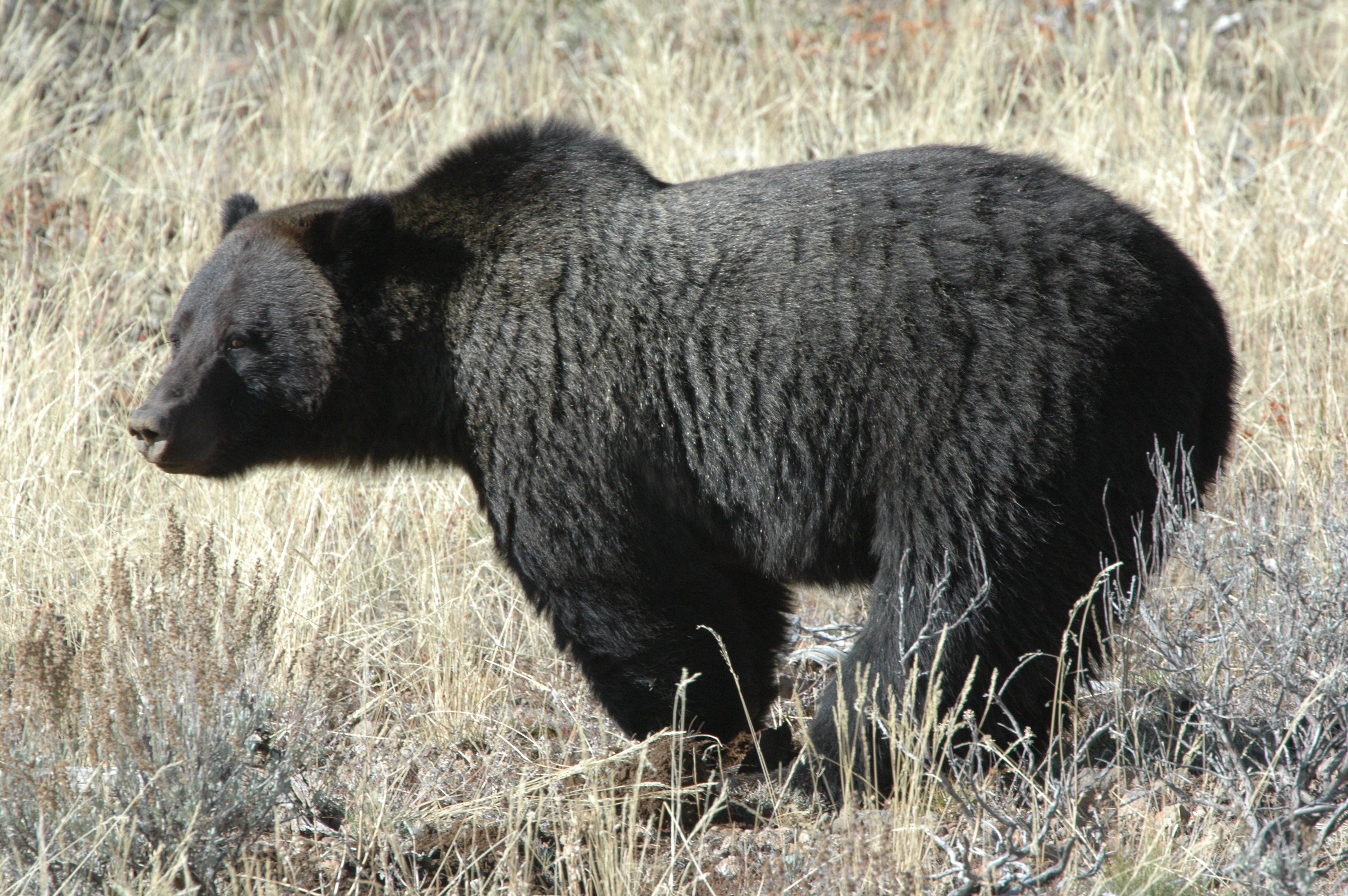
Photo Copyright Jim Robertson
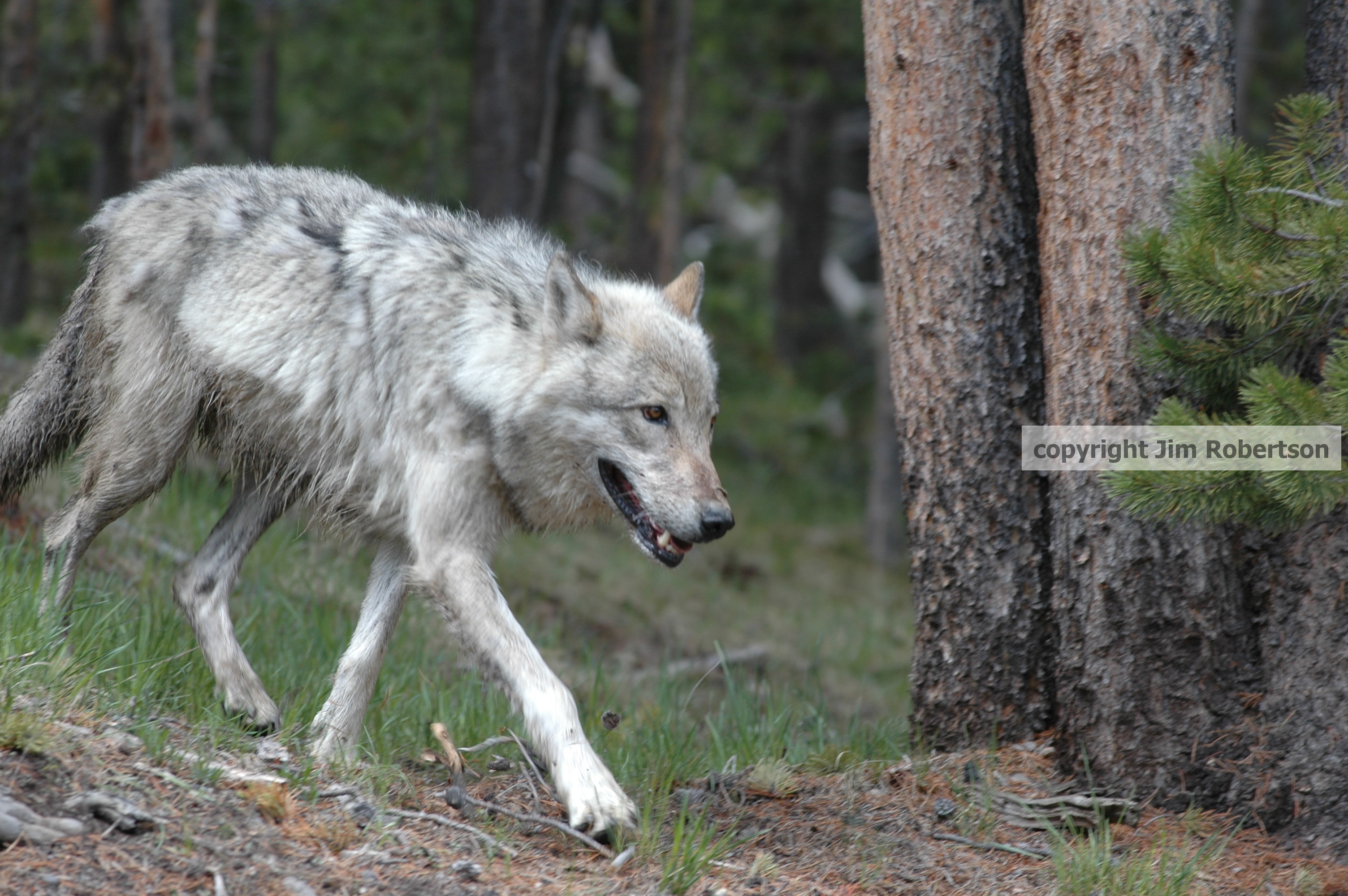
Photo Copyright Jim Robertson

Controversy over wolves and elk was predicted before wolves entered the Lolo area

Idaho Fish and Game uses Chopper to kill 23 wolves in The Lolo

Controversy over wolves and elk was predicted before wolves entered the area-

Idaho Fish and Game reports it has used a helicopter to kill 23 wolves in the north central Idaho area commonly called the Lolo.  This is the latest in a continuing effort (6 forays in 4 years) to reduce the number of wolves there by 70%. In recent years IDF&G has also had very generous hunting rules to kill cougar and bear. Here is the story from the media — Associated Press in the Missoulian. “Idaho Fish and Game kills 23 wolves in Lolo Pass area.

The point of these efforts is to try to bring back the once mighty elk herd that roamed the area. The Lolo became famous for elk in the 1940s through the 80s. The size of the herd stemmed from the regeneration of the great forest fire of 1910 and later fires. Regeneration provided perfect conditions to result in a large number of elk. Elk numbers were legendary and became part of hunting lore. Unfortunately for the elk herd, the burned forest did not only regenerate. It advanced to maturity resembling the conditions when Lewis and Clark traversed the area and almost starved due to lack of game. Predictions were this maturity would cause elk numbers to crash and remain low indefinitely (until the habitat was “reborn”). As predicted, the crash happened. The elk population peaked last in 1989 at an estimated 16,054. Then came a sharp drop, almost a cliff, but by then politics dictated a new and logically impossible explanation for the crash — wolves.

We first drove down the Lochsa River in the spring of 1976. It was new country for me — beautiful, primitive or Wilderness country just beyond Highway 12. There was, however, the interesting distraction of numerous fires burning on the slopes just north of the highway. We learned these fires were set in an effort to forestall the coming decline in elk habitat. We almost hit an elk on the highway and saw quite a few more.

In those days there were plenty of bear and cougar were increasing. Cougar had recently become a protected game animal in Idaho. No one spoke of predation as a factor. That would come later in the mid-1990s. After the first drop in the early 90s, the elk herd took another hit in 1995-6 with a big die-off in a severe winter.  Afterwards the low population recovered but little, and drifted slowly downward. Today (2014) there are only about 2200 elk.

Wolves were reintroduced to Idaho in 1995 and 1996, but none to the Lolo. Wolves eventually made their way north to the Lolo, but their numbers were not significant until at least 5 years later — about the year 2000.copyrighted Hayden wolf walking

We see that the huge drop in elk populations came before the wolves. Therefore, wolves could not have been responsible for the elk herd’s drop off the cliff. They could not have been, at least in this universe where a cause has to come before the effect.

At the time of the big crash, I predicted wolves would, nevertheless, be blamed. Anti-wolf groups were gearing up. They likely figured that many hunters did not have the time sequence of events clearly in mind. Politicians soon joined in and the future path for Idaho Fish and Game was set in political concrete.

From the Lolo, anti-wolf forces then took the misinterpreted data and added to it the big drop in Yellowstone Park’s northern range elk herd. This became standard fare to show how wolves hammered elk. Agencies did not highlight data on the where elk numbers were stable, or even growing inspite of an increasing wolf population, such as the Hells Canyon Elk Zone, the Brownlee Zone, the Weiser River Zone, or finally the Snake River and Pioneer Zones where there are wolves, but “too many elk,” where elk will be reduced to please agricultural interests.  Are these elk somehow less important than deep backcountry elk?

At any rate, the conventional wisdom became elk were almost extinct in Idaho, disinformation that IDF&G did not actively dispute even though it brought great harm to the department’s revenue when hunters shunned the state.

On the contrary, Idaho Fish and Game launched their campaign to nearly rid the Lolo of wolves and other large predators at a high monetary cost. Meanwhile in reality, in their new Idaho Elk Management Plan, Fish and Game reports a statewide elk population of 107,000 animals.

Now Idaho Fish and Game plans to go after wolves even in (especially in) Idaho’s famed Wilderness areas where natural processes are legally supposed to be paramount.

What will happen in the Lolo? After 4 years of a war on native Idaho carnivores, we should expect to be seeing an increase in elk if predators are the reason elk numbers have remained low. This is a logically possible explanation. However, the habitat for elk has not clearly improved. There have been some new forest fires and these burned areas should eventually lead to new habitat. The fires have not yet been extensive, and it isn’t clear that the fire-opened areas are growing elk food instead of the invasive spotted knapweed. This noxious invader was not present back in 1940. In the new elk management plan, weeds are blamed for lower elk numbers in a number of hunting zones in Idaho. Why not the Lolo? It might be politically appropriate to speak only of other zones.

If You Love Wolves, Love Elk and Hate Hunting

Wolf advocates have known for a long time now that ranching is the nemesis of all things natural and wild, and that if you want to help the wolves, boycott beef, leather, wool, lamb and mutton. But lately hunters like those in the Idaho trophy elk hunting industry have been out to prove that they are a wolf’s gravest threat.

Not only do certain Idahoans want to run wolves out of lands cleared for ranching, they want to eliminate them from the wilderness as well.

They see public lands, such as the Lolo National Forest and the Frank Church wilderness area, as private breeding grounds for elk specimens they love to kill, and they’re not willing to share those specimens with the likes of wolves.

Some wolf lovers respond with hatred for the cows and sheep themselves, and disregard for deer and elk. But wolves need elk and deer to survive, therefore wolf lovers should also be elk and deer lovers and wilderness advocates. Ultimately, a true wolf lover is not only anti-cattle and sheep ranching, but also anti-deer, moose, caribou and elk hunting.

Wolf advocates who are indifferent to ungulates and accepting of hunting and ranching will never see an end to wolf hunting or “control.”

Text and Wildlife Photography ©Jim Robertson

Text and Wildlife Photography ©Jim Robertson

Idaho kills 23 wolves from helicopter this month in Lolo Zone

copyrighted Hayden wolf in lodgepoles

This article was sent to me with the comment:

“Bastards aerial gunned down 23 wolves those fuckers 
How is this going to end Jim
I feel so sad
And hateful.”
…To which I answered: It will end when the human race or finally grows a conscience or goes extinct , whichever comes first.

http://www.spokesman.com/blogs/outdoors/2014/feb/28/idaho-kills-23-wolves-month-lolo-zone/

by Rich

Feb. 28, 2014 3:36 p.m.                             •  12 comments

PREDATORS — Idaho Fish and Game, in cooperation with the USDA Wildlife Services, killed 23 gray wolves from a helicopter near the Idaho-Montana border during February in an effort to relieve predation on the struggling elk herds in the remote Lolo Zone.

The agency said in a just-issued media release that the wolf-control effort has been completed.

“The action is consistent with Idaho’s predation management plan for the Lolo elk zone, where predation is the major reason elk population numbers are considerably below management objectives,” the agency said in the release.

In addition to the animals killed in this control action, 17 wolves have been taken by hunters and trappers in the Lolo zone during the 2013-14 season – 7 by hunting and 10 by trapping, officials said.

The trapping season ends March 31, the hunting season ends June 30.

Fish and Game estimates there were 75 -100 wolves in the Lolo zone at the start of the 2013 hunting season with additional animals crossing back and forth between Idaho and Montana and from other Idaho elk zones.  Officials said their goal is to reduce that Lolo zone wolf population by 70 percent.

The Lolo elk population has declined from 16,000 elk in 1989 to roughly 2,100 elk in 2010, when Fish and Game last surveyed the zone.

The Lolo predation management plan is posted on the Fish and Game website.

This is the sixth agency control action taken in Lolo zone during the last four years.  A total of 25 wolves were taken in the previous five actions.

Fish and Game officials say they authorize control actions where wolves are causing conflicts with people or domestic animals, or are a significant factor in prey population declines.  Such control actions are consistent with Idaho’s 2002 Wolf Conservation and Management Plan approved by the U.S. Fish and Wildlife Service and the Idaho Legislature, they say.

More from IFG:

Fish and Game prefers to manage wolf populations using hunters and trappers and only authorizes control actions where harvest has been insufficient to meet management goals.  The Lolo zone is steep, rugged country that is difficult to access, especially in winter.

Restoring the Lolo elk population will require liberal bear, mountain lion, and wolf harvest through hunting and trapping (in the case of wolves), and control actions in addition to improving elk habitat.  The short-term goals in Fish and Game’s 2014 Elk Plan are to stabilize the elk population and begin to help it grow.

Helicopter crews are now capturing and placing radio collars on elk, moose, and wolves in the Lolo zone in order to continue monitoring to see whether prey populations increase in response to regulated wolf hunting, trapping and control actions.