Raccoons Are Couting on Your Call


By Amaroq Weiss
Special to The Bee
Monday, Mar. 17, 2014 – 12:00 am
State officials apparently forgot to tell the wolves that there are no wolves in California.
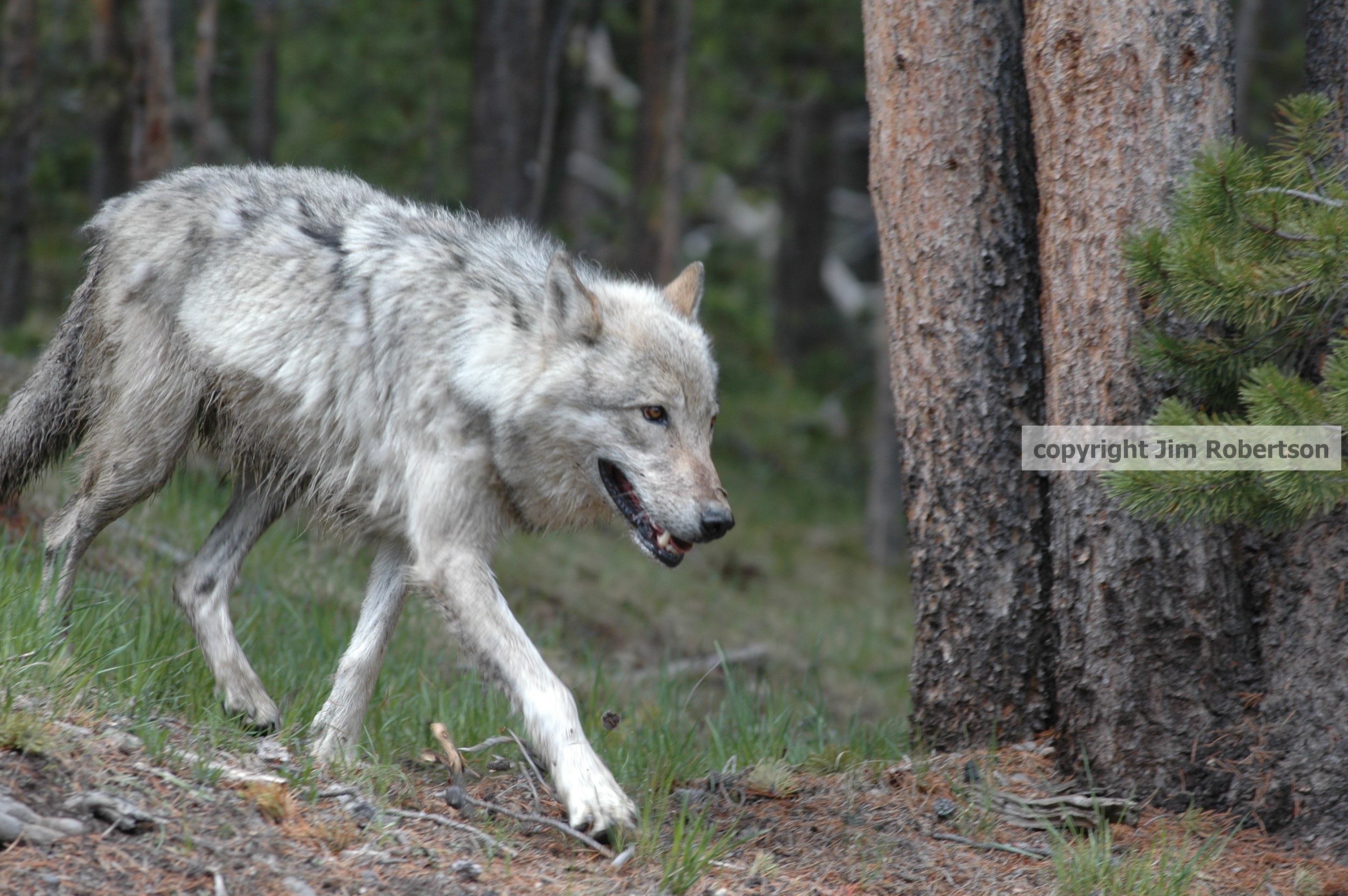
Almost as if on cue, just as top state wildlife managers were assuring us last month there was no need to protect wolves in California simply because there were none here to protect, the state’s most famous wolf returned.
On Feb. 5, the very day California Department of Fish and Wildlife officials were making their final recommendation against awarding state protection to gray wolves, the wolf OR-7 crossed back into California for the second time in 2014.
The repeated return of the wolf who spent 15 months in California before wandering back into Oregon late last year – and who has now made California part of his range for each of the past four years – poses a serious challenge for officials spinning the state narrative on wolves.
With healthy wolf populations continuing to expand in neighboring Oregon in recent months, the reality on the ground confirms what scientists have long been telling us – wolves will return to California.
The question now is whether the California Fish & Game commissioners who have the final word on state wolf protections will follow the science or the politics when they make their ruling this spring.
Not listing the wolf would be to ignore the science and state precedent.
The commission protected the wolverine though none had been confirmed in the state for 50 years. It listed the Guadalupe fur seal, though this species was thought extirpated with only sporadic sightings of individuals at the time of listing. It continued to protect California condors knowing there were none in the wild.
Their decision on wolves should be informed by recent missteps on the federal level after a peer-review panel of national wolf experts revealed last month that the U.S. Fish and Wildlife Service ignored the best available science in proposing to drop Endangered Species Act protections for most wolves in the lower 48 states even though wolves exist in only 5 percent of their historic range.
The unanimous conclusion of the legally required review – that the federal June 2013 wolf-delisting proposal misrepresents the most current science regarding wolf conservation and wolf taxonomy – poses a big scientific problem for the U.S. Fish and Wildlife Service’s national wolf-delisting proposal.
Or at least it should.
And that’s potentially good news, offering hope of continued federal protection that will help gray wolves recover in eastern states as well as states like California, Colorado and Utah where hundreds of thousands of acres of prime uninhabited wolf habitat remains.
But despite the overwhelming evidence of federal politics trumping science, there’s been no sign yet the Obama administration will face the facts and support ongoing Endangered Species Act protections for wolves in most states.
That leaves it up to the California Fish & Game Commission to decide whether it, too, will play politics with wolves. There’s no doubt that wolves will keep coming to California. Oregon wildlife managers announced in recent days that the state wolf population has more than tripled over the past three years to more than 60, with similar growth in Washington.
And just in the past two weeks, fresh wolf tracks have been confirmed on the eastern flank of Mount Hood – only the second time since wolves were reintroduced in the West that a wolf has reached the Oregon Cascades.
The first was OR-7.
Read more here: http://www.sacbee.com/2014/03/17/6238760/viewpoints-or-7s-return-and-expanding.html#storylink=cpy
The U.S. Fish and Wildlife Service (FWS) received feedback from nearly a million citizens and a host of conservation biologists for its decision to remove federal protections from wolves last year, and recently convened a new panel of experts to revisit the issue. This new panel found that the FWS relied upon one faulty paper to make its wrongful decision to strip wolves of their Endangered Species Act protections.
Without their federal safeguards, several states have opened trophy hunting and trapping seasons, and thousands of wolves have been mercilessly slaughtered. Help protect wolves and demand that they be given adequate federal protections to prevent future inhumane acts.
TAKE ACTION Here.
The FWS needs to hear from you before March 27. Please fill out the form below to submit a letter to U.S. Secretary of the Interior Sally Jewell.
Dear Secretary Jewell,
I value wolves and I want to see them protected by the Endangered Species Act. Without these federal safeguards, wolves are pitted against an unfair arsenal of traps, snares, baits, hounds, and shooters who kill them from low-flying aircraft. Killing wolves puts their family packs in disarray and leaves young pups to starve.
Most Americans love wolves, and wolf-watching tourists spend millions of dollars to see them in places like Yellowstone National Park. After receiving pressure from the livestock industry and extreme groups, the government has given up on wolves and literally put them in the crosshairs before they could recover to most of their historic range. It’s quite simple: wolf populations are still recovering, and the best available science does not support their removal from the protections afforded to them by the Endangered Species Act. Please provide adequate protections for this iconic and beautiful species.
Wisconsin Wildlife Ethic-Vote Our Wildlife
MADRAVENSPEAK
Speak Out Against Hunter Federal Land Grab in S.1996 and Ten Sister Bills
“The idea of wilderness needs no defense. It only needs more defenders.” Edward Abbey
Pending federal Senate Bill 1996, the “Bipartisan Sportsmen’s Bill” (http://beta.congress.gov/bill/113th-congress/senate-bill/1996/text?q=%7B%22search%22%3A%5B%22S.1996+Bipartisan+sportsmen%27s+%22%5D%7D ) and its 10 deadly companion bills (http://beta.congress.gov/bill/113th-congress/senate-bill/1996/related-bills?q=%7B%22search%22%3A%5B%22S.1996+Bipartisan+sportsmen%27s+%22%5D%7D ) go beyond eviscerating the 1964 Wilderness Act, to take over most federal lands for violence. http://www.peopleforwesternheritage.com/WildernessActSum.pdf
The House version of the bill, H.R. 3590, passed the U.S. House of Representatives with all 227 Republicans and 41 Democrats ( 268 total), voting for, including Ron Kind, Wisconsin Democrat, co-sponsoring the bill. Gwen Moore and Mark Pocan were among 154 Democrats voting against.
An 8-year process culminated in Lyndon Johnson signing the Wilderness Act into law on September 3, 1964. A rare visionary bill, it passed the house and senate with overwhelming bipartisan…
View original post 759 more words
[What the hell do they mean “Now?” We’ve known about the mass extinction of megafauna known as the American Blitzkrieg for decades…]
Robin McKie, science editor
They were some of the strangest animals to walk the Earth: wombats as big as hippos, sloths larger than bears, four-tusked elephants, and an armadillo that would have dwarfed a VW Beetle. They flourished for millions of years, then vanished from our planet just as humans emerged from their African homeland.
It is one of palaeontology’s most intriguing mysteries and will form the core of a conference at Oxford University this week when delegates will debate whether climate change or human hunters killed off the planet’s lost megafauna, as these extinct giants are known.
“Creatures like megatherium, the giant sloth, and the glyptodon, a car-sized species of armadillo, disappeared in North and South America about 10,000 years ago, when there were major changes to climates – which some scientists believe triggered their extinctions,” said Yadvinder Malhi, professor of ecosystem science at Oxford, one of the organisers of the conference, Megafauna and Ecosystem Function.
“However, it is also the case that tribes of modern humans were moving into these creatures’ territories at these times – and many of us believe it is too much of a coincidence that this happened just as these animals vanished. These creatures had endured millions of years of climate change before then, after all. However, this was the first time they had encountered humans.”
Modern humans emerged from Africa around 70,000 years ago, travelled across Asia and reached Australia 50,000 years ago, a time that coincides with a wave of extinctions of creatures there, including the diprotodon, a species of wombat that grew to the size of a modern hippopotamus. By about 14,000 years ago, humans had reached North America by crossing the land bridge that then linked Siberia and Alaska. Then they headed south.
By 10,000 years ago, Homo sapiens had conquered North and South America at a time that coincided with major megafauna extinctions, including those of the giant sloth and the glyptodon.
“We think of Africa and south-east Asia – with their lions, elephants and rhinos – as the main home of large animals today, but until very recently in our planet’s history, huge creatures thrived in Australia, North America and South America as well,” said Professor Adrian Lister of the Natural History Museum in London. “The question is: why did they disappear in the new world but survive in the old world?
“Some believe it is because large animals in Africa and south-east Asia learned to become wary of human beings and decided to avoid them at all costs. However, I also think climate change may have been involved in the Americas and Australia and that humans only finished off these big animals when they were already weakened by loss of habitats and other climate-related problems.”
The idea that humans were involved in any way in eradicating dozens of species of giant animal when we were still hunter-gatherers has important implications in any case. It was thought, until relatively recently, that it was only when humans invented agriculture several thousand years ago that our species’ relationship with the natural world become unbalanced. Until then, humans had a close affinity with nature. But if ancient hunter-gatherers played a part in wiping out these species of huge animals as long as 50,000 years ago, humanity’s supposed innate harmony with the living world appears misplaced.
More to the point, humanity is still paying the price for the disappearance of the megafauna of the Americas and Australia, the Oxford conference will hear. “There is now a lot of evidence to suggest that large herbivores like gomphotheres, a family of elephant-like animals that went extinct in South America around 9,000 years, played a key role in spreading nutrition in areas like the Amazon. They would eat fruit in the forest, including avocados, and their excrement would then fertilise other areas. That no longer happens and places like the Amazon are today affected by low nutrition as a result,” Malhi said.
Another example is provided by the giant wombat, the diprotodon, which some scientists have argued browsed bush across Australia and kept biomass levels very low. When the diprotodon vanished, plants and shrubs across the outback grew unhindered. The result was major bush fires which, archaeologists have discovered, became a serious problem just after the giant wombat disappeared from Australia.
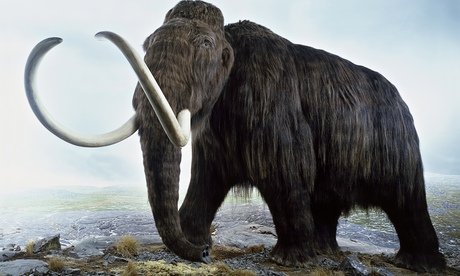
Diprotodon, the largest known marsupial, which used to roam Australia. Photograph: AlamySimilarly, creatures such as the mammoth played a key role in trampling tundra and maintaining healthy grasslands in high latitudes such as Siberia. When the mammoth became extinct, the tundra took over to the detriment of the landscape.
“It is now becoming clear that lots of our understanding of contemporary ecology is incomplete because it does not take into account that ecosystems were adopted to having giant animals like the mammoth or the diprotodon,” added Malhi. “These are not natural systems today because they are missing key components to which most plants had adopted.”
This awareness has led some scientists to propose moving populations of the planet’s surviving large animals into regions where they could help restore the ecologies to their previous healthy conditions. One such experiment is being carried out by the ecologist Sergey Zimov at a nature reserve called Pleistocene Park in Siberia. Zimov has reintroduced musk ox, moose and other large animals and is attempting to find out if their browsing will restore the landscape to its previous healthy, grassy state. Zimov is also scheduled to speak at the Oxford conference. Other researchers go even further and have proposed bringing extinct megafauna back to life. For example, several scientists have suggested that it could be possible to clone a mammoth from frozen remains found in Siberia using an Asian elephant as a surrogate mother.
Lister was cautious about the prospects of such work, however. “I think people greatly underestimate the incredible difficulties involved. The mammoth corpses we have found are thousands of years old and we have yet to find one that possesses an entire, intact cell with a nucleus. Without that, you are going to find it very difficult to bring an animal like a mammoth back to life.”
In fact, the real lesson from the fate of the Earth’s megafauna is to appreciate how important surviving species are to our planet. Oxford University ecologist Emily Read, a conference organiser, said: “We need to protect the megafauna that we have. More than 20,000 elephants were killed in 2012 for ivory and rhino numbers are declining because their horns are traded, illegally, at more than the price of gold. It’s not just the cultural value of these large animals that we need to think about, but the fact that removing them affects the whole ecosystem.”
In case you haven’t seen this…
http://www.wtvideo.com/video/1202/man:-the-cruelty-of-man-represented-in-a-cartoon

Hope you’ve enjoyed civilized life, folks. Because a new study sponsored by NASA’s Goddard Space Flight Center says the world’s industrial societies are poised to collapse under the weight of their own unsustainable appetites for resources. There goes the weekend . . . and everything after it for the rest of our lives.
The research article appears in the peer-reviewed scientific journal Ecological Economics, but Dr. Nafeez Ahmed, executive director of the Institute for Policy Research & Development, has a more understandable (but no less harrowing) summary over at The Guardian. Either way, the news isn’t good—as the researchers point out, history doesn’t seem to hold out any favor for advanced societies.
The fall of the Roman Empire, and the equally (if not more) advanced Han, Mauryan, and Gupta Empires, as well as so many advanced Mesopotamian Empires, are all testimony to the fact that advanced, sophisticated, complex, and creative civilizations can be both fragile and impermanent.
Who’s to blame? You. Me. Everyone walking around outside your window. Even the technology we invented to save us from ourselves is contributing to our decline.
Technological change can raise the efficiency of resource use, but it also tends to raise both per capita resource consumption and the scale of resource extraction, so that, absent policy effects, the increases in consumption often compensate for the increased efficiency of resource use.
Is there a way out? Of course. But you’re probably not gonna like it. Dr. Ahmed sums up the researchers’ suggestions:
The two key solutions are to reduce economic inequality so as to ensure fairer distribution of resources, and to dramatically reduce resource consumption by relying on less intensive renewable resources and reducing population growth.
Which is just as difficult and improbable as it sounds.
Seriously, you should read the whole rundown of what the research says. It’s eye-opening, and a serious call to action—if the crushing bleakness of what we’ve done to ourselves hasn’t already doomed you to abandon all hope. Here, watch a funny video to make you feel better. [The Guardian]
[I guess I’ve always know humans were bad for the planet. I wrote this back in 1979.]
We’ve broken all
of Mother Nature’s laws.
In her perfection
we create the flaws.
We kick her, ungrateful,
like a child in the womb.
We could see the truth,
but avert our eyes.
Rule her like gods,
living shallow lives
on our self-appointed throne
we’re the beasts out of tune.
Out of tune,
nearly out of room.
Multiplying fast,
We’ll have to face Her soon.
She doesn’t complain
when we kick in the womb,
when we grow and grow
Take up so much room.
Her maternal love is our sanctuary.
But unless we love her in return
(as a spoiled child,
we must mature)
the kicks may cause her to miscarry.
Beasts out of tune,
the love must come soon.