Breeding Ourselves To Extinction

Exposing the Big Game's avatarExposing the Big Game

1451324_650954518277931_1616731734_n

Breeding Ourselves To Extinction

November 19, 2014

Overpopulation Fuels Climate Change

Breeding Ourselves To Extinction

by DADY CHERY & GILBERT MERCIER

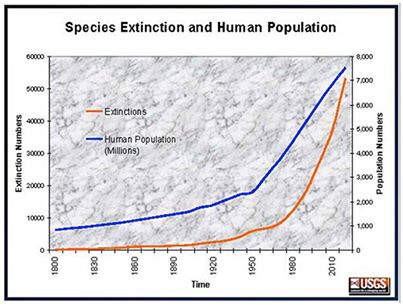
The United Nations has held countless major meetings on climate change, at great consumption of fuel, that have amounted to nothing but reports and promises of more talk. After many of these alarming reports, the G20 leaders, in November 2014, decided to throw several billions of dollars at the problem. Despite climate-change denial becoming incorrect, as long as a discussion of overpopulation, in the context of climate-change mitigation, remains a taboo, we may be sure that nothing will be achieved. If we are serious about reducing our carbon footprint, we must rethink the flawed capitalist concept of unending economic growth and consider reducing the number of human feet in the world. Overpopulation must be discussed in the context of climate change. A major impediment to this discussion has been…

View original post 1,156 more words

Climate Change Is Actually Helping Whale Hunters — Here’s How

Exposing the Big Game's avatarExposing the Big Game

Climate Change Is Actually Helping Whale Hunters — Here's HowClimate Change Is Actually Helping Whale Hunters — Here's How

Photo by Franck Robichon/EPA

Tipping Point

Climate Change Is Actually Helping Whale Hunters — Here’s How

By Matt Smith

September 4, 2015 | 8:30 am

VICE News is closely tracking global environmental change. Check out the Tipping Point blog here.

A ship carrying endangered whale meat dodged anti-whaling activists by heading to Japan via the Russian Arctic, a passage conservationists say illustrates another threat posed by a warming climate.

The 260-foot Winter Bay put into Osaka at the end of August with an estimated 1,800 tons of meat from fin whales caught by an Iceland-based company. The conservation group Sea Shepherd, which tries to disrupt whaling operations, followed the Winter Bay as far as the Norwegian port of Tromsø, Sea Shepherd founder Paul Watson told VICE News.

“The Winter Bay stayed in Tromsø until mid-August before leaving,” Watson said. “We couldn’t really do much, because the Norwegians dispatched two of…

View original post 922 more words

Animal rights advocates condemn Norway‘s whale hunt

http://www.koreaherald.com/view.php?ud=20170405000855

2017-04-05

Korean animal rights activists called on Norway to stop its whale hunt in a rally in Seoul timed with the start of its annual whaling season.

Members of the coalition comprising the Coexistence of Animal Rights on Earth, the Korean Animal Welfare Association and the Hotpink Dolphins staged the protest in front of the Norwegian Embassy in Seoul.

A minke whale after it has been caught (Yonhap)

The rally came after the North European country’s six-month whaling season began on Saturday with a quota raised from 880 last year to 999.

They challenged Norway’s assertion that the minke whale is not an endangered species with an estimated 100,000 living off the Norwegian coast where the hunt is due to take place, adding “the number of the animal includes that of minke whales returning to the North Atlantic and the Arctic Ocean in spring.”

“That many minke whales do not inhabit waters off Norway all the time,” they said. “Ninety percent of those whales slaughtered by Norway every year are female and most of them are pregnant.”

They also said the “No Way, Norway” petition calling for the end of Norway’s whale slaughter has garnered more than 2.6 million signatories.

During Wednesday’s rally, the coalition revealed data from the International Whaling Commission that says about 140,000 minke whales have been hunted in the North Atlantic since the 1940s, 120,000 of which were killed by Norway. (Yonhap)

Border walls are bad for wildlife

Exposing the Big Game's avatarExposing the Big Game

November 1, 2016

In 1996, Botswana erected an 83-mile fence along its border with Namibia. The goal was to protect domestic cattle from the highly contagious foot-and-mouth disease. Within a year, though, the barrier had snared five giraffes, one elephant, several antelopes and numerous other wild animals.

In the 20 years since, border barriers have proliferated to unprecedented levels — and become one of presidential candidate Donald Trump’s favorite talking points. But while attention has focused on the human consequences of a more bordered world, the effect on wildlife is also dramatic.

Trump has proposed sealing off the U.S.-Mexico frontier with a “great” expansion of the current wall, which spans about 650 miles of the…

View original post 1,024 more words

War and the Effect on Wildlife

http://www.ourendangeredworld.com/war-effect-wildlife/

By Jenny Griffin

Human conflict throughout the world can often result in wars that cause large-scale economic and social disruption, as well as immense suffering and loss of human life. But the impact is not limited to the effect on human populations living in the war-zone.
Its impact spreads broader, often impacting the natural environment and the wildlife that inhabits these areas, ultimately with dire consequences for wildlife conservation, biodiversity, and for the livelihoods of human communities that depend on these natural resources.

The negative impact that war has on the environment and wildlife is typically fuelled by a number of factors, including:

    •A breakdown in law and order, together with disruption of agricultural production and economic trade leads to a lack of income opportunities as a result;
    •A growing dependence on natural resources and wildlife (eg. wood for cooking, wildlife for food) due to lack of other options;
    •An increase in human movement through natural protected areas as a result of a mass exodus of refugees fleeing war torn areas or an insurgency of militants, all of whom require food and shelter;
    •An abundance of trigger happy militia armed with high powered automatic weapons and firearms makes unarmed wildlife an easy target and that much more vulnerable.

War can impact wildlife in several ways:
1) by destroying vital habitat that wildlife needs to survive;
2) by over-exploiting natural resources, including wildlife; and
3) pollution can have both short-term and long-term impacts on the environment and wildlife.

Habitat Destruction

Natural vegetation is often cleared to allow troops to either move through an area more easily or to improve visibility so that they are able to detect approaching enemy forces. Masses of displaced people living in temporary settlements can result in erosion and deforestation. Wildlife reserves and other natural protected areas are particularly vulnerable as they are very often situated on international borders and offer an abundance of natural resources and cover. Habitat destruction can threaten vulnerable species – especially those with limited ranges – and even cause them to become locally extinct.

Over-Exploitation of Natural Resources

Deforestation

Deforestation by World Bank Photo Collection

Over-exploitation of natural resources can occur as a result of subsistence use of resources or commercial exploitation of resources. Wars typically leave countries in a state of upheaval and as a result, local rural communities are very often unable to cultivate food crops during wartime, having to turn to wild plant foods and bush meat as an alternative food source to meet their nutritional needs in order to survive. Displaced people often harvest wildlife while they are living away from home, but may continue to do so after they return to their communities, as other sources of food may still be non-existent for some time.

In combat areas hunting of wildlife generally occurs on a grand scale – with larger animals be targeted more frequently – in order to provide food for military troops. As many large animals, such as the critically endangered mountain gorilla, have complex social hierarchies and slow reproductive rates, when animals are killed at a rate that exceeds their ability to reproduce it can devastate wildlife populations.

Commercial exploitation and illegal trade of natural resources such as diamonds and timber, and poached ivory and rhino horn is often undertaken to fund military operations, weapons and ammunition. Exploiting commercially lucrative resources with a readily available source of weapons fuels a vicious cycle that allows armed militia to control the area, natural resources and their network of illegal trade operations. The proliferation in weapons, notably high-powered automatic rifles that are far more effective at killing larger game than traditional spears, often results in a rapid escalation in the slaughtering of wildlife for the bushmeat trade.

Pollution

The environment can be polluted directly as a result of conflict, or may occur indirectly as a result of human activities in sensitive areas. The Persian Gulf War saw massive amounts of oil being deliberately dumped into Persian Gulf in efforts to prevent troops from coming ashore. As the war progressed, oil wells in Kuwait were set alight by fleeing Iraqi soldiers. The resulting oil pollution and atmospheric pollution had severe environmental consequences, severely impacting local wildlife, especially marine life and seabirds. Spraying of the herbicide Agent Orange in Indochina in efforts to defoliate vegetation during the Vietnam War resulted in toxic pollutants contaminating the vegetation, soil and water, with dire consequences for both the environment and the wildlife and human populations living in these areas.

Pollution can also occur indirectly as a result of war. For example, surface water and ground water sources may become contaminated when large groups of displaced people are forced to settle in temporary refugee camps that lack adequate sanitation and where waste is allowed to accumulate due to lack of services. This can result in nutrient enrichment of water bodies, leading to low oxygen levels and fish die-offs, and can also cause disease outbreaks to spread rapidly amongst humans living in cramped, unsanitary conditions, with little or no access to medical care or medicines. Some diseases can also be passed on to wildlife with devastating effects.

[Thanks to Rosemary for the link,]

Global Coral Bleaching Update — Pacific Corals, Seychelles in Danger as Great Barrier Reef Cools

robertscribbler's avatarrobertscribbler

The last global coral bleaching event that inflicted a degree of damage comparable to the one we are now experiencing occurred during 1997 through 1999. Back then, global annual surface temperatures hit a peak of 0.85 degrees Celsius hotter than 1880s averages and ocean temperatures in many regions hit a range of 29-30 C or more. This warming-spurred event generated never-before seen wreckage among the world’s corals.

(Pacific Ocean sea surface temperatures are again warming as the Equatorial region progresses toward a predicted 2017 El Nino. Sea surface temperature anomalies of 1-2 C above average are now very widespread with embedded hot spots that contain 2-4 C above average temperatures [see above map]. These anomalies are enough to continue a global coral bleaching event that has now lasted for four years. Image source: Earth Nullschool.)

The 2014 to 2017 Global Coral Bleaching Event

In 2014, annual average…

View original post 719 more words

10 Animals You Should Love, Not Eat

Exposing the Big Game's avatarExposing the Big Game

10 Animals You Should Love, Not Eat

Most people like to think of themselves as animal lovers. We think negatively about people who say they don’t like animals. I always called myself an animal lover yet I ate animals. I wasn’t lying. I’m pretty sure that if I had to personally choose the animal that would be slaughtered for my dinner and see her killed with my own eyes, I would have opted for salad. The problem is that most of us don’t see the billions of animals that are bred, held captive and killed for our food. They are a nameless, faceless mass that are out of sight and out of mind. What happens when we stop to look and think about the animals we eat as individual beings who feel pain and joy, who love and mourn, who cherish and lose families, who die yet…

View original post 2,437 more words

Tuesday Is Soylent Green Day Again

Exposing the Big Game's avatarExposing the Big Game

Last night I watched the timeless 1973 movie, Soylent Green, again and was again impressed (unfavorably) by how much the futuristic world that it depicted mirrored the world we’re headed for now. The temperature of the overcrowded New York of the future was a constant 90 degrees; the oceans were dying (presumably from overfishing and pollution, they hadn’t heard of acidification at the time); and the world was running out of food..

Spoiler Alert:

Set in 2022, the film opens with a slide show of earlier eras, back when the Earth was covered with forests and open fields, and there were only a few scattered settlements of people who travelled in horse-drawn wagons.

As the images pass quickly by, we see the first automobiles (tail pipes spewing toxic climate-changing carbon gases), followed by a massive blacktop parking lot jam packed with Model Ts. The pictures begin to flash almost more rapidly than we can focus, but we…

View original post 429 more words

The number of new flu viruses is increasing, and could lead to a pandemic

https://medicalxpress.com/news/2017-04-flu-viruses-pandemic.html

April 7, 2017 by C Raina Macintyre, Abrar Ahmad Chughtai, And Chau Bui, The Conversation
Flu virus
Flu virus

Influenza has affected humans for over 6,000 years, causing pandemics at regular intervals. During the 1918 Spanish flu, it was thought to be a bacteria, until an American physician Richard Shope identified the virus in 1931.

So how is it this pathogen has managed to stay around for so long, and why haven’t we beaten it yet? The answer is that influenza is a that changes rapidly and regularly.

New flu vaccines are required every year due to these changes and mutations of the virus. While all flu viruses which infect humans are similar, a (which is easily transmitted between humans) is significant because humans have no immunity to it, and so are vulnerable to severe infection and death. Seasonal viruses which we see year after year were once , but humans have now been exposed to these viruses and have some background immunity to them.

We have found that the last decade has seen an acceleration in the number of infecting humans.

Why are there so many flu strains today?

Around 100 years ago the world experienced the Spanish flu pandemic, and it took another 39 years for a novel influenza virus to emerge. It took a decade after that for the next one. Since 2011, however, we have seen seven novel and variant strains emerge. This is a very large increase compared to the past.

The reasons for this increase are unknown, but there could be many. One reason could be better diagnostics and testing; another could be changes in poultry farming and animal management practices, since influenza is a virus that affects humans, birds and many animal species; as well as changes in climate, urbanisation and other ecological influences.

But none of these factors have changed at the same rate as the emergence of new viruses has escalated. This warrants new research to unpack the relative contributions of all the different possible factors.

Another change is advances in genetic engineering tools, which make it possible to edit the genome of any living organism, including viruses. The possibility of a lab accident or deliberate release of engineered flu viruses is real. Experiments to engineer influenza viruses have been published since 2011, and remain controversial for the possible risk, compared to the relative possible benefit.

With so many more novel influenza viruses emerging and circulating, the probability of genetic mutation and emergence of a new pandemic strain is higher today than any time in the past. It’s a matter of when, not if.

What can we do to prevent a pandemic?

There’s actually already a lot being done to plan for and prevent another flu pandemic. This is both in terms of pharmaceutical drugs and vaccines, and non-pharmaceutical interventions like personal protective equipment, quarantine, border control and banning of mass gatherings in the event of an outbreak.

National pandemic plans outline interventions and the best sequence of different interventions, as well as prioritisation of these interventions. Most countries also conduct pandemic hypotheticals to test their systems and responses. But the best laid plans do not account for every possibility, and we usually encounter the unexpected.

For example, during the 2009 swine flu pandemic, the pandemic phases outlined in the Australian pandemic plan were revised to better fit the emerging situation. This highlights the need to be able to rapidly respond to changing circumstances and change strategies when required.

What about vaccines?

Vaccination is the most talked about strategy but producing a matched vaccine takes three to six months at a minimum. The pandemic would be expected to peak within about two months, so vaccines can’t be relied on until after the peak of the pandemic. Instead, we need to use antiviral medications, social distancing measures, personal protective equipment such as masks and gloves, isolation and quarantine to contain the pandemic.

Influenza vaccines are specific to strains of flu, and can be used for humans, birds or animals. However, they will only work against the specific strains the vaccine was designed for. There are no vaccines for many of the novel strains emerging all over the world.

It’s almost impossible to anticipate which specific virus will cause the next pandemic. At best we can prepare pre-pandemic vaccines which require an educated guess as to which virus may mutate into a pandemic strain, and make a vaccine against that.

A strain-specific pandemic planning strategy like this is not the best approach, as illustrated by the swine flu pandemic in 2009. From 2005 until 2009, the avian flu virus H5N1 ( are defined and named by proteins on their surface, haemagglutinin – H, and neuraminidase – N) was the major cause of bird flu, so the world focused heavily on preparing for a H5N1 pandemic and developing a H5 pre-pandemic .

However, the virus that caused the 2009 pandemic was H1N1, a completely different virus, so the pre- vaccines were no use.

A better approach is to try to prevent the emergence of new virus in birds and animals, and mitigate the risks once they emerge. This involves control strategies in both animal and human health sectors, surveillance and prevention efforts.

A targeted approach in global hotspots such as China, the source of the H7N9 influenza virus, and Egypt, which is experiencing a surge in H5N1 influenza, will also help.

Hotspots are generally where humans and livestock mix in close proximity, such as backyard poultry farms and live bird markets. Asia has historically been such a site. However, we sometimes see unusual outbreaks such as the bird flu outbreak in turkey farms in the USA in 2015.

Culling of birds is a commonly used method to control the risk once infection is detected. As are measures such as regulation of live bird markets and of the poultry and livestock industries. Excellent surveillance, rapid intelligence and picking up potential pandemics as they arise can make all the difference. We probably had a near miss pandemic strain arising in Indonesia in 2006, but the remote location and early detection mitigated the risk.

Explore further: Scientists ‘must not become complacent’ when assessing pandemic threat from flu viruses

A population bomb is killing us

Exposing the Big Game's avatarExposing the Big Game

“…It’s ‘impossible to feed 10 billion people.’ We don’t need more farmers, we need fewer small mouths to feed.”…

[I would add that the root problem responsible for overpopulation is human arrogance and the scourge of speciesism. Once we address that, we can move beyond mass-denial and take a serious, scientific look at this planet’s carrying capacity in relation to human overpopulation.]

From:

Climate change isn’t the problem. A population bomb is killing us

Humans are doing nothing to stop their own self-destruction

By Paul B Farrell

…Population is out of control. That’s the world’s No. 1 problem. Yet we’re trapped in mass denial. Nobody’s dealing with the world’s biggest problem. Listen:

    • Scientific American says global population growth is “the most overlooked and essential strategy for achieving long-term balance with the environment.” By 2050 world population will explode from today’s 7 billion to 10 billion, with 1.4 billion each in India…

    View original post 577 more words