How the Trump budget undercuts security risks posed by pandemics

http://theconversation.com/how-the-trump-budget-undercuts-security-risks-posed-by-pandemics-75281

April 4, 2017 9.09pm EDT
Women in rural Malawi, outside an AIDS hospital. AIDS was the first of the ‘new’ pandemic threats, after bird flu. Author provided. , Author provided

President Trump proposed a US$54 billion military budget increase to solidify the security of our nation. However, the government also recognizes pandemic threats as an issue of national security – one that knows no borders.

In the last four years, we have faced the Ebola epidemic – contained after significant loss of life – and Zika, which is still not contained. Collectively, we will feel these effects for a generation, while children born with Zika-related defects and their families will feel the effects every day of their lives.

The U.S. is a leading member of the Global Health Security Agenda (GHSA), a growing international partnership created to respond to infectious disease threats. Yet the Trump budget slashes funding for the very agencies mandated to prevent pandemics. Take, for example, the 37 percent cut to the $50 billion State Department and United States Agency for International Development (USAID) budget, more than one-third of which targets global health security. As a global health researcher, I think this reveals a grave lack of understanding of the nuances and complexity of this national security issue.

The way the military protects America’s welfare is straightforward. The way that other U.S. agencies prevent pandemics is less understood. That it’s complicated shouldn’t stop our commitment to it.

Threats are closer than we realize

There are imminent threats that aren’t in the realm of hypothetical. Here’s an example: In January of this year, the government issued a travel warning in response to an active outbreak of H7N9 bird flu in China.

This strain of avian flu is worrisome because a few small mutations would allow it to spread from person to person. This could be the next pandemic to sweep the globe.

Historically speaking, we are overdue for a bird flu disaster. They have been documented over the past two centuries and appear every 40 years on average; the last one was in 1969.

Officials in southwest France ordered the slaughter of more than 600,000 ducks in February 2017 after an outbreak of bird flu. Bob Edme/AP

While preventing pandemics is expensive, it’s infinitely cheaper than the costs of actual pandemics. A report by the World Bank found a bird flu pandemic comparable to those from the last century could trigger a major global recession, with a fall in global GDP between 0.7 percent and 4.8 percent. While that might not sound like much, it represents $833 billion to $5.7 trillion.

Billions have already been spent on pandemics this century. As an epidemiologist who worked for one U.S. pandemic prevention initiative sponsored by USAID, I don’t question the amounts being spent. What I do question is the return on investment using current unproven strategies that do nothing to address the urgency of the situation right now.

National security, science and public health

Since the 1970s, when USAID recognized that improved population health was integral to development goals, the number of infectious disease outbreaks has tripled. In response, USAID created the Emerging Pandemic Threats program, which focuses on discovering new animal viruses that may pose threats to human health.

However, it’s a big jump to identifying an animal virus with pathogenic potential to one that actually “spills over” and infects human populations. Instead of being an applied public health program with immediate potential to prevent pandemics, virus discovery is traditional scientific research. This research also does not address other pathogens that already pose pandemic threat, such as Zika, which is mosquito-borne, or superbugs (i.e., multidrug resistant bacteria). It turns out that the real problem to preventing pandemics is people.

Limited knowledge of human practices that increase risk of infection and of the diseases that pose the greatest risk represent the fundamental challenges to prevention. In 2015, the World Health Organization developed a list of emerging diseases likely to cause severe outbreaks in the near future: Crimean Congo hemorrhagic fever, Ebola virus disease and Marburg, Lassa fever, MERS and SARS coronavirus diseases, Nipah and Rift Valley fever. Three “serious” backup diseases didn’t make the final cut: chikungunya, severe fever with thrombocytopaenia syndrome and Zika (avian flu is treated separately). As history has shown us with Zika, we have a pretty good sense of what we’re up against in terms of disease.

Is there a better way to prevent pandemics?

Tools exist to determine which high-risk diseases are already circulating in human populations. Ebola provides a useful example. Decades before an outbreak was reported, a study found that Liberians had been exposed to Ebola – and survived.

Although there are few studies like this, Liberia is not a unique example. Scientists in Gabon documented Ebola exposure years prior to its first reported outbreak. Disease exposure may predict countries at highest risk for future outbreaks, but provides no information about how people are infected.

That has changed. New tools exist which measure both the diseases that are circulating and the behaviors that put people at risk of catching them. In fact, this approach, which integrates biological and behavioral surveillance, is already familiar to other successful USAID programs.

The closer we come to identifying where an outbreak will occur and which disease will be the likely culprit, the faster we can prioritize areas of highest risk. Targeted prevention strategies include developing diagnostics and vaccines in enough quantity to inoculate the population at immediate risk.

Since outbreaks often happen in remote areas with limited health infrastructure, the ability to vaccinate and detect disease will involve health systems strengthening – again beginning with regions at highest risk of known outbreak potential.

On March 3, the government stated increased concern regarding upgraded H7N9 bird flu. Even if this is not the next pandemic, there is always another threat waiting in the wings. We have the tools to provide a formidable, cost-effective first pass at pandemic prevention. It’s time to get the most bang for the buck we still have left – and to protect our national security on all fronts.

New Study: What’s Scarier than the Permian Extinction? Burn All the Fossil Fuels to Find Out.

robertscribbler's avatarrobertscribbler

If we burn all the fossil fuels “not only will the resultant climate change be faster than anything Earth has seen for millions of years, the climate that will exist is likely to have no natural counterpart, as far as we can tell, in at least the last 420 million years.”  — Gavin Foster, Professor of Isotope Geochemistry at the University of Southampton

*****

Back in the 1780s as coal-fired smoke stacks sprouted across England to belch their black soot into the hitherto virgin skies of Earth, it’s likely we had not an inkling of the destruction they were ultimately capable of unleashing:

(Scientists have now found that burning all the fossil fuels through about 2250 could result in conditions that are worse than those that occurred during the Permian Extinction of 252 million years ago. Video source: Catastrophe — The Permian Extinction.)

Svante Arrhenius, by the…

View original post 762 more words

3 tiger cubs destined for zoo in Syria rescued in Lebanon

http://www.news-sentinel.com/article/20170403/AP/304039948&profile=1002

Monday, April 03, 2017 09:07 am
BEIRUT – Three Siberian tiger cubs destined for a zoo in war-torn Syria were rescued by a Lebanese animal rights group after being trapped in an unmarked, maggot-infested crate in Beirut’s airport for almost a week.

The tigers, which were being transported from Ukraine, arrived at the Beirut airport on March 7, inside a ventilated 0.3-cubic-meter (10.6-cubic feet) crate, where they could not stand or move and were forced to urinate and defecate on each other, according to Animals Lebanon.

The animal rights group, which had been alerted to the shipment ultimately bound for Samer al-Husainawi Zoo in Damascus before it landed in Beirut, petitioned a Lebanese judge to release the tigers into their care the following week, Executive Director Jason Mier said.

The judge responded by issuing an order demanding the tigers be released, citing concerns for their health and welfare, the group said.

“Once we finally got them out of the box, the box had dozens and dozens of maggots crawling around in it. There were maggots all over the back thighs of the animals and around their anus,” Mier said. The tigers also suffered from dehydration, according to the group.

The tigers were sent from the zoo in Mykolaev, Ukraine. Volodymyr Topchiy, that zoo’s director, said the deal to send them abroad was entirely legal.

“They passed customs clearance, we have customs declarations,” he said, adding that the tiger cubs were exchanged for some wildcats.

Topchiy believes problems with paperwork and bureaucracy stopped their transfer to Syria. “On the transportation boxes there were no ‘up’ or down’ signs,” he said.

He said the three tiger cubs were in one box, not separate, and the zoo dealer was stopped because of these reasons. “Authorities wanted to confiscate (the cubs),” he said.

Mier said the crate arrived with no markings and no documents, and did not meet IATA regulations nor those of CITES, the Convention on International Trade in Endangered Species, despite the fact that the four-month-old Siberian tigers fall under that category.

This is not the first deal that the Mykolaev zoo has made with its Syrian counterpart, and Topchiy said he is considering sending more tiger cubs there.

Lebanon enacted an animal protection and welfare law in 2015, granting animals legal rights and allowing for the regulation and monitoring of all the industries and establishments that use or sell animals to ensure that the animals are not placed in abusive environments.

The country is also a signatory to a number of international conventions regarding animal welfare, such as CITES, the main legislation against wildlife trafficking.

In August 2015, the death of a privately owned lion cub as a result of severe malnourishment prompted the Agriculture Ministry to clamp down on the sale and ownership of big cats.

In July, the ministry issued a decree to stop the trafficking of big cats and forcing zoos to register formally.

Animal rights in the Trump Era: protecting Alaskan wildlife

With so much news coming from Washington DC these days, it’s hard to keep up with everything. One story that caught my eye and disgusts me to no end is a bill Trump recently signed into law.

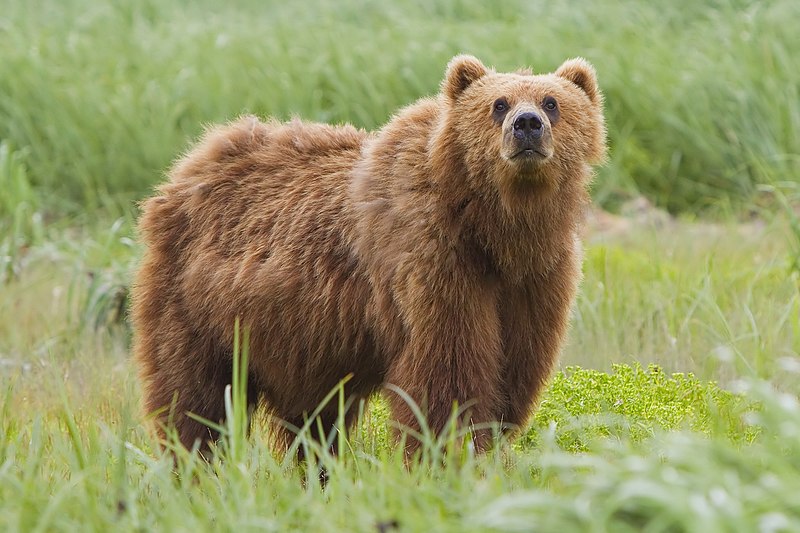
What happens now? Predators, mostly bears and wolves, living on federal lands in Alaska will be slaughtered.

The law this bill repealed is an Obama-era regulation that prevented the hunting of bears and wolves on Alaskan federal lands unless it was deemed necessary to preserve the land’s refuge status. With the passage of this new law, bears and wolves can be shot from planes. They can be baited and shot. Cubs and pups can be killed in their dens, and mothers and their kids can be targeted and killed any time, any place.

As the former director of US Fish & Wildlife Services wrote in August of 2016, laws like this one are “purportedly aimed at increasing populations of caribou and moose but defies modern science of predator-prey relationships.” He was in favor of the Obama-era regulations that sought to protect predators on federal refuge lands. He stated that we should “ensure that predator and prey alike can thrive on our refuges.”

Why are bills like this, that so unfairly target predators–– going so far as to allow cubs and pups to be shot in their dens–– so popular among Republicans? The answer is the NRA, which backed this resolution. On the opposing side of the battle was the Humane Society, which urged Congress not to adopt the resolution.

One line in the NRA’s article about the law struck me as not only odd, but as an outright lie. They state that the ads the Humane Society aired in regards to the law are “falsely claiming that its repeal would allow for inhumane forms of taking bears and wolves.”

Is shooting hibernating bears in their dens not inhumane? Is chasing down bears from planes not inhumane? Is pulling the trigger on wolf puppies point-blank not inhumane?

The answer is obvious.

Now not only are the unethical and brutal murders of countless Alaskan bears and wolves legal, but the passage of this law suggests that we as a nation are okay with such inhumane actions. It also messes with the already fragile ecosystem, and will lead to the deaths of animals on refuge lands.

It is wrong, and I am deeply ashamed that it is now the law.

http://blog.timesunion.com/animalrights/animal-rights-in-the-trump-era-protecting-alaskan-wildlife/6512/

Wolf management idea makes sense

[Consider the source]:

http://www.capitalpress.com/Opinion/Editorials/20170323/wolf-management-idea-makes-sense

March 23, 2017 9:51AM

Washington Department of Fish and Wildlife managers are offering an idea they believe would help them manage wolves more effectively.

WASHINGTON DEPARTMENT OF FISH AND WILDLIFE

Washington Department of Fish and Wildlife managers are offering an idea they believe would help them manage wolves more effectively.

If one follows the wolf issue long enough, occasionally a nugget of common sense appears.

Such is the case with a recent suggestion the folks at the Washington State Department of Fish and wildlife offered. Speaking during a conference call with the state Wolf Advisory Group, WDFW wolf policy coordinator Donny Martorello offered this idea: that dead livestock be considered “qualifying” victims of wolves if the time, circumstance and location of their deaths parallel other confirmed depredations.

In other words, if a carcass is found near those of other wolf victims but scavengers have destroyed the evidence directly linking the attack to wolves, state wildlife managers could label it a “qualifying” attack.

Previously, such cases were considered “probable” attacks and were not counted against a wolfpack. Under the Washington wolf plan, managers can kill only wolves that are responsible for four confirmed depredations within a year.

While this may seem to be a bureaucratic splitting of hairs, it’s critically important for managing wolves. Under the new idea, if wolves are found to be responsible for four depredations, including any that are “qualifying,” managers could take steps to get rid of the wolves.

A study found wolfpacks that are thinned soon after attacking cattle or sheep get the message that attacking livestock is unacceptable. By including qualifying attacks, managers could act quicker to thin the ranks of wolves instead of waiting weeks or months for another confirmed depredation.

If managers thin a wolfpack after a long period of time, the wolves have no idea whether it is linked to a depredation, according to the study.

The idea is to manage wolves in a way that is both effective and assures ranchers and others that each step is effective.

That in itself is good reason for the department to adopt such a common sense rule.

It’s also something wolf managers in other states would do well to consider.

The state Wolf Advisory Group will discuss the idea during a March 29-30 meeting in Olympia. We urge the group to take a close look at it, as common sense can be a rare commodity when dealing with wolves.

CONSUMING LESS MEAT COULD EASE CLIMATE CHANGE

http://daily-iowan.com/2017/04/05/consuming-less-meat-could-ease-climate-change/

By Natalie Betz 

natalie-betz@uiowa.edu

Beef consumption across the county has dropped, according to national research, and it’s helping to combat climate change.

According to a March report by the Natural Resources Defense Council, Americans consumed 19 percent less beef in 2014 than in 2005, eliminating an approximate 185 million metric tons of greenhouse gas emissions. The council is a New York City nonprofit international environmental advocacy group.

The drop in beef consumption could be because some people are trying to help the climate, but it might also be because people are realizing that red meat can be harmful, said H.S. Udaykumar, a University of Iowa professor of mechanical engineering. He described it as a “happy coincidence.”

Some students, such as UI sophomore Logan Grant, became vegetarian for more personal reasons. She has been a vegetarian for five months after she realized that being an animal lover and supporting meat companies made her a hypocrite. Although she originally became a vegetarian because of ethical reasons, she soon learned about the environmental benefits.

Like Grant, Pete Akers, a UI visiting assistant professor of geography, noted that it isn’t usual for people to become a vegetarian because of the environment.

“Most people don’t typically switch to a vegetarian diet to initially help climate change, but a lot of people are consuming more sustainable foods with less carbon and methane emissions, which increases the ambit of food supply for everyone,” Akers said.

Additionally, he said, the amount of methane a single cow can produce with its four stomachs is extremely harmful to the planet. Methane has a greenhouse effect 25 times more powerful than carbon dioxide, according to the report.

“Cows, to a bigger extent, convert gas to methane,” Udaykumar said.

Akers said that pigs are a better choice over beef, because pigs require about eight to 10 pounds of grain to produce one pound of pork, rather than the 25 pounds of grain to produce one pound of beef, and the hundreds of gallons of water needed for the cow to grow.

Hog farming is a huge industry in Iowa. According to statistics, it alone represents $7.5 billion in total economic activity for Iowa. The numbers are based on the 2012 U.S. Census of Agriculture and analysis by the Spencer Parkinson of Decision Innovation and Iowa State University on the Iowa Pork Producers Association website.

Akers also said chickens are even better than pigs because they only need two to three pounds of grain to produce one pound of meat.

Additionally, there’s an “unreasonable effectiveness” of the Chick-Fil-A campaign stating that chicken is better for humans than beef, Udaykumar said.

“Farmed fish are the most efficient, and if people chose to order fish over beef, it would make a pretty big impact, largely because they’re cold-blooded and have different metabolisms,” Akers said. “Also, fish don’t have to burn energy to stay alive.”

But the decrease in beef consumption isn’t the only meat that could help climate change, he said. Essentially, all meat from fish to cattle is going to have a greater impact on climate change because of the extra steps needed to help the animals grow, he said.

The reason is that all animal products take far more land, water, and fossil fuels to grow, Udaykumar said.

Additionally, he said, Iowa land is used to produce biofuels for cars using corn and soy, and a significant amount is used to as animal feed, then what is left is used to produce food for humans.

The effect that this has on the environment is that the crops fill soils with chemicals, which run into rivers and eventually ends up in the ocean, killing fish, Udaykumar said.

Grant said she’s glad to be a vegetarian because the feed fed to animals is what humans ultimately end up consuming.

Akers said that if the trend of consuming less beef continues, there will be more land to designate for human food. Therefore, he said, there will be more food for humans, because now, so much land is used to grow animal feed.

Electric Flights Between Major Hubs Possible in Ten Years as Tesla Outpaces Ford & GM Market Value

robertscribbler's avatarrobertscribbler

As the impacts of climate change continue to worsen, the opportunity still exists for leaders and individuals at every level to reduce the coming harms by renewing and redoubling the push for clean energy. And in many places, this kind of strong leadership is happening — just not in the Trump White House.

(Battery gigafactories, solar roofs, electric vehicles and many other renewable energy advances are enabling both energy independence and the potential for a rapid response to human-forced climate change. But obstacles imposed by short-sighted and immoral leaders like Trump could get in the way of these much-needed actions. Image source: Tesla.)

In January, China appeared ready to take the title of clean energy leader away from the United States as it planned to shut down 104 carbon and soot spewing coal-fired power plants. California and New York pledged to redouble support for renewables even as…

View original post 663 more words

The Indian Hot Season Began Two Months Early This Year — And the Worst is Yet to Come

robertscribbler's avatarrobertscribbler

Simulations indicate an all-round warming, associated with increasing greenhouse gas concentrations, over the Indian subcontinent… — Climate Change and India

*****

In India, it was still February. The hot season was supposed to begin two months later in April. But temperatures in some coastal provinces had already rocketed to above 100 degrees F (38 C).

Late February temperatures for Konkan hit as high as 104 F (40 C) even as Mumbai and Ratnagiri hit 100 F (38 C).

According to Indian meteorological sources, there are no weather records of temperatures hitting such high marks so fast at any time in at least the past 20 years. Temperatures in late February and March for this region hit a range that is more typical of the height of the hot season from April to May. And when one considers the fact that India has experienced extreme heat and drought for at least…

View original post 679 more words

Trump revokes Alaska refuge rule, allows wolves to be killed

http://www.capitalpress.com/AP_Nation_World/20170404/trump-revokes-alaska-refuge-rule-allows-wolves-to-be-killed

Predators can kill more than 80 percent of the moose and caribou that die during an average year, according to the Alaska Department of Fish and Game.

By DAN JOLING

Associated Press

Published on April 4, 2017

ANCHORAGE, Alaska (AP) — The state of Alaska’s toolkit for increasing moose and caribou numbers includes killing wolf pups in dens, shooting wolf packs from helicopters and adopting liberal hunting regulations that allow sportsmen to shoot grizzlies over bait.

But when state officials wanted to extend “predator control” to federal wildlife refuges, the U.S. Fish and Wildlife Service said no. And after years of saying no, the agency late last year adopted a rule to make the denial permanent.

Alaska’s elected officials called that an outrage and an infringement on state rights. The dispute reached the White House.

President Donald Trump on Monday signed a resolution approved by the U.S. House and Senate to revoke a U.S. Fish and Wildlife Service rule banning most predator control on Alaska refuges. Alaska’s lone U.S. representative, Republican Don Young, says Alaska was promised it could manage game animals. Refuge overseers have ignored the law, he said.

“Some of you will say, ‘Oh, we have to protect the wolf puppies,’” Young told colleagues on the floor of the House. “That’s not what it’s about. It’s about the law.”

Congress explicitly gave Alaska authority to manage wildlife in the Alaska Statehood Act and two more laws, U.S. Sen. Lisa Murkowski, an Alaska Republican, said after voting to revoke the rule.

Alaska’s 16 national wildlife refuges cover about 120,000 square miles, an area slightly smaller than the state of New Mexico. Residents of rural villages living a subsistence lifestyle rely on refuges as hunting grounds. So do urban sportsmen.

Critics contend Alaska officials use unsportsmanlike techniques that would have horrified Teddy Roosevelt, creator of the first federal refuge, to boost moose and caribou numbers. Sportsmanship, however, is not a consideration, according to state authorities, when it comes to surgically removing certain numbers of predators to benefit prey populations.

Predators can kill more than 80 percent of the moose and caribou that die during an average year, according to the Alaska Department of Fish and Game.

Alaska’s mandate for killing predators comes from a law passed by the state Legislature recognizing that certain moose, caribou, and deer populations are especially important human food sources. When those populations drop too low, the Alaska Board of Game, which regulates hunting and trapping, can authorize “intensive management.”

The focus once was almost totally wolves. Since 1993, the state has killed hundreds along with lesser numbers of black and grizzly bears that prey on caribou or moose calves.

Federal wildlife refuges operate under a different mandate. For example, the Alaska Maritime National Wildlife Refuge, where the state in 2010 sought to kill wolves from helicopters to protect caribou on Unimak Island, was created by Congress with the mission of conserving animal populations and habitats “in their natural biodiversity.”

Geoff Haskett, former Alaska regional director for the U.S. Fish and Wildlife Service, said the agency adopted the rule for Alaska refuges after repeatedly fending off state attempts to extend predator control in direct conflict with refuge purposes. Some attempts up in court. For two years, he said, the state authorized an overharvest by hunters of grizzly bears on the Kenai Peninsula. The agency closed the Kenai Peninsula National Wildlife Refuge in response.

“Brown bear biologists from both the state side and the federal side had real concerns about the amount of unlimited harvest and the amount of females that would be taken by what was proposed by the state,” Haskett said.

Haskett left the agency and is now acting director of the National Wildlife Refuge Association. Even though President Trump signed the congressional resolution, Haskett believes it will not give the state of Alaska carte blanche to begin predator control on federal refuges.

“It doesn’t change the laws and authorities and existing regulations that the service already has,” Haskett said. “It’s really back to square one.”

Ken Marsh, spokesman for the Alaska Department of Fish and Game, agreed. Without a blanket rule, federal refuge managers likely will consider predator control requests on a case-by-case basis, he said, under provisions of federal environmental law.

Trump repeals Alaskan bear hunting regs

Trump repeals Alaskan bear hunting regs
© Getty Images

President Trump rolled back a trio of regulations Monday, including protections for hibernating bears in Alaska.

The Obama-era rule from the Fish and Wildlife Service (FWS) prohibited certain hunting tactics that target “predator” animals likes bears and wolves while they are inside Alaska’s national preserves. This included a ban on hunters using airplanes.

Trump overturned the rule Monday, handing control of the hunting regulations over to Alaska state officials who have shown an eagerness to control predator populations as a way to protect other animals such as deer. But animal rights activists say this will open the door to hunters snatching hibernating bears and wolves out of their dens, or even killing them in front of their cubs.

The president also rolled back the Federal Communication Commission’s (FCC) Internet privacy rules and the Labor Department’s workplace protections that required companies to report injuries and illnesses that occur on the job.