


According to today’s report from NASA’s global temperature monitor, March of 2017 was the second hottest such month recorded in the 137 year climate record.
Temperatures for the month were 1.12 C hotter than NASA’s 20th Century baseline and 1.34 C hotter than 1880s averages. These warm temperatures likely represent a climate state not seen on Earth since at least the Eemian climate epoch of 115,000 years ago. They are also now in a range that is producing serious geophysical changes such as glacial melt, sea level rise, sea ice melt, more extreme weather, and declining ocean health.

(Temperature anomaly distributions during March of 2017 is indicative of continued, global warming related polar amplification. Image source: NASA.)
Much of the excess heat during March, as has been the case with many recent months, has focused at the poles. The northern polar region in particular saw considerable above…
View original post 349 more words
http://www.all-creatures.org/articles/ar-15,748-seal-pups-killed.html
HarpSeals.org
April 2017
Sealers have killed 15,748 harp seal pups in just 3 days.
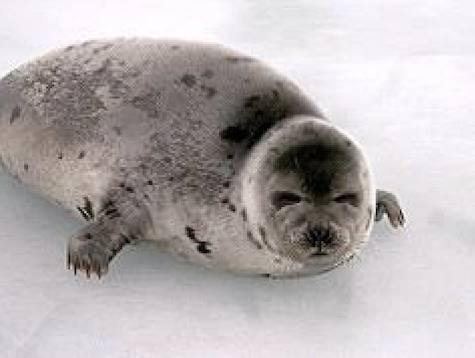
Sealers have killed 15,748 harp seal pups in just 3 days. These seal pups are just a few weeks old, and many are just learning how to swim. Sealers on a killing spree of this magnitude will almost certainly neglect to carefully check whether all the seals they have shot and/or beatened are really dead before dragging them onto their boats and/or skinning them.
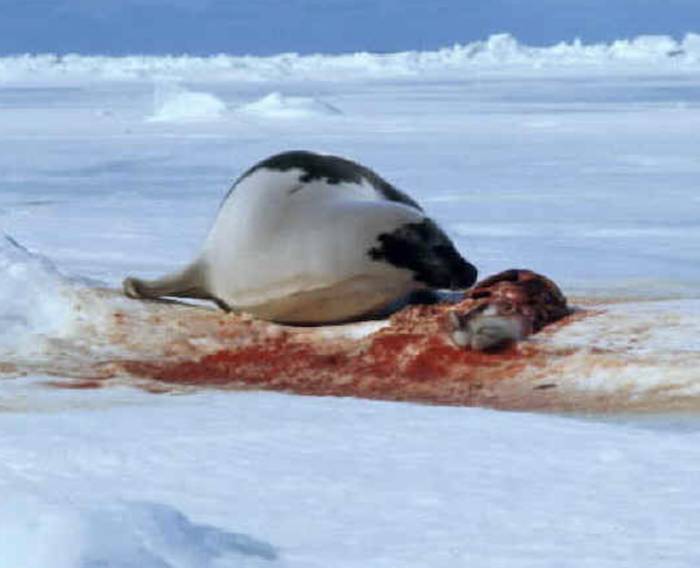
The Canadian government continues to stand by this ‘industry’, claming that it is important to Atlantic Canada and the fishermen who participate in this massacre. In reality, it represents a tiny fraction of the provincial economies of Newfoundland and Quebec, where most of the sealers come from, and just a small percentage of each sealer’s income.
Please take action.
1. Distribute leaflets where you…
View original post 89 more words
04.14.2017

YELLOWSTONE NATIONAL PARK, Wyo. — One of only three white wolves roaming Yellowstone National Park has been put down by park staff after it was found with severe injuries.
P.J. White of the National Park Service says hikers found the female wolf Tuesday on the north side of the park.
White says the wolf was in shock and dying, leading to the decision to euthanize it and investigate what caused the injuries. The nature of the animal’s injuries could not immediately be determined.
The predator was one of three known white wolves in the park.
It had lived to 12 years old, twice the age of an average wolf in the park, and was one of the most recognizable and sought after to view and photograph by park visitors.
 Images credit: Sea Shepherd
 MarEx spoke to Captain Paul Watson, Founder of the Sea Shepherd Conservation Society, to get his views on misconceptions about the organization.
Is Sea Shepherd an eco-terrorist organization?
No, none of us work for Monsanto. Seriously, since I established Sea Shepherd in 1977, we have not caused a single injury to a single person nor have we suffered a single injury to any of our crew. We don’t carry guns, and we operate within the boundaries of the law. None us have been convicted of a felony crime.
We work in partnerships with government agencies like Mexico, Ecuador, Gabon, Italy and Liberia within their territorial waters. In International waters, we intervene against illegal activities in accordance with the United Nations World Charter for Nature that allows for intervention by NGO’s to uphold international conservation law.
Is Sea Shepherd a protest organization?
I established Sea Shepherd as an anti-poaching organization to intervene against illegal activities. We are not a protest organization. We investigate, document and directly intervene against illegal activities that exploit marine wildlife.
Does Sea Shepherd comply with marine safety regulations?
Sea Shepherd looks on marine safety as a priority in all our operations. We have an unblemished record for safety. Not one crewmember has been lost or seriously injured in 40 years. Every ship is equipped with more than adequate safety and fire fighting equipment and all crewmembers are subject to training and regular safety drills. On major campaigns like the Southern Ocean, the ships carry a medical officer with substantial medical resources.
Sea Shepherd campaigns can be risky and I do insist that all crewmembers be aware of the risks that will be undertaken. When critics say we put our crew at risk, they are right, but our position is that risking our lives to defend endangered species or threatened habitat is an acceptable risk and far more noble than risking lives to defend oil wells, real estate, corporate interest and religion.
Is Sea Shepherd a U.S. based organization?
No, in fact Sea Shepherd is not actually an organization but rather a collective of numerous national entities, all registered independently within their own nations. Sea Shepherd is more of a movement with representation throughout Austral-Asia, North and South America, Europe and Africa.
Sea Shepherd Global based in Amsterdam is the coordinating center for all Sea Shepherd entities except for Sea Shepherd USA, which is prohibited by the U.S. Federal Court from direct association with other Sea Shepherd entities that oppose illegal Japanese whaling in the Southern Ocean. The ships are registered in the Netherlands, the USA, Barbados and Australia.
Why is Sea Shepherd so small compared to other organizations?
After 40 years, we could have been a much larger organization like Greenpeace or Oceana. However, from the beginning we decided we would not be a fund raising bureaucracy. We do not spend large sums of donor money on fund-raising and promotion. We don’t hire people to stand on the streets to sign up members. We don’t spend money advertising. We keep the administration to a minimum and the ships are 90 percent volunteers.
Support comes from word of mouth, visits to the ships and from people watching Whale Wars or seeing our documentaries. We want people to know that when they donate to Sea Shepherd the money goes to ships and campaigns. Sea Shepherd believes that the passion of our volunteers accomplishes more than having an organization with a large bank account.
Some members of the public believe we must have tens of millions of dollars to operate our ships and campaigns. The truth is we don’t. We operate 10 ships on a budget of less than five percent of the Greenpeace budget.
Are Sea Shepherd ships manned with experienced and nautically trained professionals?
Not in the traditional sense. Our ships are registered as yachts so we do not need to comply with strict manning regulations. Our crews are volunteers from all over the world from all walks of life. Back in 1911, Ernest Shackleton was criticized for not having a professional crew. He answered that he needed men of passion, not professionals.
The fact is that I could not pay professionals enough to do what our volunteers do for little or no wages. We look for experienced deck and engine officers. If we can’t find an experienced engineer, we do hire one if need be. Our officers train the volunteers.
We have had astrophysicists and math teachers serving as watch officers, we have had motorcycle and truck mechanics working in the engine room. We have had retired naval, coast guard and merchant officers.
On major campaigns, we always carry a qualified medical doctor in addition to crew with EMT certification. It’s a balance between experienced and inexperienced crewmembers. All volunteers are vetted by a crewing director.
Over forty years we have never lost a crewmember nor has any crewmember suffered a life-threatening injury. The ships hold monthly fire and safety drills or more if there is a change of crew.
Is Sea Shepherd an animal rights organization?
Some media describe Sea Shepherd as an animal rights organization. However, Sea Shepherd is not an animal rights organization. Sea Shepherd is a marine conservation organization specializing in anti-poaching activities. This misconception may be because all Sea Shepherd ships are 100 percent vegan vessels. They are vegan vessels for conservation and environmental reasons considering the ecological damage the meat and fishing industries are causing.
Is Sea Shepherd a leftist movement, or is it a right-wing movement?
The conservative call us liberal, the liberals call us conservatives. We are neither left nor right. Sea Shepherd does not hold a political position on anything. We are not left nor right, we are in front. We are motivated only by conservation principles. Our clients are the marine species we defend.
Does Sea Shepherd carry and use weapons?
Despite accusations that we use firearms, we don’t. None of the ships have any guns onboard. Instead we the ships are armed with a far more powerful weapon – cameras.
A favorite accusation from Sea Shepherd critics is that you are not qualified to be a Captain and therefore should not call myself a captain. Is that true?
I find this accusation amusing, because it tends to come from week-end sailors or fishermen who rarely go out of sight of land. The truth is that I don’t hold a commercial ticket nor would I want to. Our ships are all registered as yachts, and I am qualified to be a yacht master.
I was trained as a seaman with the Norwegian and Swedish Merchant marine, as a fireman with Canadian Pacific Steamships and I served in the Canadian Coast Guard on weather ships, buoy tenders and as a hovercraft rescue officer. I was first mate on all Greenpeace campaigns from 1971-1977.
My qualifications have not been questioned or denied by any ports of call we have entered or cleared and my experience is deep-sea, ice navigation and trans-ocean including leading ten expeditions to the Southern Ocean and Antarctica. If I was not qualified I would not have been able to command our ships since 1978 until the present day.

The opinions expressed herein are the author’s and not necessarily those of The Maritime Executive.

A new wolf report from the Oregon Department of Fish and Wildlife has environmentalists concerned.
The report, the first since Oregon gray wolves were removed from the Endangered Species Act list in 2015, shows the population of wolves in Oregon has stalled, and the number of both breeding pairs and packs in the state declined in 2016. The current population is 112 wolves across 11 packs, a 1.8 percent increase from 2015, when there were 110 wolves.
Though the wolf population has technically increased, environmental groups are worried: Before losing protection in November 2015, the wolf population had a 33 percent increase from 2014 to 2015.
In 2016, there were 11 packs, including eight packs of breeding pairs—which is 27 percent fewer than 2015, when there were 11 breeding pairs.
Though the November 2015 decision to remove wolves from the list won in a 4-2 vote, it has remained controversial. The following month, three environmental groups filed a legal challenge to the removal.
The lawsuit, filed by Oregon Wild, Cascadia Wildlands and the Center for Biological Diversity, said that the Oregon Fish and Wildlife Commission “violated the law by failing to follow best available science and prematurely removing protections before wolves are truly recovered.”
The Oregon Department of Justice ruled that the lawsuit was a moot point under House Bill 4040, which stated that the ability for wolves to repopulate was not being threatened. But in July 2016, the environmental groups were granted an appeal from the Oregon Court of Appeals to continue the legal challenge. That case is pending.
This year’s report also shows a sharp increase in livestock depredation by wolves in 2016. In 2015, there were just nine incidents, compared to 24 in 2016, a 116 percent increase.
Seven wolf deaths were documented in both 2015 and 2016.
In 2015, none of these deaths came from the department, but in 2016, four wolves were killed by the department in a depredation situation where non-lethal methods proved ineffective. One wolf was killed by a farmer while the wolf was killing a sheep.
“In the years immediately before losing protections, Oregon’s wolf population expanded while livestock conflict went down,” said Rob Klavins, a Field Representative for Oregon Wild based in Wallowa County said in a statement. “Unfortunately, as ODFW and special interests rushed to remove protections from wolves, not only did wolf recovery stall, but wolf killing and livestock conflict increased.”
While environmental groups are worried about the stall in population, an item on the ODFW’s newly revised Oregon Wolf Conservation and Management Plan also raises concerns.
In a draft of the plan, which is revised every five years, one section discusses wolves as “special status game animals,” a classification which came from Oregon legislators in 2009, under ORS 496.004 (9).
The classification “allows the use of controlled take through hunting and trapping (under two circumstances) in response to management concerns.” It specifies that “general season hunts are not permitted.”
The Center for Biological Diversity refers to the plan as a proposal “to create a sport trapping and hunting program for these iconic animals.”
Last month, 19 Oregon legislators sent a letter to ODFW to urge the department to reconsider the classification, calling it a “slippery slope to an open hunting and trapping season.”

From HSUS.org
We are finding dogs living in inches of their own urine and feces, with coats matted so heavily that they can barely walk, puppies choking on toxic fumes and many animals suffering from a variety of skin and eye conditions.

Sadly, it isn’t just dogs and puppies who are suffering.
So far, our Animal Rescue Team has found more than 350 neglected animals — including cats, donkeys, a horse, bunnies, chickens, ducks, geese, goats, sheep and an alpaca.
Jim, the cruelty we’re witnessing is heart-wrenching. We will stay here until every animal is on their way to a better life.
This rescue is only possible with the help of compassionate supporters like you.
Thank you so much,
Sára Varsa
Senior Director, Animal Cruelty, Rescue and Response
https://animalpetitions.org/235639/release-guardian-the-wolf-back-into-the-wild/
Tuggle, Regional Director U.S. Fish and Wildlife Service Southwest Region
Goal: Return Guardian the wolf to his pack to help maintain his struggling species.
In the summer of 2016, the U.S. Fish and Wildlife Service captured Guardian, one of a tiny number of Mexican gray wolves still living in the wild. And Guardian isn’t just one wolf — as his name suggests, he’s the alpha male of a pack that includes young pups who rely on him and his mate for food. Capturing Guardian and placing him in captivity puts their survival, and the survival of the entire species, in jeopardy. The Fish and Wildlife Service must recognize the damage they’re doing and release Guardian immediately.
Mexican gray wolves were almost driven to extinction during the 20th century and, by the millennium, they were believed to have been wiped out in many regions of North America. Efforts to reintroduce the animal at the turn of the century have slowly begun to show progress, but the species remains critically endangered, with experts suggesting that fewer than 100 currently exist in the wild. Until recently, one of those was wolf M1396, named Guardian by Albuquerque schoolchildren as part of a competition to name the 17 pups born in 2014. Guardian lived in Gila National Forest, New Mexico, as part of the Luna pack, a group of wolves that included his mate and their pups.
Life is not easy for Mexican wolves, so when local ranchers started abandoning dead cattle on land near his hunting grounds rather than disposing of them responsibly, Guardian soon learned to scavenge from their carcasses. From this, he also learned to hunt cattle: a reliable source of meat to feed his hungry pups. Under pressure from ranchers keen to maintain their profits, the Fish and Wildlife Service moved to stop this predation by capturing Guardian and keeping him in captivity, just as they had with his brother, Century, in the past. This not only deprives his pups of his protection and care, but may drive his mate to begin hunting cattle too, in a desperate bid to feed her young. With no indication of Guardian’s condition or current whereabouts, it’s vital we maintain pressure on the Fish and Wildlife Service to reverse their decision and release Guardian back in to the wild. Please sign below to demand that Guardian is immediately released to his pack.
PETITION LETTER:
Dear Dr Tuggle,
In 2016, you captured wolf M1396 in the Gila National Forest, New Mexico, and took him into captivity in response to him preying on cattle. In so doing, you removed him from the Luna pack, depriving his pups of a key source of food and placing intense pressure on his mate to support her growing young. This pressure could mean she is forced to hunt cattle herself in order to sustain them, or may even result in the pups receiving insufficient nutrition and dying of starvation.
I appreciate that you are under pressure from local ranchers to control the wolf population in a manner that does not interfere with their ongoing profits. However, removing Guardian from his family places the whole pack in serious jeopardy, and with fewer than 100 Mexican gray wolves remaining in the wild, the loss of a single pack could be catastrophic for the entire species. Accordingly, I call upon you to reverse your decision and release Guardian back into the wild to help maintain the survival of his species.
Sincerely,
[Your Name Here]
https://animalpetitions.org/235639/release-guardian-the-wolf-back-into-the-wild/
Note: the opinions expressed in this column are those of the writer and do not necessarily reflect those of High Country News, its board or staff. If you’d like to share an opinion piece of your own, please write Betsy Marston at betsym@hcn.org.

Stephen Capra is a contributor to Writers on the Range, the opinion service of High Country News. He is the executive director of Bold Visions Conservation, based in New Mexico.
We live in a time where we are heading towards a world without wildlife. We have a voice and a vote, yet we elect people who support the destruction of what makes our planet livable. But perhaps our gravest sin continues to be our treatment of wildlife. How is it that, given an earth so rich…
View original post 749 more words
Here’s a list of my favorite plant-based everyday prepared food products. These are the brands you will find in my fridge, freezer and pantry. I truly believe today’s plant-based products taste better than ever!
Although processed foods should comprise the smallest percentage of our diets, they can still be included in a balanced plant-based lifestyle, and can help ease the transition away from meat and dairy.
Dairy-Free Cheese

My number one pick is Daiya, wedges and slices. The meltability and flavor are excellent, and it comes in a great variety of flavors!
Mayonnaise

Just Mayo is the best, hands down. I use it in dressings and in my tofu eggless and toona salads or just spread it on my favorite sandwich.
Meat-Free Deli Meats

There is no better choice, in my opinion, for sandwich slices, roasts, sausages and even hot dogs than Field Roast. So many varieties to choose from and…
View original post 285 more words



 Exposing the Big Game