Exposing the Big Game

Forget Hunters' Feeble Rationalizations and Trust Your Gut Feelings: Making Sport of Killing Is Not Healthy Human Behavior

Exposing the Big Game

End of the trophy hunt: Proposed B.C. rules on killing grizzlies leave hunters and activists unhappy

http://nationalpost.com/news/canada/end-of-the-trophy-hunt-proposed-b-c-rules-on-killing-grizzlies-leave-hunters-and-activists-unhappy

The province, citing poll results, says it’s taking action because the ‘vast majority’ of people in B.C. take the view that grizzly trophy hunting is not ‘socially acceptable’

Under revised B.C. regulations grizzly bears can still be hunted, but only in restricted circumstances for meat. No trophy parts — hide, skull or paws — can be kept by the hunter.Getty Images

The hunter wearing the camouflage ball cap could barely contain his excitement.

He had just fired his bolt-action rifle at a grizzly grazing in the wilds of northern British Columbia, sending the bear tumbling down a hill to within 10 yards of him.

“Holy, Toledo!” the hunter says in a dramatic 2014 YouTube video of the kill. He flashes a wide grin and fist bumps his son and hunting guide.

“This is a dream come true for me. I’ve been wanting a grizz for a long, long time.”

Such videos could soon become a rarity after B.C.’s NDP government announced plans this summer to ban grizzly bear “trophy hunting” — hunting for thrills and bragging rights — and to restrict the harvesting of grizzlies only for meat.

But the proposed regulation, set to take effect Nov. 30, is drawing rebuke from all sides of the emotionally charged debate — hunters who say they should be able to take home mementos of their kills, guide outfitters who say their livelihoods are at stake and activists who say killing grizzlies for food should also be banned.

“The whole thing hasn’t been thought out,” said Ian McAllister, executive director of Pacific Wild, a non-profit focused on conservation.

Currently, B.C. residents can apply for permits to hunt grizzlies in certain designated areas under a lottery system. Those living outside the province can hunt grizzlies only after they have hired a guide outfitter.

The province says its motivation for ending the trophy hunt is not because the grizzly population is in jeopardy. According to the Ministry of Forests, Lands, Natural Resource Operations and Rural Development, about 250 grizzles are taken by hunters each year out of a “stable and self-sustaining” population of roughly 15,000.

Instead, the province, citing poll results, says it’s taking action because the “vast majority” of people in B.C. take the view that grizzly trophy hunting is “not a socially acceptable practice.”

Under the new regulation, it will be illegal for a hunter to possess “trophy parts” of a grizzly, including the skull, hide and paws. The province has not decided if it will require hunters to leave those prohibited parts at the kill site or require hunters to take them in for government inspection.

But in an open letter signed earlier this month, Humane Society International/Canada, the BC SPCA and numerous other environmental and animal-welfare organizations expressed concern that the trophy hunt ban will be difficult to enforce and that trophy hunting will likely continue “under the guise” of meat hunting.

“People do not travel hundreds or thousands of kilometres, pay tens of thousands of dollars, and risk their lives shooting at grizzly bears to put meat on the table. … Even if the head, hide and claws are left on the ground, or given to a conservation officer, the hunter will take away trophy videos, photographs and bragging rights. The bears will still be killed for sport,” the letter states.

As they called for a complete ban of grizzly hunting, the groups also disputed the province’s claim that the grizzly population is sustainable, saying the species is threatened in some regions due to human conflicts, habitat destruction and hunting.

They would prefer if the province threw its support behind businesses that promote grizzly viewing instead of hunting.

Meanwhile, the province’s guide outfitters worry the new regulation could put a big dent in their business.

“This is not a science-based decision; this is purely an emotional decision,” said Mark Werner of the Guide Outfitters Association of B.C.

Werner pointed out that while current regulations require hunters to harvest edible portions of black bears, they permit hunters to take home other parts of the bear, such as the head and hide. Why allow it for black bears but not grizzlies? It would be such a waste to leave behind those parts of the grizzly, he said.

Werner and other pro-hunting advocates said logging and other big industries do far more harm to the grizzly population than selective hunting.

If the ban proceeds, expect the encroachment of grizzlies into urban centres and attacks on hikers and campers to rise, they added. Sometimes, you need that “human fear factor” to keep grizzlies at bay, Werner said.

Neither the father-son duo in the 2014 YouTube video nor the hunting outfitter they hired, Love Bros & Lee Ltd. of Hazelton, B.C., could be reached for comment. But other hunters say the braggadocio depicted in the video is not representative of their behaviour.

Carl Gitscheff of Dawson Creek, B.C., recalled a grizzly hunt that he did with his 34-year-old son, Krostin, this past spring in the northeast part of the province.

“At this stage in my life, to be honest with you, I don’t care if I kill anything. I just enjoy the hunt. My purpose was to go with him and accompany him on his bear,” Gitscheff said.

But when they spotted a grizzly in the distance on the second day of their trip, Gitscheff’s son let him take the shot.

“He actually proved himself as the man and extended his compassion, his love, by insisting that I take it. … It was the gentleman thing to do, which really for a father, touched my heart in a way that’s hard to describe.”

The end result was a “picture perfect” one-shot kill.

Gitscheff said he harvested the entire bear and is in the process of tanning the hide.

“Upon my expiry, perhaps one of my grandchildren may hang it in their home and say this belonged to Papa,” he said.

“You’ll never see a picture of my bear on social media. If you walked into my home, you’ll never see that bear. It’s not on display. I’m not beating my chest over this animal.”

Michigan House approves crane hunting resolution to address overpopulation

https://www.clickondetroit.com/news/michigan-house-approves-crane-hunting-resolution-to-address-overpopulation

[No, the articles’ title doesn’t mean they think enough hunters will shoot themselves or each other in accidents during their newly proposed crane hunt that it will impact the out of control human population in the slightest bit. Unfortunately they meant that hunting canes them might keep their numbers down where humans want them.]

Michigan Rep. Jim Lower calls for Sandhill crane hunting

DETROIT – Michigan Rep. Jim Lower, of Cedar Lake, praised his colleagues in the Michigan House of Representatives for approving his resolution calling for a hunting season to address Sandhill crane overpopulation.

House Resolution 154 encouraged the Michigan Natural Resources Commission to add Sandhill cranes to the game species list and sought approval from the U.S. Fish and Wildlife Service for a hunting season in Michigan.

“I’m hopeful that the Natural Resources Commission will move forward with the idea and create a Sandhill crane hunt,” Lower said. “The establishment of a hunting season will help control the population and limit damage to local farms, where corn and wheat plants serve as a food source for the birds.”

Michigan is home to an increasing population of Sandhill cranes, with an estimated 23,082 reported in Michigan’s 2015 population survey, officials said.

Over the past 10 years, the population has grown an average of 9.4 percent annually, officials said.

While Michigan farmers are allowed to obtain nuisance permits to kill Sandhill cranes causing crop damage on their farms, Lower said the permits do not provide a solution to the overpopulation problem.

Lower said birds killed with nuisance permits are a wasted resource, as their meat cannot be harvested.

Sixteen states currently allow Sandhill crane hunting during certain seasons.

“A number of states already hunt Sandhill cranes, and their population continues to climb, along with reports of crop damage caused by cranes,” Lower said. “Still, hunting is the best tool we have to manage the population as a whole, and it’s time to utilize it in Michigan.”

Bill to block challenges to wolf delisting advances

Exposing the Big Game's avatarThe Extinction Chronicles

Shortly after this fall’s gray wolf season opened in Wyoming, a bill that would remove Endangered Species Act protections for gray wolves in Minnesota, Wisconsin, Michigan and Wyoming — and prohibit judicial review of the decision — jumped its first hurdle in the U.S. House.

The Gray Wolf State Management Act (H.R. 424), a bill introduced by U.S. Reps. Liz Cheney, R-Wyo., and Collin Peterson, D-Minn., passed the House Natural Resources Committee on Oct. 4.

“For far too long our court system has been abused by radical environmental groups filing frivolous lawsuits to prevent Wyoming from managing our gray wolf population,” Cheney said in a press release. In an email, Cheney said she was pleased that the bill made it through the committee.

In testimony in front of the full House Committee on Natural Resources on Oct. 4, Peterson…

View original post 611 more words

Climate change at work? Weather Service calls for third straight mild winter

Exposing the Big Game's avatarThe Extinction Chronicles

 https://www.washingtonpost.com/news/capital-weather-gang/wp/2017/10/19/climate-change-at-work-weather-service-calls-for-third-straight-mild-winter/?utm_term=.d2fd1ce7d517
October 19 at 1:17 PM
National Weather Service’s 2017-2018 winter temperature outlook. Orange and blue areas illustrate where warmer- and cooler- than normal conditions are favored. The numbers indicate the percent likelihood of being cooler or warmer than normal. Because there are three categories, cooler-than-normal, equal chances, and warmer-than-normal, and each has a 33 percent chance of occurring as a baseline, when percentages are above that, it indicates a lean in the cooler or warmer direction.

If you’re itching for outbreaks of the polar vortex and waist-deep snow, the upcoming winter may not be your cup of tea. And, thanks to climate change, the odds of brutally cold winters are decaying.

For the third time in as many years, the nation — on balance — should expect warmer-than-normal temperatures, according to the National Weather Service, which released its winter outlook on Thursday.

The Weather Service favors…

View original post 682 more words

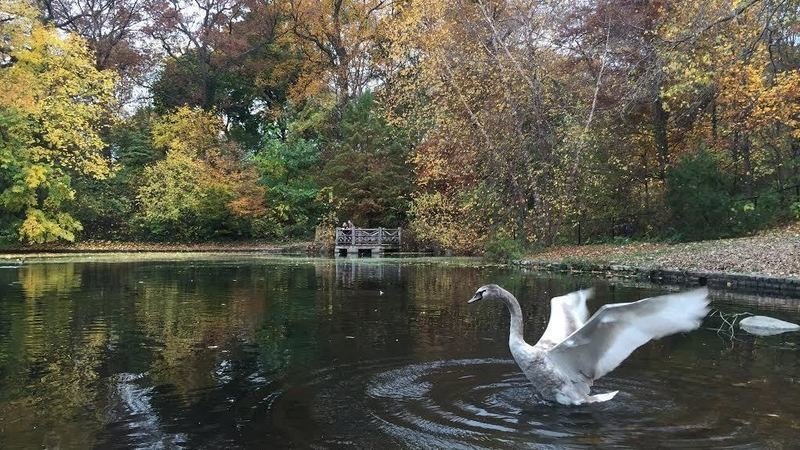
Petition · New York State Department of Environmental Conservation: Don’t Kill Mute Swans in New York State – Kill the “Mute Swan Plan” · Change.org

Dog killed by bow hunter inspires new bill to restrict hunting

http://newjersey.news12.com/story/36623273/dog-killed-by-bow-hunter-inspires-new-bill-to-restrict-hunting

TRENTON –A New Jersey lawmaker is set to propose a new bill Wednesday aimed at restricting hunting near residential property.

It’s called Tonka’s Law and is named for a dog killed by a bow hunter in September in Readington Township. The bow hunter was about 50 feet from the property line of the dog’s owners.

Officials said the hunter, Romeo Antonuccio, of Kenilworth, was charged with careless discharge and damage of property after he told police that while trying to shoot deer from a tree stand, he thought the dog was a coyote.

State Sen. Raymond Lesniak plans to announce the new bill Wednesday night on Facebook Live.