Exposing the Big Game

Forget Hunters' Feeble Rationalizations and Trust Your Gut Feelings: Making Sport of Killing Is Not Healthy Human Behavior

Exposing the Big Game

Japan Aims to Overthrow 32-Year-Old Global Whaling Ban

Tuesday, 11 September 2018

LORRAINE CHOW OF ECOWATCH FOR BUZZFLASH AT TRUTHOUT

whales Takver / Flickr

Article reprinted with permission from EcoWatch

http://buzzflash.com/commentary/japan-aims-to-overthrow-32-year-old-global-whaling-ban

Japan is proposing a slew of rule changes at the International Whaling Commission (IWC) meeting in Florianópolis, Brazil this week that conservationists worry would ultimately lift a 1986 moratorium on commercial whaling.

Japan, which launched a “scientific whaling” program in 1987 as a loophole to the moratorium, has killed more than 15,600 whales in the Antarctic since the ban (including juvenile and pregnant minke whales), according to a report released last month by the Environmental Investigation Agency (EIA) and the Animal Welfare Institute(AWI).

Other commercial whalers include Norway, which has killed more than 14,000 minke whales, and Iceland, which has killed nearly 1,800 whales in defiance of the moratorium, according to the report.

Previous reports have revealed that the Japanese government has an ultimate goal to resume commercial whaling, even though most of its citizens no longer eat whales. Whaling proponents say that hunting the mammals is part of their culture.

Hideki Moronuki, Japan’s senior fisheries negotiator and commissioner for the IWC, told the BBC that the country is pushing for the “the sustainable use of whales.”

Among its proposals, Japan wants to set up a “Sustainable Whaling Committee” which would create catch-quotas for nations wishing to allow their citizens to hunt healthy whale populations for commercial purposes, according to AFP.

Japan, which says minke and other whale stocks have recovered, will propose setting new catch quotas for species whose stocks are recognized as healthy by the IWC scientific committee.

Japan is also seeking to lower the proportion of votes required to set rule changes to a simple majority of the 89-member IWC, rather than three-quarters.

IWC meeting host Brazil is trying to rally other anti-whaling nations, such ads the European Union, Australia and New Zealand, to sign the “Florianópolis Declaration” that states commercial whaling is a no longer economically necessary and would allow the recovery of all whale populations to pre-industrial whaling levels, according to AFP.

Conservation groups have highlighted significant welfare concerns regarding “inhumane” time to death (TTD) rates after the whales are caught.

Whalers typically use an exploding harpoon to try to kill the animal “instantly”—defined by the IWC as within 10 seconds of being shot.

However, the report from EIA and AWI found that the hunted whales have suffered up to 25 minutes before dying:

  • Iceland’s TTD data in 2014 claimed that 42 died “instantly” while eight whales had to be shot a second time and their median TTD was eight minutes.
  • Norway recently collected TTD data for 271 minke whales. The median TTD for the 49 whales not registered as instantaneous deaths was six minutes. One whale had to be shot twice, taking 20-25 minutes to die.
  • Japan’s minke whales taken in the offshore North Pacific hunt take an average of two minutes to die, while those in the coastal hunt take over five minutes. Antarctic minkes take an average of 1.8 minutes to die.

Whaling opponents are urging the IWC to reaffirm its international moratorium on commercial whaling.

“If Japan gets its way, it would be a massive victory for those rogue whalers who have time and again defied the international ban on commercial whaling and an absolute disaster for the world’s whales,” said Clare Perry, EIA’s Ocean Campaigns leader in a statement received by EcoWatch.

“Many whale species have not yet recovered from massive overhunting in the past, and they are also facing a wide array of mounting existential threats ranging from climate change to marine pollution by chemicals, plastics and noise,” Perry added.

Kate O’Connell, marine wildlife consultant for the Animal Welfare Institute had similar sentiments.

“We’re only just beginning to grasp the vital role whales play in maintaining the health of the world’s oceans,” O’Connell said. “Weakening the ban now would be a fatal mistake, and would open the doors to increased commercial whaling around the world. This cruel and unnecessary industry is a relic of the past that has no place in modern society.”

“All other contracting governments to the IWC must step up to vigorously defend the moratorium from this new assault by Japan and its allies,” O’Connell concluded.

EcoWatch@EcoWatch

Japan Kills More Than 120 Pregnant Whales http://ow.ly/4NJS30keIMi  @SeaShepherd @Oceanwire @savingoceans

Japan Kills More Than 120 Pregnant Whales

More than 120 pregnant female minke whales were killed this year in the Antarctic Ocean as part of Japan’s “scientific whaling” program.

ecowatch.com

Youths aged 16 and older can now join in the moose hunt, which begins this weekend

For the Buckle family of Corner Brook, hunting is a family affair — one that goes back decades.

Matthew Buckle was waddling through snow to bring partridges back to his father almost as soon as he could walk. His wife, Tammy Buckle, also started hunting and fishing as a child, going out as a family with her 16 siblings. [!!]

“All my fondest memories of spending time with my father, it’s always been hunting and fishing,” Matthew Buckle said.

“It’s what I grew up doing. It’s what I love doing.”

Now the couple brings their own three children out hunting as well and this year their daughter Emily, who just started Grade 12, hopes to shoot her first moose.

Emily’s goal is possible this year due to recent changes in hunting regulations in Newfoundland and Labrador. One of the most significant changes is the new minimum ages of 16 for big game hunting and 12 for small game hunting, Fisheries and Land Resources Minister Gerry Byrne told CBC’s Corner Brook Morning Show on Friday.

Watch out, moose: hunting season starts Saturday. (CBC)

“We’ve taken a number of very deliberate actions to increase access to our outdoor heritage,” Byrne said.

Minimum hunting ages were previously 18 for big game and 16 for small game.

‘I want them to learn what I know’

The reduction in hunting age will give young people more opportunities to spend time in nature, Byrne said.

“One of the big considerations in this was when you provide an opportunity for our young people to get access to the outdoors, to get access to hunting, they learn very, very important skills at an early age,” he said.

“Not only do they learn better safety skills that they retain for a lifetime, but they also retain important conservation principles and values.”

Young hunters have to fulfil the same safety requirements as adults. (Ashley Taylor/Labrador Hunting and Fishing Association )

That’s a key motivation for the Buckles.

“I want them to learn what I know,” said Matthew.

“I want them to learn about nature and the ethics of hunting. I want them to know where our food comes from and how to get clean, organic, free-range meat for your future.”

Those lessons have resonated with daughter Emily, who says she enjoys time spent hunting with her family and values the food from their hunts.

“When you kill something, you get to eat it and you get to know where it comes from,” she said.

The shared experience is a source of pride and enjoyment for the whole family, Matthew said.

“It definitely makes me proud to see my own kids involved in the things that I love to do. It’s so enjoyable just to see them in nature, to see them interacting without their iPhones, without their Xbox.”

Training requirements same for youth and adults

The eligible age for hunting licences has been lowered, but the safety restrictions are just as stringent as they are for adult hunters, Byrne said.

“There will be no 16-year-olds that will be hunting big game without adult supervision,” said Byrne, who said the same is true for small game.

‘There are very, very strict requirements that are in place to be able to receive a licence and participate in the hunt, and safety and training are part of those requirements.”

Eligible hunters of all ages must complete a hunting test for firearm safety and a hunter education program, and the province is offering youth hunter skills workshops a few times a year in different locations around the province. A recent workshop in Deer Lake had about 50 attendees, Byrne said, and another will be held in Happy Valley-Goose Bay this weekend.

There will be no 16-year-olds that will be hunting big game without adult supervision.– Gerry Byrne

Safety is a key consideration for the Buckle family as well, and Tammy is a hunting safety instructor.

“‘When it does come to the firearms component, safety is of the upmost importance to us,” she said.

The couple have worked to instill a respect for and knowledge of hunting safety in their children from a young age, she said, including not just firearms but also rabbit snares and fish hooks.

Emily Buckle completed her firearms safety training before obtaining her first moose licence, and plans to practise before she goes out to hunt herself.

Such experiences, when done safely, are a valuable way to preserve both provincial and family traditions, Byrne said.

“It’s a great experience for a mother and a son, or a father and a daughter, to be out in our Newfoundland and Labrador outdoor heritage to participate in this.”

Read more from CBC Newfoundland and Labrador

With files from The Corner Brook Morning Show

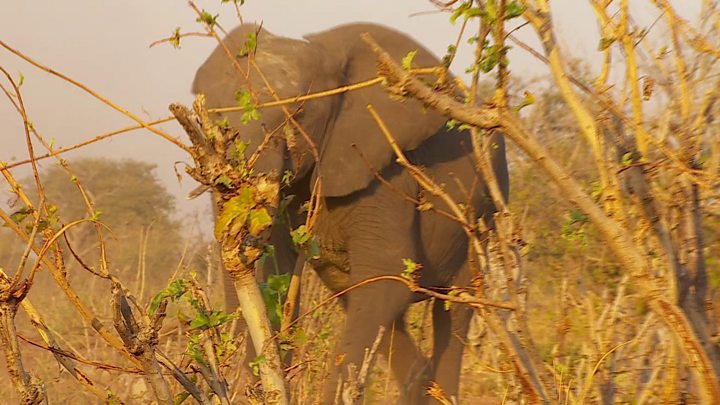
Trump encouraging elephant poaching

Exposing the Big Game's avatarCommittee to Abolish Sport Hunting Blog

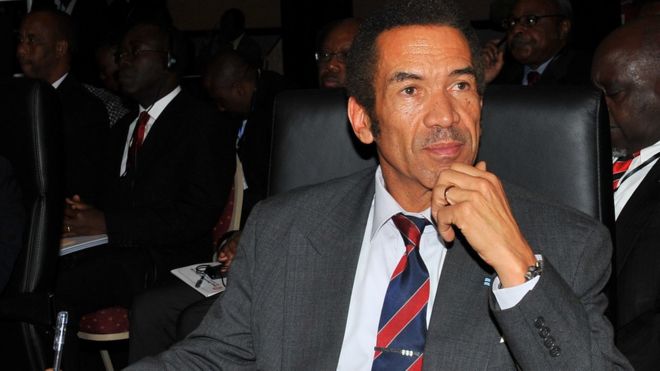
Ian KhamaImage copyrightGETTY IMAGES
Image captionIan Khama says that US policy is encouraging poaching of endangered animals

The outgoing president of Botswana has attacked his US counterpart Donald Trump for “encouraging poaching” by overturning a ban on the import of hunting trophies.

Speaking at an anti-poaching summit in Botswana, two weeks before he steps down, President Ian Khama told the BBC it was not just Mr Trump’s attitude towards wildlife he was concerned about, but his “attitude towards the whole planet”.

The US government recently made a U-turn on the import of animal heads from Africa – the “trophies” prized by American hunters travelling to the continent.

Mr Khama said that his government had “actually banned hunting” but that Mr Trump’s lifting of the trophy ban was “encouraging poaching in this country”.

Media captionCounting Africa’s elephants from the air

Mr Khama was speaking at…

View original post 411 more words

6 Years Ago, North Carolina Chose To Ignore Rising Sea Levels. This Week It Braces For Disaster.

Exposing the Big Game's avatarThe Extinction Chronicles

Confronted with Hurricane Florence, North Carolina prepares for a state of emergency.

In 2012, North Carolina legislators passed a bill that barred policymakers and developers from using up-to-date climate science to plan for rising sea levels on the state’s coast. Now Hurricane Florence threatens to cause a devastating storm surge that could put thousands of lives in danger and cost the state billions of dollars worth of damage.

The hurricane, which is expected to make landfall on Friday, is shaping up to be one of the worst storms to hit the East Coast. Residents of North Carolina’s Outer Banks and mainland coasts have already been ordered to evacuate. President Donald Trumpdeclared a state of emergency in both North and South Carolina, and a Federal Emergency Management Agency administrator said that the Category 4 hurricane will likely cause “massive damage to our country.”

And the…

View original post 818 more words

Yellowstone hit by global warming, increased visitation: report

PINEDALE, Wyo. (Reuters) – Hotter, drier conditions have led to more severe wildfires in Yellowstone National Park, while growing numbers of visitors have harmed everything from prized hydrothermal features to its famed grizzly bears, the park said in a report on Monday.

FILE PHOTO: A bison walks in Yellowstone National Park in Wyoming, U.S. on August 10, 2011. REUTERS/Lucy Nicholson/File Photo

Average temperatures in Yellowstone, which has been designated as both World Heritage and Biosphere Reserve sites by a United Nations panel, are exceeding historical norms even as climate change is blamed for a string of fires that have increased in size and which last longer, according to the study.

The 60-page “The state of Yellowstone vital signs and select park resources, 2017” report is one of just four compiled in the past decade. They are designed to track one of the largest, nearly intact temperate ecosystems in the world.

Yellowstone is celebrated for geothermal areas that contain about half the world’s active geysers, as well as forests, mountains, meadows, rivers and lakes considered a crucial sanctuary for the largest concentration of diverse wildlife in the Lower 48 states. The report shows it has seen warmer summers with less moisture and shorter winters in recent years.

At Mammoth Hot Springs in the northwest of the park, for example, the average annual daily minimum temperature has increased by 3.9 degrees Fahrenheit from 1941 to 2016 even as total annual precipitation has for the most part been below the long-term mean of 15.3 inches and snowpack has generally declined, scientists found.

Researchers noted an increase in the size of wildfires that impact vegetation and degrade air quality and said the future holds more of the same.

“If climate trends continue along their current trajectory, fires within the park will continue to be larger (and) burn for longer durations,” according to the report.

The millions of visitors who flock to Yellowstone each year from around the globe are behind a trend that includes vandalism to unique thermal features.

The thermal features have been subjected to everything from a drone crashing into one of them to crowds surging onto fragile grounds surrounding the features.

And while the grizzly population in the Yellowstone area is considered stable at roughly 700 bears, humans engaged in such pastimes as driving, hiking, camping and cycling can disrupt bear activities and even contribute to their deaths.

Yellowstone, most of whose 2.2 million acres sit in Wyoming but which also encompasses portions of Idaho and Montana, saw a record 4.2 million visits in 2016 and recorded its second busiest year in history in 2017.

Outfitter charged with unsafe bear baiting near Fort McMurray

Exposing the Big Game's avatarCommittee to Abolish Sport Hunting Blog

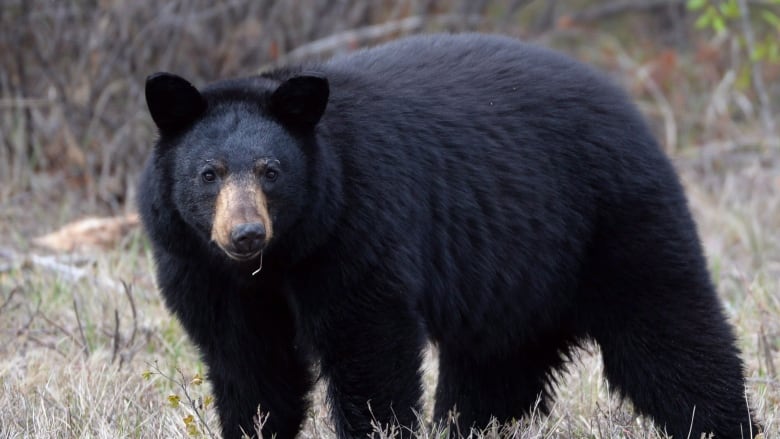
A black bear stands at the side of Highway 881 near Conklin, Alta., on Tuesday May 10, 2016. (Jonathan Hayward/Canadian Press)

Ronald Beaver wants Albertans to know why they should take seriously recent charges against an outfitter who operated in the Fort McMurray area — the practice puts others at risk.

“Once a bear comes to a bait site and is used to the area,” said Beaver, a local hunter and member of the Treaty 8 Trappers Association, “it will be protective of that area and if somebody comes close, the bear will probably charge and attack.”

Alberta-based Bear Bonez Outfitters and its owner face numerous charges including meat wastage, hunting without carrying the necessary permits and failing to post proper signs warning about the use of black bear bait.

Bear…

View original post 423 more words

Eight dead platypuses found in fishing trap in Werribee River

Updated 

Eight dead platypuses have been found in a bait trap by a group of teenagers who were clearing rubbish from a river in Melbourne’s west over the weekend.

Three girls were kayaking down the Werribee River on Saturday morning when they pulled the net from the water near the Davis Creek junction.

“They came up to the side of the bank and pulled up the rope and were of course horrified by this,” riverkeeper John Forrester said.

“One or two of [the platypuses] had been in the water for quite a few days… and so some of the carcasses had lost quite some hair, so hence as you might see on the photo, some of them are white — that’s their flesh.

“We had [another platypus trap death] with four or five in one net two years ago… but nothing like eight, no eight is just simply staggering.”

Mr Forrester said he suspected the net may have been set up to catch yabbies in the public waterway.

“The yabbies might be the intention of the net fisher, but unwittingly of course, platypus come in chasing the yabbies and naturally once inside that small cone at the top of the net, the platypus can’t get out.

“And of course they drown — they can last up to about two minutes, much like a human being in the water, without breath — but they must get out and they just can’t because the surrounds of the net from inside are completely sealed of course.

“And platypus aren’t the kind of creature that can eat its way out or chew its way out as it has no teeth.”

Authorities urged to crack down on illegal fishing nets

Mr Forrester was concerned the type of net used was similar to one which is banned from use in public waterways.

In July Victoria banned the use of opera house yabby nets, which are believed to be responsible for killing hundreds of platypuses each year.

Mr Forrester said the deaths were proof that greater enforcement is needed.

“Parks Victoria, or even local enforcement officers who have these powers such as fisheries and wildlife and so on, aren’t many on the ground,” he said.

“What we should be doing is having more and more of these people, these enforcement officers, on the ground with good and reasonable penalties, because at times these penalties are too minor.”

The Victorian Fisheries Authority has been notified of the deaths.

Rice farming up to twice as bad for climate change as previously thought, study reveals

https://www.independent.co.uk/environment/rice-farming-climate-change-global-warming-india-nitrous-oxide-methane-a8531401.html

Levels of overlooked greenhouse gas are up to 45 times higher in fields that are only flooded intermittently

Rice is a vital crop that provides people with more calories in total than any other food

Rice is a vital crop that provides people with more calories in total than any other food ( STR/AFP/Getty Images )

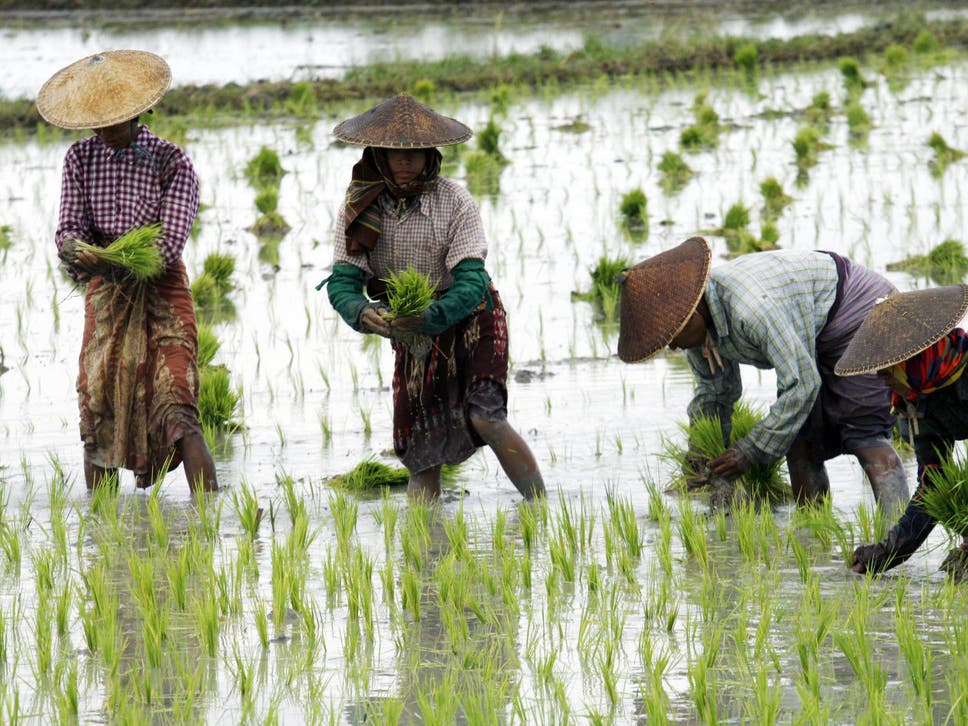
Rice farming is known to be a major contributor to climate change, but new research suggests it is far bigger a problem than previously thought.

Techniques intended to reduce emissions while also cutting water use may in fact be boosting some greenhouse gases, meaning the impact of rice cultivation may be up to twice as bad as previous estimates suggest.

Scientists at the US-based advocacy group the Environmental Defense Fund suggest the short-term warming impact of these additional gases in the atmosphere could be equivalent to 1,200 coal power plants.

Considering the importance of rice as a staple food crop, providing more calories to the global population than any other food, the researchers have recommended ways to adapt farming practices and make its cultivation more climate-friendly.

Past estimates have suggested that 2.5 per cent of human-induced climate warming can be attributed to rice farming.

The main culprit is methane, a potent greenhouse gas emitted from flooded rice fields as bacteria in the waterlogged soil produce it in large quantities.

However, there is another gas produced by rice fields that can have a harmful climate effect. Nitrous oxide, commonly known as laughing gas, is also produced by soil microbes in rice fields.

Partly in a bid to reduce methane emissions, several international organisations have promoted intermittent flooding of rice fields, but this practice comes with problems of its own.

“The full climate impact of rice farming has been significantly underestimated because up to this point, nitrous dioxide emissions from intermittently flooded farms have not been included,” said Dr Kritee Kritee from the Environmental Defense Fund, who led the research.

Analysis by the team showed that process of alternately wetting and drying rice fields – while reducing methane levels – is producing up to 45 times more nitrous oxide than constantly flooded fields.

The intermittent flooding and airing of the fields results in pulses of microbial activity that in turn leads to increased nitrous oxide levels.

These results, obtained by working with farms in southern India, were published in the journal Proceedings of the National Academy of Sciences.

“Increasing pressure on limited water resources under a changing climate could make additional rice farming regions look to intermittent flooding to address water limitations and concerns about methane emissions,” said Dr Kritee.

“Water management on rice farms needs to be calibrated to balance water use concerns with the climate impacts of both methane and nitrous oxide emissions.”

Despite being a powerful greenhouse gas in its own right that traps even more heat in the atmosphere than methane over long time periods, most rice producing countries do not report their nitrous oxide emissions.

https://players.brightcove.net/624246174001/SydS6Pxaf_default/index.html?videoId=5806469110001&customParams=videoID%253D5806469110001%2526articleId%253D8531401%2526gs_channels%253DNONE%2526playertype%253Dclicktoplay%2526topictags%253Drice%2Cfarming%2Cagriculture%2Cclimatechange%2Cindia%3Bpermutive%3A3446%252C3448%252C3449%252C3507%252C7064%252C7065%252C3478%252C3487%252C3492%252C3499%252C3500%252C3527%252C3705%252C3737%252C3738%252C3748%252C3750%252C3751%252C3762%252C3763%252C3769%252C3783%252C3785%252C3795%252C3800%252C3812%252C3817%252C3821%252C3828%252C3845%252C3847%252C3850%252C3853%252C3881%252C3891%252C3899%252C3910%252C3915%252C3916%252C3937%252C3940%252C4052%252C4071%252C4076%252C4093%252C4104%252C4105%252C4155%252C4174%252C4183%252C4185%252C4187%252C4194%252C4203%252C4204%252C4208%252C4249%252C4298%252C4299%252C4306%252C4325%252C4327%252C4328%252C4336%252C4337%252C4342%252C4349%252C4359%252C4360%252C4363%252C4395%252C4482%252C4488%252C4489%252C4495%252C4496%252C4510%252C4511%252C4512%252C4559%252C4577%252C4742%252C4743%252C4844%252C4845%252C4961%252C4970%252C5061%252C5062%252C5064%252C5065%252C5067%252C5068%252C5074%252C5103%252C5266%252C5340%252C5455%252C5472%252C5574%252C5596%252C5700%252C5702%252C5706%252C5707%252C5757%252C5776%252C5790%252C6116%252C6117%252C6164%252C6251%252C6252%252C6302%252C6685%252C6750%252C6751%252C6762%252C6824%252C6833%252C7033%252C7066%252C7078%252C7312%252C7395%252C7440%252C7496%252C3482%252C3542%252C4554%252C6238%252C7609%252C7610%252C7612%252C3601%252C7667%252C7668%252C8022%252C7839%252C4670%252C5138%252C6823%252C8272%252C5476%252C5477%252C3557%252C3684%252C3489%252C3521%252C3483%252C3550%252C3493%252C3720%252C5708%252C3535%252C7361%252C6207%252C8598%252C3721%252C8269%252C3508%252C3509%252C3510%252C3660%252C3460%252C3461%252C3563%252C4248%252C7693%252C4808%252C8799%3B&customTargeting=%2F71347885%2F_main_independent%2Fin_environment%2Fin_environment_article&playsinline=true
Nicola Sturgeon mocks Donald Trump over climate change ahead of UK visit

Dr Kritee said it was essential that scientists began investigating this overlooked threat so that nations can tackle it effectively.

“We now know nitrous oxide emissions from rice farming can be large and impactful,” said Richie Ahuja, a co-author of this study.

By considering each farm individually and taking into account their methane, nitrous oxide and water use, the scientists suggest that specific strategies can be used that can minimise emissions of climate harming gases.

“We now also know how to manage the problem. Major rice producing nations in Asia are investing to improve the agriculture sector and could benefit from the suggested dual mitigation strategies that lead to water savings, better yields, and less climate pollution,” said Mr Ahuja.

‘Climate change moving faster than we are,’ says UN Secretary General

Exposing the Big Game's avatarThe Extinction Chronicles

  • 2 hours ago
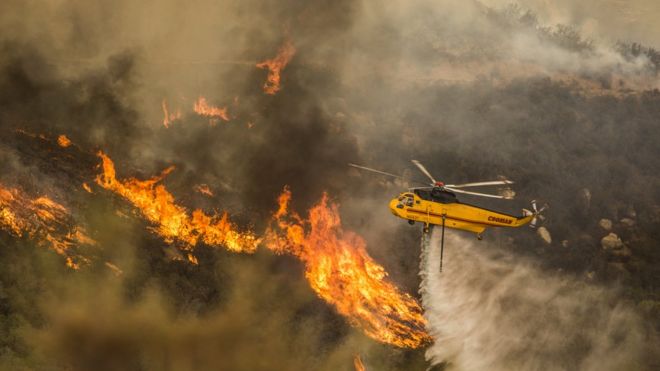
wildfiresImage copyrightMARIA ALEJANDRA CARDONA
Image captionCalifornia saw intense wildfires throughout this summer

UN Secretary General Antonio Guterres has said that if the world doesn’t change course by 2020, we run the risk of runaway climate change.

Mr Guterres said he was alarmed by the paralysis of world leaders on what he called the “defining issue” of our time.

He wants heads of government to come to New York for a special climate conference next September.

The call comes amid growing concerns over the slow pace of UN negotiations.

Mr Guterres painted a grim picture of the impacts of climate change that he says have been felt all over the world this year, with heatwaves, wildfires, storms and floods leaving a trail of destruction.

Corals are dying, he said, the oceans are becoming more acidic, and there are growing conflicts…

View original post 496 more words

The Indian tribe that gave up hunting to save forests

Exposing the Big Game's avatarCommittee to Abolish Sport Hunting Blog

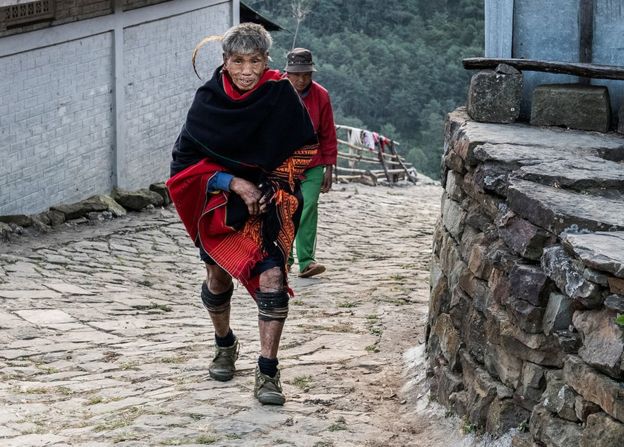
Chaiyievi Zhiinyii was a hunterImage copyrightSAYAN HAZRA
Image captionChaiyievi Zhiinyii was a hunter

A tribe in the north-eastern Indian state of Nagaland gave up their ancient tradition of hunting to protect wildlife. Photographer Sayan Hazra chronicles life in the village years after it banished the practice.

At one time, 76-year-old Chaiyievi Zhiinyii was a skilled hunter. But he stopped hunting in 2001.

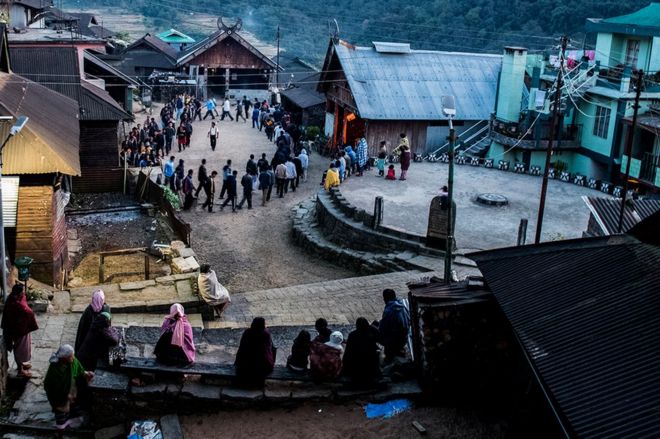
The Khonoma tribe gave up what was an important source of livelihood some 20 years ago in order to create a more stable ecosystem for future generations.

For centuries, many in the remote, hilly village spent the majority of their time hunting. They killed animals for sustenance but also because it was a tradition and a way of life.

The Khonoma village squareImage copyrightSAYAN HAZRA

It all began in 1993 when some tribespeople began a campaign to stop hunting. They were spurred to act after they discovered that…

View original post 367 more words