Exposing the Big Game

Forget Hunters' Feeble Rationalizations and Trust Your Gut Feelings: Making Sport of Killing Is Not Healthy Human Behavior

Exposing the Big Game

Yellowstone’s wolves are back, but they haven’t restored the park’s ecosystem. Here’s why.

LINKEDINCOMMENTMORE

YELLOWSTONE NATIONAL PARK, Wyoming – Yellowstone’s wolves are back, helping revive parts of the ecosystem that changed drastically when this top-of-the-food-chain predator was killed off nearly a century ago. But Yellowstone is still not 100% back to normal – and it may never be.

“You put the predator back, that’s great, but conditions have changed so much in the intervening decades that putting the predator back is not enough to restore the ecosystem,” said Tom Hobbs, a Colorado State University ecology professor. “There’s not a quick fix for mistakes like exterminating apex predators.”

It’s a sign of both the promise – and the limitations – of a multi-decade wildlife recovery effort. The reintroduction of the wolf nearly 25 years ago to the country’s first national park has brought change: Overpopulated elk herds have thinned, allowing some willow and aspen groves to return and thereby creating better habitat for songbirds and beavers.

But even as this ecosystem shows signs of recovery, a complete restoration is nowhere to be found.

“In some places, I don’t expect a full recovery of the ecosystem,” said Bill Ripple, a distinguished professor of ecology at Oregon State University, who started working in Yellowstone in 1997. “It’s going to be a mixed bag for the longer term now in coming decades.”

Yellowstone’s vanishing wolves

The park radically changed after humans exterminated the gray wolf from Yellowstone in the mid-1920s due to predator control efforts. Elk herds ballooned over the next 70 years, overgrazing vast tracts of land and trees such as willow and aspen. Fewer trees sent the songbird population into decline. Beavers lost their food source and the lumber to build their dams. The lack of those dams caused streams to erode, making them deeper and not as wide and further degrading the conditions willow need to grow.

Today, nearly 25 years after wolves were reintroduced into the park, the top predators have helped parts of the ecosystem bounce back. They’ve significantly reduced elk herds, opening the door for willow, aspen, beaver and songbird populations to recover. But the wolves haven’t been a silver bullet for the ecosystem as a whole.

“This idea that wolves have caused rapid and widespread restoration of the ecosystem is just bunk,” Hobbs said. “It’s just absolutely a fairytale.”

More about the park: Breathtaking Yellowstone sparkles in the off-season

Going to the park?: 10 tips to make the most of your visit

‘You don’t know what you’ve got here’: Why Yellowstone is one unique national park

Yellowstone’s partial recovery has set off a heated debate in academia over how much bringing back an apex predator, such as the wolf, can help restore a devastated ecosystem. It’s one with consequences stretching from the U.S. to India and Africa, where naturalists have pinned their hopes on keeping fragile ecosystems as intact as possible by avoiding the elimination of lions, tigers, sharks and other top predators.

“Maintaining intact ecosystems may be easier than fixing them after you’ve lost some of the parts,” Hobbs said.

Fewer elk, more songbirds

Most ecologists agree that Yellowstone has rebounded some. When Doug Smith, Yellowstone National Park’s wolf biologist, first arrived in 1994 shortly before wolves were reintroduced, some willow and aspen trees only came up to his knees. “Now I can’t see through it,” he said. “It’s like a forest.”

But the trees aren’t coming back in every corner of the park: In many spots willow groves haven’t returned. Because willows need beaver to keep the streams from eroding and beavers need the willows to build their dams, it’s rather hard for both to come back simultaneously and in large numbers, said Hobbs, whose team has been conducting a long-term willow growth study in the park for 17 years.

The decrease in elk hasn’t allowed willows to recover because the streams changed significantly when wolves were absent.

“It doesn’t really matter very much whether they’re being browsed or not. They don’t have adequate habitat to thrive,” Hobbs said. “The conditions that changed while wolves were absent created conditions that made it very difficult to restore willows.”

Grizzly population rebound

It’s not all about the wolves, even if they get the most attention. Over the past several decades, the number of other carnivores like the grizzly bear and mountain lion have also climbed, multiplying the impact of the top predators on the ecosystem.

“As a scientist, the challenge is to figure out how much ecological change since wolf reintroduction is attributable to wolves and how much of that change is due to other forces,” said Dan MacNulty, an associate professor at Utah State University who studies the ecology of wolves and elk in the park.

How large the wolf’s impact on the Yellowstone ecosystem is difficult to tease out in part because of nature’s complexity and capacity for frequent change, he said. But money also plays a large role: It is difficult to adequately monitor all the potential drivers of change when funding for long-term research is so limited, he said.

“One of the grand challenges in ecology is to understand the consequences of predator removal and restoration in large-scale systems like Yellowstone. But the resources aren’t there. That really limits our power to know what’s going on,” he said. “A key reason why there’s so much scientific disagreement is that we haven’t been able to take all the necessary measurements over a long enough time and over a large enough number of organisms to come up with a more definitive answer.”

Despite all the disagreement, most ecologists say removing predators today would be a mistake.

“The way ecosystems put themselves back together after such a problem is still something that scientists are trying to understand,” Ripple said. “The lesson is let’s not let things get as bad as they did with 70 years without wolves.”

But there’s an even broader question that needs to be addressed: Can we restore apex predators and coexist with them?

“There’s not many places in the rest of the United States where this is happening,” Smith said. “There are lessons here that we can do this on human-dominated landscapes in other places, but I don’t know because it might involve more wolves, cougars and bears, and right there you have a problem because people have trouble living with those three carnivores.”

Early bear hunting season begins this weekend in parts of NY

Exposing the Big Game's avatarCommittee to Abolish Sport Hunting Blog

Early bear hunting season begins this weekend in parts of NY

September 08, 2018 04:03 PM

ALBANY, N.Y. (AP) – The early bear hunting season is about to begin in New York.

The Department of Environmental Conservation says the early season runs from Sept. 8-23 in parts of southeastern New York and from Sept. 15 to Oct. 12 in northern New York.

The agency says New York has between 6,000 and 8,000 bears in the wild. The numbers have increased in recent years and bears have become more widely distributed across the state, although most live in the Adirondacks and Catskills.

Regular big game hunting season for deer and bears begins on Oct. 20 in northern New York and Nov. 17 in the southern zone.

https://www.whec.com/news/early-bear-hunting-season-begins-weekend-ny/5063268/

View original post

The death rattle of DNR hunting and trapping seasons

Exposing the Big Game's avatarCommittee to Abolish Sport Hunting Blog

TRY 1 MONTH FOR 99¢

“It turns out that in the US’s counterintuitive conservation funding system, hunters have to kill animals to fund the programs and agencies that work to save them.” ~J P Sottile, Truthout

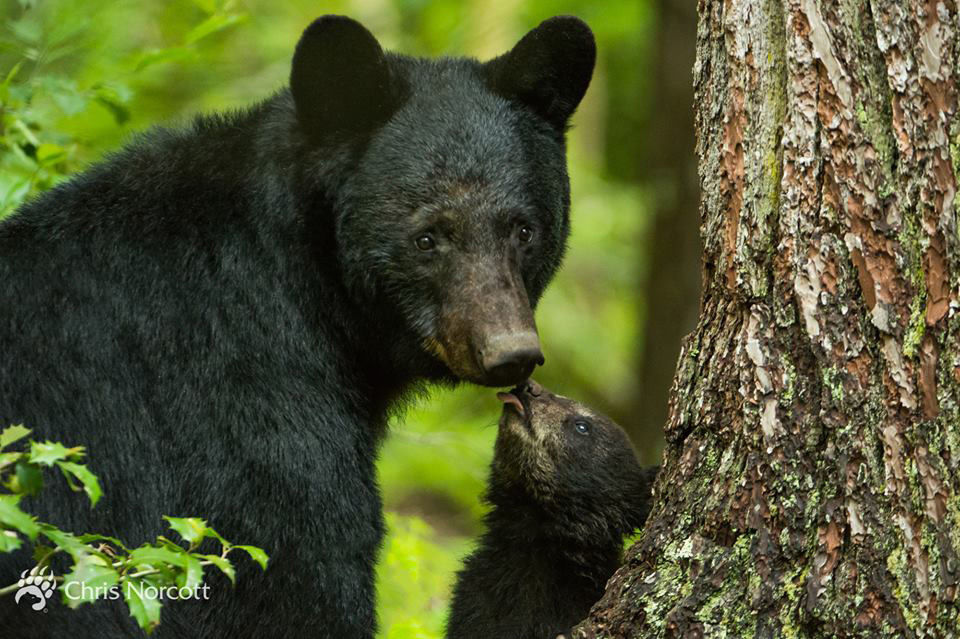
“This (photo above) is Angel with one of her 3 cubs just a couple of weeks after leaving their den. This image shows the love between the mother and her cub she was guarding at the base of this safety tree. Her two other cubs (both males) spent the night high in the tree but this cub (female) had fallen from a tree the night before and her injuries prevented her from climbing ever again during her short life on earth. There are many ways cubs…

View original post 730 more words

Cork cougar reports prompt animal welfare group to set traps

‘It is a very large cat and the reports we’ve received have been too credible to ignore’

File photograph of a puma. Photograph: AFP/Getty Images

File photograph of a puma. Photograph: AFP/Getty Images

An animal welfare group has set up traps and surveillance cameras after receiving several reports of a cougar or puma being seen in parts of Co Cork over the past fortnight.

Vincent Cashman of the Cork Society for the Prevention of Cruelty to Animalssaid the reports they had received of a cougar being seen near Fountainstownand Crosshaven had yet to be confirmed.

However he said that while the sightings were “out of the ordinary but not impossible”, the CSPCA felt that they had to give them credence such was the adamant belief of those who contacted them.

Speaking on the Neil Prendeville Show on Cork’s Red FM, Mr Cashman said it was possible that a cougar or puma had been brought into Ireland illegally as a pet and escaped from its owner.

“We’ve had no confirmation yet this is a puma but the people we have been dealing with are very credible – it is a very large cat and the reports we’ve received have been too credible to ignore.”

Mr Cashman said cougars are solitary animals and tend not to confront people and while they had received no reports of any sheep being attacked, cougars could live off smaller animals like rabbits.

Male cougars can roam over areas of up to 300 square miles while females can cover areas of up to 200 square miles but the CSPCA had targeted the locations of reported sightings to set up cameras.

“We have trail cameras set up in areas where this animal has been seen passing so as soon it passes, it starts filming so we have it on film and we have infra red as well so it picks it up at night as well.”

Mr Cashman said that the CSPCA was continuing to monitor the trail cameras and ultimately hoped to trap the animal and establish what exact species it was, but that could take some time.

“Our ultimate goal is to trap it but at the moment, there are too many rabbits around and plus there’s a bad bout of myxomatosis going around, so catching rabbits is much, much easier now.”

“When the myxo dies off a little bit, and the rabbit population normalises, then he may find getting food a little bit harder and so he may be encouraged towards our traps,” said Mr Cashman.

Gardaí in Togher, with responsibility for the Crosshaven and Fountainstown areas, said that they had received no reports of cougars being seen in the area or any reports of cougars going missing.

The nearest wildlife park to Crosshaven and Fountainstown is Fota Wildlife Park on the other side of Cork Harbour but Fota does not have cougars. It does keep lions, tigers and cheetahs.

There have been numerous reports of large cats being seen in the wild throughout Ireland in recent years, with several reports of pumas or panthers being seen in various parts of Northern Ireland.

In June 2017, the PSNI posted a warning on its Facebook page about sightings of a possible panther in the Newry area and urged people not to approach the animal if they saw it.

The PSNI and the Ulster Society for the Prevention of Cruelty to Animals began hunting for a suspected puma in August 2003 after a large animal killed a pedigree ram on a farm in Co Antrim.

According to Stephen Philpott of the USPCA, there were also sightings of wild cats around the same time in Derry and Tyrone, where a newborn calf was killed on a farm near Cookstown.

Going Viral

Exposing the Big Game's avatarThe Extinction Chronicles

In 2006, the Smithsonian Institute dubbed Balclutha-born Prof Robert Webster the "Flu Hunter" for...

by Bruce Munro
In 2006, the Smithsonian Institute dubbed Balclutha-born Prof Robert Webster the “Flu Hunter” for his significant, decades-long contribution to understanding and fighting influenza. Photo: ODT files

Serendipity has marked the distinguished career of Prof Robert Webster’s international fight against the deadly influenza virus. 

Similarly, coincidences will cause the next monster influenza epidemic, for which we are woefully unprepared, the former Otago researcher tells Bruce Munro.

It is hard to believe that the erudite and engaging voice on the phone belongs to an 86-year-old.

But there is no denying that renowned virologist Prof Robert Webster, on a call from his home in Memphis, Tennessee, was born in Balclutha, Otago, in 1932. Nor that the story he is recounting, of a surprising yet definitive moment in the battle against influenza, happened half a century ago, to him.

“It started off, more or less, as a joke,” Prof Webster…

View original post 2,177 more words

Park City employee faces felony charges for allegedly stealing hunter’s equipment

Exposing the Big Game's avatarCommittee to Abolish Sport Hunting Blog

Park City employee arrested after tree stand theft

>

PARK CITY, Utah — A Park City, city employee faces felony charges after she and her husband were allegedly caught stealing a hunter’s equipment, posted in the Wasatch Mountains.

“There’s no excuse, that I can think of, for what they did,” said hunting enthusiast, Bronko Phillips. “That’s a big no-no and they knew better.”

The investigation started with a Facebook group and some fed-up hunters.

“It was time that we did something,” said fellow hunter, Lance Palmer.

“A lot of people recently have been posting pictures (on Facebook) of their trucks being destroyed while their out scouting or hunting,” said Phillips.

“Trail cameras, every week we have one to six people saying my trail cameras were destroyed,” Phillips added. “We have gentlemen that let us know their stands were taken…

View original post 472 more words

Massive boom will corral Pacific Ocean’s plastic trash

Massive boom will corral Pacific Ocean’s plastic trashPhoto: AP Photo.

https://www.whec.com/news/-massive-boom-will-corral-pacific-oceanrsquos-plastic-trash-/5063246/

September 08, 2018 03:03 PM

SAN FRANCISCO (AP) — Engineers will deploy a trash collection device to corral plastic litter floating between California and Hawaii in an attempt to clean up the world’s largest garbage patch in the heart of the Pacific Ocean.

The 2,000-foot (600-meter) long floating boom will be towed Saturday from San Francisco to the Great Pacific Garbage Patch — an island of trash twice the size of Texas.

The system was created by The Ocean Cleanup, an organization founded by Boyan Slat, a 24-year-old innovator from the Netherlands who first became passionate about cleaning the oceans when he went scuba diving at age 16 in the Mediterranean Sea and saw more plastic bags than fish.

“The plastic is really persistent and it doesn’t go away by itself and the time to act is now,” Slat said, adding that researchers with his organization found plastic going back to the 1960s and 1970s bobbing in the patch.

The buoyant, a U-shaped barrier made of plastic and with a tapered 10-foot (3-meter) deep screen, is intended to act like a coastline, trapping some of the 1.8 trillion pieces of plastic that scientists estimate are swirling in that gyre but allowing marine life to safely swim beneath it.

Fitted with solar power lights, cameras, sensors and satellite antennas, the cleanup system will communicate its position at all times, allowing a support vessel to fish out the collected plastic every few months and transport it to dry land where it will be recycled, said Slat.

Shipping containers filled with the fishing nets, plastic bottles, laundry baskets and other plastic refuse scooped up by the system being deployed Saturday are expected to be back on land within a year, he said.

The Ocean Cleanup, which has raised $35 million in donations to fund the project, including from Salesforce.com chief executive Marc Benioff and PayPal co-founder Peter Thiel, will deploy 60 free-floating barriers in the Pacific Ocean by 2020.

“One of our goals is to remove 50 percent of the Great Pacific Garbage Patch in five years,” Slat said.

The free-floating barriers are made to withstand harsh weather conditions and constant wear and tear. They will stay in the water for two decades and in that time collect 90 percent of the trash in the patch, he added.

George Leonard, chief scientist of the Ocean Conservancy, a nonprofit environmental advocacy group, said he’s skeptical Slat can achieve that goal because even if plastic trash can be taken out of the ocean, a lot more is pouring in each year.

“The plastic is really persistent and it doesn’t go away by itself and the time to act is now,” Slat said, adding that researchers with his organization found plastic going back to the 1960s and 1970s bobbing in the patch.

The buoyant, a U-shaped barrier made of plastic and with a tapered 10-foot (3-meter) deep screen, is intended to act like a coastline, trapping some of the 1.8 trillion pieces of plastic that scientists estimate are swirling in that gyre but allowing marine life to safely swim beneath it.

Fitted with solar power lights, cameras, sensors and satellite antennas, the cleanup system will communicate its position at all times, allowing a support vessel to fish out the collected plastic every few months and transport it to dry land where it will be recycled, said Slat.

Shipping containers filled with the fishing nets, plastic bottles, laundry baskets and other plastic refuse scooped up by the system being deployed Saturday are expected to be back on land within a year, he said.

The Ocean Cleanup, which has raised $35 million in donations to fund the project, including from Salesforce.com chief executive Marc Benioff and PayPal co-founder Peter Thiel, will deploy 60 free-floating barriers in the Pacific Ocean by 2020.

“One of our goals is to remove 50 percent of the Great Pacific Garbage Patch in five years,” Slat said.

The free-floating barriers are made to withstand harsh weather conditions and constant wear and tear. They will stay in the water for two decades and in that time collect 90 percent of the trash in the patch, he added.

George Leonard, chief scientist of the Ocean Conservancy, a nonprofit environmental advocacy group, said he’s skeptical Slat can achieve that goal because even if plastic trash can be taken out of the ocean, a lot more is pouring in each year.

Donald Trump Jr. was in Broussard, Louisiana for … gator hunting

Exposing the Big Game's avatarCommittee to Abolish Sport Hunting Blog

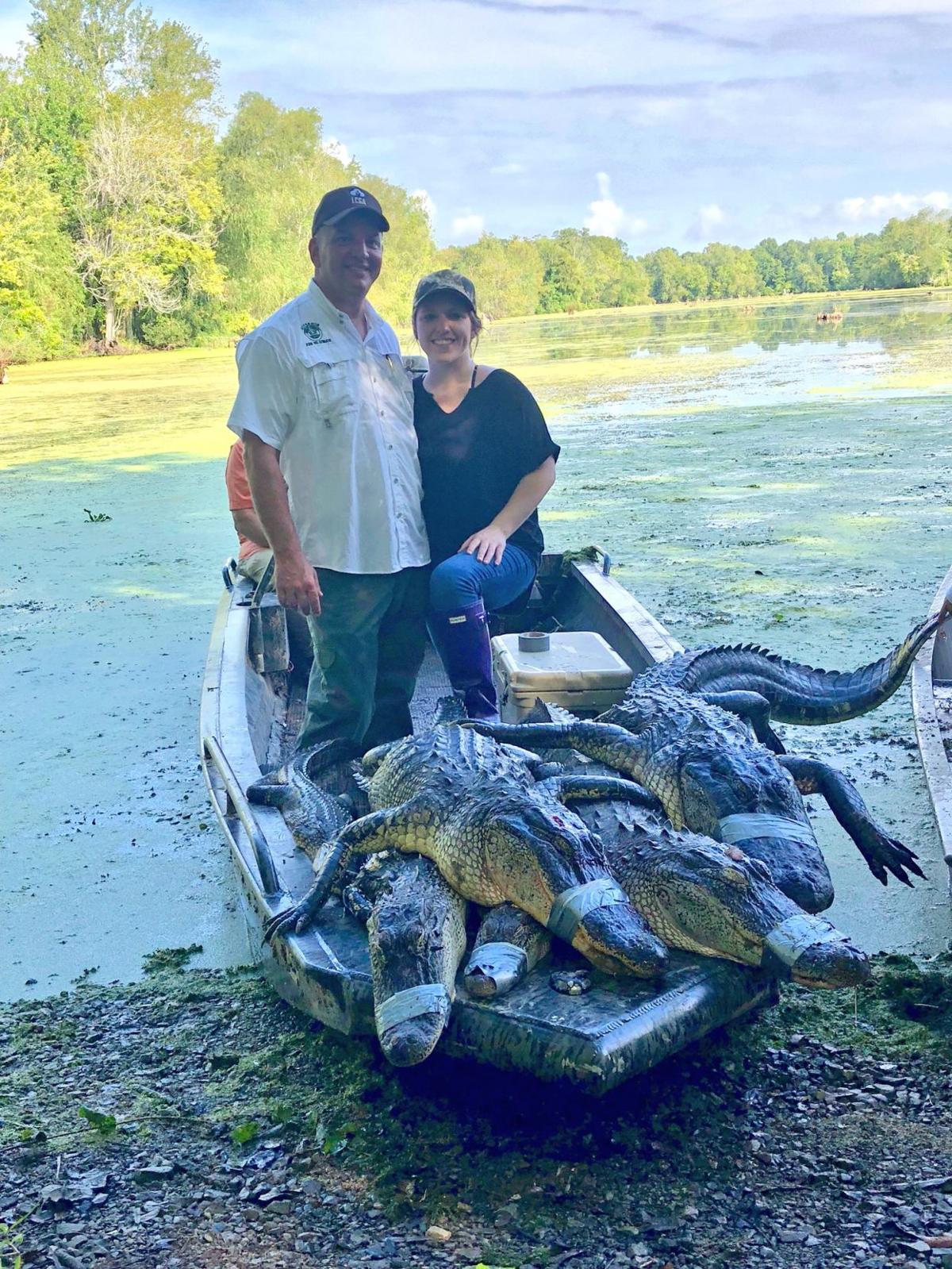
Donald Trump Jr. spent time in Broussard this weekend doing one of the most Louisiana things possible: alligator hunting.

The president’s son attended a hunt to support Louisiana Attorney General Jeff Landry, according to social media posts from attendees and Trump’s girlfriend Kimberly Guilfoyle. Landry hosts an annual gator-hunting fundraiser with a price tag of $5,000 per hunter, according to the event website.

“This is not your typical Reagan Day rubber chicken dinner so this is a fun one,” Trump said in a video shared on Facebook by another attendee. “I’m excited to come back down here again and I have a lot of friends…

View original post 348 more words

Red Tide arrives in Pinellas, killing hundreds of thousands of fish

Exposing the Big Game's avatarThe Extinction Chronicles

Fish kill, Red Tide, in the Intracoastal off the Pinellas County shoreline, Saturday. [Kelli Levy, Pinellas County’s director of environmental management]

ST. PETERSBURG — Pinellas County environmental officials have reported hundreds of thousands of dead fish on and off the coast of area beaches stretching more than 20 miles from Clearwater to St. Petersburg, confirming that Red Tide has reached the Tampa Bay area.

The first report of fish kills came from the city of Clearwater on Friday, said Kelli Levy, Pinellas’ director of environmental management. Around noon Saturday, the city of St. Petersburg reported “hundreds of thousands” more.

PREVIOUS COVERAGE: Red Tide’s toxic toll — your questions answered (w/video).

Madeira Beach, Redington Beach and Treasure Island have also been affected, she said. Levy could not provide an overall…

View original post 673 more words

Movie Review: Michael Moore’s Fahrenheit 11/9 Is a Must-See

Photo: 1996-98 AccuSoft Inc., All rights reserved/Courtesy of TIFF

You could argue that Michael Moore’s Fahrenheit 11/9 has too many irons in the fire, being variously an acid evocation of the rise of Donald Trump, a peroration against establishment Democrats (among them both Clintons and Barack Obama), an earnest exhortation to grass-roots activism, and an alarmist examination of the current moment’s parallels to Weimar Germany. But I’d say Moore has about the right number of irons, and that he strikes the living hell out of every one. This isn’t his smoothest film, but it’s his fullest and most original. It’s also his most urgent, which is really saying something. It’s one of the most urgent films ever made.

The thrust is that the United States of America is toast, or at least pretty close. Closer than it has been in 250 years — not that Moore thinks the country has ever lived up to its branding as a place of liberty and justice for all. (His own brand wouldn’t exist if he did.) But the Constitution, imperfect as it is, is only as strong as the democracy that protects it, and the democracy that protects it is only as strong as… Thereby hangs his tale.

It must be said that Fahrenheit 11/9 is something of a bait-and-switch. It opens funny, if you can forget for a second the broader narrative. 11/9, of course, is the day (it was early a.m.) that Donald Trump became president-elect, and Moore’s prologue and first section is a Greatest Hits collection of low points: from the media’s certainty he’d never win a primary/the nomination/the presidency to the certainty of Hillary Clinton and her followers that no halfway intelligent country would elect a vulgar, boastful, racist, misogynistic grifter. But after making the case that Trump’s presidency can be blamed on Gwen Stefani (hint: it was her salary on The Voice), Moore offers a hilariously annotated list of since-dethroned male harassers harassing Clinton about her e-mails and/or competency to occupy the Oval office, and then demonstrates how “the malignant narcissist played the media for suckers.” He includes himself.

He once had a bit of fun with Trump on Roseanne Barr’s short-lived yak show, grinning when Trump said he loved Roger & Me and hoped Moore would never make a film about him. Moore follows with a somewhat amusing but generally icky montage depicting Trump’s lechery towards his daughter.

Moore is barreling along when he segues to a spiritual cousin of Trump, Michigan governor Rick Snyder, a very rich man who joined the government in order to privatize it. And then comes Flint, the laughs stop abruptly, and Fahrenheit 11/9 becomes a story of criminal Republican malfeasance, establishment Democratic uninterest and/or impotence, and the rise of local activism that rattles the poohbahs of both parties.

We get Flint because it illustrates one kind of malignant governance. Snyder decided to build a second pipeline from Lake Huron (the existing one worked fine), drew water in the meantime from the ghastly Flint River, and ignored evidence that elevated levels of lead were sickening children—and permanently damaging their brains. Here’s the sort of rhetoric Moore does best: He portrays Snyder as criminally indifferent to the poisoning of poor and black children (Moore calls this “a slow-motion ethnic cleansing”) while incensed when General Motors complains that Flint water is corroding the steel in the cars still being made there. When the world premiere screening audience heard that Snyder restored the Lake Huron water to GM but not residents of Flint, there were gasps.

Moore gets a few cheap laughs when he goes to the state capitol to make a citizen’s arrest and then deluges the governor’s lawn with a truckload of Flint water. But it was the efforts of Flint mother LeeAnne Walters; Dr. Mona Hanna-Atisha; and the previously little-known whistleblower April Cook-Hawkins, who refused to follow orders and reduce the levels of lead on a report of children’s blood tests, that Moore is here to celebrate. They’re “ordinary” people who stepped up in the absence of politicians — among them President Obama, who visited the community but declined to declare a national disaster, offering only words of encouragement, and, in an uncharacteristically tone-deaf move, pretending to drink Flint water while only wetting his lips. Later, Moore notes that disgust with the Democrats kept many Flint voters from the polls in that vital Midwest state. It went narrowly for Trump.

That’s a yuuge point in Fahrenheit 11/9. Moore doesn’t reiterate his support for Bernie Sanders here. He’s more concerned with accusing newspapers like the New York Times of misrepresenting Sanders’s youthful constituency with a front-page story headlined, “Sanders’s Messages Resonates with One Age Group: His Own.” More damagingly, he accuses state parties of outright lying at the Democratic Convention about unanimous county majorities for Hillary Clinton. In a close election, the weeping — and, more important, rage — of Sanders’s voters made a difference. And don’t get him started on the Electoral College, a holdover from an era of American aristocracy.

After Flint, Trump is on to West Virginia and a teacher’s strike over wages that put them below the poverty line. While union leaders behaved wimpily and politicians did little, the strike spread to all 55 counties — and inspired teachers in other states to challenge legislatures. The next stop is Parkland, Florida. First, Moore meets for a strategy session with former Stoneman Douglas High School student David Hogg and his posse, and then he accompanies them to the state capitol in Tallahassee, where he captures the most cringeworthy evasions of NRA-funded Republican legislators.

Finally, Moore arrives at the most provocative chapter of Fahrenheit 11/9: He disputes the idea that comparisons to Nazi Germany are spurious, demonstrating the identical kind of rhetoric in the early 1930s on behalf of despotism — and sampling the editorial of a leading German Jewish newspaper that assured its readers that Hitler would be forced to moderate his proposals to conform to the German Constitution. That was before a trumped-up “national emergency,” the dissolution of much of said constitution, the Reichstag fire, and the appointment of Nazi-affiliated legislators and judges. Non-party journalists became Enemies of the People.

Where are the Russians in Fahrenheit 11/9? Putin shows up two or three times in passing. For Moore’s thesis, they’re only relevant in demonstrating Trump’s affection for despots, and, more important, for the ways in which his asides about postponing the 2020 election and becoming president for life might creep into mainstream of public discourse. What Robert Mueller will or won’t do is of no concern to him, either. Moore ridicules hope. After the movie’s premiere screening at the Toronto International Film Festival, Moore bridled when a questioner dared to use the “h” word. Fuck hope, he said. The new word is “action.”

After the world premiere screening, April Cook-Hawkins came onstage to a standing ovation. So did David Hogg and several of his peers, to an even longer one. But this is Canada, you say, the northernmost coordinate of this administration’s new Axis of Evil. (The other two are that old standby Iran and maybe Germany, Iraq being an unmentionable and Kim Jung-un a great guy whose people love him.)

A Michael Moore movie will always have cheap shots, and many liberals and progressives will wince when they’re aimed at the likes of Obama, who only by a miracle managed to pass the watered-down national health care bill that is currently being eviscerated. But can anyone committed to social justice not gag watching crypto-Republican Holy Joe Lieberman complain on Fox News about shrill progressives like Alexandria Ocasio-Cortez? (Bring a barf bag.) “I have a question for you guys,” said Moore on the Toronto stage. “Who’s ready to save America?” Yes, he’s a bit of a blowhard, but the air is blowing hard in the right direction. You need to see this film.