“The situation is so urgent that we really need to try anything,” an MIT professor said.
by James Rainey /
John D. Sterman speaks during the 2017 United Nations Climate Change Conference in Bonn, Germany. Climate Interactive
Many people see climate change as too big and daunting a problem to even think about fixing. Others are unconvinced that it’s a problem at all. Scientists issue urgent calls to action, but, often, people are unmoved.
Now, researchers say they have found one thing that increases motivation to battle climate change: a game.
The World Climate Simulation is a role-playing game that thrusts participants into the roles of negotiators at an ersatz United Nations climate summit. It forces them to make decisions about how to lower greenhouse gas emissions and slow the warming of the Earth and shows them the consequences if they do too little.
Senior Lecturer in Organisational Ethnography, Keele University
Disclosure statement
Lindsay Hamilton does not work for, consult, own shares in or receive funding from any company or organization that would benefit from this article, and has disclosed no relevant affiliations beyond their academic appointment.
Partners
Keele University provides funding as a member of The Conversation UK.
Republish this articleRepublish our articles for free, online or in print, under Creative Commons license.
Secretly filmed footage of a group of sheep shearers working on a farm makes for shocking viewing. Animals are kicked, stamped on and punched in the face. The abuse, uncovered by an animal rights group, is difficult to watch.
Broadcast by Channel 4 News, the footage was filmed by PETA Asiaduring summer wool shearing, when teams of contractors are typically paid “per sheep sheared”.
It goes without saying that animal cruelty and mishandling is unethical, and sheep farmers are understandably keen to stress that the footage is not representative of British sheep farming practises. But beyond the indefensible actions of some individuals lies a wider issue. In low margin industries, such as wool, there are limited incentives to invest in people with a high level of skill – or respect for animals.
Consumer demand for cheap clothing is part of the problem. Apart from what is used for carpets, mattresses and one or two other artisan sectors of the industry, the generally low price of wool makes it hard for farmers to prioritise processes like shearing. To do so is neither profitable nor productive.
The market for wool is particularly stringent. What was once a thriving component of the sheep farming industry is now a mere byproduct of the more profitable lamb market. Yes, wool commodity prices have increased over the last decade and there have been some niche successes in, for example, rare breed wool such as Herdwick fleece from the UK’s Lake District.
But for many farmers, wool production provides only a small fraction of their overall income. In terms of the invested effort in cleaning, processing and packing shorn fleeces, it is almost certainly loss making.
The sheep shearing scandal revealed by PETA comes at a time when there has been a sharpening focus on animal welfare issues. There have been policy pledges made by the UK’s environment secretary, Michael Gove, to bring animals into the political spotlight, for example by prohibiting sales of puppies and kittens in pet shops.
But these pledges may do little to reassure a public that takes a serious interest in animal health and that has seen myriad recent “scandals” in relation to contamination (horse meat), disease (foot and mouth, BSE, bird flu) and the ethics of animal treatment.
Animal ethics
Research shows that a large majority of people who work with animals do so because they find human-animal contact rewarding in some way. For some, it’s the prospect of improving the well-being of animals as a veterinary surgeon, or as a volunteer in a rescue shelter. For others, like farmers, the reward comes from interacting with animals as part of a particular way of life.
Even those employed in slaughterhouses and meat processing plants have been observed to display a generally unemotional “blankness” rather than outright violence when it comes to handling animals. It seems instead that acts of violence and cruelty are restricted to a minority, and research has shed light on the psychological links between animal violence and other forms of social dysfunction, such as domestic abuse. For most, animal work is either positively rewarding or routinely unemotional.
What is significant is that a minority of unregulated and probably unobserved individuals are allowed to engage in acts of cruelty that most would find repugnant and deeply upsetting. In the sheep farming industry, where farmers are working to tight profit margins in tough conditions, there is so little slack in the system that – at times like shearing – speed can be valued over other concerns.
It is this low margin, high speed culture which makes it more likely that self-employed contractors like shearing gangs will seek to cut corners or lose patience with their charges and react with violence.
There are no simple solutions to such problems. But continuing to expose and discuss animal cruelty is an important step in ensuring it remains on the agricultural and political agenda – and that it permeates the consciousness of consumers, too.
Consumer demand for wool is a driver of the price the farmer receives and, as the seasons change and magazine editors publicise jumpers and cardigans for the autumn and winter, now is a good time to raise awareness of the issue.
Greater regulation and surveillance is needed in the shearing industry to ensure rogue practitioners are prevented from finding work. Beyond that, however, sheep farmers also need to be able to secure greater returns for wool in order to maximise the care they take in its production. It needs to be worth their while to hire people who are paid fairly for the time they take to do the job well.
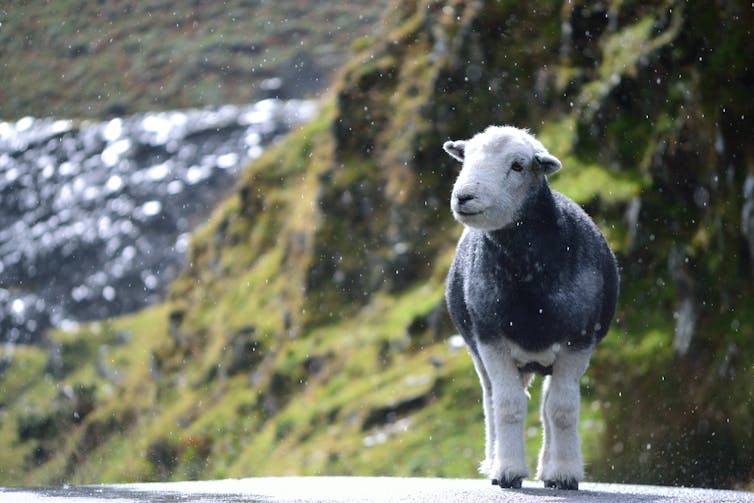
It can be done. In the UK, Herdwick sheep were once maligned for their particularly wiry wool. Their products have now been successfully rebranded as the breed’s longstanding connection to the beautiful Lake District has added a premium to their fleeces, now prized for their quality and durability in the production of mattresses, carpets and tweeds. Other farmers may well be able to follow their lead, providing greater opportunities for generating new value in this most ancient of commodities.
Two black bears died in Juneau this summer after getting caught in snares marked by the same person and set for wolves but illegally left out past the end of the trapping season.
The snares, both found on Douglas Island, bore tags that identified the trapper who originally marked them: 39-year-old Mark Mitchell, a Juneau resident, according to an Alaska State Troopers updateposted Thursday.
A bear cub was caught in a snare set for wolves on Douglas Island in May 2018. The bear was later euthanized because the snare had cut through to the bone on both legs. (Alaska State Trooper photo)
It is believed that there are still additional snares in the field on Douglas Island or in the area of Thane, troopers say.
Mitchell was cited in late May after hikers found…
In September of last year, two executives of JBS, the world’s largest meat producer, based in Brazil, were arrested and charged with insider trading. In May 2017, the billionaire siblings—Wesley Batista, JBS’s CEO, and his younger brother Joesley, the firm’s former chairman—admitted to bribing more than 1,800 politicians and government officials, including meat inspectors, in an effort to avoid food safety checks.
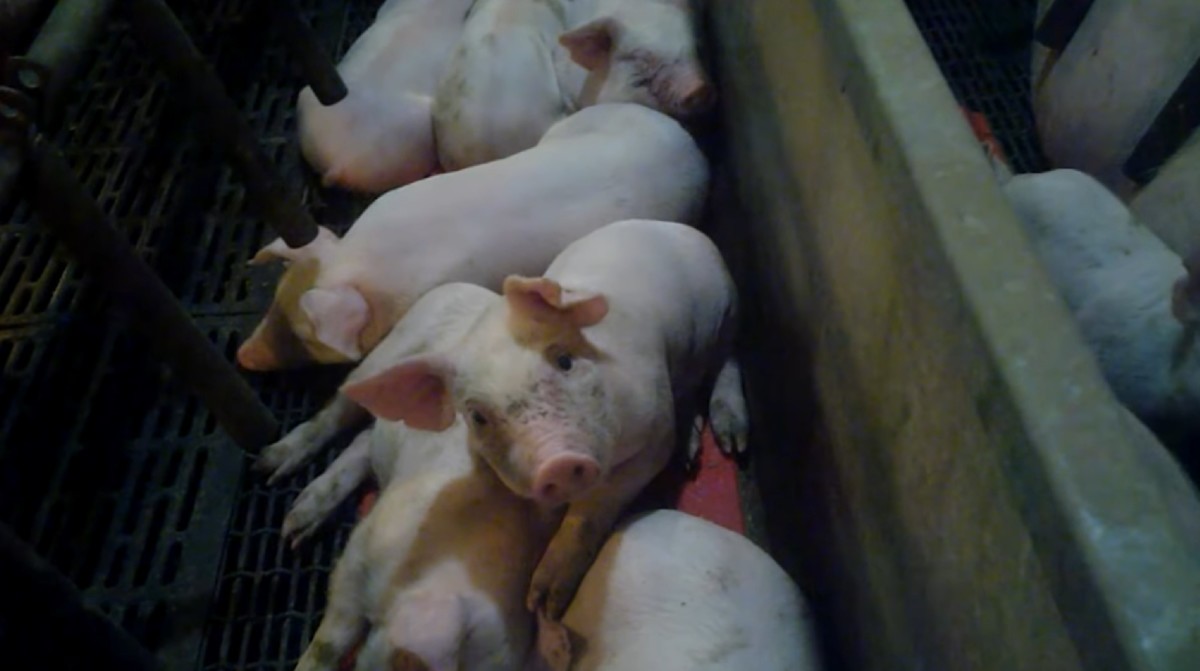
Now, new undercover video shot by a Mercy for Animals (MFA) investigator at Tosh Farms, a JBS pork supplier based in Franklin, Kentucky, exposes what the animal rights group calls the “malicious and systemic abuse of mother pigs and piglets.”
“I’ll never forget the way they looked up at me,” said Tyler, the MFA investigator, about the pigs he documented at Tosh Farms. “They all shared the same look of helplessness and fear.”
“One mother pig stumbled down a corridor with her uterus hanging outside her body. She wouldn’t live much longer,” he said on an MFA website launched specifically to document the JBS investigation, jbstorture.com.
Tyler witnessed workers at Tosh Farms kicking and striking animals in their faces, ripping out the testicles of piglets without any pain relief, and even smashing the heads of piglets against the ground in order to kill them.
Those piglets who did not immediately die were left to suffer, denied proper veterinary care. “A worker grabbed a piglet, just hours old, by the feet and swung him high and then slammed his head down against the hard concrete,” said Tyler. “Any life left quickly vanished.”
Stay in the loop
Never miss the news and analysis you care about.
“From the day pigs are born until the day they are violently killed for JBS pork, their lives are filled with misery and deprivation,” said Matt Rice, president of MFA, in a press statement. “If JBS executives abused even one dog or cat the way their suppliers abuse millions of pigs, they would be jailed for cruelty to animals. As the largest meat company in the world, JBS has the power and responsibility to end this torture.”
Clare Ellis, publisher of Stone Pier Press, which recently released “Sprig the Rescue Pig,” the first of its Farm Animal Rescue Books for children, was appalled: “Stories like this are even more heartbreaking and upsetting when you consider how very smart, curious, affectionate and sensitive pigs are.” She added that, “Close to 99 percent of animals raised for food come from factory farms, which, in addition to being terribly cruel, do an enormous amount of environmental damage.”
Following the July 17 release of the video, which was taken between December 2017 and March 2018, JBS said it suspended shipments from that supplier site. “The images presented in the video fall completely outside the company’s standards,” JBS said in a statement, but did not name the supplier involved.
But for MFA, suspending shipments from that single supplier isn’t nearly enough. “JBS’s decision to suspend Tosh Farms as a supplier is too little, too late,” Kenny Torrella, director of communications with MFA, told Truthout. “It amounts to nothing more than meaningless PR spin.”
The group, headquartered in Los Angeles, is now calling on JBS to end factory farm cruelty across its global pork supply chains, including the elimination of painful mutilations. In addition, MFA is calling on JBS to prohibit its suppliers from housing sows in tiny gestation crates for nearly their entire lives. These metal cages, the standard of which measures just 6.6 feet x 2 feet—so small that they can’t even turn around or lie down comfortably—are where pregnant sows live in factory farms around the globe for nearly their entire lives. In the United States as of 2016, there were 5.36 million breeding sows, most of them kept in gestation crates.
Confined to tiny gestation crates, mother pigs are not only denied basic natural behaviors like playing, exploring and engaging with their peers and children, but they also must endure immense and prolonged mental and emotional suffering. “These curious animals lose their minds from frustration and stress,” writes Lucas Alvarenga, vice president of MFA in Brazil. “They often also suffer painful pressure sores from rubbing against the bars of their crates and crippling joint problems as their muscles waste away from lack of use.”
While gestation crates are still the norm across the world, things are beginning to change for the better. Canada, the European Union, New Zealand and Australia, as well as 10 US states, have banned cruel gestation crates. Further, more than 60 major food companies—including McDonald’s, Walmart, Burger King and Nestlé—have said they would ban gestation crates from their suppliers.
In addition, California voters will have the opportunity in November to ban the sale of pork from pigs confined in gestation crates. If the measure passes, that will impact Tosh Farms and JBS, as the pigs reared at Tosh are then transported to a JBS slaughterhouse in Louisville, Kentucky, which supplies pork products to stores across California.
The systemic abuse and torture of pigs is an industry-wide problem. Last year, MFA investigators at the Aurora cooperative pig factory farm in the state of Santa Catarina in Brazil, the third-largest meat producer in Brazil and a major pork exporter to the United States, recorded video of pigs and piglets enduring a wide range of cruelty, including, notes Alvarenga, “workers slicing off the tails, cutting holes in the ears and grinding the teeth of piglets without any pain relief.”
“The animals who are raised to be food for humans are so much more than just burgers and bacon,” said Marc Bekoff, professor emeritus of ecology and evolutionary biology at the University of Colorado, Boulder, and co-author ofThe Animals’ Agenda: Freedom, Compassion, and Coexistence in the Human Age.
“Pigs, cows, chickens, turkeys and other non-human animals whose flesh is destined to wind up in our mouths were once sentient beings with rich emotional lives,” said Bekoff, who is also the co-founder, with Jane Goodall, of Ethologists for the Ethical Treatment of Animals. “But because consumers rarely interact with them while they are still alive, they don’t see that these animals feel such a wide range of emotions, ranging from joy to sadness to grief, just like we all do.”
Non-human animals aren’t the only victims of the factory farm system. Slaughterhouse workers must witness the nightmarish conditions that the animals must endure. Some workers must do the actual killing, day in and day out.
“The psychological toll this takes on a person cannot be underestimated,” writes Ashitha Nagesh. “Slaughterhouse work has been linked to a variety of disorders, including PTSD and the lesser-known PITS (perpetration-induced traumatic stress). It has also been connected to an increase in crime rates, including higher incidents of domestic abuse.”
“To help move society to a more ethical food system, we as consumers must think less about ‘what’ is on our plate and more about ‘who’ is on our plate,” said Bekoff.
TAKE ACTION: Sign the petition urging JBS to ban gestation crates and painful mutilations.
This article was produced by Earth | Food | Life, a project of the Independent Media Institute.
A recent study evaluated whether the relationship between eating more red meat and heart disease is because eating red meat increases iron levels.
Heart disease is one of the leading causes of death worldwide, and there is evidence of a relationship between eating more red meat and heart disease risk. However, it is not known how exactly red meat could increase the risk. One possible explanation is that red meat is rich in iron, and high iron levels in the blood could contribute to the development of heart disease. This theory was tested in a German study that was recently published in The American Journal of Clinical Nutrition.
The researchers performed their enquiry using participants of the European EPIC-Heidelberg study. EPIC-Hedelberg is an ongoing clinical study in which 25,000 initially-healthy male and female volunteers have been monitored since the mid-1990s. The participants had submitted blood samples and provided detailed information on socioeconomic status, lifestyle factors, and dietary habits at the beginning of the study period. To investigate the relationship between red meat and heart disease, researchers identified all members of this group that had evidence of heart disease. They found that 555 participants had survived a heart attack, 513 had survived a stroke, and 381 had died due to heart disease. They randomly selected 2,738 other study participants to serve as controls.
The researchers used the information on dietary habits to determine the amount of red meat each participant typically consumed. They also measured the amount of iron and the iron-storage proteins transferrin and ferritin in blood samples that had been frozen at the start of the monitoring study (blood tests for ferritin are commonly used in health clinics to assess whole-body iron stores). They then used a variety of statistical methods to determine if there was a relationship between iron levels, red meat, and heart disease. These methods also allowed them to account for age, gender, and other health and lifestyle factors known to be associated with increased risk of heart disease.
Increased Ferritin Levels
Eating more red meat led to increased ferritin levels in the control group. Ferritin is a protein that the body uses to store iron. However, other measures of iron storage (blood iron concentration and transferrin) did not change with red meat consumption.
Increased Risk of Heart Attack with Red Meat Consumption
The participants who had had heart attacks, stroke, or death due to heart disease ate, on average, more red meat than people in the control group. When adjusting for age and gender, every additional 50 grams (1.8 ounces) of daily red meat consumption increased the risk of suffering a heart attack by 1.18 times, of stroke by 1.16 times, and of dying from heart disease by 1.27 times.
The participants with evidence of heart disease tended to have a higher body mass index, less education, and were more likely to smoke and have high blood pressure relative to the control group. These lifestyle and health factors are all already known to be associated with increased risk of heart disease. Once these and other known risk factors (alcohol consumption, fiber intake, energy intake, menopausal status, c-reactive protein, and low-density lipoprotein levels) were accounted for, only the relationship between red meat and heart attacks remained significant.
In other words, the known risk factors aside from red meat were sufficient to explain why some participants were more likely to get strokes and die of heart disease. This implies, for example, that while eating more red meat may lead to obesity, it is the obesity that increases the risk of stroke and death, not the red meat specifically.
Risk of Heart Attack Decreased after Considering Other Risk Factors
When adjusting for just age and gender, every doubling of blood ferritin concentration increased the risk of having a heart attack by 1.09 times, and the risk of dying of heart disease by 1.13 times. However, both these relationships disappeared once the additional known risk factors were accounted for.
Furthermore, study participants with low ferritin concentrations (less than 76.5 ng/mL) did not have a lower risk of heart attack, stroke or death from heart disease than those with higher concentrations. The other measures of iron storage (blood iron and transferrin) were not associated with risk of heart disease.
Iron from Red Meat May Not Increase Risk of Heart Disease
There were several limitations of the study. All blood samples and dietary surveys were conducted at the beginning of the study, several years before many of the participants developed heart disease. It is, therefore, possible that dietary habits and iron storage status could have changed in the intervening period. Also, the causes of death for study participants were determined from death certificates rather than clinical records, which would have been more reliable. Finally, the German participants in the EPIC-Heidelberg study may not be representative of other populations, such as North Americans.
Overall, this study did not support the idea that the iron from red meat increased the risk of heart disease. Instead, increased levels of the iron-storage protein ferritin may be a marker of other health or lifestyle factors (such as obesity or smoking) that are the actual causes of heart disease. However, the study did find evidence that eating more red meat increased the chances of having a heart attack, independently of other risk factors. How exactly red meat does this remains unknown.
Written by Bryan Hughes, PhD
Reference: Quintana Pacheco, D. A., Sookthai, D., Wittenbecher, C., Graf, M. E., Schübel, R., Johnson, T., Katzke, V., Jakszyn, P., Kaaks, R. & Kühn, T. Red meat consumption and risk of cardiovascular diseases—is increased iron load a possible link? The American Journal of Clinical Nutrition 107, 113-119 (2018).
Worthington, MN (KSFY) A Worthington man died in a hunting accident early Saturday morning.
The Nobles County Sheriff’s Department said first responders found Jeffrey Dean Nickel, 39, of Worthington, deceased.
A hunting accident was reported to the Sheriff’s Department at 6:42am at the Eagle Lake wildlife management area near Sunberg Avenue and 130th Street in Graham Lakes township.
The Nobles County Sheriff’s office, Fulda Ambulance, Brewster Fire and Rescue and Minnesota Department of Natural Resources all responded.
Authorities are not releasing any other details at this time. Stick with KSFY news as we learn the latest on this developing story.
Reductions, by 50 percent or more, in ruminant meat (beef and mutton) consumption are, most likely, unavoidable if the EU targets are to be met, according to the findings published in the Food Policy journal
EU climate targets won’t be met unless greenhouse gas emissions linked to beef and dairy consumption are dramatically reduced, a Swedish study published on Monday said.
“Reductions, by 50 percent or more, in ruminant meat (beef and mutton) consumption are, most likely, unavoidable if the EU targets are to be met,” according to the findings published in the Food Policy journal.
But Stefan Wirsenius, one of the authors of the study written by researchers from Chalmers University of Technology and the SP Technical Research Institute, said there was no need to give up meat completely. “Poultry and pork cause quite low emissions,” he said.
Dairy products are also problematic, according to…
Estimated global greenhouse gas emission (GHG) targets to keep within a 1.5°C rise in temperature compared to emissions from global meat and dairy production based on business-as-usual growth projections. Credit: Emissions impossible
Researchers at the Institute for Agriculture and Trade Policy and GRAIN have released a report titled “Emissions impossible – How big meat and dairy are heating up the planet.” The report is a discussion regarding an analysis the groups did on the impact the meat and dairy industries have on global warming. One of their major findings is that large meat and dairy corporations are set to overtake large oil companies as the largest emitters of greenhouse gases. In the report, the researchers also suggest that it is time to expand the field of corporations that get the major share of attention surrounding global warming. They make the case that that meat and dairy producers have flown under the radar for years, and that now, the time has come to include them.
Researchers for the two groups report that they conducted an extensive review of production numbers released by the largest meat and dairy producers and used those numbers to calculate greenhouse gas emissions. They note that very few of the largest meat and dairy corporations offer emissions data and that those that do fail to include data regarding the supply chain. They suggest further that the supply chain in the industry typically accounts for up to 80 percent of greenhouse gas emissions—it typically includes emissions from activities related to growing crops as well as methane emitted directly from livestock.
The researchers also report that a very large share of meat and dairy production occurs in just a few regions: Argentina, Brazil, the U.S., the European Union, Canada, Australia and New Zealand. They also claim that five of the biggest meat and dairy corporations are already responsible for more greenhouse gas emissions than BP, ExxonMobil or Shell. They further claim that their analysis of the industry showed that approximately 80 percent of the global allowable greenhouse gas emissions budget would be taken up by just the meat and dairy industry by 2050, if production is not reduced.
The researchers conclude their report by suggesting that soon there will be no choice—if we are to curb greenhouse gas emissions to meet targets set by agreed upon protocols, meat and dairy production will have to be greatly reduced.
Concerned about the millions of tons of garbage in the patch – a floating blob halfway between California and Hawaii that’s twice the size of Texas – the Ocean Cleanup project is sending out a giant floating trash collector to try to scoop it up. The…
AS CHINA’S agriculture authorities scramble to contain the spread of a pig-killing virus, experts worry that it could spread elsewhere in Asia. But the consequences of the disease at home are bad enough. Pork is China’s favourite meat. Pig farming is big business. The collapse of its market would hamper economic growth. Badly handled, the outbreak could dent the government’s credibility.
The disease was first reported on August 3rd, when it was noted that 47 out of 383 pigs on a small farm in Liaoning, a province in the far north-east, had died. The virus has spread to five other provinces: Anhui, Henan, Heilongjiang, Jiangsu and Zhejiang. The authorities have stepped up inspections, shut some live markets, stopped the transport of pigs from the affected areas and culled nearly 40,000 swine. On September 5th the UN’s Food and Agriculture Organisation…





 Exposing the Big Game