Exposing the Big Game

Forget Hunters' Feeble Rationalizations and Trust Your Gut Feelings: Making Sport of Killing Is Not Healthy Human Behavior

Exposing the Big Game

New Jersey Bear Hunt Underway as Fate of Future Ones Unclear

Exposing the Big Game's avatarCommittee to Abolish Sport Hunting Blog

Thousands of hunters and small groups of protesters have spread out across northern New Jersey as the state’s latest bear hunt got underway.

Oct. 9, 2017,

The Associated Press

https://www.usnews.com/news/best-states/new-jersey/articles/2017-10-09/bear-hunt-begins-as-fate-of-future-new-jersey-hunts-unclear

Greg Honachefsky, a volunteer wildlife technician, weighs the first hunted black bear checking in at the Whittingham Wildlife Managment Area d

uring the first day of a six-day state black bear hunt Monday, Oct. 9, 2017, in Fredon, N.J. (Daniel Freel/The New Jersey Herald via AP) The Associated Press

NEWTON, N.J. (AP) — Thousands of hunters and some small groups of protesters spread out across northern New Jersey on Monday without any reports of major incidents during the state’s latest bear hunt.

State wildlife officials have touted the annual hunts as an important part of controlling the bear population and minimizing run-ins with humans, particularly in the northern part of New Jersey known as bear country. There are an estimated 2,400 to…

View original post 561 more words

Sometimes the Moose is Out to Get You

Exposing the Big Game's avatarCommittee to Abolish Sport Hunting Blog

http://vocm.com/news/sometimes-the-moose-is-out-to-get-you/

A hunter on the Burin Peninsula is in good spirits after being attacked by a moose this weekend.

Rodney Buffett and his friends were hunting near Grand Bank yesterday when Buffett spotted a huge bull.

Buffett’s friend, Chris Caines, says Buffett did what a hunter does. Buffett went after the moose and dropped it with a gunshot. He says when Buffet went up to see if it was dead, he turned around for a moment and the moose popped up, charged at him, and sent him flying through the air.

While Caines and the rest of the party tended to Buffett, the moose ran off.

Buffett was airlifted to hospital in St. John’s, treated and released a short time later. Caines says Buffett is staying with his sister. He is in good spirits, despite not bagging…

View original post 2 more words

Deadly bird flu H7N9 spreads worldwide due to China refusal to give samples to help with production of vaccine

Deadly bird flu Deadly bird flu H7N9 is spreading all over the world cause China is refusing to give virus samples to United Kingdom and US in order to produce vaccine. As it was known Chinese authorities have refused to give sample of the virus cause it possibly breaks WHO rules.

Deadly worlwide pandemic will be caused by a stain of bird flue,as experts warn cause the country is decreasing efforts to product vaccines.  As it was also reported UK and US have tried to convice China in order to get the virus H7N9 samples in order to protect humans from the disease.

Professor Ian Jones, from the University of Reading said: ‘If the virus were to jump it would become a pandemic strain.’

Dr Michael Callahan, a disease expert at Harvard University warned: ‘Jeopardizing US access to foreign pathogens and therapies to counter them undermines our nation’s ability to protect against infections which can spread globally within days.’

The virus H7N9 is not causing symptoms to birds but to humans could have deadly results. Tests have shown that it could cause caughing fever, breathing problems, pneumonia or organ failure and worst of all could have deadly results.

WHO earlier this year ranked the bird flu as one of the major pandemic treats.

Professor Jonathan Van-Tam UK Government’s deputy chief medical officer, said: ‘[H7N9] is an example of another virus which has proven its ability to transmit from birds to humans. It’s possible that it could be the cause of the next pandemic.’

Dozens of elephants killed in Botswana

Baby elephants are seen in the photo: Baby elephants, orphaned by poachers, are now being cared for at a new sanctuary in Botswana© Elephants Without Borders Baby elephants, orphaned by poachers, are now being cared for at a new sanctuary in Botswana

of nearly 90 elephants have been found near a famous wildlife sanctuary in Botswana, conservationists say.

Elephants Without Borders, which is conducting an aerial survey, said the scale of poaching deaths is the largest seen in Africa.

The spike coincides with Botswana’s anti-poaching unit being disarmed.

Botswana has the world’s largest elephant population, but poachers have been breaching its border.

The scientist carrying out the extensive wildlife survey said many of the 87 dead elephants were killed for their tusks just weeks ago – and that five white rhinos have been poached in three months.

“I’m shocked, I’m completely astounded. The scale of elephant poaching is by far the largest I’ve seen or read about anywhere in Africa to date,” said Dr Mike Chase from Elephants Without Borders.

“When I compare this to figures and data from the Great Elephant Census, which I conducted in 2015, we are recording double the number of fresh poached elephants than anywhere else in Africa.”

That census estimated a third of Africa’s elephants had been killed in the last decade and 60% of Tanzania’s elephants had been lost in five years.

Botswana has had a reputation for an unforgiving approach to poachers and had largely escaped the elephant losses seen elsewhere.

Despite a lack of fences on the international border, data from tracking collars showed elephants retreating from Angola, Namibia and Zambia and deciding to stay within the boundaries of Botswana where it was thought to be safe.

Incidents of poaching in the country were rare because of armed and well-managed anti-poaching units.

With 130,000 elephants, Botswana has been described as their last sanctuary in Africa as poaching for ivory continues to wipe out herds across the rest of the continent.

The first sign that was changing came two years ago when the BBC flew with Mr Chase close to the Namibian border and he discovered a string of elephant carcasses with their tusks removed for the first time.

But these latest killings have been found deep into Botswana – close to the protected Okavango Delta wildlife sanctuary, which attracts tourists from around the world.

“People did warn us of an impending poaching problem and we thought we were prepared for it,” said Mr Chase, who pointed to the disarmament of the country’s anti-poaching unit as a cause.

“The poachers are now turning their guns to Botswana. We have the world’s largest elephant population and it’s open season for poachers.

“Clearly we need to be doing more to stop the scale of what we are recording on our survey.”

Botswana’s 2018 Wildlife Aerial Survey is only half-way through and conservationists fear the final figure of poached elephants will be a lot higher.

The survey area is split into sections, or transepts, and the plane flies back and forth like a lawnmower cutting the grass – turning at each end to ensure nothing is missed.

“Fresh carcasses” are those lost within the last three months, but many of those recorded had been killed within the last few weeks.

Conservationists fear the scale of this new poaching problem is being ignored as it is bad for the country’s reputation.

“This requires urgent and immediate action by the Botswana government,” said Mr Chase.

“Botswana has always been at the forefront of conservation and it will require political will.

“Our new president must uphold Botswana’s legacy and tackle this problem quickly. Tourism is vitally important for our economy, jobs, as well as our international reputation which is at stake here as being a safe stronghold for elephants.”

Infected East Coast seals are washing ashore – and are a danger to people and pets, experts say

Exposing the Big Game's avatarThe Extinction Chronicles

| The Herald Sun

Gray seals can grow up to 10 feet and weigh as much as 880 pounds, according to the National Oceanic and Atmospheric Administration.
Gray seals can grow up to 10 feet and weigh as much as 880 pounds, according to the National Oceanic and Atmospheric Administration. NOAA Fisheries

Infected East Coast seals are washing ashore – and are a danger to people and pets, experts say

September 02, 2018 12:59 PM

View original post 418 more words

Rescued jumbo dies of injuries caused by snare trap


KOTA KINABALU: A juvenile male Bornean pygmy elephant has died a week after he was found with an injury on his front left leg caused by a snare trap at Ulu Segama Forest Reserve, Lahad Datu.

Sabah Wildlife Department (SWD) public relations officer Siti Nur’Ain Ampuan Acheh said the five-year-old pachyderm died on the way to the Borneo Elephant Sanctuary in Kinabatangan at about 8.40am on Sunday (Sept 2).

Siti Nur’Ain said the elephant was rescued on Aug 26 after it was found with an injury on its leg caused by the trapping device.

She added that a team comprising a veterinarian and wildlife rangers was dispatched to the location to rescue the injured animal.

image: https://www.thestar.com.my/~/media/online/2018/09/02/13/43/pygmydead2.ashx?la=en

One of the last pictures taken of the weakened elephant before it succumbed to its injuries.

“They managed to capture the elephant and initiated treatment. He suffered a severe and deep wound which had already reached the bone.

“The elephant was also in poor physical condition and weak,” she said.

Siti Nur’Ain said the animal did not respond well to the treatment and died while being transported to the sanctuary for further treatment.

“Post-mortem was conducted to determine the cause of death.

“Findings revealed that the elephant died due to septicaemia which originated from the severe snare trap injury,” she explained.

SWD is investigating the manager of the adjoining plantation.

The latest death brings to 26 the number of elephants killed this year.

Read more at https://www.thestar.com.my/news/nation/2018/09/02/rescued-jumbo-dies-of-injuries-caused-by-snare-trap/#SpKg03ghkPIccXti.99

PRINCE HARRY DITCHES HUNTING, PROMPTED BY VEGAN-CURIOUS MEGHAN MARKLE

Prince Harry Ditches Hunting, Prompted By Vegan-Curious Meghan Markle

by

Associate Editor, UK | Contactable via charlotte@livekindly.co

https://www.livekindly.co/prince-harry-ditches-hunting-prompted-by-meghan-markle/

Posted by  | Sep 1, 2018

During a recent weekend trip to the royal country estate of Balmoral, Prince Harry abstained from his family’s annual bird-shooting expedition. According to the Mirror, sources believe the decision to boycott the hunt was prompted by the Prince’s wife, former actor Meghan Markle.

This is not the first time rumours of this nature have surfaced. At the end of last year, it was announced that Prince Harry would not take part in the annual Boxing Day hunt – a tradition he has regularly participated in since he was a young child. Many believed that Markle, an animal-lover, was the catalyst for this decision. According to the Sun, a “royal insider” said: “Meghan is a keen animal rights campaigner and doesn’t like hunting in any form.” The insider added, “if it means breaking with long-standing royal traditions to avoid upsetting her, so be it.”

Unlike several members of the royal family, many Brits are anti-hunting. Last July, a poll revealed that nearly 70 percent of the population believe shooting birds for sport should be illegal. According to the League Against Cruel Sports, the animal rights organization that conducted the survey, game hunting birds is both outdated and barbaric.


“The shooting industry tries to paint pheasant and partridge shooting as some kind of traditional, idyllic activity which puts food on the table,” said the director of campaigns for the League, Chris Luffingham. “That image has been blown out of the sky because people clearly don’t believe it anymore.”

As well as steering the Prince away from hunting traditions, Markle is also converting him to a more veggie-centric diet like her own. In April, sources revealed to the Daily Mail that Markle was attempting to wean HRH off of meat in the lead up to their wedding.

Although not confirmed if Markle follows a fully plant-based diet, she is a firm lover of cruelty-free fashion; even playing a hand in helping Burberry ditch fur from its designs. On her wedding day, the former “Suits” star graced the reception in a cruelty-free Stella McCartney dress, and on her birthday, the Duchess received a vegan leather bag as a gift from the animal rights organization PETA.

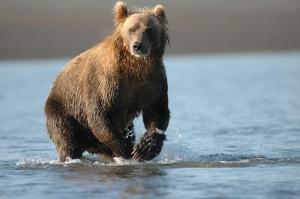
Letter: Grizzly Bears no less than Individuals

Exposing the Big Game's avatarCommittee to Abolish Sport Hunting Blog

The most remarkable thing about Judge Christensen’s August 30th order (“Judge blocks first grizzly hunts in decades”) was that he acknowledged “The threat of death to individual bears…” Wildlife issues are notorious for bringing out the “population management’ banter in all but the most avid animal advocate. Perhaps through these noble bears we can finally address an animal issue with something other than depersonalization and disinformation…

Over the hundreds of hours I’ve spent photographing grizzly bears I never thought of them as anything less than individuals with their own thoughts, concerns and will to live. Anyone out objectifying them as a trophies is using twisted thinking and doesn’t deserve a say in their future.

No one can honestly say that they have an unmitigable hankering for grizzly bear meat. Clearly it would be nothing more than a trophy hunt. As the world-renowned primatologist Jane Goodall recently put it: If a 

View original post 52 more words

Why Jane Goodall Wants A Permit To Hunt Grizzly Bears In Wyoming

Exposing the Big Game's avatarCommittee to Abolish Sport Hunting Blog

Chimpanzee researcher Jane Goodall and elephant conservationist Cynthia Moss seek permits in Wyoming’s first grizzly bear hunt in 44 years.

Why Jane Goodall Wants A Permit To Hunt Grizzly Bears In Wyoming

JACKSON HOLE, WY — Legendary conservationists Jane Goodall and Cynthia Moss don’t plan to use them, but they’ve entered a lottery in Wyoming for permits to hunt grizzly bear in the Yellowstone region. The state hasn’t allowed grizzly bear hunting in 44 years.

Grizzlies in the Greater Yellowstone Ecosystem were removed from the Endangered Species List last year. In May, the Wyoming Game and Fish Commission unanimously approved hunting of grizzly bears as trophy animals. The federal protection began in 1975 when the bruin population in the Yellowstone area plummeted to 136. Today, there are around 700 individuals.

Goodall, renowned for her research with chimpanzees, and Moss, who battles elephant poachers in eastern Africa, have joined a global protest…

View original post 289 more words

Washington wildlife agency gets green light to kill cattle-hunting wolf

  22 HOURS AGO

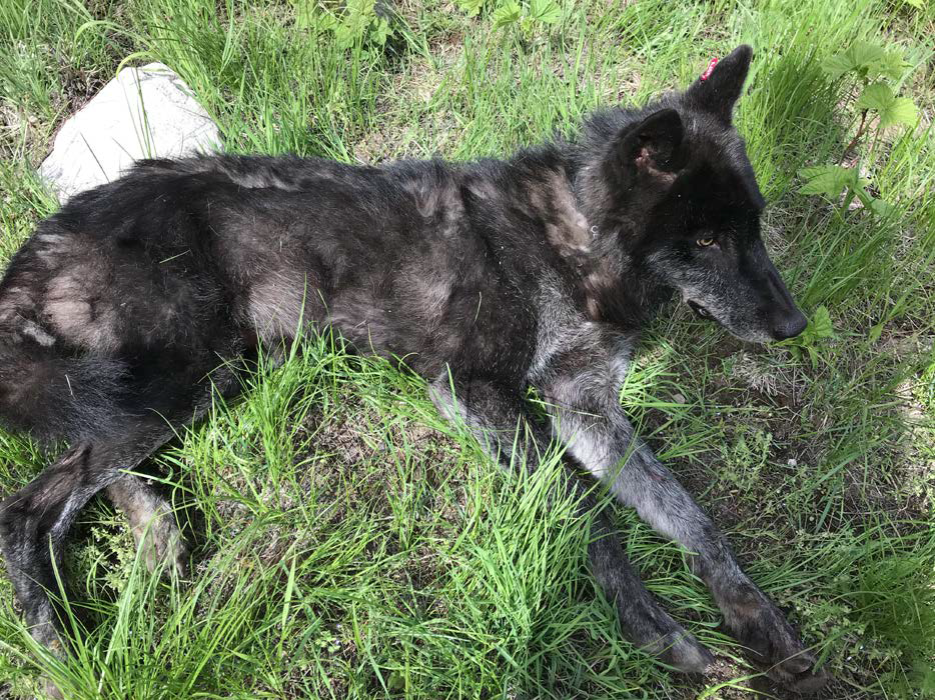
Washington state government marksmen now have clearance to go out this weekend to shoot a wolf from a pack that has been preying on cattle in the Colville National Forest. A judge on Friday declined to extend a temporary stay on the killing won by several environmental groups last week.

Lawyers for the Center for Biological Diversity and Cascadia Wildlands were back in Thurston County Superior Court Friday morning seeking a longer injunction. They wanted to prevent the Washington Department of Fish and Wildlife from killing members of the Togo wolf pack.

“There is a high burden that has to be met,” said Judge Carol Murphy in issuing a denial from the bench. “That burden has not been met at this time.”

The new Department of Fish and Wildlife director, Kelly Susewind, watched from the back of the courtroom. After the ruling, he said he was “glad” the agency can proceed.

Still, inside and outside court Friday, the wildlife agency faced questions about the necessity of hunting down the male wolf, given that he is already limping from an existing bullet wound in a rear leg and probably not currently a threat to livestock.

“In order to change pack behavior, it’s still appropriate to lethally remove the collared male,” Susewind said in an interview.

The West Coast wolf advocate for the Center for Biological Diversity predicted the disruption of the pack structure from killing its leader could increase — not decrease — problems for ranchers in the mountains near the Canadian border.

“In killing that wolf, that leaves his mate on her own to hunt and feed herself and her two pups,” said Amaroq Weiss. “If she’s hunting by herself, she’s not going to be able to take a big, wild prey animal like an elk down by herself. The most vulnerable prey that is in the area is livestock. So this may actually exacerbate the conflicts and result in more livestock losses, which no one wants.”

Weiss called the courtroom outcome “a tragic result” for the wolf, his pups and mate.

Susewind’s authorization to take lethal measures against one or more members of the Togo pack came after the pack preyed on cattle on six separate occasions in the Kettle River Range since last November.

Late last week, a cattleman shot and injured the Togo pack male in an incident that remains under investigation by Fish and Wildlife. The rancher told the agency’s staff that he shot in self-defense after encountering the growling wolf, who may have been protecting the pack’s pups.

Environmental groups in the Pacific Northwest other than those that brought the lawsuit are grudgingly going along with killing problem wolves as a last resort policy.

“Lawsuits and polarization haven’t worked out well for wolves elsewhere, so we see little upside in spreading those tactics to Washington, where wolf recovery is going relatively well overall,” said Mitch Friedman, executive director of the Bellingham-based group Conservation Northwest, in a statement critical of the legal challenge.

He said collaboration between conservation groups, government agencies and livestock producers “is leading to less social conflict concerning wolves.” It’s also making ranchers more willing to adopt non-lethal wolf deterrence techniques, Friedman said.

Copyright 2018 Northwest News Network.