(CNN)Late night is stepping up for the planet.Stephen Colbert, Samantha Bee, James Corden, Jimmy Fallon, Jimmy Kimmel, Seth Meyers and Trevor Noah will unite across networks on Sept. 22 for “Climate Night,” focusing their programming on climate change.Shows that will participate include TBS’s “Full Frontal with Samantha Bee,” ABC’s “Jimmy Kimmel Live!,” NBC’s “Late Night with Seth Meyers,” Comedy Central’s “The Daily Show with Trevor Noah,” CBS’s “The Late Late Show with James Corden,” CBS’s “The Late Show with Stephen Colbert,” and NBC’s “The Tonight Show Starring Jimmy Fallon.”
Though the subject matter is serious, there will be jokes.
“I don’t want to die,” said Kimmel of why he’s participating.
“In the interest of recycling, please use whatever Jimmy Kimmel said,” quipped Fallon.Enter your email to sign up for the Pop Life Chronicles newsletter.close dialogDo you want the week’s most impactful entertainment stories?We’ve got you.Pop InBy subscribing you agree to ourprivacy policy.“I’m thrilled to participate in ‘Climate Night,'” said Bee. “But maybe we should move it up a few days? Just because, you know, it’s urgent?”
“I’m proud to dedicate one entire night of my show to the climate, so I can say I wasn’t part of the problem, I was 1/365th of the solution,” said Colbert.”Climate Night” takes place during Climate Week NYC, a weeklong summit of global leaders and climate activists promoting actionable solutions to address the climate crisis.
“Climate Night” was created by former “Daily Show” and “Patriot Act” showrunner Steve Bodow.”Climate change has gone very fast from ‘probably the future,’ to ‘actually, right now’ — which means we all need to be talking and thinking about it much more,” Bodow said. “Late-night hosts reflect our national conversation even more than Russian Twitter bots set it — so this incredible group of shows coming together makes a statement about the scale and urgency of the world’s hottest problem.”
Even as recent air pollution laws have sought to curb fossil fuel emissions, hydrogen emissions have continued to surge with no signs of slowing down. And there’s a chance that leakage is to blame.
Molecular hydrogen is a natural component of our atmosphere due to the breakdown of formaldehyde, but it is also a byproduct of fossil fuel combustion, especially from automobile exhaust, and biomass burning.
While hydrogen doesn’t trap heat in the atmosphere on its own, it canindirectly impactthe distribution of methane andozone. After carbon dioxide, these are the…
Steam rises from the Miller coal power plant in Adamsville, Ala., in April. An industry group says a climate plan in Congress would shut down all U.S. coal plants by 2030 or earlier.Andrew Caballero-Reynolds/AFP via Getty Images
President Biden’s ambitious climate change plan could soon become a reality if Democrats in Congress succeed in passing a $3.5 trillion budget package. But first Democrats, who are crafting the legislation without Republican support, must overcome powerful opposition, some of it within their own party.
This legislation would bring extraordinary changes to the country’s energy sector. It would lead to huge reductions in the climate-warming greenhouse gases the U.S. emits and change the kind of car many Americans drive.
A key element is a $150 billion Clean Electricity Performance Program, or CEPP, that would pay utilities to switch…
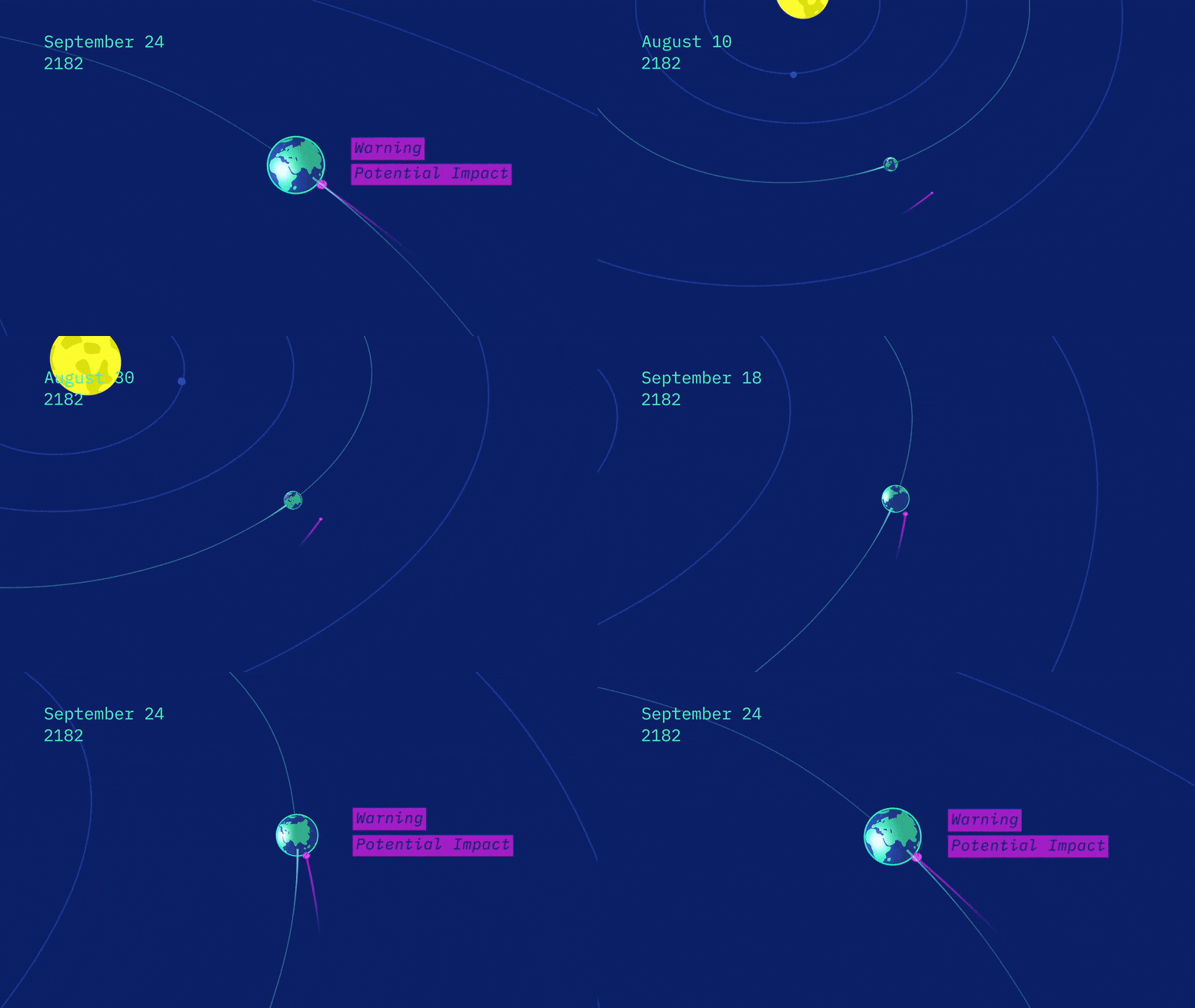
Using NASA’s Deep Space Network and state-of-the-art computer models, scientists were able to significantly shrink uncertainties in Bennu’s orbit, determining its total impact probability through the year 2300 is about 1 in 1,750 (or 0.057%). The researchers were also able to identify September 24, 2182, as the most significant single date in terms of a potential impact, with an impact probability of 1 in 2,700 (or about 0.037%). Credit: NASA’s Goddard Space Flight Center
Like Hitting a Bullseye With Your Eyes Closed
Two statisticians put into perspective the chances of asteroid Bennu striking Earth in the next 300 years.
RecentlyNASAupdated its forecastof the chances that the asteroid Bennu, one of the two most hazardous known objects in our solar system, will hit Earth in the next 300 years. New calculations put…
All living snakes evolved from a handful of species that survived the giant asteroid impact that wiped out the dinosaurs and most other living things at the end of the Cretaceous. Credit: Joschua Knüppe
A new study suggests that all living snakes evolved from a handful of species that survived the giant asteroid impact that wiped out the dinosaurs and most other living things at the end of the Cretaceous. The authors say that this devastating extinction event was a form of ‘creative destruction’ that allowed snakes to diversify into new niches, previously filled by their competitors.
The research, published in Nature Communications, shows that snakes, today including almost 4000 living species, started to diversify around the time that an extra-terrestrial impact wiped out the dinosaurs and most other species on the planet.
The study, led by scientists at the University of Bath and including collaborators from Bristol, Cambridge and Germany, used fossils and analyzed genetic differences between modern snakes to reconstruct snake evolution. The analyses helped to pinpoint the time that modern snakes evolved.
Their results show that all living snakes trace back to just a handful of species that survived the asteroid impact 66 million years ago, the same extinction that wiped out the dinosaurs.
The authors argue that the ability of snakes to shelter underground and go for long periods without food helped them survive the destructive effects of the impact. In the aftermath, the extinction of their competitors—including Cretaceous snakes and the dinosaurs themselves—allowed snakes to move into new niches, new habitats and new continents.
Snakes then began to diversify, producing lineages like vipers, cobras, garter snakes, pythons, and boas, exploiting new habitats, and new prey. Modern snake diversity—including tree snakes, sea snakes, venomous vipers and cobras, and huge constrictors like boas and pythons—emerged only after the dinosaur extinction.
Fossils also show a change in the shape of snake vertebrae in the aftermath, resulting from the extinction of Cretaceous lineages and the appearance of new groups, including giant sea snakes up to 10 meters long.
“It’s remarkable, because not only are they surviving an extinction that wipes out so many other animals, but within a few million years they are innovating, using their habitats in new ways,” said lead author and recent Bath graduate Dr. Catherine Klein, who now works at Friedrich-Alexander-Universität Erlangen-Nürnberg (FAU) in Germany.
The study also suggests that snakes began to spread across the globe around this time. Although the ancestor of living snakes probably lived somewhere in the Southern Hemisphere, snakes first appear to have spread to Asia after the extinction.
Dr. Nick Longrich, from the Milner Centre for Evolution at the University of Bath and the corresponding author, said: “Our research suggests that extinction acted as a form of ‘creative destruction’- by wiping out old species, it allowed survivors to exploit the gaps in the ecosystem, experimenting with new lifestyles and habitats.
“This seems to be a general feature of evolution—it’s the periods immediately after major extinctions where we see evolution at its most wildly experimental and innovative.
“The destruction of biodiversity makes room for new things to emerge and colonize new landmasses. Ultimately life becomes even more diverse than before.”
The study also found evidence for a second major diversification event around the time that the world shifted from a warm ‘Greenhouse Earth’ into a cold ‘Icehouse’ climate, which saw the formation of polar icecaps and the start of the Ice Ages.
The patterns seen in snakes hint at a key role for catastrophes—severe, rapid, and global environmental disruptions—in driving evolutionary change.
Packages of beef cuts are displayed at a Costco store on May 24 in Novato, Calif. The prices of meats have surged, and the White House is partly blaming the handful of meatpackers that control the industry.Justin Sullivan/Getty Images
Prices for beef, pork and chicken have surged during the pandemic, and the Biden administration believes it knows who’s partly behind it: a handful of big meatpacking companies that control most of the country’s supply.
Beef prices alone jumped 12.2% over the last year, according to new consumer inflation data on Tuesday, making it one of the costliest items in the surging bills that consumers face today at the grocery store.
“It’s just outrageous. I can’t even understand how people are supposed to be able to pay that kind of money for basic stuff like ground beef,” says Adam Jones, who raises Angus cattle in northwest Kansas. “We’re not talking about filet mignon. We’re just talking about being able to make spaghetti or being able to make tacos.”
The surge in meat prices is contributing to high inflation. The Labor Department reported Tuesday that consumer price index rose 5.3% in the 12 months ending in August. That’s down slightly from June and July when inflation was running at 5.4% — but it’s still near the highest level in nearly 13 years. Pork prices jumped 9.8% in the last year while chicken prices jumped 7.2%.Article continues after sponsor messagehttps://8365fe610adbc4295ba88093fca9a092.safeframe.googlesyndication.com/safeframe/1-0-38/html/container.html
The White House is responding by shining a spotlight on “Big Meat,” as part of a larger campaign against what the Biden administration calls “anti-competitive” behavior by big business — even as meatpackers insist they are not to blame.
More than 80% of the beef in the U.S. is slaughtered and processed by just four big companies, including Tyson Foods and JBS USA. A similar handful of companies also controls processing of more than half the chicken in the country and two-thirds of the pork.
That means farmers and ranchers have few choices of where to sell their livestock.
Jones calls himself a conservative Republican. But he welcomes the administration’s push to bring more competition to the highly consolidated meatpacking industry.
“There has been merger after merger,” Jones said. “It’s really gotten to the point where there’s no competition in our industry at all.”
The administration says industry giants like Tyson and Smithfield have such a stranglehold on processing operations that they can command higher prices at the supermarket, while also putting the squeeze on farmers, who in some cases can’t even cover their costs.
“Farmers are losing money on cattle, hogs and poultry that they’re selling at a time when consumers are seeing higher prices at the grocery store,” Agriculture Secretary Tom Vilsack said last week. “And there are now record profits or near-record profits for those in the middle.
“I remember talking to a producer the other day in Council Bluffs [Iowa], and he said, ‘I don’t get this. I just sold my cattle and lost $150 a head. But the processor made $1,800 a head. How can that be?’ ” Vilsack said.
Agriculture Secretary Tom Vilsack speaks on rising food prices at a press briefing at the White House on Sept. 8. The Biden administration is taking steps to try to bring more suppliers to the meatpacking industry.Kevin Dietsch/Getty Images
The White House wants to open up the Big Meat industry
The administration is setting aside $500 million to help bankroll new meat processors to compete with the big four.
The Justice Department is also investigating alleged price-fixing in the chicken market. The No. 2 chicken processor, Pilgrim’s Pride, pleaded guilty this year to conspiring with others to limit production and keep chicken prices artificially high.
But meatpackers reject the idea that industry consolidation is hurting ranchers or consumers.
“The present spread between live cattle and beef prices has everything to do with the law of supply and demand,” says Shane Miller, group president for fresh meats at Tyson, the nation’s largest beef and chicken processor.
Miller told a Senate committee this summer that the pandemic and other shocks have forced processors to slow down their slaughtering operations, so there are fewer cattle coming in and fewer steaks going out.
“This led to an oversupply of live cattle and an undersupply of beef, all while demand for beef products is at an all-time high,” Miller said. “So it should not surprise any of us that as a result, the price for cattle fell while the price for beef rose.”
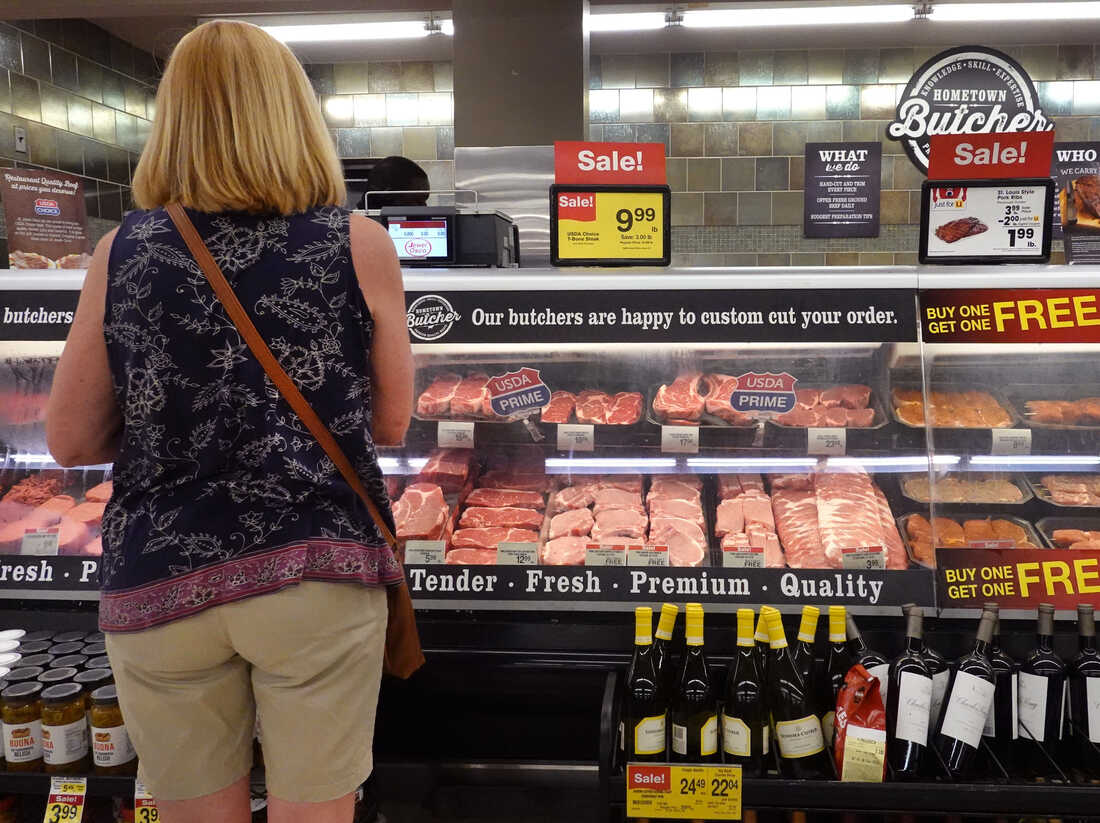
A customer shops for meat at a supermarket in Chicago on June 10. A surge in meat prices is contributing to higher inflation, raising the Biden administration’s concern.Scott Olson/Getty Images
Ending sticker shock at the butcher counter
The meatpacking companies argue that in normal times, their giant size makes them more efficient and helps keep prices for consumers low.
In recent decades, that “consumer welfare” argument carried a lot of weight. Government regulators were willing to go along with one merger after another, so long as hamburger was cheap.
“Between these recent price shocks in the pandemic and ongoing allegations of price-fixing, that [consumer welfare] argument for consolidation is falling apart,” said Claire Kelloway, a researcher at the Open Markets Institute, an anti-monopoly think tank. “There’s increasing evidence and suspicions that this market power has gone too far and is beginning to hurt consumers.”
A ransomware attack on JBS in June that temporarily idled nearly a quarter of the company’s beef-processing capacity also highlighted the risk of having so much of the nation’s food supply in the hands of a few big companies.
Almost exactly a century ago, the federal government passed the Packers and Stockyards Act to crack down on excesses of what was then known as the “Meat Trust.”
The Biden administration is promising beefed-up enforcement of that 1921 law. And it may find fresh support from shoppers facing sticker shock at the butcher counter.
In Michigan last fall, a guided elk hunter holding a cow tag accidentally shot a bull elk. Upon discovering the mistake, the hunter and his guide immediately notified a state conservation officer. After a thorough investigation, it was concluded that, indeed, it was an “honest mistake.” The hunter did not have his rifle confiscated or go to jail, but he ultimately paid a $1,000 fine and had his hunting license revoked.
The bull elk was confiscated by the state and the meat was donated to a worthy charity.
This incident begs the question: Did the punishment fit the crime?
In Maine, as in other states, not a hunting season goes by without incidents like the Michigan one, where hunters misjudge the sex of an animal in the heat of the hunt, or, worse, kill two animals by mistake…
Conservation Officer Darrin Kittelson (International Falls 1)reports fall recreational activities are increasing with bear hunting and ATV riding being the main focuses. Instructing emergency vehicle operations to fellow conservation officers was conducted at Camp Ripley. More than 50 local youth received their firearms safety certificate over the weekend.
CO Curtis Simonson (International Falls 2)reports checking anglers on Rainy Lake as well as checking bear baits in the area. Unregistered bear baits and bear baits without the required signage were located. Enforcement action was taken for these issues. Simonson also assisted with a youth firearms safety class in the International Falls area.
CO Troy Fondie (Orr)reports monitoring angling and boating activities. ATV-riding and goose-hunting activities were checked. Forest roads were monitored…
Wisconsin lawmakers drafted a bill Wednesday to overturn the law requiring an annual wolf hunting season.
Themandatorywolf hunts began under former Wisconsin Governor Scott Walker in 2012. Democrats are now pushing to pass a bill changing the statute to make wolf huntsoptional and give the Department of Natural Resources discretion over whether the hunt should take place or not,according to the Wisconsin State Journal.The new bill would change one word of the original statute. Instead of stating “the department shall allow the hunting and trapping of wolves,” it would state “the department may allow the hunting and trapping ofwolves,”according to WSJ.
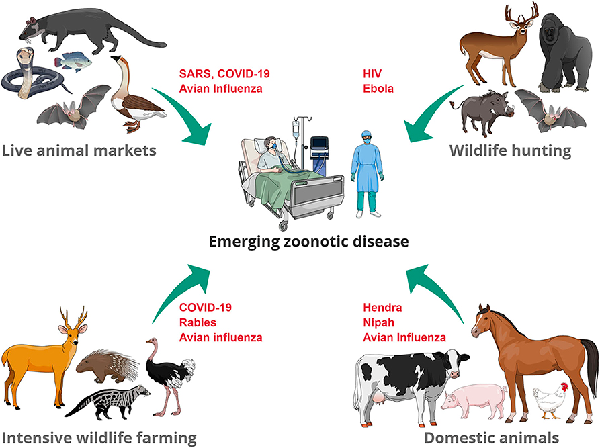
COVID-19, SARS, bovine spongiform, swine flu and avian influenza all have one thing in common: they are all zoonotic diseases, suggesting they originated from animals.
Expanding scientific study into the environmental components of zoonotic diseases, as well as creating and implementing stronger biosecurity measures are some of the policy possibilities.
It advocates for legislation that improve animal health (including wildlife health services), as well as greater monitoring and regulatory capability in the food industry.
Government should also find measures to lessen their demand for animal protein, according to the paper.
Reducing meat demand isn’t increasingly recognised as essential as a policy solution, partially because many people don’t associate our present pandemic with the dietary pattern or agricultural sector.
Throughout time’s vicissitudes, the incidents of pandemics have been known to have originated from animal husbandry and industrial production chain.
Reference can be made to the mad cow disease (Bovine spongiform encephalopathy) outbreak in the United kingdom in the 1980s, the H5N1 (bird flu) outbreak traced to Chinese chicken factories in 1997, swine flu (H1N1) outbreak in 2009, which is known to have originated from farms in North Carolina in the United States and Mexico, the west African Ebola outbreak in 2013, though it is believed to have its earlier traces identified 1976 in parts of Central Africa, followed by the SARS-COVID 19 (corona virus), whose early cases were associated to the animal market in Wuhan, China.
Clearly, the origins of these pandemics aren’t limited to some countries or some practices.
It is imperative to note that pandemic viruses have all been realised in situations where humans and animals meet, thus rearing animals on a larger scale as food will have significant effects on our lives.
Plants
One fundamental idea that emanates from these assertions is that fact that since the dawn of time, no single recorded pandemic is known to have originated with plants or has a history that can be traced to plants.
Taking into consideration the unpredictability of the influx of pandemics, and our position to mitigate against its consequences, effectives strategies that will arouse public interest in substituting increasing need for animal food with plant food, will place us in a much advantageous position against future pandemics.
It is incumbent of policy makers to implement policies appropriate for more consumption of plant-based diet than animal-based diet, however, this may not be heralded by policy leaders as it involves changing some behavioural, patterns of people, which may in most cases be considered as not the business of policy makers or government.
However, there is a sense in which taking this into consideration of more imperative. An attention shift towards plant-based diet means cultivating more plants, which not only serves as healthy food, but also a supportive climate change agent.
In order to successfully realise that, measures can be initiated by incentivising and making plant-based farming more attractive which is evaluating food procurement and nutrition guidelines to ensure that public facilities such as schools, hospitals, jails, and industries serve a plant-based meal as a daily requirement on menus.
Dietry guide
The government should also work to implement its own dietary guide and increase access to plant-based foods, particularly for low-income, rural and northern citizens. Foods that are good for humans and the environment must be subsidised.
It is clearly without a doubt that our dietary habits influence our environments as well as having health impacts on us.
It is thus inevitably relevant for the Ghanaian populace and policy makers to support an agenda to shift to plant-based diet, taking into consideration, the interrelationship between zoonosis and animal production.
Because if not us who and if not now, when? It is Kairos time.
The writer is a Teaching/Research Assistant, University of Energy and Natural Resources. P.O. Box 214, Sunyani-Ghana







 V. Paul Reynolds

 Share
Share Tweet
Tweet


 Exposing the Big Game