UT: Hunter Found Dead In North Slope Area

Exposing the Big Game's avatarCommittee to Abolish Sport Hunting Blog

https://www.kpcw.org/post/hunter-found-dead-north-slope-area#stream/0

ByRICK BROUGH13 HOURS AGOShareTweetEmailListenListening…0:51

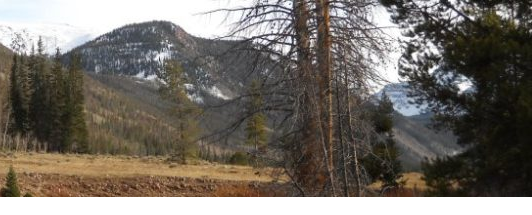
Summit County deputies responded last weekend to the report of a hunter found dead, apparently of natural causes, in the North Slope area of the High Uintas.

Sheriff’s Lt. Andrew Wright said that on Saturday morning, at about 7:45, his office heard from two hunters, traveling through an area east of the Mirror Lake Highway, who discovered a red ATV. About 20 feet away, they found a man who, the Lieutenant said, had been dead for some time.

The fatality, later identified as a 67-year-old Syracuse resident, showed no signs of obvious wounds or indications of a suspicious death.

According to Lt. Wright, the man’s family said he usually hunted alone and would send out his GPS location to keep in touch. His daughter said he didn’t appear, as scheduled, for his granddaughter’s softball game on Friday…

View original post 22 more words

DON’T BE FOOLED BY GREEN AND HUMANE WASHING

thomas-iversen-4W8FgDVyUME-unsplash2.jpg
Screenshot (696).png

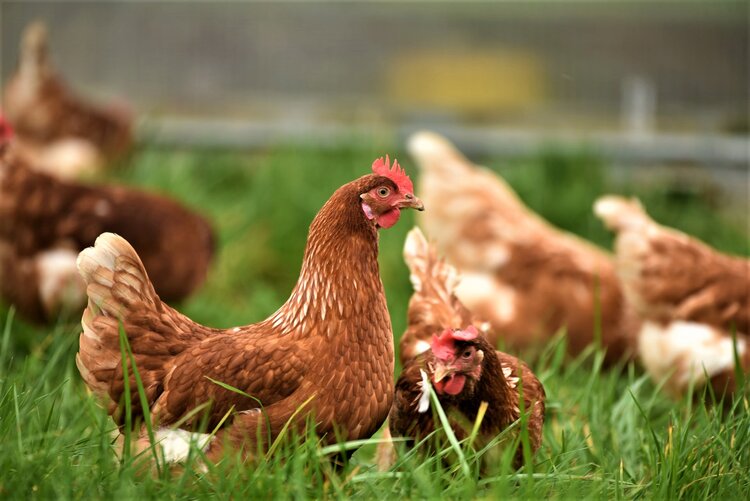
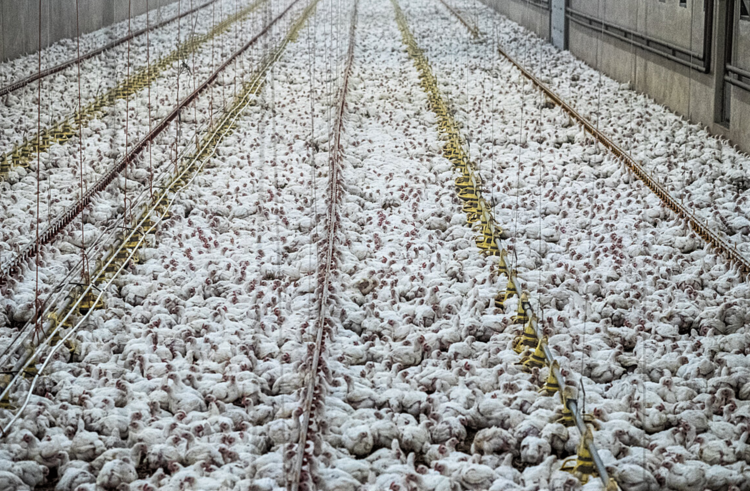
Which photo do you think shows organic/free range chicken farming? The answer is: Both!

Photos: Thomas Iversen on Unsplash (l); Juho Kerala/Hidden/We Animals Media (r)

https://www.planetfriendlynews.com/blog/dont-be-fooled-by-green-and-humane-washing

By Jessica Scott-Reid

Jessica is a Canadian writer, animal advocate and plant-based food expert. Her work appears regularly in media across Canada and the US.

In recent years, demand for meat, dairy and egg products that come from animals who consumers believe are treated more humanely than animals raised on factory farms, has increased. Similarly, demand for animal products farmed in ways that appear more environmentally friendly and sustainable, has also grown. It is no longer one of the world’s best kept secrets that industrialized animal farming comes with major animal welfare and climate change concerns. Thus, many consumers are now looking to certain food labels to assure them that what they are buying – and often spending more money on — offers more ethical and environmental value.

But, with marketing and labelling terms such as “humanely raised” and “sustainably farmed” often unregulated, and in some cases used deceptively by industrial producers, consumers can be left confused or, worse, duped. Thankfully, a number of animal and environmental advocacy organizations, academic institutions and publications have come to the rescue with food labelling guides to help decipher which marketing terms mean what they imply, and which are conning caring consumers.  

US 

In the US, consumers are overwhelmed with choices when it comes to seemingly humane or sustainable animal products. The barrage of labels claiming items are “free range,” “organic,” “CARE certified” or “grass-fed” can make it nearly impossible to figure out which terms, if any, mean anything meaningful for animals or the planet.

The Animal Welfare Institute has taken up this tricky task for consumers, creating a quick-check guide to weed through what many labels, certification programs and terms mean (or don’t mean), with added colour coding to identify the best and worst choices. FoodPrint has created a similar guide regarding common environmental labels. And for an even more in-depth look at terms used specifically to humane-wash meat, dairy and egg products, advocacy group Farm Forward created a report entitled The Dirt on Humanewashing.

Staff and students at Vermont Law School have also made an online tool called Labels Unwrapped, which provides broader education on food labels and the laws behind them, including information on animal product labels, produce labels, supplements and more. Finally, for an easy breakdown and great read, writer Rachel Krantz for VOX authored: “Wild-caught,” “organic,” “grass-fed”: what do all these animal welfare labels actually mean?  which also discusses fish labeling.   

Planet Friendly News/Food labelling/Green washing

Canada  

Though Canada has fewer labels and certification programs pertaining to animal products than the US, buzzwords known to evoke unwarranted compassion, such as “cage free” and “natural,” are still found in most meat, dairy and egg aisles. To assist the consumer in casting a critical eye over these claims, Canadian animal law organization Animal Justice, provides on its site a list of common meat, dairy and egg labelling terms, and what they mean.

And for discussion on Canada’s Roundtable on Sustainable Beef, a label now gracing beef products sold at Canadian Walmarts, Corporate Knights Magazine offers a well-balanced take in Is ‘sustainable beef’ a load of bull?  

UK/ EU  

In the UK, animal welfare organization Compassion in World Farming discusses some of those common meat, dairy and egg label claims, along with certification programs unique to the region, such as Soil Association Standard, RSPCA Assured, and Red Tractor. The BBC also has a helpful list of pros and cons regarding certain food labels, which also includes Rainforest Alliance and Marine Stewardship Council.   

In the EU, Eurogroup For Animals published a report last year on the various meat, dairy and egg labelling schemes across EU countries. The report also discusses growing demand for label transparency, and makes a case for the mandatory implementation of what it calls Method of Production + labelling, “that would combine method-of-production marking with simple information on animal welfare, based on a core set of animal welfare indicators.”   

Marketing and labelling of meat, dairy and egg products has become a complex and somewhat volatile endeavour across the Western world. A growing number of consumers are eager to spend a little more money to feel a little less guilty about the impact of their purchases, and the meat, egg and dairy industries are ready to make claims that will ease consumers’ consciences.

Decoding which animal welfare and environmental claims are truthful, audited, and genuinely beneficial is a difficult task. And even those deemed best can only ever tell a story of products that may be a little less harmful than the standard. Animal farming is inherently cruel and always ecologically damaging, albeit to varying degrees. To truly reduce harm upon animals and the planet, opting for plant-based alternatives and proteins will always be a better bet.   

Sign up below for our newsletter — delivered to your inbox every month — to share insightful stories on how to have a positive impact on life on our planet.

 SEPTEMBER 13, 2021NEXTOTHER VICTIMS OF CLIMATE CHAOS

Huge reduction in meat-eating ‘essential’ to avoid climate breakdown

This article is more than 2 years old

Major study also finds huge changes to farming are needed to avoid destroying Earth’s ability to feed its population

https://www.theguardian.com/environment/2018/oct/10/huge-reduction-in-meat-eating-essential-to-avoid-climate-breakdown

Steak and a healthy vegetarian meal with pulses.
Steak and a healthy vegetarian meal with pulses. Composite: Getty Images

Damian Carrington Environment editor@dpcarringtonWed 10 Oct 2018 13.00 EDT

2,246

Huge reductions in meat-eating are essential to avoid dangerous climate change, according to the most comprehensive analysis yet of the food system’s impact on the environment. In western countries, beef consumption needs to fall by 90% and be replaced by five times more beans and pulses.

The research also finds that enormous changes to farming are needed to avoid destroying the planet’s ability to feed the 10 billion people expected to be on the planet in a few decades.

Food production already causes great damage to the environment, via greenhouse gases from livestock, deforestation and water shortages from farming, and vast ocean dead zones from agricultural pollution. But without action, its impact will get far worse as the world population rises by 2.3 billion people by 2050 and global income triples, enabling more people to eat meat-rich western diets.

Cattle at an illegal settlement in the Jamanxim National Forest, northern Brazil.

This trajectory would smash critical environmental limits beyond which humanity will struggle to live, the new research indicates. “It is pretty shocking,” said Marco Springmann at the University of Oxford, who led the research team. “We are really risking the sustainability of the whole system. If we are interested in people being able to farm and eat, then we better not do that.”

“Feeding a world population of 10 billion is possible, but only if we change the way we eat and the way we produce food,” said Prof Johan Rockström at the Potsdam Institute for Climate Impact Research in Germany, who was part of the research team. “Greening the food sector or eating up our planet: this is what is on the menu today.”https://interactive.guim.co.uk/uploader/embed/2018/10/archive-zip/giv-3902g0So34D17lH0

The new study follows the publication of a landmark UN report on Monday in which the world’s leading scientists warned there are just a dozen years in which to keep global warming under 1.5C, beyond which even half a degree will significantly worsen the risks of drought, floods and extreme heat. The report said eating less meat and dairy was important but said current trends were in the opposite direction.Advertisementhttps://711edaa8d79bfe2f073f96ff59f44717.safeframe.googlesyndication.com/safeframe/1-0-38/html/container.html

The new research, published in the journal Nature, is the most thorough to date and combined data from every country to assess the impact of food production on the global environment. It then looked at what could be done to stop the looming food crisis.

“There is no magic bullet,” said Springmann. “But dietary and technological change [on farms] are the two essential things, and hopefully they can be complemented by reduction in food loss and waste.” About a third of food produced today never reaches the table.

The researchers found a global shift to a “flexitarian” diet was needed to keep climate change even under 2C, let alone 1.5C. This flexitarian diet means the average world citizen needs to eat 75% less beef, 90% less pork and half the number of eggs, while tripling consumption of beans and pulses and quadrupling nuts and seeds. This would halve emissions from livestock and better management of manure would enable further cuts.

In rich nations, the dietary changes required are ever more stark. UK and US citizens need to cut beef by 90% and milk by 60% while increasing beans and pulses between four and six times. However, the millions of people in poor nations who are undernourished need to eat a little more meat and dairy.

Reducing meat consumption might be achieved by a mix of education, taxes, subsidies for plant-based foods and changes to school and workplace menus, the scientists said.

To halt deforestation, water shortages and pollution from overuse of fertiliser, profound changes in farming practices are needed. These include increasing crop yields in poorer nations, more universal water storage and far more careful use of fertilisers.

“I was surprised by the fact we need a combination of very ambitious options,” Springmann said. “We really need to push it to the edge of what is possible.”

All the diet and farming options are already being implemented in somewhere in the world, said Springmann. In the Netherlands and Israel, fertilisers and water are being better used, while big cuts in meat consumption are being seen among young people in some cities.

Synthetic burger restaurant

But a global change is needed, he said: “I think we can do it, but we really need much more proactive governments to provide the right framework. People can make a personal difference by changing their diet, but also by knocking on the doors of their politicians and saying we need better environmental regulations – that is also very important. Do not let politicians off the hook.”

Prof Tim Benton at the University of Leeds, who was not part of the research team, said: “Ultimately, we live on a finite planet, with finite resources. It is a fiction to imagine there is a technological solution allowing us to produce as much food as we might ever want, allowing us to overeat and throw food away.” He said the environmental burden of the current food system “undermines the ability of future generations to live on a stable and ecologically rich planet”.

Prof Peter Smith at the University of Aberdeen, who was also not part of the research team, said: “We know food choices are very personal, and that behaviour change can be difficult to encourage, but the evidence is now unequivocal – we need to change our diets if we are to have a sustainable future. The fact that it will also make us healthier makes it a no-brainer.”

Meat accounts for nearly 60% of all greenhouse gases from food production, study finds

Production of meat worldwide emits 28 times as much as growing plants, and most crops are raised to feed animals bound for slaughter

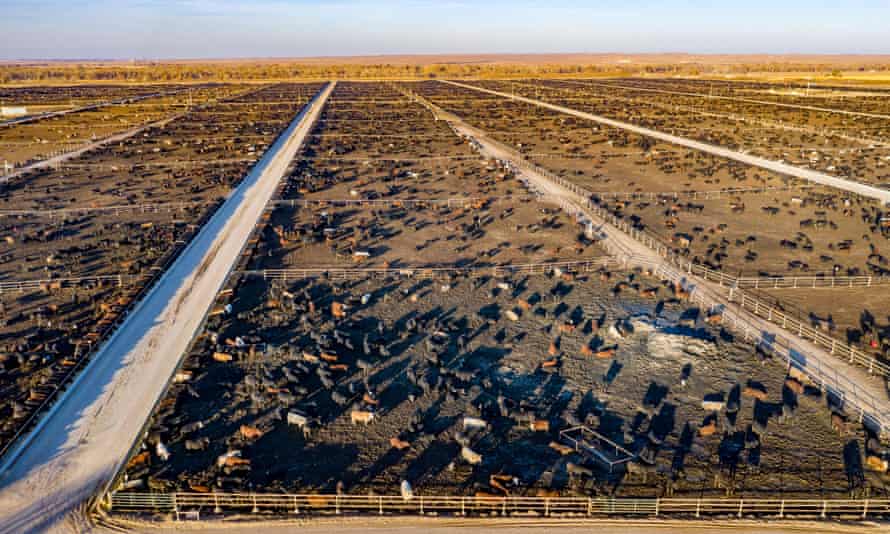
A single kilo of beef creates 70kg of emissions. This feedlot in Colorado can hold 98,000 cattle.
A single kilo of beef creates 70kg of emissions. This feedlot in Colorado can hold 98,000 cattle. Photograph: Jim West/Alamy Stock Photo

Oliver Milman@olliemilmanMon 13 Sep 2021 11.00 EDT

https://www.theguardian.com/environment/2021/sep/13/meat-greenhouses-gases-food-production-study?fbclid=IwAR10tnfrj1DGM5v5u5Dz00P1bVnCKF1ZYF3AX07DGP7dohtQGaA-zWPbkz

The global production of food is responsible for a third of all planet-heating gases emitted by human activity, with the use of animals for meat causing twice the pollution of producing plant-based foods, a major new study has found.

The entire system of food production, such as the use of farming machinery, spraying of fertilizer and transportation of products, causes 17.3bn metric tonnes of greenhouse gases a year, according to the research. This enormous release of gases that fuel the climate crisis is more than double the entire emissions of the US and represents 35% of all global emissions, researchers said.

“The emissions are at the higher end of what we expected, it was a little bit of a surprise,” said Atul Jain, a climate scientist at the University of Illinois and co-author of the paper, published in Nature Food. “This study shows the entire cycle of the food production system, and policymakers may want to use the results to think about how to control greenhouse gas emissions.”

The raising and culling of animals for food is far worse for the climate than growing and processing fruits and vegetables for people to eat, the research found, confirming previous findings on the outsized impact that meat production, particularly beef, has on the environment.

The use of cows, pigs and other animals for food, as well as livestock feed, is responsible for 57% of all food production emissions, the research found, with 29% coming from the cultivation of plant-based foods. The rest comes from other uses of land, such as for cotton or rubber. Beef alone accounts for a quarter of emissions produced by raising and growing food.https://interactive.guim.co.uk/uploader/embed/2021/09/archive-zip/giv-825aLgf1Cna7ZLS/

Grazing animals require a lot of land, which is often cleared through the felling of forests, as well as vast tracts of additional land to grow their feed. The paper calculates that the majority of all the world’s cropland is used to feed livestock, rather than people. Livestock also produce large quantities of methane, a powerful greenhouse gas.

“All of these things combined means that the emissions are very high,” said Xiaoming Xu, another University of Illinois researcher and the lead author of the paper. “To produce more meat you need to feed the animals more, which then generates more emissions. You need more biomass to feed animals in order to get the same amount of calories. It isn’t very efficient.”

The difference in emissions between meat and plant production is stark – to produce 1kg of wheat, 2.5kg of greenhouse gases are emitted. A single kilo of beef, meanwhile, creates 70kg of emissions. The researchers said that societies should be aware of this significant discrepancy when addressing the climate crisis.Advertisementhttps://f5082b5b82680f355b9138534e6bb88b.safeframe.googlesyndication.com/safeframe/1-0-38/html/container.html

“I’m a strict vegetarian and part of the motivation for this study was to find out my own carbon footprint, but it’s not our intention to force people to change their diets,” said Jain. “A lot of this comes down to personal choice. You can’t just impose your views on others. But if people are concerned about climate change, they should seriously consider changing their dietary habits.”

The researchers built a database that provided a consistent emissions profile of 171 crops and 16 animal products, drawing data from more than 200 countries. They found that South America is the region with the largest share of animal-based food emissions, followed by south and south-east Asia and then China. Food-related emissions have grown rapidly in China and India as increasing wealth and cultural changes have led more younger people in these countries to adopt meat-based diets.

The paper’s calculations of the climate impact of meat is higher than previous estimates – the UN’s Food and Agricultural Organization has said about 14% of all emissions come from meat and diary production. The climate crisis is also itself a cause of hunger, with a recent study finding that a third of global food production will be at risk by the end of the century if greenhouse gas emissions continue to rise at their current rate.

Scientists have consistently stressed that if dangerous global heating is to be avoided, a major rethink of eating habits and farming practices is required. Meat production has now expanded to the point that there are now approximately three chickens for every human on the planet.

Lewis Ziska, a plant physiologist at Columbia University who was not involved in the research said the paper is a “damn good study” that should be given “due attention” at the upcoming UN climate talks in Scotland.

“A fundamental unknown in global agriculture is its impact on greenhouse gas emissions,” Ziska said. “While previous estimates have been made, this effort represents a gold standard that will serve as an essential reference in the years to come.”

Archery deer hunt is set for the East Minnesota River refuge

Exposing the Big Game's avatarCommittee to Abolish Sport Hunting Blog

Hunters must request landowner permission before hunting the area

Deer Hunting
Archery deer hunting opens Sept. 18 in the East Minnesota River Refuge.Photo by www.hotspotoutdoors.com

Get the Jordan Independent!

An archery deer hunt opens Sept. 18 in the East Minnesota River Refuge.

The refuge is located entirely on private land in Blue Earth and Le Sueur counties along the east bank of the Minnesota River. It is open to archery hunting until Dec. 31 for taking antlerless deer or legal bucks. Hunters must request landowner permission before hunting the area.

The East Minnesota River Refuge hunt has several significant changes. This year, it is no longer considered a special hunt, which means prior hunter registration will not be required and standard archery hunting regulations apply in this area. The East Minnesota River Refuge is not open to firearms…

View original post 223 more words

The plight and puzzle of injured bears in western North Carolina

1 of 6

This three-legged bear in Lansing was pictured in June 2021.

  • Photo submitted

A bear missing one of its paws located in Banner Elk in June 2021.

  • Photo courtesy Help Asheville Bears

A bear named by the Help Asheville Bears organization as ‘Tripod’ sits upright.

  • Photo submitted

Tripod and its yearling, which was discovered to also be missing a paw, in November 2020.

  • Photo courtesy Help Asheville Bears

Peaches the bear stands on the street after losing one of her front limbs.

  • Photo submitted

Peaches the bear before she lost one of her limbs.

  • Photo submitted

HIGH COUNTRY — On June 11, the organization Help Asheville Bears confirmed a 30th bear in Western North Carolina with a missing leg. Since 2019, Help Asheville Bears has identified, documented and observed bears in the region, noting bears who have lost limbs. The newest bear identified was located in the Ashe County town of Lansing, missing its front limb. Help Asheville Bears offers rewards up to $10,000 for information about this or other bears missing limbs.

Originating in Asheville but serving communities throughout the western North Carolina region, Help Asheville Bears was started by a group of neighbors who enjoyed watching bears. Jody Williams, a founding member of Help Asheville Bears, described watching one bear who the community named Peaches who “would nurse 10 feet from my porch, dig in logs, swim in my trout pond. She felt safe.”

Peaches’ story

On Aug. 18, 2019, Peaches came to the Williams property missing the lower half of her front right leg. Jody said that he’s “not ashamed to say” he cried and called his brother, Alex Williams, operational director of Help Asheville Bears, to come see. Alex “knew something was wrong,” said Jody, by the look on Jody’s face when Alex arrived at Jody’s property.

That same night, another bear was discovered missing a leg by the community of bear watchers within a mile of where Peaches was found. Concerned by the appearance of these injured bears, Jody, Alex and friends from their community formed Help Asheville Bears to document injured bears and discover what was causing the similar injuries.

Since late 2019, Help Asheville Bears has located 30 bears in Western North Carolina missing limbs. An offshoot of Help Asheville Bears, Tony Wisniewski, a retired Raleigh police officer known as “Ski,” operates the Poacher Strike Force, a group of ex-police and law enforcement officials that investigates incidents of poaching. Wisniewski reported that there are two consistent trends in these injuries across the 30 bears: bears missing legs from the elbow down, and back legs missing from the ankle down. He contended that these injuries are consistent with illegal trapping, that the front leg injuries are most likely from snare traps set atop food and the back paws are lost to leg hold traps. The back legs observed by Help Asheville Bears are not missing from the ankle down, nor do bears demonstrate front legs missing from only the ankle down.

Mechanism of injury

North Carolina Wildlife Resource Commission stated that these injuries may be more consistent with a common threat to bears: vehicular accidents. According to the NCWRC’s black bear annual report of 2019 compiled by NCWRC black bear and furbearer biologist Colleen Olfenbuttel, after regulated hunting, vehicular collisions were the second leading cause of bear mortality.

Nearly 92 percent of bear fatalities in 2019 were from managed harvests, in which hunters had permits to legally hunt bears. Seven percent of bear fatalities were due to collisions with vehicles. These 216 collisions represented a 36 percent decrease from the prior year. Of these car accidents, 73 percent of the vehicle-related bear mortalities were in the Coastal Bear Management Unit, which includes Northampton, Halifax, Nash, Wilson, Wayne, Sampson, Cumberland and Robeson, as well as additional counties to the east. The higher number of vehicle-caused fatalities in the CBMU is “likely reflecting the higher bear population and number of highways in the region,” according to the annual report.

The NCWRC report states that a majority of vehicle-caused mortalities occur in October, followed by November and June. This is often due to the increased movement of young bears during these months. Male yearlings and subadults tend to travel farther from their natal homes in comparison to females, the report says, explaining their increased contact with vehicles. Conversely, female bears’ age distribution for vehicle-caused mortalities is more evenly spread.

As of 2018, the bear population in the Mountain Bear Management Unit (MBMU), which includes Surry, Wilkes, Cladwell, Burke and Cleveland counties, as well as all counties to the west, was estimated to be around 5,500 to 6,100 bears. The population was estimated to be around 11,470 to 12,700 bears in the CMBU in 2016, according to the North Carolina Wildlife Commission’s annual black bear report.https://1bd6ae36511b680e01966e1c8633b507.safeframe.googlesyndication.com/safeframe/1-0-38/html/container.html

Olfenbuttel says it is “actually very good” that about 92 percent of bear mortalities are due to hunting because “that means it is regulated and we can control that. If I need to grow more bears in an area, let’s have very conservative hunting seasons. If we have too many (bears), then we have a more liberal hunting season.” While she states that “I can’t regulate roadkill mortalities,” Olfenbuttel notes that since 2006 the NC Wildlife Commission has worked with the NC Department of Transportation to create wildlife underpasses to aid the movement of wildlife and avoid accidents with vehicles.

“Unfortunately, quite a few bears are hit on our roadways, especially in Asheville,” Olfenbuttel said. With a growing bear population, she added that there is a “ridgeline that bears just funnel into and they get to Asheville and go ‘wow, there’s lots of food to eat, lots of bird seed, and unsecured garbage.’” The high density population in the area leads to increased bear mortalities due to vehicles in that area.

Unlike deer, Olfenbuttel said, quite a few bears survive their collisions with cars.

“They have a lower center of gravity, kind of a broader side, and sometimes, the bear hits and almost, I would say, bounces off,” Olfenbuttel said. Not all bears die upon impact, she noted, saying that internal bleeding and less obvious injuries can kill bears that manage to walk away from vehicular accidents. However, many bears do heal from their injuries and survive.

Olfenbuttel said that bear broken bones can mend in a variety of ways. Without casts to set bones, sometimes she has seen bears with broken leg bones “walking just fine. It’s just stiff, because of how (the leg) healed.” Other bears, she says, have broken limb bones that “didn’t heal, and because the bone was completely broken, the only thing connecting below the break and above the break is skin, and eventually, to be honest, they will lose that lower part and it will heal over.”

Olfenbuttel noted that many of her colleagues in Florida, which is another area in which “there’s quite a bit of roadkill collisions,” have spoken to her about similar injuries and bears that may lose part of a leg in the process of time after a collision. Ultimately, Olfenbuttel said that bears “are remarkable healers.”

Veterinarian Dr. Lee Beckworth from the Ashe Animal Clinic in Jefferson said what mechanisms bears have to survive injuries such as car accidents.

“It really depends on the size of the bear and the speed of the car,” Beckworth said, that determine what kinds of general internal injuries or broken bones a bear receives from a collision. Considering these injuries, Beckworth highlighted that there are some biological attributes that help bears survive this kind of trauma, in particular certain properties of bears’ saliva, as with licking their wounds, bears are able to keep open wounds clean and avoid infection. A bear is more likely to keep clean and avoid infection with an injury to a distal extremity compared to areas of the body it cannot lick, such as the chest or back. He echoes Olfenbuttel’s sentiment that bears have “a tremendous ability to survive injury.”

Yet, Beckworth is hesitant to agree with Olfenbuttel’s explanation that this quantity of bears with missing legs identified by Help Asheville Bears is because of car collisions. While he does not study bears as specifically as Olfenbuttel does, he has doubts and theorizes that only losing the lower portion of a leg would be unlikely.

Beckworth is not alone in his conclusion. Help Asheville Bears sent their documented cases as of late 2019, including descriptions, images, and videos of three-legged bears, to a group of veteran experts for review. These experts included Tim Manley, Wildlife Biologist and Grizzly Bear Specialist with Montana Fish, Wildlife and Parks (FWP) with 39 years of service; Erik Wenum, Wildlife Biologist/Bear and Lion Conflict Specialist/Grizzly Bear TREND trapping and monitoring program with FWP, also with 30 years of service; and Brian Sommers, Wildlife Biologist/Criminal Investigator/ Wildlife Human Attack Response Team leader and Instructor with FWP, with 34 years of service.https://1bd6ae36511b680e01966e1c8633b507.safeframe.googlesyndication.com/safeframe/1-0-38/html/container.html

In a Nov. 5, 2019, letter, Sommers wrote: “All three of us agree that ‘these are not bears that have been hit by vehicles.’” He continues, stating that “Given the fact that you have approximately 12-plus bears in a 25-50 square mile area showing the same type of leg loss, it is very apparent that you have someone in the area that is baiting or attracting the bears in and then using snares to try and trap or capture the bears.”

Sommers offered his opinion on what he believes are the likeliest causes of injury.

“More than likely they are using 1/8-inch cable that clamps down tight on the leg and they are probably using some sort of ground/hole and/or bucket type set that throws or puts the snare high up on the leg,” Sommers stated. “The bear then breaks the cable or gets free somehow and the snare is still attached tightly to the leg. Given time, the leg below the snare will die and fall off and the wound will heal over.”

Despite the group’s analysis that snares are most likely the cause of injury, they recommend that several of the bears should be x-rayed to look at how the wound has healed where the leg was taken off and that “without getting hands on the bears, there is really no way to know for certain what is or has taken place regarding the loss of a leg.”

Ultimately, Sommers indicated the bears that are missing legs now create, in his words, “a management/conflict/safety risk to the public since they are no longer functioning at full capacity, and in order to survive they will become more dependent on other food sources that are easier for them to obtain, such as garbage, fruit, etc.”https://1bd6ae36511b680e01966e1c8633b507.safeframe.googlesyndication.com/safeframe/1-0-38/html/container.html

Hunting Regulations

Christian Gardner operates Appalachian Holler Hunters, a hunting group based in Avery County working to educate people about proper hunting practices through their online platform. With the growing black bear population, Gardner says some hunters have been pushing for an additional bear tag. Each season, hunters are allocated one tag to harvest a single bear. However, with the increase in bears, Gardner said many are hoping to increase the number of bears one can harvest from one to two. He adds that he believes there is an issue of bears being run over by cars and of poaching.

“People portray people for trapping bears, when actually it’s more or less from car accidents and a handful of other things,” Gardner said, noting that the bear injuries linked to poaching mischaracterize bear hunters.

While Gardner says he doesn’t know of any poaching cases personally, he has heard of people during vacations who have a bear nuisance.

“There’s really not a whole lot that can be done for it, they’ll go out and shoot them off their back porch,” Gardner said. “Not properly harvesting a black bear more or less causes health problems for the bear and potentially puts other people in danger in highly populated areas.”

Gardner believes education is key in the cases to prevent accidental violations of bear hunting laws.

Benny Vance, the president of the Daniel Boone Bear Club — a bear hunting club in Newland — explained that his organization also emphasizes the importance of hunting education and following state guidelines.

“The thing about bear hunting is that you’ve probably been born into that — a lot of people don’t understand many aspects of it. It’s more of a heritage thing,” Vance said.

Vance shared that he has not encountered tourists or people unfamiliar with bear regulations poaching bears.

“Most bear hunters are local, and stay local,” he said. Vance does travel to coastal North Carolina to hunt with family on trips, and makes an important distinction about different bear regulations.

“Over there it is private land, and you’re under the restrictions of private land,” he clarifies, in comparison to Western North Carolina, where there is far more government regulated lands.

Vance and his group hunt in large groups, running dogs together, sometimes with up to 15 or 20 people, but he says that his group is getting older, and carrying the bear out of the woods is a more arduous task due to their age.

“Sometimes we harvest a bear at (7 a.m.) and it could take us until dark to get that bear to the road or to a location where we can get it loaded into a vehicle,” Vance said.

If the bear is too difficult to take out of the woods, Vance says his group will process the bear in the woods, a process that includes cutting the meat, cleaning the bear in the woods and carrying it out.

“We use the whole bear,” Vance said, stating that even in these scenarios his group prioritizes leaving no waste.

Daniel Boone Bear Club also contributes to tracking information about the local bears, according to Vance, who said that the club “mandates that we get a tooth from every bear, and I’m responsible for turning it into the local biologist, because the data and studies that they do is essential for the bears because we do not want to over-harvest.”https://1bd6ae36511b680e01966e1c8633b507.safeframe.googlesyndication.com/safeframe/1-0-38/html/container.html

“I’m going to be perfectly honest. There probably are (poachers). There probably are some,” Vance said when asked about poaching. “I’m not going to say that there’s not. But in my experience with it, I think probably in the past there were more than there are now, because the population of bears is really really growing, and people don’t have to go to the means they used to. I’m sure there are isolated incidents, but most true groups of bear hunters are straight up.”

Moreover, Vance said bear hunting in terms of quantity is a numbers game.

“You’ve got 10 or 12 or 15 people in these groups, and not everybody’s going to kill a bear,” Vance said. “You’re lucky in a group of 16 to 20 if you harvest four or five bears a year. To me, that’s lucky.”

Vance also expressed his disagreement with those who opt to use illegal trapping methods.

“I don’t know why anybody would want to do that,” Vance explained. “I guess it’s just my sport,” stating that there would be “no sport to me whatsoever” in poaching by using traps.

Poaching investigations

Alex Williams of Help Asheville Bears says that there are multiple incentives for poaching. He notes the most extreme case: the illegal sale of bear paws and gallbladders. Bear gallbladders, according to Alex Williams, are highly valued wildlife parts, especially in Asia due to their use in homeopathic medicines said to serve as anything from aphrodisiacs to treatments for the symptoms of COVID-19.

Bear bile, the content of a bear’s gallbladder, can be an expensive commodity abroad. According to a May 2013 New York Times article entitled, “Folk Remedy Extracted From Captive Bears Stirs Furor in China,” bear bile can sell for as much as $24,000 a kilogram (roughly 2.2 pounds), which is “roughly half the price of gold.” The Animal Legal & Historical Center at Michigan State University places the price of bear bile, according to a 2008 report, at approximately $185 per pound in China, with an average wild bear gallbladder selling for about $10,000 in South Korea.https://1bd6ae36511b680e01966e1c8633b507.safeframe.googlesyndication.com/safeframe/1-0-38/html/container.html

While this may be more rare in the United States, a Charlotte Observer report published May 3, 2019, detailed how a North Carolina woman admitted to illegally buying and selling ginseng and black bear gallbladders in the North Carolina mountains to sell in Georgia. The report states that the woman “acknowledged in a court filing signed by her lawyer” a purchase of “13 bear gallbladders in Franklin, N.C., for $5,200 or $400 each, and selling one of them for $1,000.” An undercover agent with the U.S. Fish and Wildlife Service, according to the report, began arranging purchases with the suspect in 2014.

This is not the first case of federal or state wildlife organizations encountering poaching in North Carolina. A multi-agency infiltration into bear poaching circles in the early 2010s, code name “Operation Something Bruin,” was conducted for four years by the NC Wildlife Commission with the U.S. Forest Service, the U.S. Fish and Wildlife Service and the National Park Service on the federal level, and with the Georgia Department of Natural Resources and Tennessee Wildlife Resources Agency at the state level, according to a NC Wildlife Commission press release dated Oct. 15, 2013. According to media reports, the operation initiated on Feb. 27, 2013, involved undercover agents spending years gaining trust and infiltrating bear hunting groups and revealed “nearly 1,000 wildlife crimes’’ that included illegally baiting bears, even on public lands and bear sanctuaries within national forests, and more. Media reports on June 15, 2015, noted that critics of the operation accused the agencies of utilizing investigative tactics that “were neither legal nor ethical.”

Help Asheville Bears and the Poacher Strike Force, the latter of which was formed in January 2021, have yet to secure any arrests in North Carolina for poaching. The two groups offer cash rewards for tips about poaching cases, and one such tip resulted in the arrest of a man who poached three cubs in West Virginia. In a Jan. 7 Facebook post, Help Asheville Bears thanked an anonymous tipster for lending information that led to the arrest of the West Virginia poacher and thanked Lead Investigator Officer Josh Prickett and Lt. Brad McDougle with the West Virginia Natural Resources Police for their response. The West Virginia Natural Resources Police posted images on their Facebook page of three bear cub skins and other illegal items found in the poacher’s residency during their search.

Investigations of possible poaching cases in North Carolina are conducted by officers of NCWRC. Officer Brody Green of the North Carolina Wildlife Commission, whose patrol covers Watauga, Wilkes and Alexander counties, shared that he has never had any reports or found any evidence of traps in his region. In the case of bears, Green says he has responded to a bear missing a paw that was getting close to humans.

“I saw the bear one time from a distance, but when I tried to get closer to see if it was too injured to continue surviving, the bear ran away from me,” Green said. The bear, he says, appeared healthy enough to survive on its own, and while he and the other wildlife officers can try to assess the situation, Green notes that “bears are super elusive.”

Green added that reports of illegal activity regarding deer hunting and trout fishing are more common in his area of purview, but that he does occasionally receive tips about bears, usually in reference to “a season violation, somebody shooting one after legal shooting hours or outside of the season.” While Green says he has made arrests in his time as a wildlife officer, he says that there are not “a ton” of reports about illegal activities in bear hunting because, echoing Gardner and Vance, bear hunters in the area “do a pretty good job at following the rules.”

Wisniewski from the Poacher Strike Force said that the three-legged bears’ injuries are too similar to be accidents, and are continuing to “show up with a ton of frequency.”

“We have all hunted and fished for a lot of years and seen a lot of animals killed on the road,” Wisniewski said of he and his hunting companions, but concluded that “the consistency in the injuries” suggest that “it is very unlikely they are all from car strikes with no other injuries.” While snares are illegal to use in North Carolina, they are readily accessible to be bought through online retailers like Amazon, according to Wisniewski.

Wisniewski contends that Poacher Strike Force members have “coincidentally” purchased them from the online purchasing site and sent them to their places of business, be it “for your bar or your place at home where everybody sits and has chit chat over the fireplace.” Traps are only illegal to use and not to possess, should one want to purchase one for an intention such as decoration.

Wisniewski explains that PSF is currently struggling to bring tips from informants to concrete evidence and consequences.

“We know of three to four groups, from informants and other wildlife officers and people up there (in Asheville). We know who they are, quite frankly where they live, a fairly small area where they operate,” Wisniewski said.

As the organization progresses, Wisniewski said that the Poacher Strike Force and Help Asheville Bears intend to confirm tips and “prove all we have heard, beyond somebody just saying it.”

The tips Help Asheville Bears and the Poacher Strike Force receive cover everything from bears being caught by snares with illegal leg holds to, according to Wisniewski, “dogs being run for more than just training.” He added that NCWRC officers are “convinced we are on to some of the right groups.” When hunters are allowed to start running their dogs and are getting prepared for bear hunting season starting in July and August, Wisniewski assured that the Poacher Strike Force will begin again to look to follow and verify leads from informants.

To report tips regarding poaching in North Carolina, NCWRC has an established tip line at 1 (855) WILDTIP. Tips can also be reported to HAB at helpashevillebears.org.

An Alaskan Hunter Mauled by a Grizzly Sow Uses His GPS to Call for Help

Exposing the Big Game's avatarCommittee to Abolish Sport Hunting Blog

BY BOB MCNALLY | UPDATED SEP 13, 2021

Given the remote location of the encounter and the defensive behavior usually exhibited by sows with cubs, the release states, there are no plans to locate the grizzly. At more than 13 million acres, Wrangell-St. Elias is the largest National Park and Preserve in America. It’s located about 250 miles east of Anchorage in a rugged mountain region. Although hunting isnot allowed in national parks, itis permitted in preserves.

Hunter Jason Long of Eagle River, Alaska, was attacked and injured by a sow grizzly bear near the Wrangell-St. Elias National Park and Preserve on Sept. 8, reports theNational Park Service. Long was hunting alone when he encountered the sow and her two cubs.St. Lawrence River Muskies Are Under Attack By Invasive GobiesHow to Catch Big Bass in Small CreeksMinnesota’s Early Teal Experiment: More Opportunity for Duck Hunters or a Threat to Duck Hunting as We Know It?Tampa Bay Angler Catches a Filefish That He Thought Was a Trash BagHow to Not Get Lost When Your GPS FailsTwo Historic Public Waterfowl Meccas See Water Management Changes This Fallhttps://imasdk.googleapis.com/js/core/bridge3.479.1_en.html#goog_1839877601https://imasdk.googleapis.com/js/core/bridge3.479.1_en.html#goog_1913184657https://imasdk.googleapis.com/js/core/bridge3.479.1_en.html#goog_839883331https://imasdk.googleapis.com/js/core/bridge3.479.1_en.html#goog_1616332595https://imasdk.googleapis.com/js/core/bridge3.479.1_en.html#goog_1616332597javascript:false

Long was in an unnamed drainage near the Chisana River when he was mauled by the grizzly. He suffered lacerations and puncture…

View original post 149 more words

Justice

New Slaughterhouse Investigation Reveals Critical Lapse in Federal Law

New Slaughterhouse Investigation Reveals Critical Lapse in Federal Law

ByIngrid L. TaylorSeptember 7, 2021Animal Equality

Read Next
definition of sentient
Why the Term ‘Sentient’ Is So Complicated

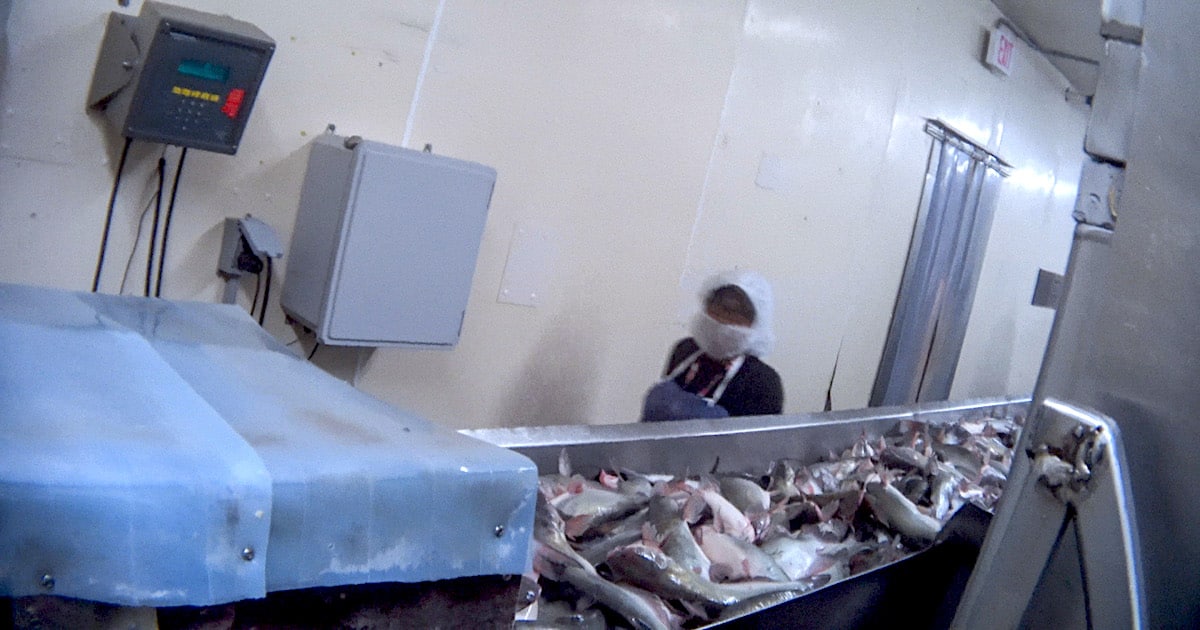
In the same month the U.S. Senate recognized August as National Catfish Month, Animal Equality, an international animal protection organization that has conducted hundreds of investigations into slaughterhouses and industrial farms, released disturbing footage of an undercover investigation at Simmons Farm Raised Catfish. Simmons, in Yazoo City, Mississippi, is one of the largest USDA-inspected catfish slaughterhouses in the U.S. and a supplier for Cracker Barrel and Captain D’s restaurant chains, as well as Kroger, Save A Lot, and Piggly Wiggly grocery stores. 

Video footage revealed catfish piled on overcrowded conveyor belts slowly suffocating as workers take lengthy breaks, fish returning to consciousness after electrical stunning and beheaded while fully awake, and undersized, deformed, or parasite-scarred fish languishing in bins without water for hours before being ground alive and turned into feed for growing catfish. A turtle, bycatch from the netting process that removes the farmed fish from ponds, was tossed onto a conveyor belt loaded with severed fish heads and tried to escape being shredded alive. 

The month-long investigation further revealed that these were not isolated incidents, according to Animal Equality’s Director of Investigations Sean Thomas, but that catfish, turtles, and other bycatch fish were routinely left to suffer out of water before being killed. 

Pressing for Criminal Animal Cruelty Charges 

Animal Equality presented evidence to the Yazoo County Sheriff’s Office and County Prosecutor alleging that Simmons had violated Mississippi law against animal cruelty, which does not exclude fish from legal consideration, according to Kathy Hessler, Director of the Animal Law Clinic at Lewis and Clark School. Hessler further stated in a memo that “scientific research indicates that fish and turtles can suffer and feel pain, and that animals who live in water, fish, in particular, suffer when taken out of water.” Thomas points out that catfish are “robust” fish and can survive for prolonged periods out of water, making their slow suffocation even more excruciating. 

The slaughter process itself also causes pain and suffering. The catfish pass through an electrical stunning device intended to incapacitate them prior to decapitation. The fish are heaped on top of each other, and the stunning relies on the current being carried from fish to fish through their crowded bodies. However, videos of the slaughter line show catfish flopping, gasping, and moving their fins after stunning, and many appear to be fully conscious when beheaded and may even maintain consciousness for some time after decapitation. Play00:00-03:19MuteSettingsEnter fullscreenhttps://www.youtube-nocookie.com/embed/PLmzCvb8kqc?autoplay=0&controls=0&disablekb=1&playsinline=0&cc_load_policy=0&cc_lang_pref=auto&widget_referrer=https%3A%2F%2Fsentientmedia.org%2Fnew-slaughterhouse-investigation-reveals-critical-lapse-in-federal-law%2F&noCookie=true&rel=0&showinfo=0&iv_load_policy=3&modestbranding=1&enablejsapi=1&origin=https%3A%2F%2Fsentientmedia.org&widgetid=1Play

In one haunting scene, the severed head of a catfish gasps slowly as the conveyor belt passes. Studies in other species of fish have shown that respiration and gasping can persist for up to eight hours after decapitation, and research in rats suggests that brain death does not occur for a least a minute after decapitation—raising questions about how much suffering these conscious catfish endure, and for how long. To that point, Thomas cites a 2020 study showing that catfish are resilient to electrical stunning and most immediately regained consciousness. 

The organization has also reached out to companies that purchase catfish from Simmons, and Kroger has initiated an independent investigation into the allegations. Animal Equality also filed consumer complaints with Alabama, Georgia, Louisiana, Mississippi, and Tennessee state attorneys general, stating that Simmons’s claim of “swiftly processing” catfish constitutes unfair or deceptive trade practices. In response, Simmons removed the claim from its website that the fish are processed “within 30 minutes.”

A Unique Opportunity to Demand Federal Oversight  

While catfish are not excluded from local animal cruelty laws, they are excluded from the Humane Methods of Livestock Slaughter Act, originally passed in 1958 and the only federal legislation overseeing animal welfare during slaughter. This act requires the “proper treatment and humane handling” of all animals slaughtered in USDA-inspected facilities but omits chickens and fish. According to Hessler, “fish and aquatic animals have no legal protections during transportation to, or within, the slaughter process. Methods of slaughtering fish and other aquatic animals can be quite gruesome, painful to the animals involved, and take significant periods of time.” In 2021, over 193,000 tons of catfish (measured in live weight) have already passed through slaughterhouses, with no oversight for their humane handling or welfare. 

However, catfish do hold the unusual status of being the only fish species inspected by the USDA, the federal organization responsible for enforcing the Humane Slaughter Act. This unique regulatory situation was implemented in 2016 to undercut foreign competitors to the U.S.’s home-grown catfish industry. Producers hoped that adding USDA certification to their products would give them an edge in the market. In the states of Mississippi, Alabama, and Arkansas, which collectively use 53,200 acres of water surface for catfish farming, catfish production is frequently marketed as “sustainable, traditional family farms” rather than as an industry bringing in significant sales, to the tune of 371 million dollars in 2020.  

Despite catfish’s special status, USDA inspectors don’t assess live fish in slaughterhouses. As Thomas explains, “it’s just for the sanitary conditions under which the fish are packaged. So, if a piece of that fish fell on the floor they would inspect it, but they’re not going over to the other side and watching where the live animals come in and seeing if stunning is occurring or anything like that.” Thomas points out that this sends a potent message to the industry “where the USDA doesn’t recognize them [the catfish] as animals deserving of even the most basic protections.” 

But, because USDA inspectors are already present in these facilities, Animal Equality sees this as an opportunity to press for federal oversight of catfish being slaughtered. And as Hessler states, the legislative framework is already present, and “these animals now vastly outnumber their mammal counterparts in the slaughter process, and scientific evidence has clearly shown that they can feel pain and suffer. It is therefore incumbent on us to protect them from unnecessary suffering during the slaughter process.” 

To this end, Animal Equality is petitioning Congress to include fish in the Humane Slaughter Act. Thomas admits that this is only a first step in humane oversight for farmed fish, but it would be a crucial move toward recognizing their capacity for pain and suffering and their need for federal protections. 

Simmons Farm Raised Catfish and The Catfish Institute could not be reached for comment. Read More

Fish Farming Giant Faces Animal Abuse Allegations

“If the Industry Won’t Tell the Truth, We Will”: Animal Equality’s Fight Continues

Factory Farming: Shedding Light on the Highly Secretive Industry


Exposing the Big Game's avatarThe Extinction Chronicles

Polar bears are inbreeding as ice melts away, scientists say

Li Cohen4 days ago


‘Weird, patronizing behavior’: AOC lets rip at Manchin’s ‘young lady’…4 injured, 2 unaccounted for after explosion rocks Atlanta-area apartment…

Climate changeis rapidly melting sea ice in the Arctic, causing “large-scale changes” in how polar bears are able to function, according to a new study. In Norway, scientists found, the bears are inbreeding as the species fights to survive.a polar bear walking across a snow covered mountain: A polar bear (Ursus maritimus) on the pack ice north of© Wolfgang Kaehler/LightRocket via Getty ImagesA polar bear (Ursus maritimus) on the pack ice north of

Astudypublished on Wednesday found that on the Norwegian archipelago of Svalbard, polar bear populations have seen a 10% loss in their genetic diversity from 1995 to 2016. The primary driver for the decline among the two generations of bears studied in that time is the rapid loss of ice in the Barents Sea, as it causes “detrimental ecological…

View original post 484 more words

Montana Defiantly Puts Yellowstone Wolves In Its Crosshairs

Exposing the Big Game's avatarCommittee to Abolish Sport Hunting Blog

IN UNPRECEDENTED MOVE, NEW HUNTING AND TRAPPING REGULATIONS WOULD ALLOW EVERY WOLF COMING INTO STATE FROM AMERICA’S FIRST NATIONAL PARK TO BE KILLED AS A TROPHY

https://mountainjournal.org/montana-hunting-laws-put-yellowstone-wolves-in-the-crosshairs

byTodd WilkinsonSUPPORT USGET NEWSLETTERPhoto by Jacob W. Frank/NPS; graphic element added by Gus O’Keefe
By Todd Wilkinson
For the first autumn in 27 years, the most famous population of wild wolves in the world has essentially no protection when members of its packs wander across the invisible boundary of Yellowstone National Park into Montana.
Montana’s controversial new wolf management laws, designed to reduce wolf numbers in the state to the lowest level they can be without triggering a return to federal protection under the Endangered Species Act, come into sharpest focus perhaps on the northern edge of America’s first national park.
Any wolf that lives most of its life in Yellowstone and crosses the boundary…

View original post 6,490 more words