Livestock represent more than 50% of all methane generated in California, contributing to climate-warming greenhouse gases. We should double down on investments in methane-reduction programs as effective, short-term climate solutions.
Chuck Ahlem is a San Joaquin Valley dairy farmer and former undersecretary of the California Department of Food and Agriculture, cahlem@dairycares.com.
As legislators return to Sacramento for final deliberations this year, prioritizing funding for methane reduction should be the first order of business.
Last week’s landmark report by the U.N. Intergovernmental Panel on Climate Change further sounded the alarm that additional warming is inevitable. The report says world leaders must achieve “strong, rapid and sustained” reductions in carbon dioxide, the most abundant and damaging greenhouse gas. The report also documents that reducing methane is the best and fastest strategy for slowing global warming.
While both methane and carbon dioxide warm the atmosphere, the two greenhouse gases do not behave in the environment in the same way. A single CO2 molecule causes less warming, but its impact lingers for hundreds of years and accumulates in the atmosphere. Methane is more potent, but short-lived, making it easier to address. Thus, reducing methane emissions is a critical climate mitigation strategy. As one of the report’s co-authors, Maisa Rojas Corradi, said, “Quickly reducing methane could counteract global warming, while also improving air quality.”
California policymakers undoubtedly will seize the U.N. report as an opportunity to talk tough on climate change, but will they seize the opportunity to actually do something to save the planet? As legislators negotiate spending on drought and climate change in the next weeks, they would be wise to follow the governor’s lead.
Gov. Gavin Newsom wisely included $60 million for the California Department of Food and Agriculture dairy methane reduction programs in his revised budget. Livestock are a significant source of methane in the state. We should be encouraging our leaders to double down on investments in these effective, short-term climate solutions.
Gov. Jerry Brown understood the importance of funding methane reduction, providing hundreds of millions of dollars for dairy and landfill methane mitigation during his time in office. It’s not rocket science, and the payoff is real.
The dairy and landfill methane reduction programs are the most cost-effective and efficient under the California Climate Investment portfolio. And the California Department of Food and Agriculture dairy digester program is by far the best investment made by the state to date. Consider the following, as reported in the California Climate Investments annual report:
The Dairy Digester Research and Development Program is accomplishing more greenhouse gas reductions than any other investment, achieving 29% of total greenhouse gas reductions, while being allocated just 2.1% of the funds implemented to date.
At a cost of just $9 per ton of carbon dioxide equivalent reduced, the digester program is the most cost-effective program.
The digester program will generate more than 21 million metric tons of carbon dioxide equivalent reduction over the initial 10 years.
A recent analysis by the California Air Resources Board further establishes the need for more public funding for dairy methane reduction efforts. The dairy digester program is oversubscribed and out of funds. The state will only meet its existing 40% reduction target if that additional funding materializes.
As a dairy farmer in the San Joaquin Valley, I’ve learned more about greenhouse gases and other air emissions than I could have ever imagined. Climate change affects everyone, especially those of us whose way of life relies on the weather. My family has made it a point to do what we can on our farm to reduce emissions — especially methane — and I see many of my fellow dairy farmers doing the same.
The bottom line: The science is clear that the planet is warming. The science is also clear that reducing methane is our best short-term hope for staving off catastrophic impacts. Our children, grandchildren and future generations are depending on it.
In early March 2020, Rob Wallace, an evolutionary biologist who had been adrift after an unceremonious exit from the University of Minnesota, flew to New Orleans and then got on a bus to Jackson, Miss., where he was scheduled to speak at an event on health and racial injustice. Wallace, who turned 50 this summer, has been studying and writing about infectious diseases and their origins for half his life. For almost as long, he’s been warning that the practices of industrial agriculture would lead to a deadly pandemic on the scale of Covid-19—or worse. “A pandemic may now be all but inevitable,” he wrote of the H5N1 avian influenza virus in 2007. ”In what would be a catastrophic failure on the part of governments and health ministries worldwide, millions may die.”
Before his trip to Jackson, Wallace had been closely monitoring the outbreak of a novel virus in Wuhan. Though he’d been spooked by a news report that showed a delivery driver in China practicing extreme social distancing, he went ahead with the trip. As an underpaid academic, he needed the money, and as an American, he didn’t expect anything to happen to him. “I too had been infused with a peculiarly American moment, wherein financial desperation meets imperial exceptionalism,” he wrote.
He’d been infected with something he’d been warning about for years, and like so many around the country and the world, all he could do was to hope to keep breathing. “No test. No antiviral. No masks and no gloves provided. No community health practitioner stopping by to check on me,” Wallace wrote.
“You can intellectually understand something but still not assimilate the oncoming damage,” he told me later, as he recalled the “sour vindication” of having his worst fears come true. “So there’s an aspect of rage, and an arrival at an understanding.”
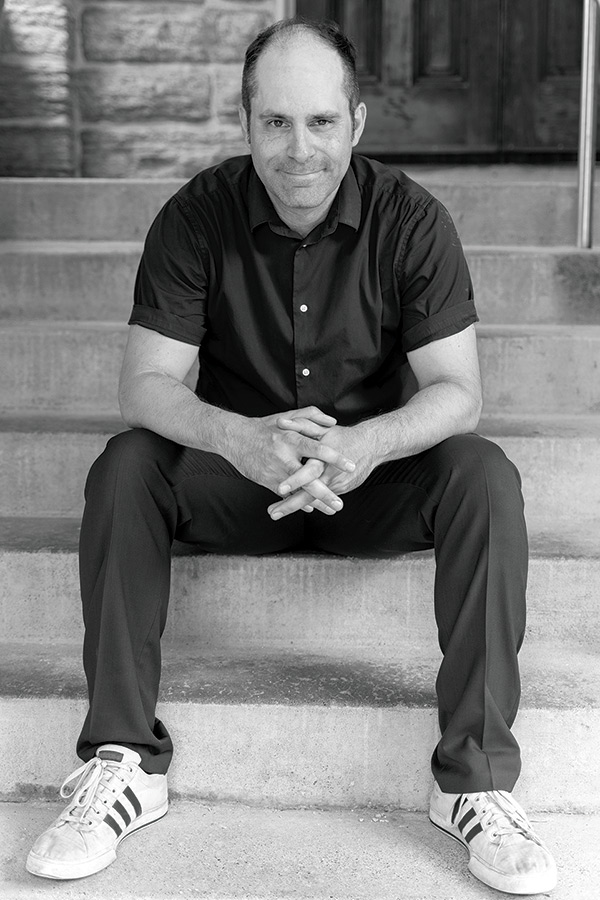
Wallace looks more like a dad on the way to his kid’s Little League game than a lab-coat-wearing scientist who used to consult with the Centers for Disease Control and Prevention and the United Nations. That could be because he hasn’t had a job in academia for more than a decade, a circumstance he attributes to his decision to take the implications of his scholarship seriously.
That’s why the book Wallace published last October came with a provocative title—Dead Epidemiologists: On the Origins of Covid-19. Though there are many “brilliant, bright, amazing, and hardworking” epidemiologists whose work he cites, their impact is limited, Wallace said: “They are in the business of cleaning up the mess the system brought about, and that’s the extent to which they’re willing to go.” In his first essay on Covid, “Notes on a Novel Coronavirus,” published in January 2020, Wallace wrote that an epidemiologist is like a “stable boy with a shovel following around elephants at the circus.”
“As an epidemiologist, you’re supposed to want to put yourself out of business,” Wallace said. “Everyone has bills to pay; I understand that. But the extent to which your corruption might lead to a pathogen that could kill a billion people—that’s where my line is.” While he’s not the only Cassandra whose warnings of a pandemic like Covid-19 went unheeded, there are few as clear-eyed about where to direct the blame. “Agribusiness is at war with public health,” he wrote in the March 2020 essay “Covid-19 and the Circuits of Capital,” and if no serious action is taken, the interval before the next pandemic will be “far shorter…than the hundred-year lull since 1918.”
So during that fateful spring, it’s fair to say, Wallace should have been as aware as anyone on earth of the speed with which such a virus could spread in the United States. “Perhaps that was my version of being a dead epidemiologist, who cannot assimilate what he knows about things into action or interpretation,” he admitted. Throughout Dead Epidemiologists—some of which was written while he was afflicted with Covid—Wallace mercilessly attacks the complacency and fecklessness with which establishment scientists and politicians responded to the virus; he also surveys the damage that the pandemic has wrought on the bottom rungs of society. The book is poignantly dedicated to three meatpacking workers who died from Covid-19, and Wallace describes their barbarous working conditions in detail. But the book’s chief concern is the origin of the SARS-CoV2 virus, and Wallace works backward here, from the outbreak to the bat cave.
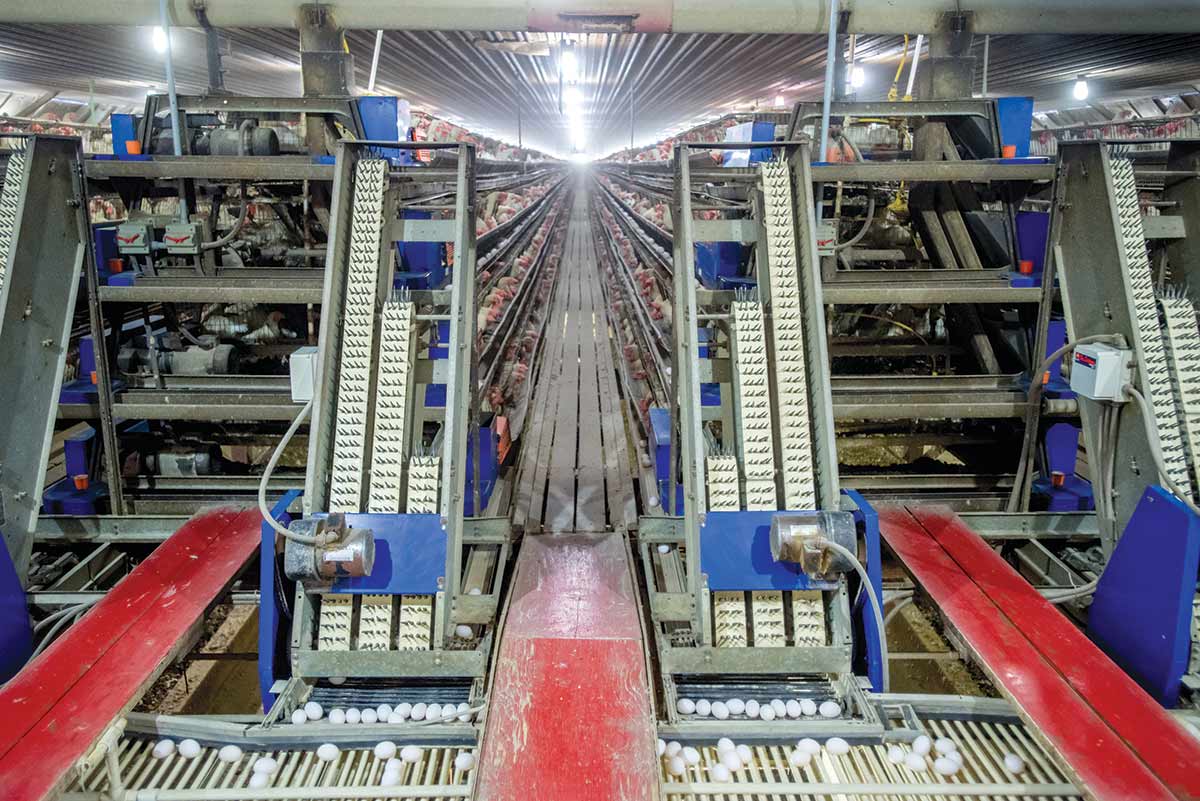
Factory farm: Industrial agriculture has increasingly moved away from biodiversity and toward mass production. (VW Pics via Getty Images)
To fully grasp why we’re living in an age of pandemics, one must first understand how industrial agriculture and deforestation work in tandem. The H5N1 bird flu and the H1N1 swine flu emerged from poultry and hog farms, whereas Ebola and Covid-19 emerged from wild animals. All are the result of zoonotic spillovers—when pathogens that originate in animals cross over to humans and then mutate in ways that allow them to spread to other humans. According to a July 2020 report from the United Nations, three out of four of all “new and emerging human infectious diseases” are zoonotic in origin, and a study in the journal Nature found that agricultural drivers were associated with half of all the zoonotic pathogens that emerged in humans in that time. In Wallace’s view, this increase is “concurrent” with the livestock revolution, the expansion and consolidation of the meat sector that began in the 1970s in the southeastern United States and then spread around the world.
DONATE NOW TO POWER THE NATION.
Readers like you make our independent journalism possible.
When thousands of the same breed of animal are raised in crowded conditions, the lack of biodiversity creates “an ecology nigh perfect for the evolution of multiple virulent strains of influenza,” Wallace wrote. Farms built near dwindling primary forests where zoonotic pathogens reside have inadvertently “empowered the pathogens to be their very best selves,” he told me. “You strip out the complexity of forest that had been keeping these pathogens bottled up, and you let them have a nice straight shot to the major cities, which gives them opportunities to multiply themselves. This all increases transmission and increases virulence.”
The cities themselves have also become increasingly vulnerable, without investment in public space and health care. “You’ve stripped out everything from environmental sanitation, especially in the Global South, and you’ve made public health an individual intervention,” he added.
But few have made the connection between the past year and a half and the processes that Wallace highlights. “Other than reprobates like me, most Americans think of Covid-19 as a thing that emerged out of China, and doesn’t it have to do with bats or labs or something?” Wallace continued. “So a natural act, or the fault of the Chinese, or both.” That obfuscation makes sense, given what Wallace repeatedly identifies as the essential strategy of agribusiness corporations: They leave their biggest costs off their own balance sheets and let them fall instead on the environment, animals, farmers, workers, consumers, and public health agencies the world over. “Governments are prepared to subsidize agribusiness billions upon billions for damage control in the form of animal and human vaccines, tamiflu, culling operations, and body bags,” he wrote concerning the swine flu in 2009.
Unlike your average MSNBC viewer, Wallace never dismissed the “lab leak” theory of Covid’s origin as outside the realm of possibility or beyond legitimate scientific inquiry. In 2013, he warned that the proliferation over the past 20 years of biosafety labs—which handle and run experiments on some of the world’s deadliest viruses—was making an accident almost inevitable. Though he’s still a proponent of the “field” hypothesis, which holds that the virus crossed over in nature rather than in a laboratory facility, Wallace believes that the origin debate, at least as it’s being hashed out in the public sphere, largely misses the point. “Both represent efforts at avoiding addressing the economic model driving the emergence of virulent pathogens to begin with,” he argued last August on his Patreon page, where his articles often appear first. “The trope best suited for organizing our thinking here isn’t necessarily a murder mystery. It may be better conceived as an alien invasion of our own making.”
The spread: A volunteer worker disinfects a bus station in Curitiba, Brazil, in April 2020. Brazilian President Jair Bolsonaro described Covid as a “little flu,” before contracting it himself. (Daniel Castellano / AFP via Getty Images)
It may come as a surprise that Wallace, a scholar of agriculture, was born and raised on Manhattan’s Upper West Side. He was an only child and a self-described “pink diaper baby”—his parents to the left of the Democratic Party, but not quite Reds. Rodrick and Deborah Wallace, a physicist and an ecologist, met on a picket line protesting a weapons research lab when they were graduate students at Columbia and Barnard. Rodrick was organizing with a group called Scientists and Engineers for Social and Political Action, an early formation of Science for the People, which would count radical scientists like Richard Levins, Stephen Jay Gould, and Richard Lewontin as members. When Columbia hosted an Earth Day celebration sponsored by Ford Motors, which Deborah called “the first attempt at greenwashing,” the couple helped organize the inaugural People’s Earth Day event, with speakers from the United Farm Workers and the Black Panther Party, as well as the labor leader Tony Mazzocchi.
Shortly after Robert was born, his parents became epidemiologists in their own right. Their study of the destruction of housing in the Bronx in the early 1970s and its public health fallout became the book A Plague on Your Houses: How New York Was Burned Down and National Health Crumbled. The Wallaces showed that the fires that engulfed the Bronx between 1969 and 1976 were the result of the city’s decision to reduce fire services in poor neighborhoods, based on faulty data from the Rand Corporation.
“We were running a disaster site operation out of our house. We didn’t have the time or energy to indoctrinate the child,” Rodrick said during a Zoom call with the couple from their home in the Bronx. “He could tell what was going on through the conversations he heard or through seeing the hundreds of autopsy reports laid out on our terrace from the mass, fatal toxic fires.” Today the Wallace family works collaboratively; Rodrick and Deborah are the coauthors of several chapters in Dead Epidemiologists.
While pursuing a PhD in biology at the City University of New York, where he also contributed articles and illustrations to the student newspaper The Messenger, Wallace studied the HIV crisis in the city in the 1980s and ’90s. He found that AIDS death rates by zip code corresponded to the unequal distribution of the life-saving cocktails of antiretroviral medications, which in turn corresponded to previously existing inequality. “Rob’s dissertation was essentially an extension of the family business,” Deborah said. It marked the beginning of Wallace’s fascination with the social dimensions of infectious disease and served as morbid preparation for the way Covid-19 has laid bare the United States’ and the rest of the globe’s most deeply entrenched injustices.
After graduate school, Wallace went to the University of California, Irvine, to do postdoctoral research with Dr. Walter Fitch, the father of molecular phylogeny, a method of tracing the evolutionary history of and relationships among organisms. In 2007 Wallace was the lead author of the first study that pinpointed the southern Chinese province of Guangdong as the source of the H5N1 avian influenza virus in the mid-1990s. Yet there was something the genetic sequencing he was looking at couldn’t tell him: Why did it emerge there during that time? “I made the mistake of becoming curious about something,” Wallace said. “That’s not a good career move in science.”
SUPPORT OUR WORK WITH A DIGITAL SUBSCRIPTION.
Get unlimited access: $9.50 for six months.
He began to read beyond his discipline, investigating history, sociology, and political economy. “In the course of getting these literatures to speak to each other, all of a sudden my vision of what causality is completely changed,” Wallace said. He found that as China’s post-Mao economy opened up to direct foreign investment, it shifted from subsistence agriculture to vertically integrated poultry and hog farming for commodity export. Between 1985 and 2000, skyrocketing chicken and duck production combined with a globally unprecedented migration of people from China’s rural areas to the cities to create the perfect epidemiological storm. “The social sciences are utterly critical to understand how things evolve at the molecular level,” he said.
Following the money changed Wallace’s concept of what a disease hot spot is. If we paid as much attention to the entities that fund deforestation and highly pathogenic farming methods as we do to the outbreak zone, we would have to see the international centers of finance like London, Hong Kong, and New York City as viral epicenters too. “Hong Kong had been painted as a victim in this moralistic story, but it was also the source by virtue of financing the reconstruction of agriculture in Guangdong,” Wallace said. He proposed that China advocate renaming viruses and their variants to reflect their political- economic origins, as he’s begun to do in his own writing, with the “NAFTA Flu” (for the swine flu) and “Neoliberal Ebola.” In July, Keir Starmer of the UK Labour Party proposed naming what was then known as the UK variant after Boris Johnson. Wallace had already named it the BoJo Strain in December.
Wallace’s discovery that macroeconomics could shape microbiology was both a breakthrough and the beginning of the end of his academic career. He had applied for a tenure-track position in the geography department at the University of Minnesota, Twin Cities, but was hired in 2008 on a contractual basis instead. He suspected this was due to a factional dispute within the department, and he felt marginalized by his colleagues when he arrived. He had also started a blog, Farming Pathogens, and when the swine flu emerged in 2009, Wallace wrote about who was to blame. “When you start speaking out at Minnesota, which is an agricultural shop, and you blame agribusiness for the emergence of a pandemic, you’re not going to get support,” Wallace said. His one-year contract was not renewed, and he was given a token visiting scholar position. “They dumped my body at the Institute for Global Studies. I had no money and no office, basically just access to the library. So I got the message.”
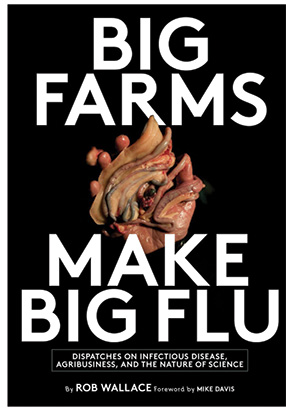
The warning sign: Wallace’s writings from the early 21st century, collected in the 2016 book Big Farms Make Big Flu, anticipated the crises of our age.
Wallace spent the next few years bitter and angry. He was also broke, living off food stamps and unemployment insurance. He and his wife had gotten divorced. The weeks when his son stayed with him, he’d eat OK; when he was solo, not so much. Eventually he got a job making sandwiches at a deli in St. Paul. Wallace had also written enough blog posts that he could shop around a book of essays, which became Big Farms Make Big Flu: Dispatches on Influenza, Agribusiness, and the Nature of Science, published in 2016 by Monthly Review Press.
“His depth of ecological understanding was just astounding, and he managed to bring it together with epidemiology and social science in amazing ways,” said John Bellamy Foster, the editor of Monthly Review, a professor of sociology at the University of Oregon, and the author of Marx’s Ecology. “One of the problems on the left, like everywhere else, was that issues of nature and science were separate from social science and history. Biology was an issue for biologists, not for social scientists. Rob’s work teaches us to put these together and make sense of what’s going on.”
While Wallace’s harrowing predictions in Big Farms Make Big Flu might have seemed alarmist in 2016, today, in the midst of the Covid-19 pandemic, they look prophetic. As Wallace’s star has risen over the past year and a half, the book has been reprinted in Spanish and Italian, and he’s been interviewed by media outlets in India, Brazil, and Germany. “His work is irresistible,” Foster said, “because we are facing these growing epidemiological and economic crises, and Rob’s analysis is really the only realistic lens to understand the problem. His critique is now a common ground for critical intellectuals around the world. And it’s happened very fast.”
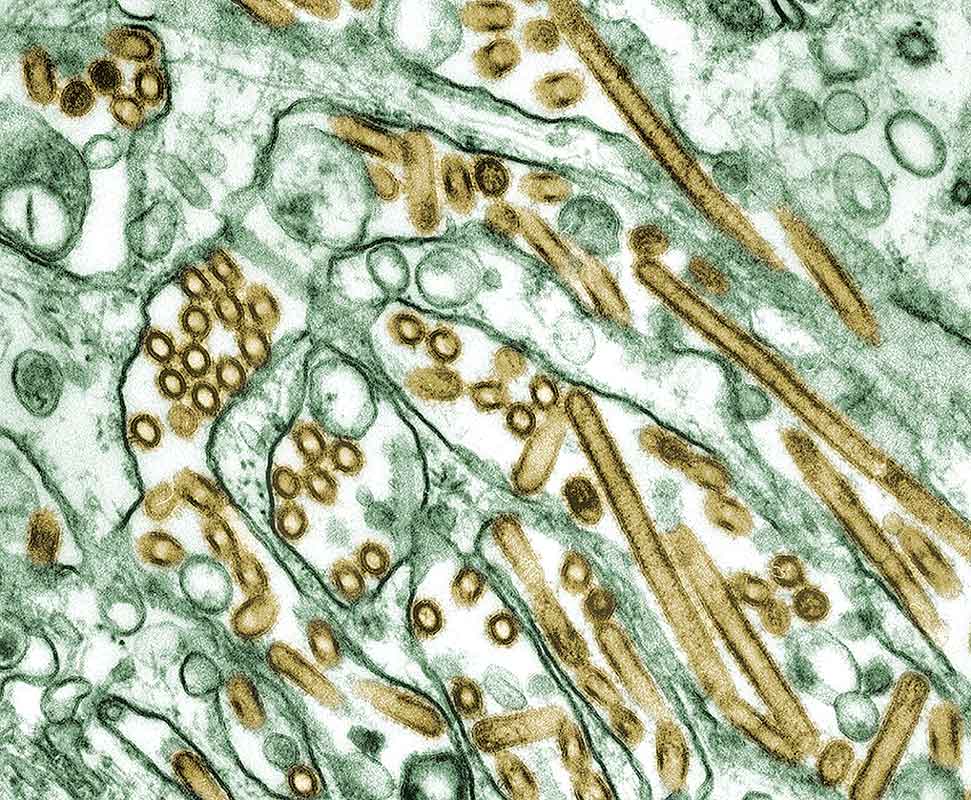
Crossing over: An electron micrograph of the H5N1 virus. The rate of animal viruses infecting humans has increased alongside livestock farming. (Smith Collection / Gado / Getty Images)
Wallace’s move from studying the genetic sequencing of viruses to analyzing their origins is a matter not just of conviction but of necessity. Once a deadly virus emerges, “the horse has left the barn,” he is fond of saying. This is where the infamous Wuhan “wet market” enters the picture, which Wallace emphasizes must be understood as part of a web of economic, political, and ecological relations. When China’s farms industrialized, many small farmers sought to become purveyors of wild food. As big farms took up more and more land, the small farmers were forced to raise or hunt animals closer to or within the forests where the most exotic pathogens might reside. Say, in a bat cave.
Wallace’s personal theory is that Covid-19 “emerged along the increasingly industrialized wild animal commodity chain from hinterlands and border towns as far south and west as Yunnan. On the last leg of its domestic tour, the virus made its way to Wuhan by truck or plane and then the world,” he wrote in May. And while southern China has been ground zero for several outbreaks, because of the country’s unique path to development in the late 20th century, and the Chinese government is not without blame, Wallace notes that the same thing could—and often does—happen elsewhere. Pandemics are just one symptom of a broader ecological sickness: a “rift” in the planet’s social metabolism that occurs when economic abstractions are treated as more real than ecological limits, to borrow the Marxist framework pioneered by ecosocialist theorists like Foster and expanded by Wallace.
This rift between ecology and the economy runs parallel with the growing political divide between urban and rural, Wallace said. Early in the pandemic, his organization, the Agroecology and Rural Economics Research Corps, launched an international collective called Pandemic Research for the People, focusing on “the needs of everyday people most immediately affected” by Covid-19. Many of America’s farmers, for example, have been in decades-long exploitative contractual relationships with agribusiness corporations. In Minnesota, they’re in such dire straits that it has led to an epidemic of suicides.
“We’re trying to bridge gaps and signal that their plight matters,” Wallace said. “It requires a respect for people who don’t have degrees at the end of their names but have a profound understanding of the systems you’re looking at.” It’s difficult to argue with the notion that any movement or coalition capable of loosening the grip of agribusiness corporations would have to address this fracture between the city and the hinterland. Such a movement, he continued, would seek to deliver on the slogan from Charles Booker’s 2020 Democratic primary campaign for the Kentucky Senate: “From the hood to the holler.” Or, to widen the scope, “From the South Side of Chicago to South America,” as Wallace wrote in a recent Patreon dispatch, once again reminding us that the pandemic is “over” only for a tiny minority of people on the planet.
The alternative is agroecology, which is simultaneously a science, an agricultural practice, and a radical anti-capitalist movement with roots in Brazil’s Landless Workers Movement and the international peasant alliance La Via Campesina. Wallace defines an agroecological system as one that is “tied to the state of the surrounding landscape from which resources are continually drawn (and returned).” The way out, then, is not so much to create a new world, or to escape into space like Jeff Bezos and Elon Musk seem to be planning, but “more along the lines of coming back to earth.”
Wallace is now at work on a book of essays called Revolution Space: Adventures Outside Capitalist Science, which will extend beyond the natural and social sciences to incorporate the humanities, most notably ancient mythology. Toward the end of our conversation, he took off his glasses and leaned over the table to show me the inscription—“Epimethean Vision”—printed in white letters on the inside of his lens. It’s become something of a life mantra for Wallace: You have to look back to see what’s coming. “Foresight is important, but you need hindsight—not to go back to some prelapsarian fantasy, but to draw the lessons that happened previously so you don’t do it again,” he explained. “We’re getting right back on track to what brought us here, except next time it could be a pathogen that emerges to kill a billion people.”
While he acknowledges that cynicism is an “occupational hazard,” Wallace’s work on Covid-19 has brought him more acolytes than detractors. “I’ve found when systems are in crisis, there is room for weirdos like me,” he said. Like the archetypal outsider scientist at the beginning of a disaster movie, Wallace has struggled to be heard. But by the third act, what once seemed like doomsday prophecy could become the basis for recovery. “If I’ve arisen in this historical moment, it’s because I was thrown aside in such a way that I landed in a realm that forced me to become a different scientist,” Wallace said. “I went through the hellfire of ostracization and marginalization. It’s true, I don’t want to go there ever again. But I also understand that one can say what’s necessary to say and still survive another day.”
Eamon WhalenEamon Whalen is a freelance journalist from Minneapolis covering culture and politics, and a 2019 recipient of the 11th Hour Food and Farming Fellowship.
The FINANCIAL — An Oxford University and University College Cork study today reveals the scale of the challenge facing large power companies in the EU and UK if they delay aligning their portfolios with net zero.
The researchers found that a ‘significant majority’ of companies within the sector could have the financial resources to close their carbon emitting power plants early. But if they delay action for just five years, fourteen out of the twenty-nine companies analysed suffer declines in credit ratings related to having enough money to pay interest payments on loans. Credit ratings fell for twelve companies based on having less money available to pay back their loans, including one which was rated as high risk.
Delayed action on climate increases the amount of cashflows that needs to be reinvested to sustain the company from lost cashflows associated with…
New York State Department of Environmental Conservation (DEC) announced that DEC has adopted new rules for deer and bear hunting in New York. Rule changes include extending hunting hours and dress code requirements when afield to improve hunter safety.
Establish a nine-day season for antlerless deer in mid-September (Sept. 11 – 19, 2021) using firearms in Wildlife Management Units (WMUs) 3M, 3R, 8A, 8F, 8G, 8J, 8N, 9A, and 9F, and using…
It’s time to make fur farming history. Tens of thousands of mink and other fur-bearing animals are purpose-bred, raised and then killed for the use of their fur.
The issue of fur farming is more than an “animal rights” issue as it concerns the inextricable linking of human, animal and environmental health. The viral storm caused by Covid-19 exposed these overlapping interspecies vulnerabilities. Minks are vulnerable to SARS-CoV-2, the virus that causes COVID-19, and the virus can jump the species barrier to transmit to humans. Repeated outbreaks of Covid-19 at commercial mink farms in B.C., Europe, the U.S.A., and other parts of the world have spotlighted this cruel and unnecessary industry. Millions of minks have been killed attempting to stop the viral spread, and breed bans have now been put in place in many countries in the E.U. and beyond.
Several voices, including The Suzuki Foundation, The Union of British Columbia Indian Chiefs (UBCIC), Humane Societies, infectious disease physicians, and the Fur-Bearers, have been calling for the closure of the commercial fur farming industry. A recent article by Humane Society International outlined some of the main reasons. Canadian infectious diseases specialist Dr. Hajek was quoted: “Given the very real threat of viral mutations and the transmission of virus between animals and people in these facilities, the B.C. Government should now act decisively, prohibit and end industrial fur farming in the interest of public health and animal welfare.”
Kelly Butler, of H.S.I./Canada, stated, “The world community is taking urgent action to end fur farming because it is inherently inhumane, environmentally destructive, and poses a grave public health risk. More than 20 countries have already stopped fur farming within their jurisdictions. The B.C. government must follow the lead of these nations and end this cruel, high risk, outdated and needless industry.” Dr. Dubois, BC SPCA Chief Scientific Officer, stated, “fur farming exists in direct opposition to the values of British Columbians. The continuation of this industry would present unacceptable outcomes for both animals and people.” Grand Chief Phillip, president of the UBCIC, stated, “We are renewing our call for an end to fur farming in B.C. This industry not only goes against Indigenous values of wildlife stewardship and conservation but also has proven to be an unmanageable threat to public health.”
Are there some checks and balances under Canadian law? There are some laws and codes of practice, but many argue they do not go far enough. In BC, for example, the statute to regulate the fur farm industry is the Animal Health Act and Fur Farm Regulations. The act defines:
“fur bearing animal” means a chinchilla, fisher, fox, marten, mink or nutria;
“fur farm” means a place where two or more fur bearing animals are kept in captivity with the intention of breeding the animals, or producing pelts, for commercial purposes
Part 3 — Health of Fur Bearing Animals — Health management plan states:
7(1) A licensed fur farmer must
(a) establish a health management plan in accordance with subsection (2) for the fur bearing animals kept on the fur farm, and (b) ensure that all operators on the fur farm implement all protocols and procedures contained in the plan.
On July 6, 2021, a novel type of lawsuit concerning fur farming was filed in B.C. Supreme Court on behalf of the Fur Bearer’s. David Wu, of Arvay Finlay, one of the lawyers for the case (I am co-counsel), outlined the case in a nutshell: “The Fur-Bearer’s have launched a judicial review challenging the renewal of a fur farm licence to B.C.’s only chinchilla fur farm. The basis of the judicial review is that the licence was renewed with no animal health management plan in place. A health management plan is a requirement under the applicable regulation. The government does not dispute that there was no fur farm licence in place. Rather, it appears that the main arguments the government will advance are that the petitioners lack public interest standing and the issue is moot because the government is now working to address the lack of a health management plan. As such, whether the government can be held accountable over how it follows and enforces the regulatory scheme will likely become front and center in this case.” We expect this animal law case will go to a hearing later this year. (For further details, please see B.C. taken to court over chinchilla fur farm licence in Vancouver Is Awesome).
On July 21, 2021, under the Public Health Act, S.B.C. 2008, a moratorium was ordered on new B.C. mink farms and capped existing fur farms due to Covid-19. All provinces should follow suit, and funding programs that support the commercial fur farming industry, proven to be a threat to health, should be stopped.
A 2020 public opinion poll showed that 81 per cent of Canadians are opposed to killing animals for their fur. The overarching question is, why do we continue to allow fur farming now that the facts are in and the science is clear? The law needs to catch up by rapidly phasing out the industry and provide retraining to fur farmers. Big-name fashion houses have taken fur off their designer menus, including Prada, Gucci, Coach, and others, demonstrating an understanding of consumer demand for fur-free fashion.
Consumer appetite for using the fur coats of animals for human vanity has shrunk in the face of humane education. The killing of animals for their fur, for fashion is not socially or morally acceptable and needs to be banned. We are overdue in Canada to bring the anachronistic commercial fur farming industry to a swift close.
The Canadian Legal Newswire is a FREE newsletter that keeps you up to date on news and analysis about the Canadian legal scene. A separate InHouse Edition is delivered on a regular basis, providing targeted news and information of interest to in-house counsel.
Crews set a backfire in an effort to gain control of the massive Caldor fire near the Tahoe basin in California on Aug. 26.Ty O’Neil/SOPA Images/LightRocket/Getty Images
Through fires and hurricanes, through lethal heat waves and flash floods, the world seems to be ending — or at least, that’s what it feels like.
All around us, we’re seeing the effects of climate change.Wildfiresare raging through the West. Much of southeast Louisiana was flattened byHurricane Ida, and parts of New York and New Jersey are digging out from disastrous flooding.
And if it seems like natural disasters are happening more and more often, that’s becausethey are: Climate change has helped drive a fivefold increase in the number of weather-related disasters in the last 50 years. Climate change means disasters arehappening simultaneously…
A screenshot of Dr. Nicole Linder, chief hospitalist for OSF St. Francis Hospital Medical Group in Escanaba, Michigan. Linder spoke to reporters during a virtual press event Thursday, Sept. 9, about her experience working with COVID-19 patients and the importance of getting vaccinated to reduce risk of severe illness and death.
Dr. Nicole Linder has cared for countless COVID-19 patients throughout the pandemic, but one “very special patient” was on her mind as she spoke with reporters Thursday, Sept. 9, about the need to get more Michiganders vaccinated.
Linder, who serves as chief hospitalist for OSF St. Francis Hospital Medical Group in Escanaba, said she has cared for a patient named Kathy for the last three weeks, who had “refused the vaccine adamantly” before contracting COVID-19.
The woman voiced regret upon being admitted, and spent her time in the hospital calling friends and family who, like her, had refused to be vaccinated. Linder said Kathy convinced at least six people to get the shot before her condition worsened and she was sent home to spend her final days in hospice care with her family.
“It was too late for her,” Linder said. “Despite everything that could possibly be done for her, she’s going to lose her battle and lose her life. And she’s vivacious and gregarious and just a wonderful person and this did not have to happen. Her family didn’t have to lose her.”
The Upper Peninsula doctor spoke Thursday about her experience with COVID-19 patients in recent months, the vast majority of whom have declined to get vaccinated and wound up seriously ill from a coronavirus infection. In Delta County, where she works, 53% of residents had gotten a first shot as of Sept. 8, and 57% were fully vaccinated.https://83ac4b141531a7c646a1dcb2adbc8ec8.safeframe.googlesyndication.com/safeframe/1-0-38/html/container.html
“I’m fatigued, and I am heartsick and I’m tired of watching people suffer needlessly and die of a disease that could have been prevented by a simple and safe and effective vaccine,” Linder said. “I don’t want to watch my patients’ families suffer with the grief of this and also the guilt if they played some role in their family member’s decision not to be vaccinated.”
One of the most common reasons she hears for why people didn’t get vaccinated was because they “don’t want to inject some untested or foreign substance into their body.”
“I don’t think that people realize that if they do become ill enough to be hospitalized, they’re going to be injected with a lot of foreign substances and most of them less proven than the COVID vaccine,” she said. “… I think people overestimate the effectiveness of the treatments that we have for COVID in comparison to the vaccine.”
Pfizer’s two-dose vaccine has been granted full approval for use by the U.S. Food and Drug Administration for individuals 16 year and older. Additional vaccines by Moderna and Johnson & Johnson offer similar protection against severe COVID-19 illness, and have received emergency use authorization following clinical trials and review by an independent advisory committee made up of vaccine and disease experts.
“The best treatment for COVID is to never get it in the first place,” Linder said. “There really aren’t any miracle cures, despite what some of the media figures have led the public to believe.”https://83ac4b141531a7c646a1dcb2adbc8ec8.safeframe.googlesyndication.com/safeframe/1-0-38/html/container.html
As of Tuesday, Sept. 7, about 61% of Michigan residents 12 and older had gotten a first dose of vaccine, and 56.2% had been fully vaccinated. Vaccination rates remain higher among those 50 and older, with the lowest rates coming from teens and those in their 20s and 30s.
Vaccines are readily available at local pharmacies, health systems, clinics, and health departments. To find a vaccine near you, visit Michigan’s COVID-19 vaccine website or go to VaccineFinder.org.
Each week, we answer frequently asked questions about life during the coronavirus crisis. If you have a question you’d like us to consider for a future post, email us atgoatsandsoda@npr.orgwith the subject line: “Weekly Coronavirus Questions.” See an archive of our FAQshere.
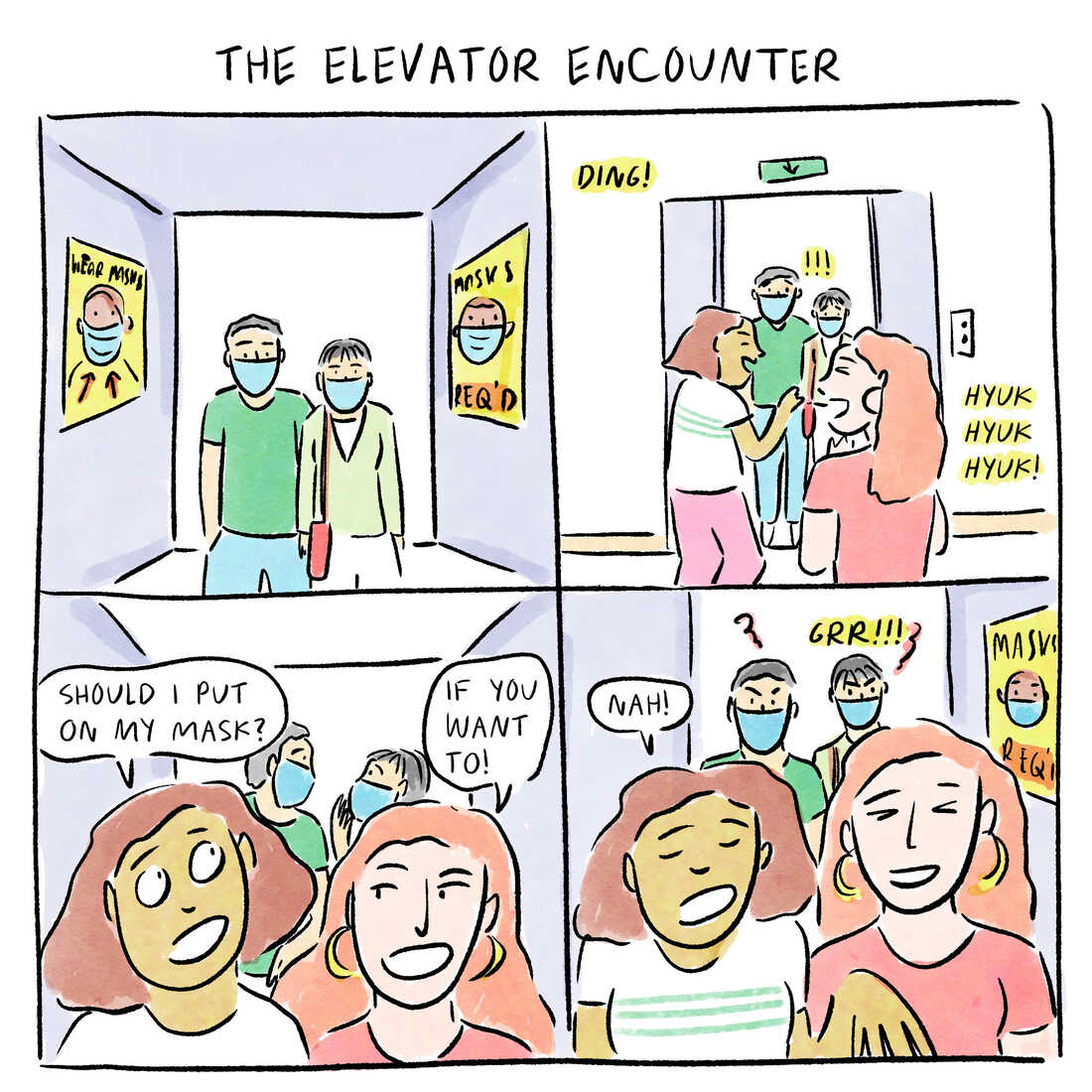
We’ve been answering coronavirus questions from our audience for over a year, but this past week, I had some questions of my own. While on vacation with my family, I encountered four tricky COVID-19 situations. I really wanted an expert’s advice.
So I interviewed three COVID-19 specialists:Charlotte Baker, an assistant professor of epidemiology at Virginia Tech;Abraar Karan, an infectious disease doctor at Stanford University; andJill Weatherhead, an assistant professor of adult and pediatric infectious diseases at Baylor College of Medicine. Here’s what they had to say…
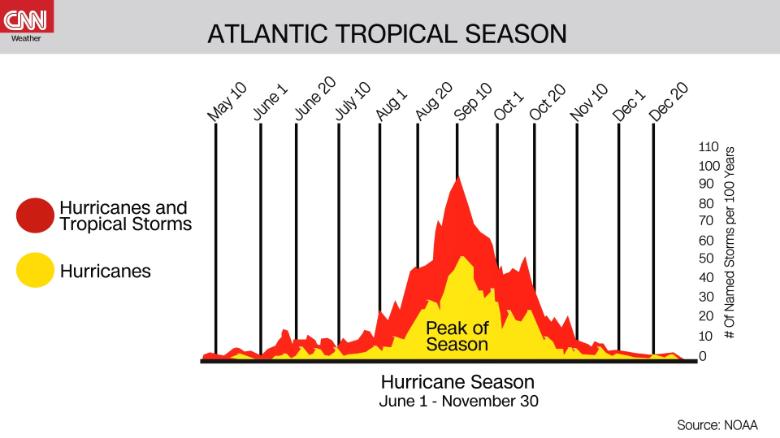
(CNN)Friday is the statistical peak of hurricane season, yet a monster named Larry is forecast to transform into a winter storm that will deliver feet of snow in Greenland.Yes, you read that correctly. A hurricane producing feet of snow. It’s been a crazy year for tropical systems already, so why not?This year is already ahead of pace in terms of storms, with 13 named. On average, we don’t see 13 named storms until theend of the season.
Hurricane-force winds arenot uncommonin Greenland, but hurricanes that bring significant snow are.
Feet of snow for Greenland
Hurricane Larry is forecast to slide up the east coast of Greenland this weekend. When it gets there, it will have sustained winds around 60 to 70 mph, with gusts as high…
Humans have already warmed the planet by at least 1 degree Celsius by burning fossil fuels that spew heat-trapping gases into the sky. The oceans are rising, and deadly disasters like wildfires, heat waves, and flooding are becoming more destructive. Almost every part of the world is experiencingthe effects of climate change.
That much is “unequivocal,” according to thelatest reportfrom the Intergovernmental Panel on Climate Change (IPCC), an international team of scientists convened by the United…


 Top Articles





/cdn.vox-cdn.com/uploads/chorus_image/image/69839405/GettyImages_1234532629.0.jpeg)
 Exposing the Big Game