More comfortable with rounding up lost dogs and rescuing kittens from trees, a team of animal control officers in Maryland’s second-most-populous county is wrestling with an unprecedented challenge: how to catch a dazzle of free-roaming zebras.
Five of the animals broke free from a private farm in Prince George county more than a week ago and have been roaming neighbourhoods south of Upper Marlboro in a search of food.
“You can’t hunt them down. They’re just too fast, they run, they won’t let you get near them,” Rodney Taylor, chief of Prince George county’s animal services department, told the ABC affiliate WJLA news.
“We do have a feeding station set up, and we’re winning their confidence. They are eating there every morning between 2am and 4am.”https://platform.twitter.com/embed/Tweet.html?creatorScreenName=richlusc&dnt=true&embedId=twitter-widget-0&features=eyJ0ZndfZXhwZXJpbWVudHNfY29va2llX2V4cGlyYXRpb24iOnsiYnVja2V0IjoxMjA5NjAwLCJ2ZXJzaW9uIjpudWxsfSwidGZ3X2hvcml6b25fdHdlZXRfZW1iZWRfOTU1NSI6eyJidWNrZXQiOiJodGUiLCJ2ZXJzaW9uIjpudWxsfSwidGZ3X3NwYWNlX2NhcmQiOnsiYnVja2V0Ijoib2ZmIiwidmVyc2lvbiI6bnVsbH19&frame=false&hideCard=false&hideThread=false&id=1435675637289738244&lang=en&origin=https%3A%2F%2Fwww.theguardian.com%2Fus-news%2F2021%2Fsep%2F10%2Fzebras-escape-maryland&sessionId=f58ff6ff7b7751631f68bada4cd47f30d2faca2f&siteScreenName=guardian&theme=light&widgetsVersion=1890d59c%3A1627936082797&width=550px
“If you spook them, you’re just pushing them further out. And that’s when it can get dangerous, they can get out on the highway. Things can happen,” he added.
The zebras, part of a larger herd of 39 that reportedly arrived from Florida at the private farm in Upper Marlboro last month, broke free from their enclosure just over a week ago.
The farm’s owner, identified by Taylor as Jerry Holly, has not responded to media requests for comment, but is licensed to keep exotic animals, according to US Department of Agriculture records.
According to WJLA, the farm also had black-handed spider monkeys, dromedaries, mandrills, red kangaroos, brown lemurs, capybaras and gibbons as recently as 2018.
Residents who have spotted the zebras have been reporting their location to animal services, Taylor said.
Alexa Curling, who lives in the Marlton neighbourhood, recorded a video clip of the animals wandering near her house. Her sister Layla, 10, told WJLA she spotted them from an upstairs window and called out to her mother, who did not believe her.
“I thought it was a deer for about three seconds, and then I noticed it was actually a zebra. She said I was crazy and stuff. She believed me after we looked out the bathroom window,” she said.
Taylor said of the creatures: “They won’t attack you [but] please do not try to corner them or try to catch them. They’re not used to being handled by humans, so they will kick. Zebras do bite.”
Students wear face masks as they attend their first day in school after summer vacation at the St. Lawrence Catholic School in North Miami, on August 18, 2021.
A woman looks at options for the mifepristone abortion pill on May 8, 2020, in Arlington, Virginia, after her home state of Texas temporarily banned abortions in March 2020. Having split with her boyfriend, she decided to buy pills on the internet and perform her own abortion at home.
As Texas’s remaining 15 abortion clinics grapple with the fallout of last week’s implementation of the nation’s most restrictive anti-abortion law, which now allows private citizens to sue anyone who “aids or abets” a person seeking an abortion after six weeks, at least three facilities in San Antonio have stopped offering the procedure to avoid lawsuits.
With access to the procedure shrinking rapidly even for Texans under six weeks, pregnant people without the ability or resources to travel out of state, especially undocumented Texans, rural Texans and/or Texans of color, are already turning to self-managed methods. That doesn’t necessarily mean the kinds of desperate measures pregnant people have traditionally turned to in the past when abortions were illegal, although it doesn’t rule them out either. Most commonly, self-managed abortion has come to look like women obtaining abortion-inducing pills from online telemedicine sites and online pharmacies.
After decades of Republican-backed abortion restrictions, low-income and rural Texans were already turning to self-managed abortions as the number of licensed clinics in the state dwindled from 41 in 2008 to only 15 by 2020. In that time, abortion-inducing pills quickly became the most common method to terminate early pregnancies. According to the reproductive rights research organization Guttmacher Institute, 60 percent of early-term abortion-seekers elect to take a pill over having surgery.
Never miss another story
Get the news you want, delivered to your inbox every day.
Email
But what many may have missed amid the flood of news coverage of the state’s harsh six-week abortion ban, Senate Bill 8 (SB 8), is that the state also passed a separate bill, Senate Bill 4 (SB 4), specifically targeting medication abortion. SB 4 creates a state jail felony offense for providers who prescribe medication abortions after seven weeks of pregnancy, effectively double banning medication-induced abortions in the state. The law also bans abortion-inducing pills from being mailed in Texas.
If you’re wondering how abortions could be banned at both six weeks and seven weeks, you’re not alone. Kamyon Connor, who is executive director of the Texas Equal Access (TEA) Fund, which provides abortion funding to low-income people in Texas, tells Truthout that the new seven-week abortion pill ban, while compounding the harms of the six-week abortion ban, is also somewhat in conflict with it. “It allows for more than six weeks’ worth of abortion, which is weird. So already, the state is contradicting itself in some ways by saying, ‘At seven weeks it’s still OK to do, but actually it’s not because of this other thing,’” Connor says.
But the contradictions don’t lessen the bills’ threats. The combined impacts of the two laws have left the state’s most marginalized people to seek out abortion-inducing pills on their own, and Texas abortion facilities, support networks and reproductive rights advocates say they are still struggling to provide answers.
“People were already self-managing their abortions under the watchful eye of an abortion provider, something that’s completely safe for folks to do in the privacy of their own homes,” says Connor. “What the state is trying to do is intimidate folks who might turn to self-managed abortion care outside of the realm of traditional, clinic-based, provider-managed care for their abortions because they’re unable to access them [under SB 8] in our state.”
The TEA Fund is now mostly dedicating its support to assisting low-income Texans of color in traveling out of state for abortions, and Connor says the Fund has not yet received inquiries from clients or potential clients about how to pursue self-managed abortion or how to seek abortion pills outside clinic-based supervision. In fact, most of the Fund’s referrals come directly from the clinics themselves.“What the state is trying to do is intimidate folks who might turn to self-managed abortion care outside of the realm of traditional, clinic-based, provider-managed care.”
But it’s not just that the organization isn’t specifically receiving those inquiries; the Fund’s help line has seen an overall drop in call volumes since SB 8’s implementation last Wednesday. Connor says that decrease has been typical in the immediate aftermath of prior state-legislated abortion restrictions, such as Gov. Greg Abbott’s executive order at the onset of the pandemic, which banned abortions as a “medically unnecessary” procedure. (That order was later struck down by courts.) “There’s an adjustment period of where people are trying to figure it out,” Connor says.
If someone were to specifically inquire about self-managed abortion, the Fund’s staff and volunteers would try to redirect them by providing resources and support to find the person care out of state instead, Connor says. The impacts of both bills are something Connor says the Fund has been preparing to handle for months by retraining staff and strengthening connections to regional, out-of-state clinics, as well as beefing up safety and security protocols.
“Abortion funds have this unique muscle developed by having relationships with clinics outside of the state already because our clients have always had to leave the state due to harsh restrictions here, but also because we understand that people should be able to access abortion care however they want,” Connor tells Truthout.“Abortion funds have this unique muscle developed by having relationships with clinics outside of the state already because our clients have always had to leave the state due to harsh restrictions here.”
Like SB 8, even if SB 4 is eventually overturned in the court system — an increasingly uncertain outcome amid the Trump-installed, conservative-majority Supreme Court’s refusal to block SB 8 from going into effect and soon weighing a Mississippi challenge to Roe v. Wade — barriers to medication abortion would remain. This is because of the way Texas regulated the procedure even prior to the passage of SB 4: Even as the COVID-19 Delta variant slams intensive care units in the state’s largest cities, Texas continues to prohibit appointments to obtain medication abortion via telemedicine, forcing women to see providers in person in order to be able to access abortion-inducing pills.
SB 4’s new restrictions do not align with the U.S. Food and Drug Administration’s (FDA) standards. The agency approved mifepristone in the U.S. for nonsurgical abortion in 2000, and the FDA’s 2016 guidelines allow practitioners to provide mifepristone and misoprostol, the two-drug combination prescribed for medication abortions, up to 10 weeks’ gestation.
The Texas Medical Association has called the Texas Legislature’s passage of two anti-abortion bills “unconstitutional” and an interference with the fundamental patient-physician relationship, while condemning SB 4 for containing “language that criminalizes the practice of medicine.”
“FDA standards dictate one thing, but apparently our Texas legislators feel it is upon their power to contradict medical expertise and limit medication abortion to seven weeks,” says Nancy Cárdenas Peña, who is Texas director of policy and advocacy the National Latina Institute for Reproductive Justice. “So we’ll have our hands full with SB 8, fighting against that legislation in courts, but we would still have yet another fight on SB 4, because while these attacks are connected, the fights against them can look a little different.”“FDA standards dictate one thing, but apparently our Texas legislators feel it is upon their power to contradict medical expertise and limit medication abortion to seven weeks.”
The fight against SB 4, Cárdenas Peña says, must be more focused on destigmatizing conversations around what self-managed abortion really looks like in the modern era. More often than not — with the proper information, resources and guidance — self-managed abortions are completely safe and preferable for many people, especially those in rural areas who may have to travel hours just to see a provider, and undocumented people in border regions who may be unable to cross immigration checkpoints.
That latter issue is one Cárdenas Peña says must be lifted up in the fight against both SB 4 and SB 8. “The intersection of immigration and reproductive health care is more close together than people realize. In areas like the Rio Grande Valley, we have internal immigration checkpoints that prevent people from leaving, so this conversation about, ‘We’re just going to go to another state for abortion care,’ is not the same for everyone,” she tells Truthout. “So folks who are undocumented and do not have papers cannot cross these checkpoints and access health care anywhere else and are therefore subject to the state laws that are in place.”“In areas like the Rio Grande Valley, we have internal immigration checkpoints that prevent people from leaving, so this conversation about, ‘We’re just going to go to another state for abortion care,’ is not the same for everyone.”
The criminalization efforts we see in Texas’s new anti-abortion laws are similar to tactics that have long been deployed against undocumented people, Cárdenas Peña points out. Anti-abortion hotlines and websites that encourage people to report on those seeking abortion access in Texas mirror Immigration and Customs Enforcement tip lines that collect reports on undocumented people and those aiding and housing them. “So in the same essence that immigration hotlines seek for loved ones to report other people, we see the rise of ‘whistleblower’ websites within the abortion movement asking people to report on each other and trying to attain this $10,000 bounty, which just a reminder, is the floor, not the ceiling … that people can ask for in court,” Cárdenas Peña says.
The intersection between abortion travel and immigration is especially important to emphasize amid reproductive rights advocates’ bittersweet celebration of the Mexican Supreme Court’s Tuesday ruling that punishing women for abortion is unconstitutional. The precedent-setting decision annuls several provisions of a law passed by a northern Mexican state along the Texas border. It has immediate implications for Texas’s SB 8 and SB 4 laws, too.
Mexico’s decision opens another option for Texans seeking legal abortions, both surgical and medication-induced. Even before the passage of SB 4, women in South Texas frequently crossed the border to go to Mexican pharmacies to buy misoprostol. With SB 4 limiting Texans’ ability to obtain both mifepristone and misoprostol beyond seven weeks in the U.S., Mexico is poised to see an explosion in abortion-seekers crossing the border — that is, among people with the ability to cross the border in the first place.“These are direct attacks on Black folks, queer, trans people, Indigenous folks, migrants and immigrants along our borders.”
Texas’s most marginalized people, however, will be stuck with the impacts of its abortions bans, something reproductive rights advocates say needs remain central in the struggle for reproductive justice.
“These are direct attacks on Black folks, queer, trans people, Indigenous folks, migrants and immigrants along our borders,” the TEA Fund’s Connor says. “This is also a direct attack upon young folks, who often try to seek this kind of [self-managed] care — specifically for our young people who don’t necessarily have supportive guardians in their lives or any kind of parental figures.”
Texas Gov. Greg Abbott (R) is facing stark criticism, including from Rep. Alexandria Ocasio-Cortez (D-New York), over recent comments he made defending his state’s highly restrictive abortion law. The newly passed law — which is in clear violation of the human right to health care — does not even make exceptions for access to abortion beyond the six-week period in the case of rape or incest, as many on social media have noted.
“Abortion should be free and accessible to anyone who wants one for any reason,” said author Lauren Hough. “If you have to list rape and incest to make your point, you’ve already lost. Abortion is healthcare.”
Organizer Kim Moore expressed a similar viewpoint.
Stay in the loop
Never miss the news and analysis you care about.
Email
“Framing your support of abortion solely around victims of rape and incest is ……. it’s something,” Moore wrote on Twitter. “People deserve the right to make their own reproductive decisions. Period.”
Abbott suggested on Tuesday that his state’s ban on the medical procedure after six weeks of gestation was not problematic for women because they had those six weeks after a sexual assault to decide what to do — ignoring the fact that, for many, six weeks is not enough time to know if one is pregnant or not.
A reporter asked Abbott how he could justify forcing a person to “carry a pregnancy to term” if they have been raped or been the victim of incest since the state’s new law didn’t carve out those exceptions. Abbott disregarded those concerns and wrongly implied that they were still protected.
“It doesn’t require that at all because, obviously, it provides at least six weeks for a person to be able to get an abortion” if they’re a victim of a sexual assault, he said.
But, Abbott added, the state would seek to stop rapes from happening.
“Let’s make something very clear. Rape is a crime, and Texas will work tirelessly to make sure that we eliminate all rapists from the streets of Texas by aggressively going out and arresting them and prosecuting them and getting them off the streets,” he said.
Not only is the statement absurd at face value in the context of sexual assault, but claiming an intent to “eliminate all rapists” is seriously misleading. As Philip Bump pointed out in The Washington Post, “prosecuting a rapist does not prevent a rape.”
“After-the-fact legal actions are of course important,” Bump added, “but even a successful effort to arrest everyone who has committed rape in Texas does not prevent a new rape from occurring.”
Abbott’s words are also racist dog whistles, as noted writer and human rights activist Leah McElrath pointed out.
“When people like Abbott talk about ‘eliminating’ rape, they’re talking about narrowing its definition to rape by strangers accompanied by violence. They’re telegraphing an intent to fear-monger about non-white men as sexual predators vis a vis white women,” McElrath wrote on Twitter. “That’s what’s ahead.”
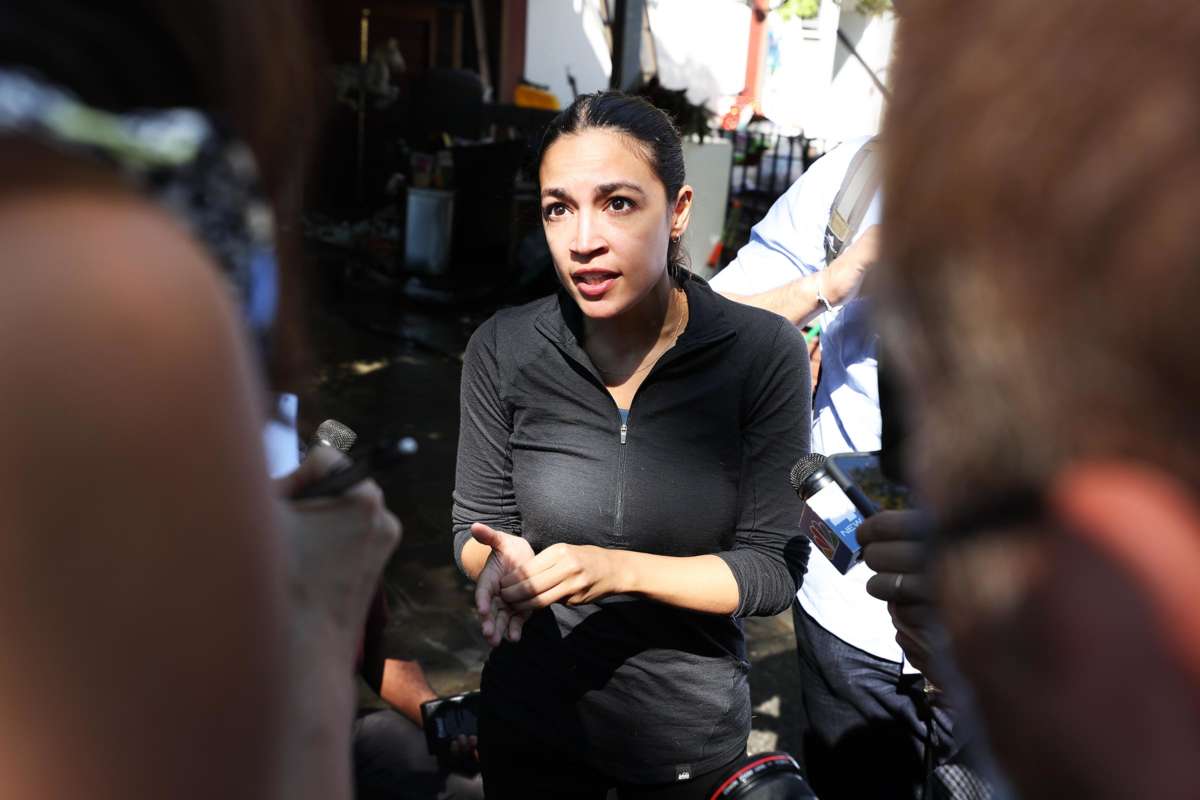
Countering Abbott’s comments while appearing on CNN Tuesday night, Ocasio-Cortez blasted the Texas governor for speaking “from such a place of deep ignorance” on the issue. Victims of rape, she rightly pointed out, are not always aware that they’re pregnant after just six weeks.
“I’m sorry we have to break down biology 101 on national television, but in case no one has informed him before in his life, six weeks pregnant means two weeks late for your period,” Ocasio-Cortez said. “And two weeks late on your period for any person, any person with a menstrual cycle, can happen if you’re stressed, if your diet changes, or for really no reason at all. So, you don’t have six weeks.”
The New York congresswoman also noted that Abbott’s words disregarded a critical point: that prosecuting rapists won’t stop offenders who are close to or know their victims.
“These aren’t just predators that are walking around the streets at night. They are people’s uncles. They are teachers, They are family friends and when something like that happens it takes a very long time, first of all, for any victim to come forward,” Ocasio-Cortez said.
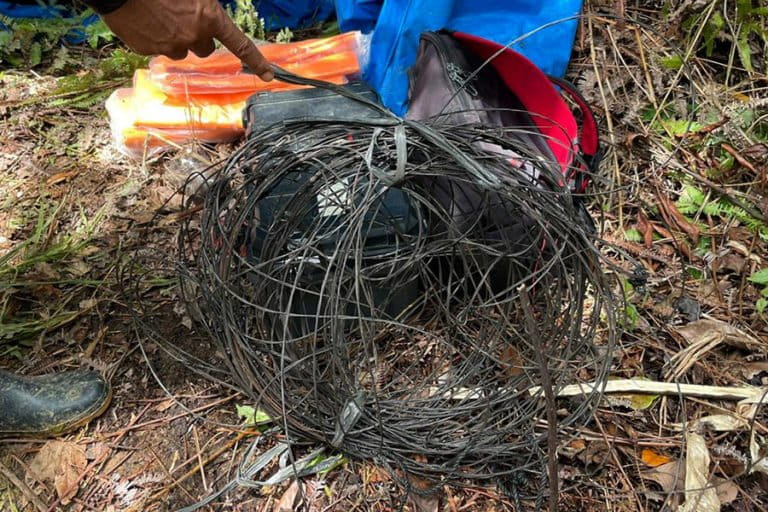
BANDA ACEH, Indonesia — A mother Sumatran tiger and her two cubs were found dead this week in a snare trap in Indonesia’s westernmost Aceh province.
Local people in Buboh, a village in South Aceh, discovered the tiger carcasses on Aug. 24 and reported them to authorities.
“The mother was entangled in the neck and left hind leg, while the left front leg was rotting,” Agus Irianto, the head of the Natural Resource Conservation Agency’s branch in Aceh, said on Thursday.
The Sumatran tiger (Panthera tigris sumatrae) is critically endangered, with only a few hundred thought to remain in the wild.
The species’ decline is largely due to the destruction of its rainforest habitat and poaching, with its body parts used in traditional Chinese medicine.
The incident follows the death of a female tiger in nearby Kapa Sesak village, also in South Aceh, in late June. It had apparently eaten a goat contaminated with poisonous chemicals.
Also this month, on Aug. 14, a male tiger, estimated to be seven or eight years old, was found dead in Pasaman, West Sumatra province.
The three dead tigers in Aceh. Image by Chandra.Steel wire from the snare traps in which the tigers were found. Image by Chandra.
Undercover footage taken by Farm Transparency Project reveals shocking abuses at three crocodile factory farms in Australia owned by Hermès. Upon release of the footage, People for the Ethical Treatment of Animals (PETA) staged provocative protests at Hermès stores in New York City, London and Paris to call on the company to replace crocodile skin with cruelty-free fabrics for their handbags.https://www.youtube.com/embed/GdUo3Bjz2xw?feature=oembed
Australia accounts for 60% of the global trade of crocodile skins. Crocodiles, who have a natural lifespan of 70 years, are slaughtered by Hermès when they are just 2-3 years old. Birkin bags, which are made from the skins of four crocodiles, sell for tens, if not hundreds, of thousands of dollars at Hermès stores.
Hermès slaughters four crocodiles to produce one Birkin bag
Kindness Project, an Australian animal rights organization that released the Transparency Project footage, has launched a campaign to shut down Australia’s commercial crocodile farms and transition the workers into other jobs. “With so many sustainable and animal friendly alternatives available, there is no need for fashion houses to harm animals in the production of their clothing and accessories. We are asking for an end to Hermès crocodile cruelty, demanding they #dropcroc from their collections, in favor of protecting precious wildlife from cruelty and suffering.”
According to PETA, Hermès is planning to build what would be Australia’s largest crocodile farm, which would hold up to 50,000 individuals. Previous PETA investigations have shown workers shooting reptiles in the head; cutting into their bodies as they struggle to escape; and stabbing still-conscious animals in an effort to dislocate their vertebrae. They also show reptiles moving their legs and tails several minutes after these slaughter attempts. “No purse is worth an animal’s agonizing death,” says PETA Executive Vice President Tracy Reiman. “PETA is calling on Hermès to listen to the outcry against cruelty to crocodiles and bag exotic skins.”
People for the Ethical Treatment of Animals (PETA) staged a protest at Hermès in NYC after Kindness Project released undercover video footage of crocodile abuse at the company’s crocodile factory farms in Australia.
Artwork by Barry Kent MacKay reproduced with permission.
Keith A. Hobson and Linda Wires | September 8, 2021
Download Article
Keith A. Hobson, FRSC, Department of Biology, University of Western Ontario.
Linda Wires, Conservation Biologist and author of The Double-crested Cormorant: Plight of a Feathered Pariah
Fall is a special time in the Great Lakes region of Ontario for those interested in the movements of migratory species, as there are millions of warblers, waterbirds and monarch butterflies moving south. Unfortunately, it also heralds the highly controversial hunting season in the region that was initiated in 2020, when from 15 September to 31 December hunters can kill 15 Double-crested Cormorants a day.
Sadly, Double-crested Cormorants have a lengthy history of being insufficiently protected and indeed persecuted. While most migratory birds in Canada are protected by the Migratory Birds Convention Act, the Double-crested Cormorant is not, despite fully qualifying as a migratory bird native to North America.
Instead, cormorants in Canada are managed provincially, enabling Ontario’s Ford Government to legally declare open season on a migratory native species that is not a game bird. The liberal “bag limit” is designed to cull the populations to, as yet, an unexplained level in response to a vociferous lobby group, chief among them the Ontario Federation of Anglers and Hunters (OFAH).
OFAH asserts that cormorants are “destroying natural ecosystems” and describes an “ecological mess caused by high concentrations of these fish-devouring birds.” It is true that this species feeds almost exclusively on fish and they aggregate during summer in impressive breeding colonies along shorelines where they can nest in trees or on the ground, and sometimes denude vegetation. Such attributes are common to colonial waterbirds, yet the cormorant singularly evokes ire and it is not unusual to find terms like “ugly”, “useless” and “marauding” on recent blog sites.
No scientific committees engaged in tackling the many ills of the Great Lakes ecosystems have identified cormorants as an issue, but instead point to the introduction of numerous invasive species, a suite of human activities, and current and pending climate change as top concerns. Furthermore, data from numerous scientific studies in various areas of North America, including the Great Lakes of Ontario, have overwhelmingly shown that cormorants pose no threat to sport or commercial fisheries. In fact, the evidence indicates they are increasingly feeding on invasive damaging fish, such as round goby and alewife. Similarly, cormorant impacts to vegetation are local and part of a natural disturbance regime that has occurred for millennia. Compared with the catastrophic and long-term perturbation humans have caused, cormorant-caused impacts to the natural environment are trivial.
In local cases where scientific evidence has demonstrated a need for cormorant control, a targeted rational approach would include measurable goals and be undertaken by skilled professionals. Within the spirit of adaptive resource management, it would require continual justification, data, and careful monitoring before and after any action is taken. It would not be based on perception or opinion common in social media and advocacy circles.
The ecological integrity of the Great Lakes should be of great concern to everyone. But the decision of Doug Ford’s government to allow public killing of cormorants throughout Ontario has absolutely no basis in science. Rather, it signals a significant departure from professional evidence-based wildlife management. The danger of such an approach is on full display in the US, where public perception and dislike of the species has prevailed. There, over the last two decades approximately one million cormorants have been destroyed, despite no scientific evidence to indicate that such control was warranted. As such, Ontario’s new fall “season” should indeed be a wake-up call to Canadians.
Reference
Hobson, K. A. 2021. Ontario <https://na01.safelinks.protection.outlook.com/?url=https%3A%2F%2Frsc-src.ca %2Fen%2Fvoices%2FHobson%25202021%2520ACE-ECO.pdf&data=04%7C01%7C%7C51869111f e894ebdeaba08d973c8e7c2%7C84df9e7fe9f640afb435aaaaaaaaaaaa%7C1%7C0%7C6376681 28979783358%7CUnknown%7CTWFpbGZsb3d8eyJWIjoiMC4wLjAwMDAiLCJQIjoiV2luMzIiLCJB TiI6Ik1haWwiLCJXVCI6Mn0%3D%7C1000&sdata=B48Rs1OFeOxB2TsD1bD9oIvMFRaw68smdNLj U5%2BEk7w%3D&reserved=0> ‘s decision for the province-wide cull of Double-crested Cormorants. Avian Conservation and Ecology 16(1):24. https://doi.org/10.5751/ACE-01949-160124 <https://na01.safelinks.protection.outlook.com/?url=https%3A%2F%2Fdoi.org%2F 10.5751%2FACE-01949-160124&data=04%7C01%7C%7C51869111fe894ebdeaba08d973c8e7c 2%7C84df9e7fe9f640afb435aaaaaaaaaaaa%7C1%7C0%7C637668128979793296%7CUnknown% 7CTWFpbGZsb3d8eyJWIjoiMC4wLjAwMDAiLCJQIjoiV2luMzIiLCJBTiI6Ik1haWwiLCJXVCI6Mn 0%3D%7C1000&sdata=ACLBQFVmJFg5hYMdSqulten5vf61RxQZD%2B%2BstCPrhEo%3D&reserve d=0>
The article was published in the Globe and Mail on September 9, 2021.
<https://na01.safelinks.protection.outlook.com/?url=https%3A%2F%2Frsc-src.ca %2Fen%2Fvoices%2Fopen-season-science-double-crested-cormorants-under-attack- again&data=04%7C01%7C%7C51869111fe894ebdeaba08d973c8e7c2%7C84df9e7fe9f640afb 435aaaaaaaaaaaa%7C1%7C0%7C637668128979803259%7CUnknown%7CTWFpbGZsb3d8eyJWIjo iMC4wLjAwMDAiLCJQIjoiV2luMzIiLCJBTiI6Ik1haWwiLCJXVCI6Mn0%3D%7C1000&sdata=v0% 2FeWjo%2F59ostluDMvCgkEVctlh1H0DSFsu%2BG1x16sc%3D&reserved=0> Open Season on Science: Double-crested Cormorants Under Attack. Again. | The Royal Society of Canada
Keith A. Hobson and Linda Wires | September 8, 2021Download ArticleKeith A. Hobson, FRSC, Department of Biology, University of Western Ontario.Linda Wires, Conservation Biologist and author of The Double-crested Cormorant: Plight of a Feathered Pariah
Regulator alleges Toronto-based company overstated quality of down
Brandie Weikle · CBC News · Posted: Sep 08, 2021 5:46 PM ET | Last Updated: September 9
Jackets are on display at the Canada Goose showroom in Toronto in November 2013. Canada Goose Holdings has been fined around $88,000 by China for allegedly making misleading claims about the materials it uses. (Aaron Vincent Elkaim/The Canadian Press)
819 comments
Toronto-based Canada Goose Holdings Inc. is in hot water with China, which has fined the winter-apparel maker for allegedly misleading consumers about the materials it uses.
The country’s regulator, the National Enterprise Credit Information Publicity System, fined the company 450,000 yuan, the equivalent of about $88,202.
The complaint centres on the company’s claim it uses “Hutterite down,” the warmest down available. It alleges the company uses other kinds of down in most of its products.
“The main filling is ordinary duck down, but it costs tens of thousands of yuan at every turn. Is the Canadian goose down jacket sold for warmth or IQ tax?” the commentary says.
In an emailed response to CBC News, the company said a technical error on a partner website was behind confusion about its products’ materials.
“Earlier this year a misalignment of text was found on a partner site, Tmall, in our [Asia-Pacific] region. The error was corrected immediately,” the email said.
Tmall is one of the largest online platforms for Chinese consumers.
The parka-maker said it uses both goose and duck down, depending on the construction of the garment.
Canada Goose isn’t the first foreign-owned apparel company to tangle with China about its marketing messages.
Jia Wang, interim director of the China Institute at the University of Alberta, says relations between Canada and China are at what some would describe as their lowest point in the past two decades. (Submitted by Jia Wang)
Since the arrest, the relationship between Canada and China can best be described as “very fraught,” said Jia Wang, interim director of the China Institute at the University of Alberta in Edmonton.
“Some would even say this is probably one of the low points of our bilateral relations over the past couple of decades,” said Wang.
While it would be a stretch to draw a direct line between the Canada Goose fine and the geopolitical situation, said Wang, the downturn in relations was most notable with the detention of Canadians Michael Kovrig and Michael Spavor shortly after Meng’s arrest. But there have been economic retaliations as well, she said.
“China’s ban on the imports of Canadian canola seeds, for example — that’s widely believed, for good reason, as a retaliation measure levied against Canada by the Chinese government.”
With its population of 1.4 billion and a growing middle class estimated at somewhere between 300 and 700 million, Wang said China is “the largest luxury goods market in the world,” representing about one third of the total global market.
“So that’s why a lot of luxury goods companies around the world, not just Canada, are really eyeing the Chinese market … because they see a downturn of their sales in other markets, the developed world markets, but they are hoping, of course, to maintain their revenue levels.
“They are looking at China, a big market, and it’s not shrinking. It’s still growing.”
People line up outside the Canada Goose flagship store in Beijing, in November 2019. China is the biggest market for luxury goods in the world, says Wang. (Submitted by Jia Wang)
Reno, NV — The Reno City Council voted 6 to 1 in favor of a resolution condemning wildlife killing contests and calling on the Nevada Board of Wildlife Commissioners to ban contests at the September 8th meeting, much to the relief of local residents, scientists, activists, and national wildlife conservation organizations. Reno will join a growing number of states and counties that have formally criticized these contests, which award participants with cash, guns, or other prizes for killing the most, largest, or smallest of the target species.
Naomi Duerr of the Reno City Council and a devoted leader of the effort to pass the resolution, introduced the resolution in honor of the late Norm Harry, a lifelong advocate for Nevada’s precious wildlife. “I initiated this resolution as I feel strongly about the detrimental effects these inhumane contests have on our native wildlife,” Councilwoman Duerr said.Fauna Tomlinson, Project Coyote Program Associate and…


 READ MORE


 Elon Musk’s SpaceX launch site threatens wildlife,Texas environmental groups sayhttps://imasdk.googleapis.com/js/core/bridge3.479.1_en.html#goog_2106764047https://imasdk.googleapis.com/js/core/bridge3.479.1_en.html#goog_538607594https://imasdk.googleapis.com/js/core/bridge3.479.1_en.html#goog_1512206850








 Exposing the Big Game