Anti-logging protest becomes Canada’s biggest ever act of civil disobedience

https://www.theguardian.com/environment/2021/sep/08/canada-logging-protest-vancouver-island?utm_term=ced85aae4848ef4dbd049a1f97138194&utm_campaign=GreenLight&utm_source=esp&utm_medium=Email&CMP=greenlight_email

At least 866 arrested since April, as police condemned for violence against protesters defending Vancouver Island’s ancient forests

Protesters on the floor of the logging road. One protester said: ‘The [police] are getting very frustrated by our tenacity because we’re constantly rebuilding and coming up with new ideas.’
Protesters on the floor of the logging road. One protester said: ‘The [police] are getting very frustrated by our tenacity because we’re constantly rebuilding and coming up with new ideas.’ Photograph: Jen Osborne

Supported by

SEJ

About this contentJen Osborne in Fairy Creek and Leyland Cecco in TorontoWed 8 Sep 2021 11.11 EDT

A string of protests against old-growth logging in western Canada have become the biggest act of civil disobedience in the country’s history, with the arrest of least 866 people since April.

The bitter fight over the future of Vancouver Island’s diminishing ancient forests – in which activists used guerrilla methods of resistance such as locking their bodies to the logging road and police responded by beating, dragging and pepper-spraying demonstrators – has surpassed the previous record of arrests set in the 1990s at the anti-logging protests dubbed the “War in the Woods”.
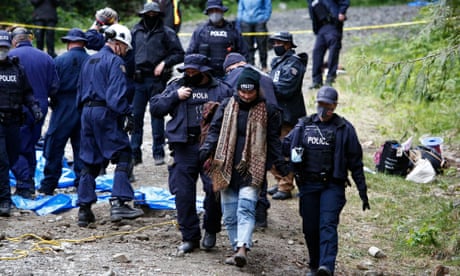
Police escort a protester away after their arrest for blocking a logging road at an old growth logging blockade on southern Vancouver Island, in British Columbia, Canada.

For months, hundreds of activists with the Rainforest Flying Squad have camped out in the remote Fairy Creek watershed in a desperate attempt to shift the course of logging in the region.

They have chained themselves to tripods crafted from logs, suspended themselves in trees and even locked their arms inside devices called “sleeping dragons” cemented into the ground.

“We have experts in rigging, we have climbers, we have carpenters – we have all these people getting together to build amazing, beautiful things,” said Jean-François Savard, who has been at the camp since the injunction was granted to a logging company in April. “The [police] are getting very frustrated by our tenacity because we’re constantly rebuilding and coming up with new ideas. People aren’t giving up.

Members of the Royal Canadian Mounted Police have been tasked with enforcing the injunction, but have increasingly faced sharp criticism for their tactics and use of force, including ripping off protesters masks to pepper-spray them and dragging them by their hair.

Police have also come under fire for wearing “thin blue line” patches, obscuring their faces, not wearing name badges – and for their attempts to bar media from reporting on the long-running protests. Last month, a British Columbia supreme court judge ruled that the police force’s expulsions zones – set up to prevent media from entering certain areas of the injunction area to monitor police action – were unlawful.

The RCMP did not respond to a request for comment, but Sgt Chris Manseau has previously told reporters that while police action is dictated by the actions of demonstrators and social media doesn’t show the entirety of events, a review of police action is likely.

“The more violent the RCMP are, the more it radicalizes younger people. We have teenagers who are getting arrested, who are risking their lives,” said Pia Massie, who was also present at the blockages at Clayoquot Sound in 1993. “As mom, it’s very, very scary. And that’s why I keep coming back – to try to counsel people, to try to protect people.”

Other veterans of the War in the Woods say the current police conduct has been “utterly disgusting”.

“At Clayoquot, the relationship between us and the RCMP was almost cordial. They did their job, we did ours,” said Warren Kimmit. “That was the way policing should happen. There’s no question there’s nothing to be gained by the violence that’s happening here. And that violence is just increasing as they become frustrated with our ability to lock the road down.”

At stake for the activists are swaths of old growth forest on the south-western watersheds of Vancouver Island. These trees – towering western red cedar, Douglas fir and Sitka spruce – are often hundreds of years old, and are the few remaining pockets of original old growth forest. Most have been logged.
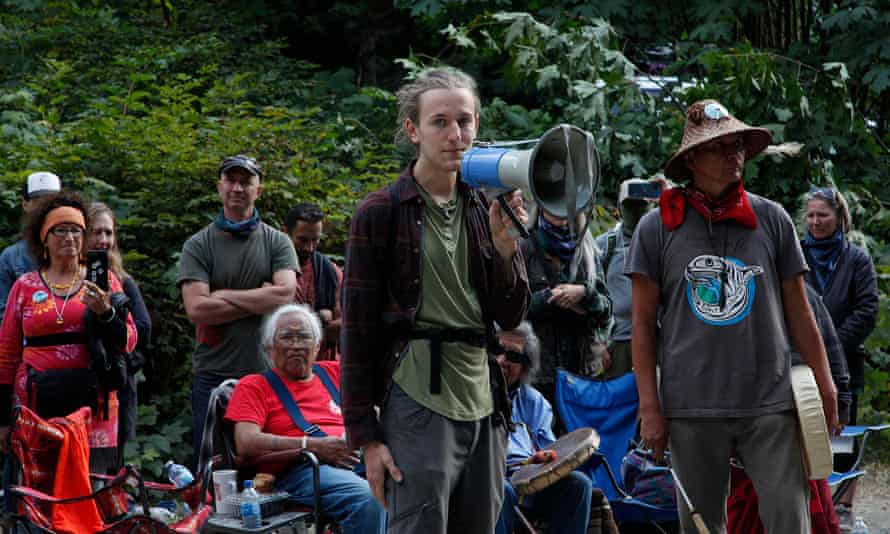
Activists have camped out in the Fairy Creek watershed in an attempt to shift the course of logging in the region.
Activists have camped out in the Fairy Creek watershed in an attempt to shift the course of logging in the region. Photograph: Jen Osborne

While the blockades have made headlines and figured into the country’s national election, they have also exposed both the legacy of old growth logging in a vulnerable ecosystem and the complex politics of the region, where a number of local First Nations receive royalties from logging operations.

The Pacheedaht elected council has a revenue sharing agreement with the logging company Teal-Jones Group and have repeatedly asked demonstrators to leave the area and to respect the sovereignty of the nation.

“We do not welcome or support unsolicited involvement or interference by others in our Territory, including third-party activism,” hereditary chief Frank Queesto Jones said in a letter from April.

Queesto Jones and fellow chief councillor Jeff Jones say the nation has grown worried about the “increasing polarization” over forestry activities and the anti-old growth logging movement.

But Pacheedaht elder Bill Jones, who has previously alleged that Frank Jones was not a true hereditary chief and did not represent the will of the nation, has become a key figure in the blockades.

“We’re surprised at the RCMP’s determination to crush us. We all come to the conclusion that it’s not just us they’re wanting to crush – they want to protect the economic and regulatory process that the Canadian government uses to get what they want off the land, under the directions of the large corporations,” said Jones.
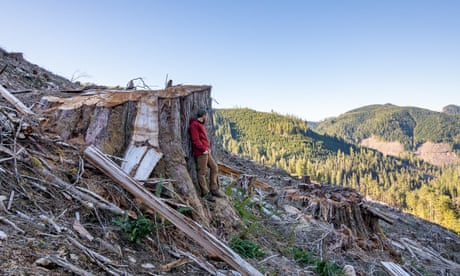
TJ Watt stands near an old-growth western red cedar in the Caycuse watershed in Canada that has been logged.

In June, the province of British Columbia and Pacheedaht, Ditidaht and Huu-ay-aht First Nations announced a two-year moratorium on cutting, a deal that protesters rejected, pointing out that other areas – the Caycuse and Walbran valleys – are slated for logging.

But those at the camps believe the confrontations at the blockades only underscore the stakes and the need for swift action to protect the few remaining stands of forest.

“The civil disobedience movement is very simple. We put our bodies on the line, we almost expect to be injured, we expect to be in a very uncomfortable situation,” said Warren Kimmit. “Our willingness to do that is what causes the public to see our commitment to a cause, to rally them and to put pressure on the government to act.”

Trapping is torture

Exposing the Big Game's avatarCommittee to Abolish Sport Hunting Blog

COMMENTARY

Avatar

ANNOULA WYLDERICH

APRIL 30, 20216:28 AM

Cover image from Born Free USA“Crushing Cruelty” reportreleased in April.

Trapping is perhaps the most egregious abuse of our wildlife. The targeted animals (and often, untargeted creatures who get caught incidentally) can sit in a trap for up to 96 hours in the state of Nevada without the requirement for trappers to check on them. Don’t bet that every trapper will check after four days, if it isn’t convenient for them.

Reportsfrom the Born Free USA wildlife advocacy organization have exposed the trapping industry and found that the few existing regulations that monitor trapping are often ignored by trappers who leave traps out after the close of the trapping season, continuing to capture animals. There are no authorities present when traps are set or an animal is killed.

The animals who get caught in these barbaric…

View original post 517 more words

Activists: Hunters have ‘stranglehold’ on Nevada wildlife

Exposing the Big Game's avatarCommittee to Abolish Sport Hunting Blog

Senator wants expanded commission, more oversight

BY:DANA GENTRY– MARCH 2, 20216:39 AM

     https://www.nevadacurrent.com/2021/03/02/activists-hunters-have-stranglehold-on-nevada-wildlife/

Habitat, not predators, is the major factor determining mule deer numbers in Nevada. (Photo: U.S. Fish and Wildlife Service).

Nevada’s Department of Wildlife needs more oversight, says state Sen. Pete Goicoechea, who is sponsoringlegislationto add two members to the Wildlife Commission. But environmentalists and animal activists say the measure would tilt the board even more in favor of hunting, trapping and fishing interests.

The WildlifeCommission is the “the least democratic of all state boards or commissions which provide oversight to a public resource,” says Donald Molde of the Nevada Wildlife Alliance. “In fact, I’m not sure there is another that is so tilted.”

By law, Nevada’s nine-member Wildlife Commission, which has wide latitude to enact policy and spend money, must have five “sportsmen,” i.e. hunters, fishermen or trappers…

View original post 1,321 more words

Bears, beleaguered by fires and drought, face hunters 

Activists ask state to call off ‘for sport’ event 

BY: DANA GENTRY – SEPTEMBER 8, 2021 6:10 AM


 (Nevada Department of Wildlife photo)

Nevada’s black bears, driven by drought, fire, and smoke from their habitats in the high country around Lake Tahoe, are about to face another existential threat — hunters.  

The state’s season for hunting bears begins Sept. 15, but environmental organizations and  animal activists are asking the governor and wildlife officials to call off the hunt for this year in the majority of designated zones. 

“We are in a new era of wildlife management, where we have to directly consider the impacts ofclimate chaos on the management of our wildlife,” says a letter from the Center for Biological Diversity, the Sierra Club – Toiyabe Chapter, the Humane Society of the United States, Animal Wellness Action, No Bear Hunt NV, Nevada Wildlife Alliance, and Bear Defenders.

Two “massive conflagrations” less than eight miles apart have “profoundly affected the ecology and wildlife of the central Sierra Nevada,” says the letter, which was sent to wildlife officials Wednesday morning.  

The Tamarack fire, declared an emergency by Gov. Steve Sisolak in late July, and the Caldor fire, which is still burning out of control and has consumed more than 218,000 acres, “form a nearly contiguous belt of burned terrain almost all the way across the Sierra Nevada,” according to the letter. 

“Wildlife which lived within areas now burned would have fled as the fire approached, and while some likely perished, some would be pushed to outside the boundaries of the fire, into foreign terrain and other animals’ territories,” the letter says, warning of the effects of the forced migration. 

“And with no refuge from the smoke and ash, these fires cause impacts to animal physiology and behavior far beyond the fire perimeters,” the letter says, similar to the effects one would see from humans forced to breathe heavy smoke, “decreased lung function, increased risk of heart illness, etc.”

Nevada’s bear hunt began in 2011. Since then, hunters have “harvested” 101 bears for sport. State records indicate more have been euthanized in that time by the state as a management protocol for so-called problem bears that enter homes, often through unlocked doors, in search of food. 

“The state should call it off,” says Bob Fulkerson, founder and development director of the Progressive Leadership Alliance of Nevada, who tweeted as much to Gov. Steve Sisolak on Tuesday.  

Fulkerson says he’s been camping in the Carson Range for four decades and has “never seen the plants and wildlife under this much stress. … The last thing those bears need are dogs fitted with GPS chasing them to exhaustion or until they tree to await being shot like a fish in a barrel.”

The Wildlife Commission has the authority to change the dates or areas of the hunt. 

“I’m not aware of any recommendation being brought by the department,” commission chairwoman Tiffany East said via email.

The Department of Wildlife director also has the statutory authority to act “In cases of emergency, with the approval of the Governor,” until the commission meets. 

“At this point, ending the bear hunt due to habitat loss is counter to the wildlife management science on carrying capacity,” NDOW director Tony Wasley said in an email. “The reality is that sometimes, reducing population numbers can improve habitat conditions and subsequently improve animal health which results in increased survival.  Removing or killing 100, may allow for the survival of hundreds and hundreds more.  It is population management, not the saving of individuals.”

Wasley says “sudden and drastic decreases in available habitat” have predictable consequences for the displaced animals as well as those who “fight to establish territories and find food.”

“As counter intuitive as it is for some people to understand, the Department has implemented multiple emergency doe hunts for mule deer and pronghorn with the objective of keeping animal populations in sync with the capacity of the land to provide for them,” Wasley said. “We will not be recommending an emergency bear hunt and similarly we have no plans to recommend a season closure due to wildfire and drought either.”

Sisolak did not respond to requests for comment.  

Ann Bryant, co-founder of California’s BEAR League, says many of the bears have been “running for their lives” and are “confused, displaced and completely out of energy… weakened and already terrorized beyond comprehension.”

A Tahoe bear whose paws had been so badly burned it was unable to move, according to California wildlife officials, was shot and killed to prevent it from being burned alive, the San Francisco Chronicle reported last week.  

“Given the habitat destruction and displacement the bears are experiencing due to the fires, to now also chase them with packs of hounds to then be shot in a recreational hunt is cruel beyond measure,” says Kathryn Bricker, executive director of No Bear Hunt NV. “Have we no moral compass?”  

In major win for animals, Mexico bans animal testing for cosmetics

A Humane WorldKitty Block’s Blog
By Kitty Block and Sara AmundsonCalendar Icon September 07, 2021The cruelty-free beauty movement continues to thrive, as Mexico becomes the 41st nation to ban animal testing for cosmetics. Getty Images/iStockphotoEven in our age of advanced technologies, rabbits, guinea pigs, mice and rats continue to have chemicals and substances forced down their throats, dripped into their eyes or slathered on their skin to satisfy new regulatory demands that undercut progress against cosmetic animal testing. That’s why we put so much effort into legislative and regulatory change—removing the driver for new animal testing and ultimately banning it.So, we rejoiced last week when Mexico became the first nation in North America to pass a law banning animal testing for cosmetics. Once enacted, the new law also bans the manufacture, import and marketing of cosmetics tested on animals elsewhere in the world. With the addition of Mexico, 41 countries have banned such testing. Also, seven states in the U.S. have prohibited the sale of animal-tested cosmetics and 10 states in Brazil have also enacted bans.Over the years, we have largely campaigned against cosmetic animal testing because of the terrible suffering and loss of animal life inherent to such procedures. As we approach critical mass in our global effort to end cosmetics testing on animals, it is more important than ever that we make it clear that we do not just stand against animal suffering, we also stand for something: The transition to state-of-the-art non-animal methods that are rapid, inexpensive, more accurate and simply better at assuring safe use for humans. This is part of a vision of a more humane world in which corporate, institutional and public policies take animals’ interests deeply into account, a world that recognizes their dependence on us, does real justice by them and seeks to draw out the best in ourselves.In Mexico, members of the Senado de la República unanimously adopted the federal bill to end cosmetic animal testing thanks to the bill’s champions, Senator Ricardo Monreal, Humane Society International/Mexico, Mexican animal organization Te Protejo and other key stakeholders. HSI’s stop-motion animated film “Save Ralph” also played a pivotal role in carrying this law across the finish line. The film—which tells the story of a rabbit “tester” through voices from a multinational, multilingual cast of stars, and went viral worldwide with more than 150 million social media views and over 740 million tags on TikTok—helped to generate more than 1.3 million petition signatures in Mexico.Companies like Lush, Unilever, P&G, L’Oréal, Avon and Givaudan are working with HSI through the Animal-Free Safety Assessment Collaboration to secure stronger policy alignment and provide training in modern, non-animal approaches to cosmetic safety assessment to build capacity across the global industry, together with acceptance by regulatory authorities. But the U.S., Canada, Brazil and other major economies still lag behind the now 41 other nations who have taken a federal stand against cosmetic testing on animals. That’s why our public policy work is laser-focused on these remaining target nations for the campaign. In the U.S. we are also pressing for state laws banning the sale of animal-tested cosmetics, building on the steady progress of the last year.Within the next few weeks, we expect to see the reintroduction of the Humane Cosmetics Act in the U.S. Congress, and we’ll be doing all that we can to secure its passage. You can add your voice to end animal testing for cosmetics in the U.S. by contacting your elected officials right now.Sara Amundson is president of the Humane Society Legislative Fund.The post In major win for animals, Mexico bans animal testing for cosmetics appeared first on A Humane World.Related StoriesDog meat traders to be prosecuted for the first time in Indonesian history – EnclosureDog meat traders to be prosecuted for the first time in Indonesian history‘I rescue animals from disaster areas. Climate change is a gamechanger.’

China threatens to send warships inside US territorial waters

Exposing the Big Game's avatarThe Extinction Chronicles

https://www.msn.com/en-us/news/world/china-threatens-to-send-warships-inside-us-territorial-waters/ar-AAOeMVj?ocid=winp1taskbar

Washington Examiner

Tom Rogan-Yesterday 2:00 PMLike|1732

©Provided by Washington ExaminerChina threatens to send warships inside US territorial waters
China, on Wednesday, threatened to send warships into U.S. territorial waters.

TheGlobal Timescalledon People’s Liberation Army Navy warships to travel to “U.S. military bases in the Asia-Pacific and the U.S. allies’ coastlines to conduct close-in reconnaissance operations and declare freedom of navigation.” The editorial added that “the U.S. will definitely see the PLA show up at its doorstep in the not-too-distant future.”Adbrunchescrunches.comBig Change In Winthrop Leaves Drivers Fuming

This isn’t simple ranting. TheGlobal Timesoperates under Central Foreign Affairs Commission DirectorYang Jiechi. Its words represent a credible threat.

Why is China so furious?

It laments the “naked provocation” of a U.S. Navy destroyer’s transit, on Wednesday, within 12 miles of a Chinese artificial island in the South China Sea…

View original post 356 more words

Earth’s tipping points could be closer than we think. Our current plans won’t work

Exposing the Big Game's avatarThe Extinction Chronicles

https://www.theguardian.com/commentisfree/2021/sep/09/earths-tipping-points-closer-current-climate-plans-wont-work-global-heating

George Monbiot

Climate policies commit us to a calamitous 2.9C of global heating, but catastrophic changes can occur at even 1.5C or 2C

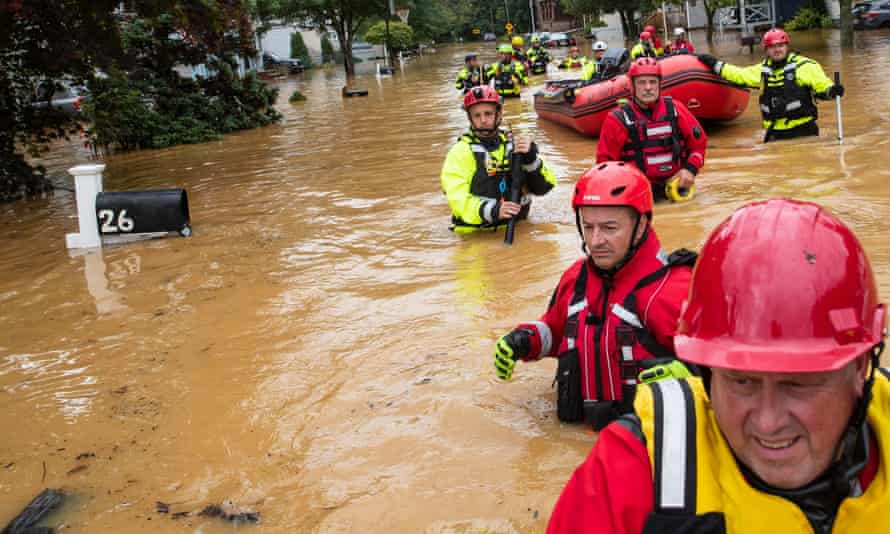
A flash flood caused by Tropical Storm Henri in Helmetta, New Jersey, on 22 August 2021.
A flash flood caused by Tropical Storm Henri in Helmetta, New Jersey, on 22 August 2021. ‘The extreme weather in 2021 – the heat domes, droughts, fires, floods and cyclones – is, frankly, terrifying.’Photograph: Tom Brenner/AFP/Getty Images

Thu 9 Sep 2021 02.00 EDT

1,817

If there’s one thing we know about climate breakdown, it’s that it will not be linear, smooth or gradual. Just as one continental plate might push beneath another in sudden fits and starts, causing periodic earthquakes and tsunamis, our atmospheric systems will absorb the stress for a while, then suddenly shift. Yet, everywhere, the programmes designed to avert it are linear, smooth and gradual.

Current plans to avoid catastrophe would work in a simple system like a washbasin, in which you can…

View original post 830 more words

From deer and dogs to rats and mink, COVID-19 has spread to the animal world

https://www.salon.com/2021/09/08/from-deer-and-dogs-to-rats-and-mink-covid-19-has-spread-to-the-animal-world/

As SARS-CoV-2 spreads through some animal populations, animals may create a feedback loop as they re-infect humans

By MATTHEW ROZSA
PUBLISHED SEPTEMBER 8, 2021 5:40AM (EDT)

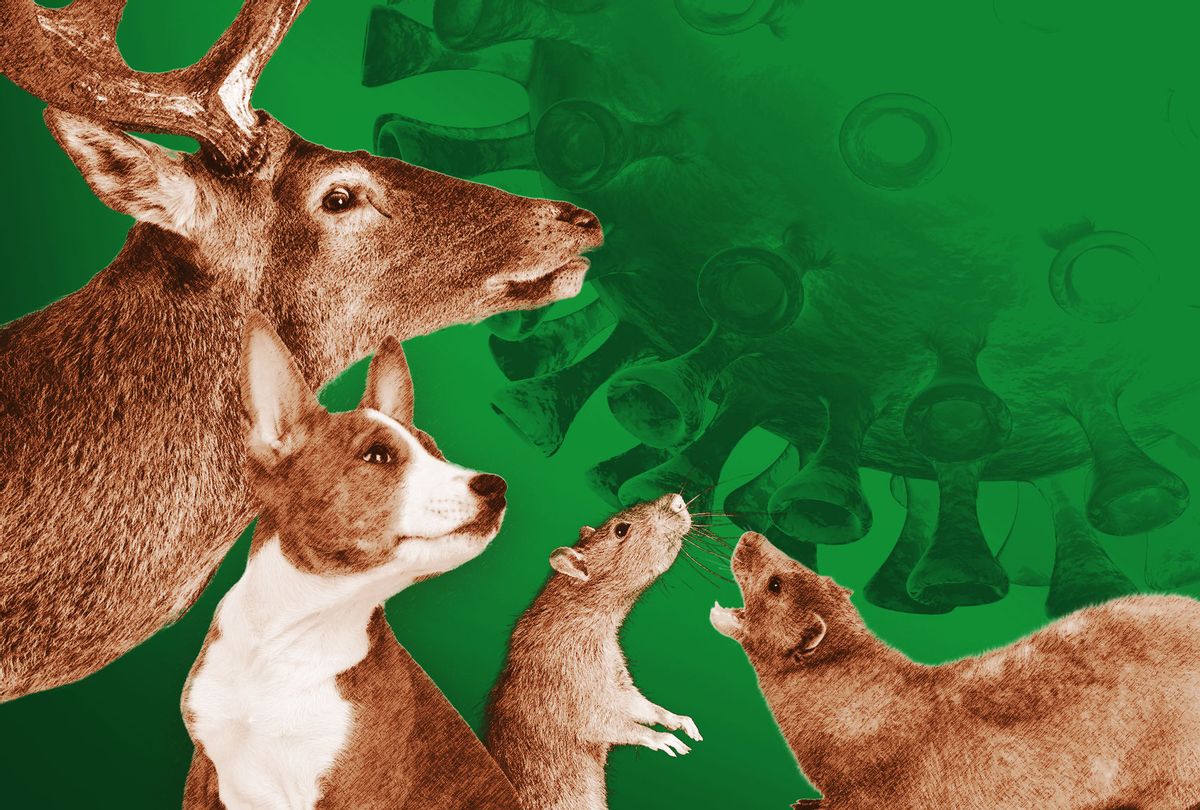
A deer stag, dog, rat and mink looking at COVID-19 (Photo illustration by Salon/Getty Images)A deer stag, dog, rat and mink looking at COVID-19 (Photo illustration by Salon/Getty Images)Facebook615TwitterReddit1Email1save
For six months out of the year, Dr. Jenessa Gjeltema has a very diverse and unusual roster of patients. The assistant professor of zoological medicine at University of California, Davis provides clinical work for hundreds and hundreds of animals at the Sacramento Zoo, from lions and giraffes to poison dart frogs and two-toed sloths. It doesn’t take long to intuit that she cares very deeply for each animal, which is why she was concerned when a meerkat became very sick during the early months of the COVID-19 pandemic.

“The meerkat presented with bloody nasal discharge coming out of its face and was in respiratory distress,” Gjeltema recalled. “It was just at the start of the pandemic, when we were getting significant amounts of community spread in our local area, and I was very concerned because we didn’t know as much as we do now about how the virus behaves in humans, much less all of the animals that were in our collection.”Advertisement:https://creative-p.undertone.com/2150/90301-1629975964/m213-0.htmlADVERTISEMENTSCROLL TO CONTINUE READING

Fortunately the meerkat was not infected and, after being comprehensively treated by medical experts, made a full recovery. Even so, the anxiety that she felt during this incident still clearly lingers with Gjeltema. 

“It’s challenging to work with less than perfect knowledge,” she told Salon.

The knowledge we have today about animals and COVID-19 remains quite imperfect, although it has become less so than when Gjeltema had to assist the hapless meerkat. The story of the COVID-19 pandemic centers around a narrative of animal-to-human transition: The prevailing scientific theory is that it originated in a horseshoe bat, reached another animal through one or many “spillover events” (transmissions) and eventually got to a human host. 

Yet zoo animals aren’t the only ones who seem to be catching the novel coronavirus. White-tailed deer in both Ohio and Michigan recently tested positive for SARS-CoV-2 antibodies, indicating previous infections. We know that companion animals like cats and dogs can develop COVID-19, while mink farmers are at risk of losing their entire industry because COVID-19 is virulent within that species. Advertisement:

There are two questions that logically emerge from the broader subject of COVID-19 and animals: The first is how this poses a threat to humans. The second is what it means for the animals themselves.

Currently, the Centers for Disease Control and Prevention (CDC) says that it is unlikely but not impossible for an animal to infect a human with SARS-CoV-2. Even though SARS-CoV-2 likely originated in bats, there is no evidence of any animal species playing a significant role in spreading COVID-19 among people. Nevertheless, the CDC advises people to avoid interacting with unfamiliar wildlife and to enforce vigilant personal hygiene standards after they make contact with strange animals.

Lyndsay Cole, a spokesperson for an Agriculture Department agency known as the Animal and Plant Health Inspection Service (APHIS), elaborated specifically on SARS-CoV-2 and white-tailed deer, which are widely and densely distributed through most of the United States. Scientists know for sure that SARS-CoV-2 antibodies exist in wild white-tailed deer, but they are unclear about how they were exposed to the virus and what impact this exposure will have for the deer, humans and other animals.Advertisement:https://creative-p.undertone.com/2150/87097-1618581792/m213-0.htmlADVERTISEMENTSCROLL TO CONTINUE READING

“There is no evidence that animals, including deer, are playing a significant role in the spread of SARS-CoV-2 to people,” Cole told Salon by email, later adding that “there have been no reports of deer showing clinical signs of infection with the virus.” Notably, the tests on the white-tailed deer samples looked for SARS-CoV-2 antibodies rather than the virus itself, which limits how much we know about the nature of what those deer are experiencing.

Lori Ann Burd, the environmental health director at the Center for Biological Diversity, explained that experts are concerned about mink because their behavior makes them susceptible to both developing infections and carrying them to other wildlife.

“Mink are extremely wide-ranging naturally, and they’re quite solitary,” Burd told Salon, noting that this makes mink extremely stressed when confined to the compact conditions of a mink farm. Indeed, such cramped conditions weaken their immune system and make them susceptible to respiratory diseases like COVID-19. As notoriously intelligent animals, mink can figure out how to escape from captivity and return to the wild, meaning that if they were previously infected by their human handlers, they could spread the disease to other wildlife and create a hotbed for new COVID-19 mutations. There is also the risk that previously infected mink could spread the disease to uninfected people at the farms.Advertisement:javascript:false;ADVERTISEMENTSCROLL TO CONTINUE READING

And what about man’s best friend, the ever-loyal dog? Sadly there is evidence that our canine companions can die from COVID-19, as Americans learned after Buddy the German shepherd died last year. At the same time, as with other animals, there is no evidence that dogs are major carriers of the disease or particularly likely to be harmed if exposed to it. Health experts agree that it would be cruel and unnecessary for ordinary dog owners to feel unsafe around their companions.

If international statistics are to be believed, cats have more reason to worry about COVID-19 than their supposed rivals. The World Organisation for Animal Health reported that as of last month there were 102 outbreaks of SARS-CoV-2 infections among cats, compared to only 90 among dogs. (They are also more likely to get seriously ill.) Mink had the most outbreaks with 358 while multiple outbreaks were also reported among tigers, lions, pumas and snow leopards.Advertisement:javascript:false;ADVERTISEMENTSCROLL TO CONTINUE READING


Want more health and science stories in your inbox? Subscribe to Salon’s weekly newsletter The Vulgar Scientist.


While scientists are not entirely clear about why certain animals are more likely to get infected than others, one prevailing theory is that it may have something to do with the ACE2 “receptor” (short for angiotensin-converting enzyme 2), a protein that serves as an entry point for SARS-CoV-2 to penetrate human cells. As a study published last year noted, it is possible to list animals that may or may not be more likely to be infected by the coronavirus based on their structure of these proteins.

The most vulnerable species to COVID-19 were catarrhine primates — a group that include chimpanzees, bonobos, Western lowland gorillas, olive baboons and Sumatran orangutans — but the scientists compiled a database with 410 vertebrates, including 252 mammals, to determine which ones had an ACE2 receptor that was likely to help the SARS-CoV-2 virus. They labeled as “high” risk animals like white-tailed deer, the Chinese hamster, the beluga whale, the giant anteater and the muskrat. At “medium” risk were golden hamsters, wild yak, jaguars, hippopotamuses and American bison. Giant pandas, polar bears, red foxes, dingos and horses were determined to be at “low” risk, while guinea pigs, harbor seals, striped hyenas, Northern elephant seals and Jamaican fruit-eating bats were deemed at “very low” risk.Advertisement:javascript:false;ADVERTISEMENTSCROLL TO CONTINUE READING

This information is helpful to Gjeltema, who told Salon that when managing the zoological collection she is particularly worried about primates. At the same time, she is also worried about the exotic felines because of their higher susceptibility, and the otters because they are closely related to mink,  and their bats (for obvious reasons).

When all is said and done, Gjeltema says she has kept her zoo safe by following the basic premises of the CDC’s guidelines for humans.

“For example, we have established social distancing as much as possible,” Gjeltema explained. “We have all of our keepers wearing face masks. We don’t have members of the public interfacing near any of our susceptible animals. Obviously, good hygiene. We have close monitoring.”

When it comes to keeping animals safe from COVID-19, and people safe from animals who might have it, Gjeltema at least knows that those ideas will work.

20 Meat and Dairy Firms Emit More Greenhouse Gas Than Germany, Britain or France

20 Meat and Dairy Firms Emit More Greenhouse Gas Than Germany, Britain or France [The Guardian]

https://www.theguardian.com/environment/2021/sep/07/20-meat-and-dairy-firms-emit-more-greenhouse-gas-than-germany-britain-or-france

Livestock companies with large emissions receive billions of dollars in funding, campaigners say

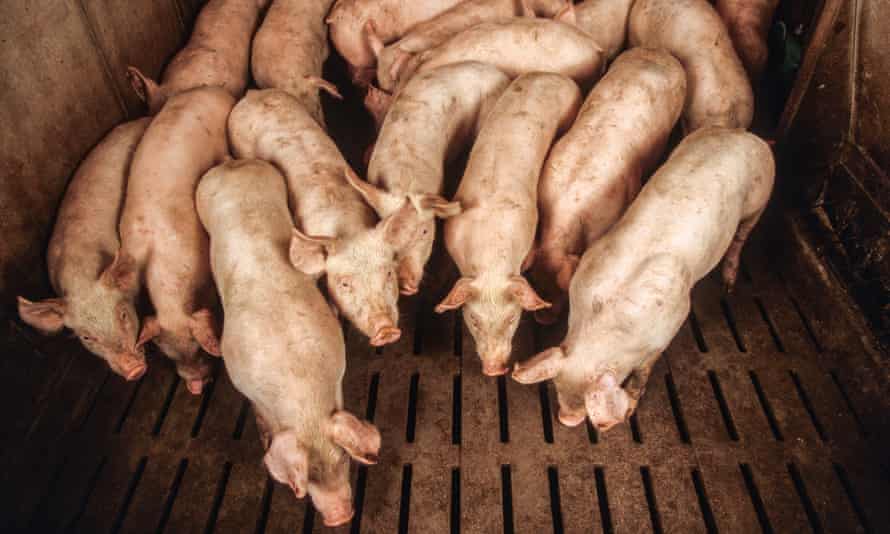
Battery-farmed pigs in an enclosure
From 2015 to 2020, global meat and dairy firms received more than US$478bn in backing, according to the Meat Atlas. Photograph: Alamy Stock Photo

Animals farmed is supported by

Animals farmed

About this contentSophie KevanyTue 7 Sep 2021 04.00 EDT

Twenty livestock companies are responsible for more greenhouse gas emissions than either Germany, Britain or France – and are receiving billions of dollars in financial backing to do so, according to a new report by environmental campaigners.

Raising livestock contributes significantly to carbon emissions, with animal agriculture accounting for 14.5% of the world’s greenhouse gas emissions. Scientific reports have found that rich countries need huge reductions in meat and dairy consumption to tackle the climate emergency.

Between 2015 and 2020, global meat and dairy companies received more than US$478bn in backing from 2,500 investment firms, banks, and pension funds, most of them based in North America or Europe, according to the Meat Atlas, which was compiled by Friends of the Earth and the European political foundation, Heinrich Böll Stiftung.

With that level of financial support, the report estimates that meat production could increase by a further 40m tonnes by 2029, to hit 366m tonnes of meat a year.

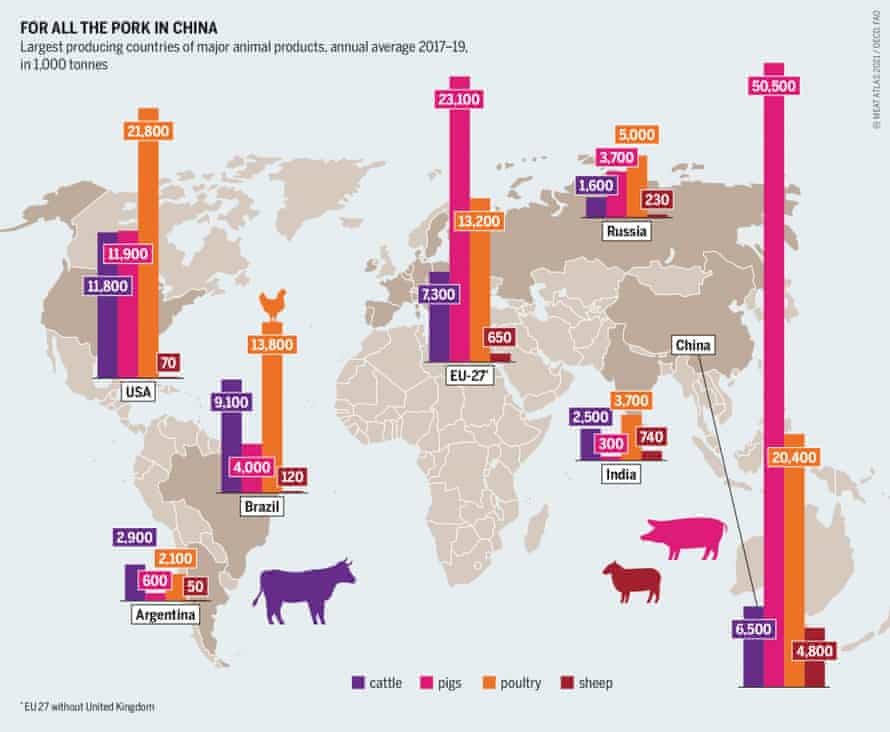
Although the vast majority of growth was likely to take place in the global south, the biggest producers will continue to be China, Brazil, the USA and the members of the European Union. By 2029 these countries may still produce 60% of worldwide meat output.

Across the world, the report says, three-quarters of all agricultural land is used to raise animals or the crops to feed them. “In Brazil alone, 175m hectares is dedicated to raising cattle,” an area of land that is about equal to the “entire agricultural area of the European Union”.

Largest producing companies of animal products, annual average 2017-19 - map
Across the world, three-quarters of all agricultural land is used to raise animals or the crops to feed them, the report says. Photograph: Meat Atlas 2021/OECD, FAO

The report also points to ongoing consolidation in the meat and dairy sector, with the biggest companies buying smaller ones and reducing competition. The effect risks squeezing out more sustainable food production models.

“To keep up with this [level of animal protein production] industrial animal farming is on the rise and keeps pushing sustainable models out of the market,” the report says.Advertisement

Texas governor accused of ‘deep ignorance’ after abortion comments – live
Anti-logging protest becomes Canada’s biggest ever act of civil disobedience
Revealed: LAPD officers told to collect social media data on every civilian they stop
Afghan women to be banned from playing sport, Taliban say
Idaho enacts ‘crisis standards of care’ protocol to battle worsening Covid

https://imasdk.googleapis.com/js/core/bridge3.478.2_en.html#goog_1547791190https://imasdk.googleapis.com/js/core/bridge3.478.2_en.html#goog_913388631https://imasdk.googleapis.com/js/core/bridge3.478.2_en.html#goog_1309769962

The recent interest shown by animal protein companies in meat alternatives and substitutes was not yet a solution, campaigners said.

“This is all for profit and is not really addressing the fundamental issues we see in the current animal protein-centred food system that is having a devastating impact on climate, biodiversity and is actually harming people around the globe,” said Stanka Becheva, a food and agriculture campaigner working with Friends of the Earth.

The bottom line, said Becheva, is that “we need to begin reducing the number of food animals on the planet and incentivise different consumption models.”

More meat industry regulation is needed too, she said, “to make sure companies are paying for the harms they have created throughout the supply chain and to minimise further damage”.

On the investment side, Becheva said private banks and investors, as well as development banks such as the World Bank and the European Bank for Reconstruction and Development needed to stop financing large-scale, intensive animal protein production projects.

Responding to the report, Paolo Patruno, deputy secretary general of the European Association for the Meat Processing Industry (CLITRAVI), said: “We don’t believe that any food sector is more or less sustainable than another. But there are more or less sustainable ways to produce plant or animal foods and we are committed to making animal protein production more sustainable.

“We also know that average GHG [greenhouse gas] emissions in the EU from livestock is half that of the global average. The global average is about 14% and the EU average is 7%,” he added.

In England and Wales, the National Farmers’ Union has set a target of reaching net zero greenhouse gas emissions in agriculture by 2040.

Police identify man who drowns in duck hunting accident

Exposing the Big Game's avatarCommittee to Abolish Sport Hunting Blog

https://plattevalley.newschannelnebraska.com/story/44676381/man-drowns-while-duck-hunting-in-north-platte

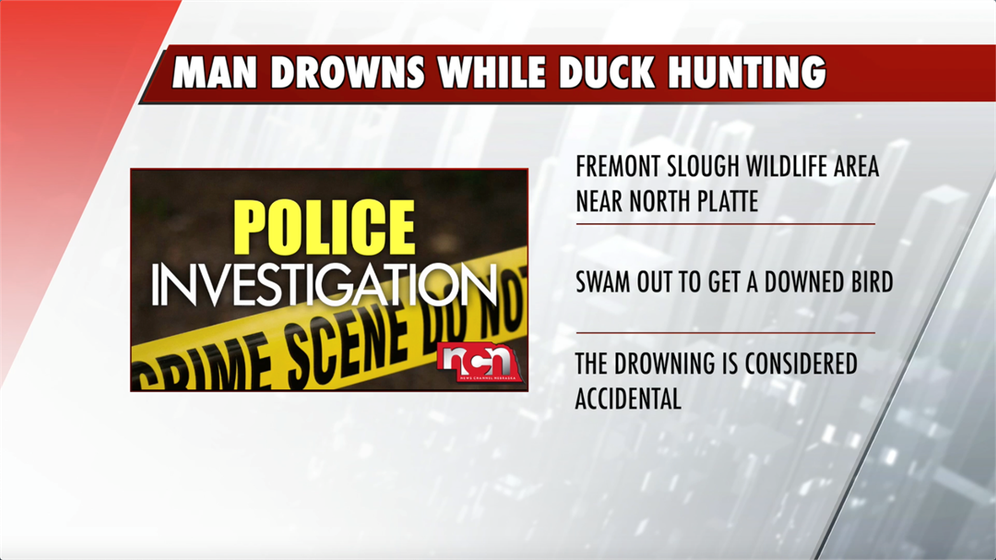
The Lincoln County Sheriff’s Office says they recovered the body of a man from the Fremont Slough Wildlife Area near North Platte Monday morning.Monday, September 6th 2021, 2:36 PM CDTUpdated:Wednesday, September 8th 2021, 11:03 AM CDTByNews Channel Nebraska

Image

NORTH PLATTE, Neb. — A man is dead after drowning in central Nebraska.

The Lincoln County Sheriff’s Office says they recovered the body of a man from the Fremont Slough Wildlife Area near North Platte Monday morning.

The initial call was made Sunday night from the area. The caller told authorities a man was duck hunting and swam out to get a downed bird.

He reportedly went under and never surfaced.https://cee125880cc106554405f398802832eb.safeframe.googlesyndication.com/safeframe/1-0-38/html/container.html

Authorities have identified the victim as 21-year-old Brandan Freeman of North Platte.

The case is considered accidental and no foul play suspected.

View original post