The Portland, Ore., City Council is planning to vote Wednesday on a proposal to ban doing business with the state of Texas following the controversial new abortion restrictions enacted in the Lone Star State.
In a statement last week, Portland Mayor Ted Wheeler (D) said the city council will vote whether to ban trading goods and services with Texas and bar state employee business travel as well, citing the new law that bans abortions after a fetal heartbeat is detected and allows private citizens to sue anyone they believe has helped a woman violate the limits.
“This law does not demonstrate concern for the health, safety, and well-being of those who may become pregnant. This law does not recognize or show respect for the human rights of those who may become pregnant,” Wheeler said in the statement. “This law rewards private individuals for exercising surveillance and control over others’ bodies. It violates the separation of church and state. And, it will force people to carry pregnancies against their will.”
“Portland City Council stands with the people who may one day face difficult decisions about pregnancy, and we respect their right to make the best decision for themselves,” he said.
The move from the northwestern city comes as Texas has faced considerable backlash surrounding the new law, which went into effect Wednesday.
The legislation, signed by Texas Gov. Greg Abbott (R), placed an effective ban on almost all abortions by about six weeks into a woman’s pregnancy when a heartbeat can usually be detected.
The Supreme Court later in the week declined to block the law in a 5-4 vote.
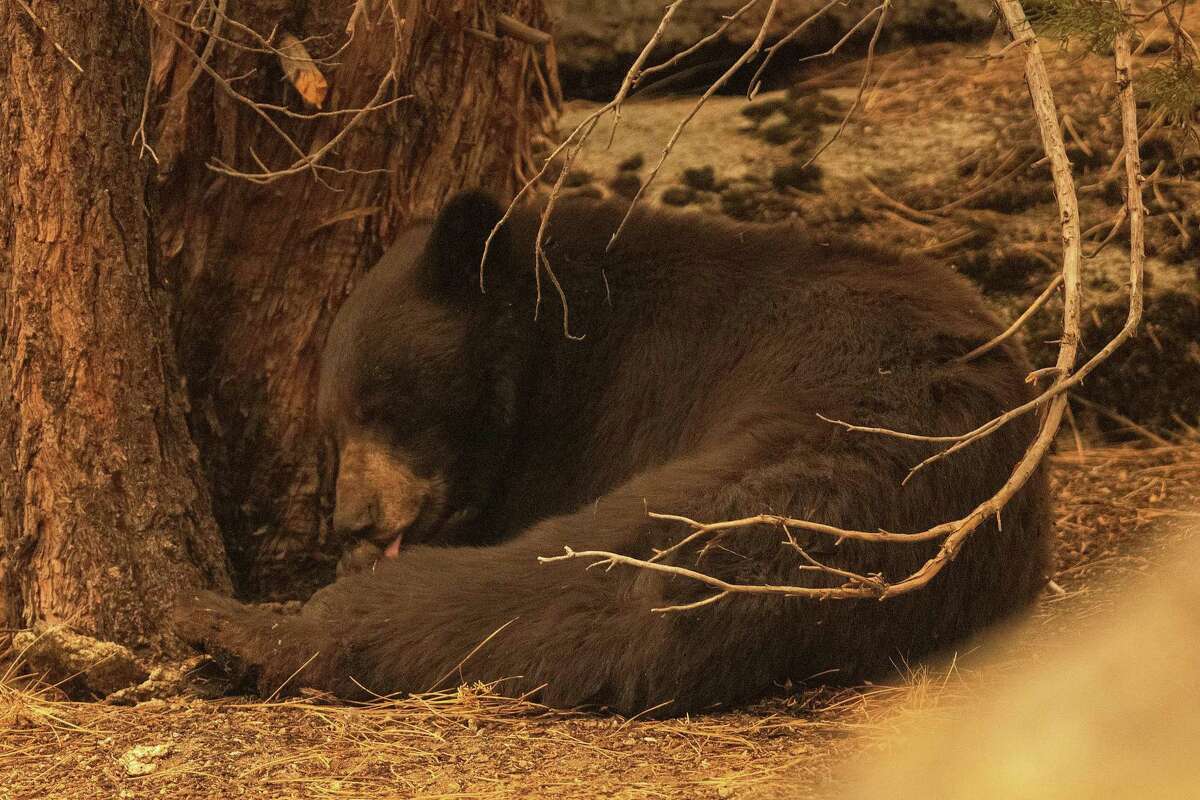
California Department of Fish and Wildlife officials had to make a tough call, with a bear they could not transport to safety, and would have burned alive in the fire as it could no longer walk.
“It was a combination of the fact that the injuries were bad and there was no easy way to transport him out of the area because it was an active fire scene with firefighting going on,” CDFW spokesperson Kirsten Macintyre told the Chronicle. “If he hadn’t been so injured, he probably would have tried to get away from the firefighters in the first place, but he was just too injured to move.”https://platform.twitter.com/embed/Tweet.html?dnt=false&embedId=twitter-widget-2&features=eyJ0ZndfZXhwZXJpbWVudHNfY29va2llX2V4cGlyYXRpb24iOnsiYnVja2V0IjoxMjA5NjAwLCJ2ZXJzaW9uIjpudWxsfSwidGZ3X2hvcml6b25fdHdlZXRfZW1iZWRfOTU1NSI6eyJidWNrZXQiOiJodGUiLCJ2ZXJzaW9uIjpudWxsfSwidGZ3X3NwYWNlX2NhcmQiOnsiYnVja2V0Ijoib2ZmIiwidmVyc2lvbiI6bnVsbH19&frame=false&hideCard=false&hideThread=false&id=1433910974860333059&lang=en&origin=https%3A%2F%2Fsfist.com%2F2021%2F09%2F03%2Fblack-bear-euthanized-for-burns-suffered-in-caldor-fire%2F&sessionId=3929e2fdfbb374772a71541725adea09c30f7f36&siteScreenName=SFist&theme=light&widgetsVersion=1890d59c%3A1627936082797&width=550px
Yet the situation is not entirely grim, and in a Friday afternoon media update, U.S. Forest Service deputy regional forester Anthony Scardina said past actions like prescribed burns and forest thinning were paying dividends to prevent the fire’s growth.
Still, there’s a growing sense of confidence that Lake Tahoe is saved. Homes there, and in Christmas Valley and Meyers, are largely standing. As of Friday morning’s report, barely over 2,000 acres had burned in the previous 24 hours. That’s down tenfold from earlier in the week, and Cal Fire officials are optimistic we’re looking at lighter winds tonight and this weekend.
YELLOWSTONE NATIONAL PARK, WY – JULY 30: A black bear rest in a mixed age forest that partially burned in 1988 on June 30, 2018 in Yellowstone National Park, WY. The fires in 1988 burned 793,800 acres, 39% of Yellowstone’s 2.2 million acres. After 30 years most of the parks lodgepole pines destroyed in 1988 have regenerated and are thriving. (Photo by William Campbell/Corbis via Getty Images)
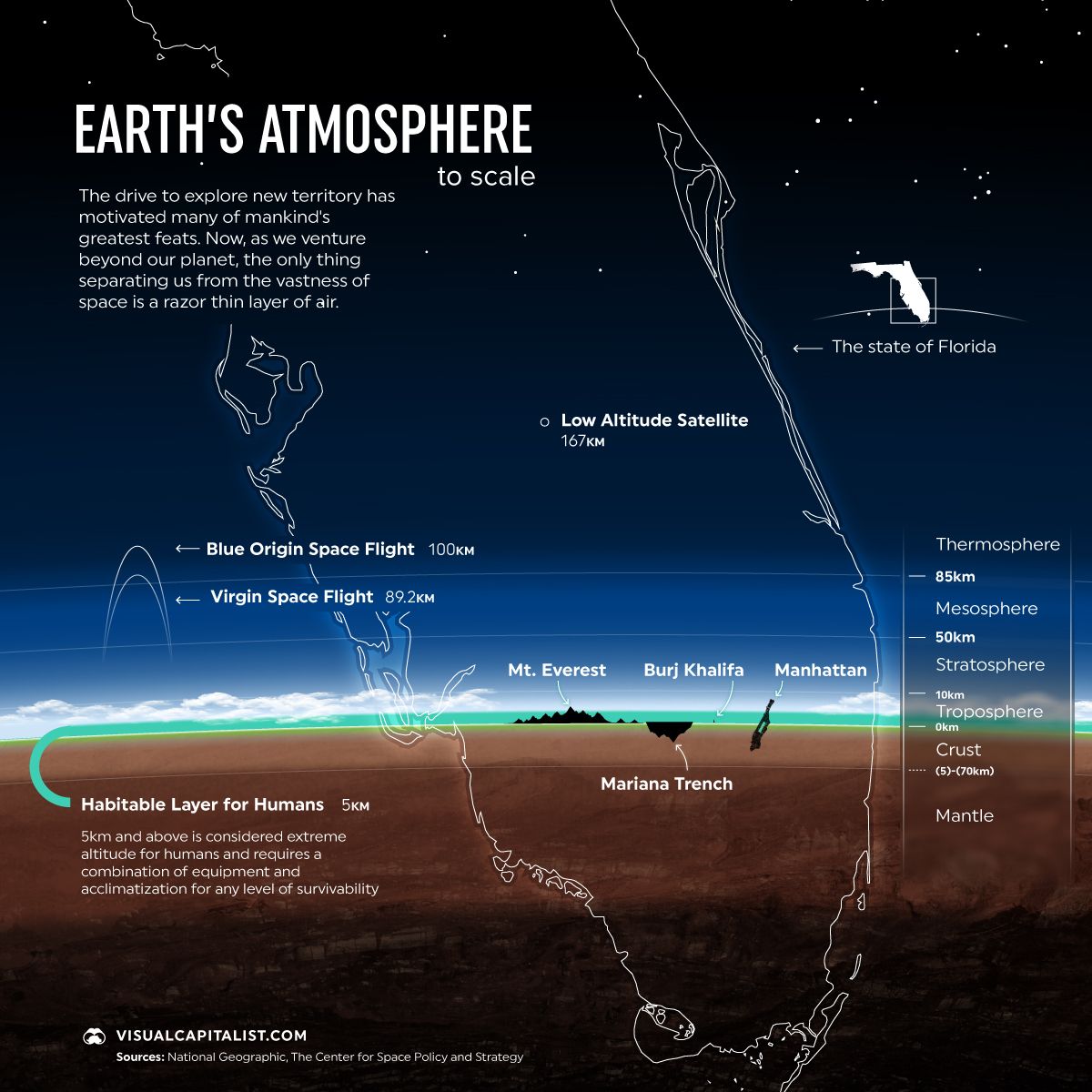
Razor Thin: A New Perspective on Earth’s Atmosphere
Earth is the only known planet that sustains life. Its atmosphere provides us with oxygen, protects us from the Sun’s radiation, and creates the barometric pressure needed so water stays liquid on our planet.
But while Earth’s atmosphere stretches for about 10,000 km (6,200 miles) above the planet’s surface, only a thin layer is actuallyhabitable.
This graphic, inspired byAndrew Winter, shows just how small Earth’s “habitable zone” is, using the state of Florida as a point of reference.
Earth’s Like an Onion: It Has Layers
Our planet’s atmosphere is made up of a unique cocktail of gases—roughly 78% nitrogen and 21% oxygen, with trace amounts of water, argon, carbon…
CALL ON GOVERNMENTS TO INCLUDE POPULATION IN BIODIVERSITY AGREEMENT
To prevent further biodiversity loss, we must address the impact of our growing humanpopulation. Please call on your country’s environment minister to support the inclusion of positive, choice-based population action in the Post-2020 Biodiversity Framework.
The UN Convention on Biological Diversity is the key international agreement protecting global biodiversity. Signatory governments must develop plans to protect biodiversity in their own nations, settargets and coordinateinternational action. Yet, progress is slow, targets are not being met and leaders are not taking this issue seriously enough.
Not a single one of the Aichi biodiversity targets have been met, in part because they fail to address human population growth, one of the main drivers fuelling the destruction of nature. It’s vital that the new programme of action to replace the Aichi targets addresses population to have…
Iwas once challenged by a friend to explain why it matters if species go extinct. Flustered, I launched into a rambling monologue about the intrinsic value of life and the importance of biodiversity for creating functioning ecosystems that ultimately prop up human economies. I don’t remember what my friend said; he certainly didn’t declare himself a born-again conservationist on the spot. But I do remember feeling frustrated that, in my inability to articulate a specific reason, I had somehow let down not only myself, but the entire planet.
The conversation would have gone very differently had I already read environmental journalist Emma Marris’s “Wild Souls: Freedom and Flourishing in the Non-Human World,” a razor-sharp exploration of the worth of wild animals and the species they belong to, and the responsibility we have toward them. “I wanted to know whether the massive human impact on Earth changes our obligation to animals,” Marris writes. “Our emotions about animals have always been strong, but are our intuitions about how — and whether — to interact with them still correct?”Advertisement:
As Marris details throughout the book, while there are good reasons to value animals as individuals, there is in fact no unassailable single reason to protect species. However, that realization does not mean we shouldn’t do so, only that we should go about it in a more thoughtful way, with an eye also toward individuals. Ultimately, Marris argues that it’s time to renegotiate our approach to wild animals and conservation to better match the realities of our human-dominated world.
At the heart of “Wild Souls” is the tension that often exists between acting in the best interest of an individual wild animal and acting in the best interest of their overall species or environment. These things do not always line up, practically or morally. “That tension hinges on trying to compare two very different things,” Marris writes. “In some ways, this is the toughest problem of all.”
Arguing for the worth of individual creatures, Marris points to a mounting body of scientific evidence showing that many nonhuman animals are “smart, emotional, and even kind,” with rich inner lives. These animals are sentient beings, she writes — selves. Given this, ethical arguments can be made for individual animals’ rights to flourish and to live autonomous lives. This applies whether the life is that of a tiger or a mouse. “We are used to common things being cheap and rare things being valuable,” Marris writes. “But selfhood is both common and priceless.”
On the other hand, the same ethical arguments cannot be made for the obligation to ensure species thrive, especially if this comes at a cost to individuals. While “many of us have a deeply felt intuition that causing a species to go extinct is wrong,” Marris writes, “‘species’ is an abstract concept” that simply encompasses a basket of animals that share a certain set of traits at a given time. “The basket itself is not sentient, cannot suffer or feel pleasure, and is not alive,” she writes.
Evolution — the process that wove the species basket — is likewise not inherently “good,” Marris continues, but rather “is just time and sex and death and mutation and chance.” While arguments can be made for why a particular species is important to humans, she concludes, it’s more difficult to find a rational justification for why a species or ecosystem has any intrinsic or objective final value beyond the individual animals it comprises.Advertisement:
Rationality aside, though, Marris, admits that she is deeply drawn to biodiversity — that “there’s something precious in what we call ‘nature,’ in the flow of energy, in the will to survive, in the way a lupine leaf holds a perfect sphere of rain.” She allows that overwhelming, logic-based justifications for protecting species are perhaps not necessary. Human passion alone can be reason enough to value the well-being of a rare species, even if it takes precedence over individual lives of members of that species or others.
On their own, these tensions can sound abstract. Marris gets around this by grounding the reader in real-world case studies on a number of topics, including keeping animals in zoos for educational purposes; supplemental feeding to sustain imperiled wild animals; captive breeding to bolster threatened populations or to secure genetic life rafts; and the practice of hunting as an ecological tool. As Marris explains, “I tried to look at these activities through the eyes of the individual animals as well as the framework of protecting species.”Advertisement:
Captive breeding, for example, usually benefits the species to the detriment of individuals, which must undergo the stress of capture and captivity — and sometimes wind up inadvertently losing their lives along with their freedom. “It’s an exercise in total domination, undertaken as part of a larger cultural project of stopping extinctions, which is arguably an attempt to reverse or reduce human domination over Earth,” Marris writes. While captive breeding does sometimes work, “does saving the kind justify restricting the autonomy of the individual?” she asks.
In the case of the California condor, the answer seems to be yes. In 1987, scientists captured the last of the world’s remaining wild condors for a captive breeding program that consisted of just 27 birds at the time. Although they were forced to forfeit their freedom, the birds likely would not have survived in the wild for much longer on their own, given the high mortality rates caused by the prevalence of lead shot in animal carcasses they were feeding on. Additionally, the species, which now numbers more than 300 in the wild, almost definitely would not have survived without intervention. So in this case, the program’s success, paired with the value of condors to humans, does seem to justify “any suffering and loss of autonomy experienced by the captured birds, especially since the levels of suffering seem quite low in this case,” Marris writes.Advertisement:
Marris suggests, though, that there should be limits to how far we go to protect biodiversity. This becomes particularly true, she writes, in instances when “we value ‘naturalness’ so highly that we become willing to hurt and kill animals to protect it.” Humans kill hundreds of thousands of invasive species each year, Marris estimates, and the ethics of lethal control can be weighed in a number of ways. In some cases, this method can be warranted: for example, in protecting an endangered species that humans are passionate about and that lives (or grows) on an island that is small enough for eradication of the invasive species to be done humanely. In other cases, though, killing invasive species solely on the basis of being invasive means depriving rats, feral cats, rabbits, possums, pythons, and other creatures — none of which maliciously chose to be born in a spot they did not evolve to occupy — years of life, without obvious justification.
Invasive species eradication also raises questions of where to draw the line on how we define natural. Over time, invasive species adapt to their environment and even evolve into new species, setting a new definition of natural. Climate change is also shifting many species poleward, causing “the idea that everything ‘should’ stay in its native range” to become “increasingly untenable,” Marris writes. As grizzly bears move north, for example, they are beginning to hybridize with polar bears, challenging “our cultural notions of discrete species and stable ecosystems.” Should the hybrid bears be shot, Marris asks, or “left alone to mate how they please, to respect their sovereignty?”Advertisement:https://creative-p.undertone.com/2150/87585-1620224649/m213-0.htmlADVERTISEMENTSCROLL TO CONTINUE READING
Perhaps the best way to save the polar bear from climate change’s deleterious impacts, she adds, is simply to “let it access the gene pool of its more flexible terrestrial cousin.”
Marris readily admits that she does not have all the answers, and that, in many cases, an answer that will simultaneously serve individual animals as well as species and ecosystems probably does not exist. What she does provide, though, is a useful set of guidelines that readers and society at large can adopt to more rigorously evaluate our attitudes toward wild animals, species, and the natural world.
As Marris argued in her 2013 book, “Rambunctious Garden,” and continues to build on in “Wild Souls,” the outdated notions of naturalness, wildness, purity, and ecological and genetic integrity — as often defined by a lack of anthropogenic influence pinned to some pre-colonial, frozen period of time — are not valuable or useful lenses through which to view environmental questions and decision-making. A more helpful and realistic set of considerations, she writes, would include the flourishing of sentient creatures, human compassion, and humility, the flow of matter and energy between living things, and biological diversity.Advertisement:
Find thousands of recipes, cooking guides for all skill levels, and more.SEE MORE →
“Taken together, I believe these values suggest that in a humanized world, we owe nonhuman animals respect and compassion, plenty of space, a climate that is not changing too quickly, and — in some cases — intervention to help them deal with environmental challenges caused by humanity,” Marris writes. And while our “reverence for the web and flow of life” may sometimes lead us to hurting or killing animals to protect a species or ecosystem, “we must not take life lightly.”
Thousands of British Columbians are calling on the province to stop the coyote cull it has planned for Stanley Park. Over the next two weeks, officials will be trapping and killing up to 35 coyotes.ADVERTISEMENThttps://629f4bbb04d24cdfa48cf815be9f349e.safeframe.googlesyndication.com/safeframe/1-0-38/html/container.html
This comes after 45 coyote attacks were reported in the past nine months in the park.
A petition started by Leilani Pulsifer a month ago, Save Vancouver’s Coyotes, has already gained more than 9,520 signatures (as of Saturday afternoon), and people continue to digitally sign their names.
One, is to urge the province to work with wildlife biologists and coyote experts to identify the aggressive individual animals, instead of killing all of them. Have the City of Vancouver and Park Board enforce the BC Wildlife Act, which states people cannot intentionally feed dangerous wildlife. Lastly, have the City pass a bylaw to prohibit the feeding of wildlife within the park and have an officer in the area handing out tickets to those who are found breaking the rules.about:blank
The Stanley Park Ecology Society is also speaking out about the coyote cull, releasing a statement, which reads in part, “SPES will continue to advocate for addressing the coyote problem at its source following the removal of the habituated coyotes. For ecological reasons, coyotes cannot be translocated nor rehabilitated.”https://platform.twitter.com/embed/Tweet.html?dnt=true&embedId=twitter-widget-0&features=eyJ0ZndfZXhwZXJpbWVudHNfY29va2llX2V4cGlyYXRpb24iOnsiYnVja2V0IjoxMjA5NjAwLCJ2ZXJzaW9uIjpudWxsfSwidGZ3X2hvcml6b25fdHdlZXRfZW1iZWRfOTU1NSI6eyJidWNrZXQiOiJodGUiLCJ2ZXJzaW9uIjpudWxsfSwidGZ3X3NwYWNlX2NhcmQiOnsiYnVja2V0Ijoib2ZmIiwidmVyc2lvbiI6bnVsbH19&frame=false&hideCard=false&hideThread=false&id=1434207568734216196&lang=en&origin=https%3A%2F%2Fdailyhive.com%2Fvancouver%2Fstanley-park-coyote-cull-petition&sessionId=1345cf4b860057ef8fd96abdc899d78e927a4083&siteScreenName=https%3A%2F%2Fdailyhive.com%2Fvancouver%2Fstanley-park-coyote-cull-petition&theme=light&widgetsVersion=1890d59c%3A1627936082797&width=500px
It also said coyotes will re-populate the park over time, adding the SPES, Park Board, BC Conservation Officer Service, and coyote experts are “making solid strides to future coyote populations from succumbing to habituation.”
The SPES said a pilot project is underway to see wildlife-proof garbage bins to prevent the animals from eating human food, as well as improved educational signage about wildlife feeding, and increased enforcement against feeding.
But, animal advocates are continuing to speak out about the coyote cull, expressing concern over how the animals will be trapped.ADVERTISEMENT
The Fur-Bearers are sounding the alarm about leg-hold traps that are used by trappers, claiming to be humane, saying the devices are “designed to hold a wild animal who will fight for their life to escape. Equivalent to slamming your hand in a car door.”https://platform.twitter.com/embed/Tweet.html?dnt=true&embedId=twitter-widget-1&features=eyJ0ZndfZXhwZXJpbWVudHNfY29va2llX2V4cGlyYXRpb24iOnsiYnVja2V0IjoxMjA5NjAwLCJ2ZXJzaW9uIjpudWxsfSwidGZ3X2hvcml6b25fdHdlZXRfZW1iZWRfOTU1NSI6eyJidWNrZXQiOiJodGUiLCJ2ZXJzaW9uIjpudWxsfSwidGZ3X3NwYWNlX2NhcmQiOnsiYnVja2V0Ijoib2ZmIiwidmVyc2lvbiI6bnVsbH19&frame=false&hideCard=false&hideThread=false&id=1433944561047408641&lang=en&origin=https%3A%2F%2Fdailyhive.com%2Fvancouver%2Fstanley-park-coyote-cull-petition&sessionId=1345cf4b860057ef8fd96abdc899d78e927a4083&siteScreenName=https%3A%2F%2Fdailyhive.com%2Fvancouver%2Fstanley-park-coyote-cull-petition&theme=light&widgetsVersion=1890d59c%3A1627936082797&width=500px
The group also said it learned through FOI documents no tickets have been issued related to wildlife feeding in three years in Stanley Park.
“It isn’t only the lack of communications that has allowed the Stanley Park situation to grow, but the lack of enforcement,” it said.ADVERTISEMENThttps://platform.twitter.com/embed/Tweet.html?dnt=true&embedId=twitter-widget-2&features=eyJ0ZndfZXhwZXJpbWVudHNfY29va2llX2V4cGlyYXRpb24iOnsiYnVja2V0IjoxMjA5NjAwLCJ2ZXJzaW9uIjpudWxsfSwidGZ3X2hvcml6b25fdHdlZXRfZW1iZWRfOTU1NSI6eyJidWNrZXQiOiJodGUiLCJ2ZXJzaW9uIjpudWxsfSwidGZ3X3NwYWNlX2NhcmQiOnsiYnVja2V0Ijoib2ZmIiwidmVyc2lvbiI6bnVsbH19&frame=false&hideCard=false&hideThread=false&id=1433941654252109828&lang=en&origin=https%3A%2F%2Fdailyhive.com%2Fvancouver%2Fstanley-park-coyote-cull-petition&sessionId=1345cf4b860057ef8fd96abdc899d78e927a4083&siteScreenName=https%3A%2F%2Fdailyhive.com%2Fvancouver%2Fstanley-park-coyote-cull-petition&theme=light&widgetsVersion=1890d59c%3A1627936082797&width=500px
On Instagram, Coyote Watch Canada shared a post by a wildlife photographer, Isabelle Groc, who said she is “deeply shocked and saddened” to hear of the decision to cull the coyotes in the park.
Groc also wrote, “I have been photographing Stanley Park for over 20 years and I have repeatedly witnessed people irresponsibly feeding wildlife, sometimes for decades, and getting away with it.”https://www.instagram.com/p/CTaRyHLr67Y/embed/?cr=1&v=13&wp=648&rd=https%3A%2F%2Fdailyhive.com&rp=%2Fvancouver%2Fstanley-park-coyote-cull-petition#%7B%22ci%22%3A0%2C%22os%22%3A10229.700000047684%2C%22ls%22%3A6689%2C%22le%22%3A7430.400000095367%7DADVERTISEMENT
On Thursday, before Canadian group The Sheepdogs was set to perform at the Malkin Bowl in Stanley Park, it tweeted “No damn coyote is gonna stop a Sheepdogs show!”
It went on to recommend concert goers get there before 7pm that evening because of the evening closures in Stanley Park, adding “let’s party in the park tomorrow night!”
But the tweet is drawing criticism over the remarks made about the coyotes.
Some called for the band and Park Board to cancel the show, while others questioned why it was still happening with the closures in effect.ADVERTISEMENThttps://platform.twitter.com/embed/Tweet.html?dnt=true&embedId=twitter-widget-3&features=eyJ0ZndfZXhwZXJpbWVudHNfY29va2llX2V4cGlyYXRpb24iOnsiYnVja2V0IjoxMjA5NjAwLCJ2ZXJzaW9uIjpudWxsfSwidGZ3X2hvcml6b25fdHdlZXRfZW1iZWRfOTU1NSI6eyJidWNrZXQiOiJodGUiLCJ2ZXJzaW9uIjpudWxsfSwidGZ3X3NwYWNlX2NhcmQiOnsiYnVja2V0Ijoib2ZmIiwidmVyc2lvbiI6bnVsbH19&frame=false&hideCard=false&hideThread=false&id=1433953684455444480&lang=en&origin=https%3A%2F%2Fdailyhive.com%2Fvancouver%2Fstanley-park-coyote-cull-petition&sessionId=1345cf4b860057ef8fd96abdc899d78e927a4083&siteScreenName=https%3A%2F%2Fdailyhive.com%2Fvancouver%2Fstanley-park-coyote-cull-petition&theme=light&widgetsVersion=1890d59c%3A1627936082797&width=500px
Pulsifer also shared this video on the petition to explain more reasons why she would like to see the coyote cull stopped.
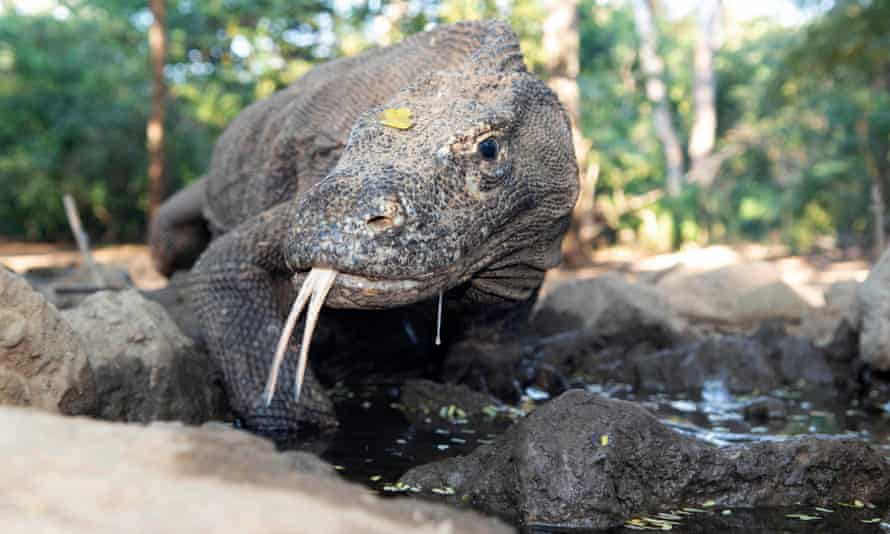
The komodo dragon, the world’s largest lizard, is threatened with extinction as rising water levels driven by the climate crisis shrink its habitat, according to the latest “red list” update.
Endemic to a handful of Indonesian islands, the komodo dragon lives on the edge of forest or in open savannah, rarely venturing higher than 700 metres above sea level. Rising water levels are set to affect 30% of its habitat in the next 45 years, according to the International Union for Conservation of Nature (IUCN), which has changed its status from vulnerable to endangered.
The update – announced at the IUCN world conservation congress in Marseille – is the first for the komodo dragon in more than 20 years. It comes after the first peer-reviewed paper on how global heating would affect the giant lizards concluded “urgent conservation actions are required to avoid risk of extinction”.
As well as being unable to move to higher ground, the komodo dragons’ habitat is becoming increasingly fragmented by human activity, which makes populations less genetically healthy and more vulnerable. Their habitat range on the island of Flores in south-eastern Indonesia is thought to have shrunk by more than 40% between 1970 and 2000.
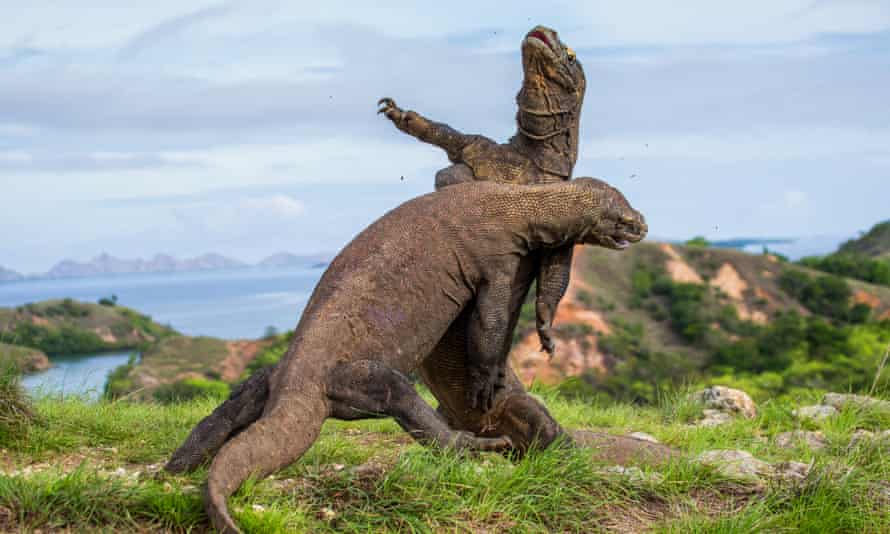
A rare image of komodo dragons fighting in Komodo national park, Indonesia. Photograph: Andrey Gudkov/Getty Images
“Because of human pressure, the forest is slowly being cut down and disappearing, and the savannah is affected by fires and degradation. That is why the animals are really in small little pockets,” said Gerardo Garcia, curator of vertebrates and invertebrates at Chester Zoo. “Habitats are being made even smaller due to rising sea levels.”Advertisement
Europeans discovered komodo dragons only in the early 20th century and were immediately fascinated by the creatures. Growing up to 3 metres long and weighing more than 150kg, komodos feed mainly on forest-dwelling pigs, deer, buffalo and fruit bats which hang in the low-lying mangrove trees. When they attack, their venomous saliva causes their prey’s blood pressure to suddenly drop and stops it clotting, sending them into shock. Despite their gory credentials we still know little about them because they’re so shy.https://interactive.guim.co.uk/uploader/embed/2021/09/komodo-dragonmap/giv-825WAcf5LtdE6m9/
“It is the most charismatic reptile on the planet yet until last year we didn’t really know where the komodos lived,” said Garcia, who was part of a three-year project with the Indonesian NGO Komodo Survival Programme that involved using camera traps to work out their movements. They discovered where they were living on Flores and now hope to do more focused conservation and community work in those areas. The subpopulation in Komodo national park is currently stable and protected.
Out of 138,000 species on the updated IUCN red list, more than 38,000 are threatened with extinction. The organisation also included a comprehensive reassessment of shark and ray species, with 37% now threatened with extinction due to overfishing, loss of habitat and the climate crisis. Sharks and rays are also burdened by the bad luck of their biology – they reproduce slowly and in low numbers, which means they are slower to bounce back compared with other species .
The IUCN red list update included some good news – four out of seven species of commercially fished tuna – Atlantic bluefin, southern bluefin, albacore and yellowfin – are on the path to recovery, thanks to the introduction of fishing quotas in the past 10 years.
“The new ratings certainly do bring some good news,” said Grantly Galland at the Pew Charitable Trusts. “Management has improved for bluefin tuna and albacore around the world in the past decade but we do still offer some caution in that IUCN ratings are based on entire species and it doesn’t allow for the assessment team to look at genetically distinct populations.”
For example, Atlantic bluefin is of least concern, but the western Atlantic population continues to experience serious declines, and is still at threat of being lost entirely.Advertisement
The success of albacore and southern bluefin tuna is due to the introduction of “harvest strategies” where the managers determine ahead of time what rules or actions they will take based on the status of the stock, and these new ratings are proof that those strategies are working.
Galland said: “When fishery managers are focused on a particular problem and dedicate efforts to fix that problem, they are able to do that, including reducing fish quotas when stakeholders don’t want them lowered. This shows that when we take those difficult decisions and focus on recovery we can actually achieve that.”
UK Becomes First Nation to Ban the Shark Fin Trade
UK Becomes First Nation to Ban the Shark Fin Trade
The UK aims to be the first country to comprehensively ban all importation and exportation of shark fins and related products.BY LIAM PRITCHETT | SEPTEMBER 2ND, 2021
The UK plans to introduce a comprehensive ban on the shark fin trade.
The British government recently announced that it will prohibit all importation and exportation of detached shark fins, in addition to all and any products containing the controversial ingredient.
The UK is the first country to propose such comprehensive restrictions. Animal welfare minister Lord Goldsmith published the details in a release from the Department for Environment, Food & Rural Affairs last month. However, the exact date of the ban is yet to be announced.
Finning involves the removal of fins, sometimes while still alive. Frequently, fishers discard the rest of the shark. It’s cruel, wasteful, and incredibly bad for the environment.
“Shark finning is indescribably cruel and causes thousands of shark[s] to die terrible deaths,” says Goldsmith. “Our action will not only help boost shark numbers, it will send a clear message that we do not support an industry that is forcing many species to the brink of extinction.”https://www.instagram.com/p/CTSi4esLt1o/embed/?cr=1&v=13&wp=648&rd=https%3A%2F%2Fwww.livekindly.co&rp=%2Fuk-ban-shark-fin-trade%2F#%7B%22ci%22%3A0%2C%22os%22%3A6046.799999952316%2C%22ls%22%3A2040.7999999523163%2C%22le%22%3A2729%7D
UK finally bans the shark fin trade
The UK banned shark finning in its waters back in 2013, but conspicuous defects in the legislation left room for the shark fin trade to continue. Existing restrictions are comparable to bans on the production of foie gras, veal, and fur that also fail to address continuing international trade.
The 2013 shark finning ban still allowed the importation of up to 25kg of shark fins for “personal consumption.” While a Greenpeace Unearthed investigation revealed that Britain exported over 50 tonnes of fins between 2017 and 2019 alone.
Humans have decimated approximately 70 percent of the world’s shark and ray population in less than five decades. We continue to kill up to 7.9 percent of the world’s existing sharks every year.
People hunt these 450 million year-old animals for their unique meat, organs, hides, and fins for use in controversial (but enduringly popular) dishes and medicines. But overfishing and other environmental problems also have a significant impact on depleted shark populations.
“It is encouraging to see the UK addressing the fin trade as an element of overfishing: the principal threat to sharks and rays,” says Ali Hood, Director of Conservation for the Shark Trust. “And we’re noting that the UK is ramping up its engagement in domestic and international shark conservation issues.”
Why are sharks important?
Sharks are a keystone species, making them absolutely essential for the continued health of their ecosystems and the marine environment in general.
They even store carbon within their bodies, and disrupting the natural cycle of life and death by hunting sharks contributes to climate change (which is yet another factor in their diminishing population).
Out of more than 500 varieties of shark, the IUCN now lists 143 as “under threat,” with various species ranging from “vulnerable” to “critically endangered.” Two specifically listed by the British government are the short fin mako and blue sharks, both ravaged by unsustainable fishing practices.
“Sharks have been around for millions of years and play a crucial role for the health of our oceans,” says shark conservationist James Glancy. “Yet, as a consequence of human activity, many shark species are critically endangered and face extinction in some regions.”




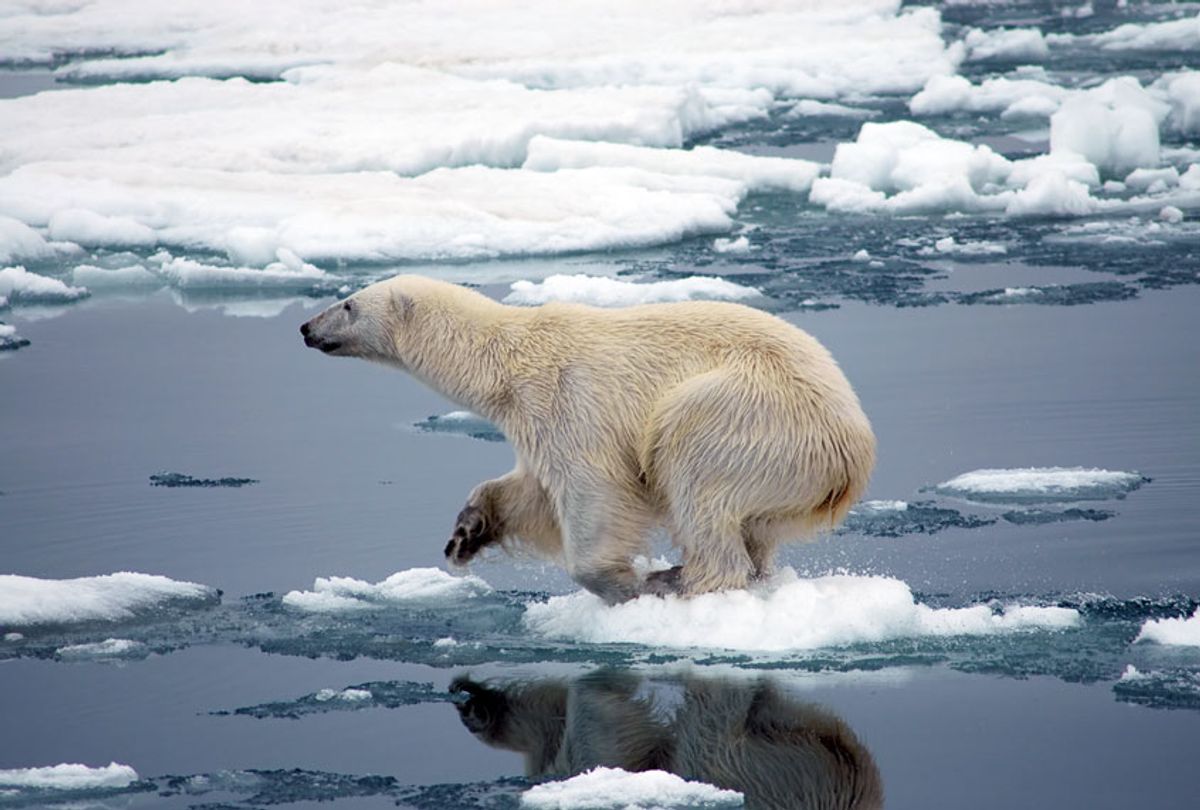 A large polar bear getting ready jump of a small piece of ice (Getty Images)




 Exposing the Big Game