Two-time World Grand Championship Tennessee Walking Horse Midnight Sun. (Photo: VisitFranklin.com)
It’s showtime again in Shelbyville, a phrase you’ll likely hear announcer Mark Farrar shout at the Tennessee Walking Horse National Celebration that’s set to crown its 83rd World Grand Champion (WGC) on Saturday night. The 2021 World Grand Championship will likely be won by one of the two contenders who captured the preliminary World Championships last Saturday – Rodney Dick and ‘Really Coach’ or Tyler Baucom and ‘Minor Ordeal.’
But unfortunately, many of the trainers competing in the event have long records of violating the Horse Protection Act (HPA) that was designed to stamp out the painful practice of soring – the intentional infliction of pain to horses’ feet and legs by applying caustic chemicals such as kerosene, mustard oil, or other caustic substances or by inserting sharp objects into the horses’ hooves to induce an artificial high step known as the “Big Lick.”
Marty Irby (Animal Wellness Action)
The Big Lick is quite a different look than that performed by the first World Grand Champion, Strolling Jim, crowned in 1939, who wore nothing more than a regular pair of horse shoes on his front feet, and exhibited the sound, smooth, natural gait that made the walking horse famous. But for decades, every World Grand Champion has been allowed to show and compete with large-stacked shoes as tall as 8-10 inches on their feet, and metal ankle chains around their pasterns – devices used to exacerbate the pain caused by soring.
And 2021 would have been the last Celebration in history where the large-stacked shoes and ankle chains were worn if it weren’t for the Humane Society of the U.S. (HSUS) and Humane Society Legislative Fund (HSLF) whose leaders intentionally torpedoed an effort to enact anti-soring legislation because the compromise didn’t mirror all the provisions of the Prevent All Soring Tactics (PAST) Act. That bill failed to win support for nine straight years, and there’s no chance of that changing anytime soon.
The compromise – hard fought, with leaders of the Walking Horse industry finally assenting to change their ways – would eliminate chains on the horses’ ankles and require a dramatic reduction in the size of the stack shoes that make Walking Horse shows look medieval. The measure also makes soring a federal felony, ends a self-policing scheme, and bans using tail braces that hold the horses tail in a U-shaped position after the ligaments have been severed – all for a certain look.
Leaders at Animal Wellness Action have worked to enact the PAST Act since 2012 when it was first introduced in the U.S. House. We like its provisions, but the bill cannot pass in its current form. You legislate based not on your hopes, but by counting votes and understanding where legislative roadblocks exist. It’s Tennessee Walking Horse National Celebration time in Tennessee but efforts to enact legislation to ban anti-cruelty techniques like soring have been torpedoed by leaders of the Human Society of the United States.
The PAST Act only achieved passage through the House in July of 2019 as result of changing the bill’s name to the U.S. Senator Joseph D. Tydings Memorial PAST Act to honor the late Senator who authored the HPA and passed away in 2018. This was a strategy we developed with the Tydings family and the Citizens’ Campaign Against Big Lick Animal Cruelty – not the HSUS or HSLF. The measure – led by the two veterinarians in Congress at the time – Reps. Kurt Schrader, D-Ore., and Ted Yoho, R-Fla. – cleared the House by a vote of 333 to 96, but with opposition from Senators who hailed from Tennessee and Kentucky and 96 House Republicans opposing it, the bill was dead on arrival in the Upper Chamber. In light of that circumstance we pulled together representatives still involved in the breed to form those revisions to the PAST Act that would have ensured the bill became law. Had it been enacted at the end of 2020, it would have taken effect this November.
The House and Senate have the votes to pass the PAST Act, but almost every animal bill has to secure consensus in the Senate to pass, and we don’t have that on the PAST Act. In light of that political reality, we at Animal Wellness Action sat down with the industry and worked to secure a compromise that finally would end horse soring in America. The Horse Protection Act of 1970, which was a monumental achievement more than a half century ago, has proved too weak to stop soring. That’s why we need a fortification of the law that can be enacted, so we can finally end soring.
While the old PAST Act has been reintroduced this year by Sens. Mike Crapo, R-Ida., and Mark Warner, D-Va., it’s simply a messaging bill at this stage in the game, blocked by a handful of Senators from the region where soring occurs most, and there’s no end in sight.
The sabotaging of the solid compromise legislation in 2020 is regrettable, but we hope that stakeholders will come together and work through the differences to make changes that will enable the bill to clear the Senate and become law. The Humane Society’s opposition to compromise has only insured one thing: horses will continue to be sored indefinitely.
Irish Council Against Blood SportsMullingar, Ireland
SEP 3, 2021 —
Ireland’s largest fur farm appears to have shut down ahead of an upcoming ban on cruel fur farming.
When activists from the National Animal Rights Association visited the fur farm near Stradbally in County Laois at the weekend, they witnessed empty cages.
The cages had previously confined thousands and thousands of mink. In the past, the unfortunate creatures could be seen frantically jumping against the bars of the cages in desperate attempts to get free. They paced back and forth and circled repeatedly but their only escape from the cages came on the day they were killed. They were mercilessly grabbed, pulled out and dumped into a box filled with poisonous Carbon Monoxide gas before the fur was pulled from their bodies.
The sight of the empty cages was hailed by NARA as “a great moment…
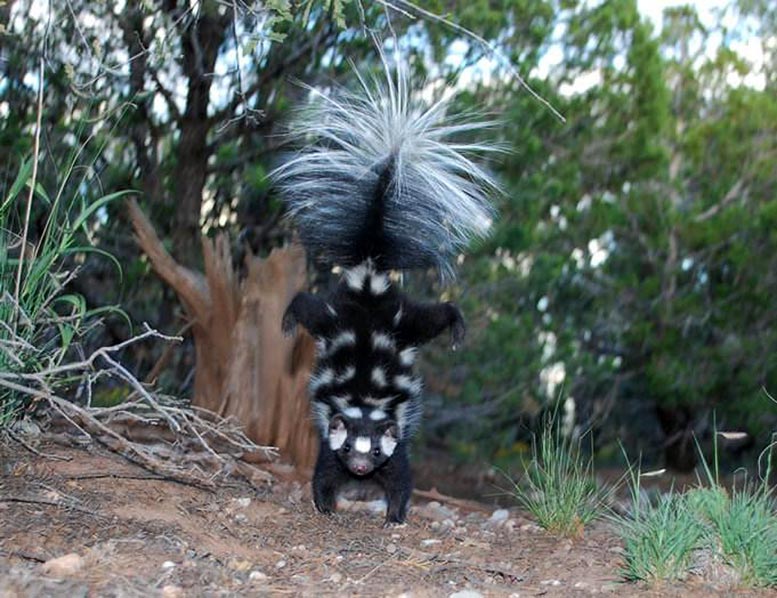
A spotted skunk doing its signature handstand. Credit: (c) Jerry W. Dragoo
Redesignating an endangered subspecies as a separate species could help it get protected.
Picture a skunk. You’re probably thinking of a stocky animal, around the size of a housecat, black with white stripes, like Pepé Le Pew. That describes North America’s most common skunk, the striped skunk, but they also have smaller, spotted cousins. Scientists still have a lot to learn about spotted skunks, starting with how many kinds of them even exist—over the years, the number of recognized species has ranged from two to fourteen, and lately, scientists have agreed there are four. But in a new paper in Molecular Phylogenetics and Evolution, researchers analyzed skunk DNA and found that there aren’t four species of spotted skunk after all: there are seven.
“North America is one of the most-studied continents in terms of mammals, and carnivores are one of the most-studied groups,” says Adam Ferguson, one of the paper’s authors and the Negaunee collections manager of mammals at Chicago’s Field Museum. “Everyone thinks we know everything about mammalian carnivore systematics, so being able to redraw the skunk family tree is very exciting.”
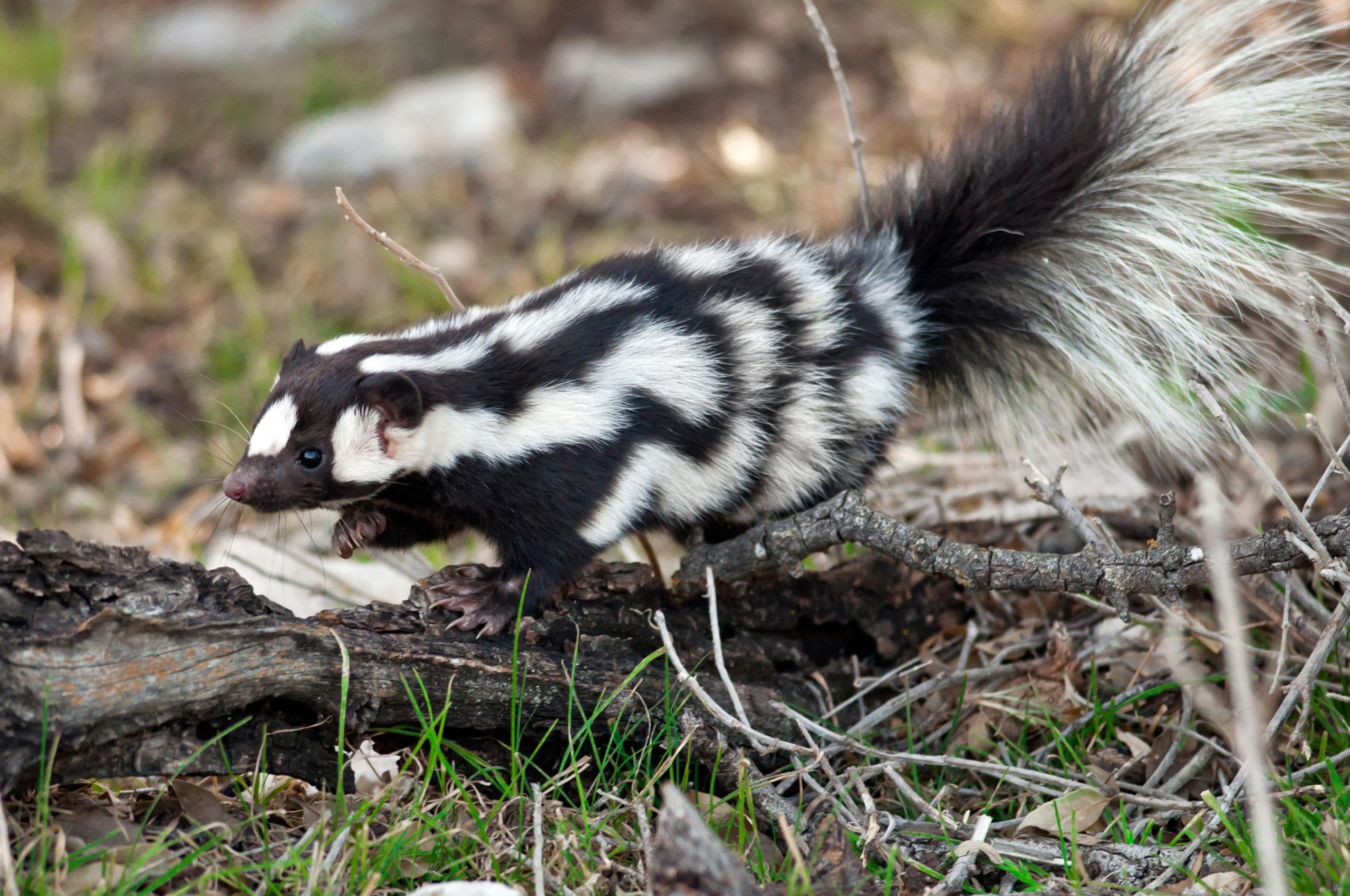
Spotted skunk. Credit: (c) Robby Fleischman
Skunks, like raccoons, otters, and weasels, are part of the Carnivora order of mammals (they’re omnivores, though). They’re distantly related to dogs, and even more distantly related to cats. Spotted skunks are found throughout North America, but they haven’t made themselves at home in urban areas the way their striped cousins have. Most spotted skunks weigh less than two pounds, whereas striped skunks can tip the scales at over ten. Like their name suggests, they have spots instead of stripes (although technically they’re just broken stripes). And while all skunks produce a nasty-smelling spray to deter predators, spotted skunks have the flashiest means of deploying it: they do a hand-stand on their front legs as an extra warning before they spray. “Spotted skunks are sometimes called the acrobats of the skunk world,” says Ferguson.
Scientists have been interested in spotted skunks for a long time—the first species formally recognized by Western science was described in 1758 by Carl Linnaeus, the inventor of the biological naming system still used today. Over the years, as many as fourteen species were recognized, though in recent decades that number’s been condensed to four. However, Ferguson suspected that there might be more, due to the lack of genetic sequence data from morphologically distinct or geographically isolated populations of this wide-ranging genus. “We figured there had to be some surprises when it came to spotted skunk diversity, because the genus as a whole had never been properly analyzed using genetic data,” says Ferguson.
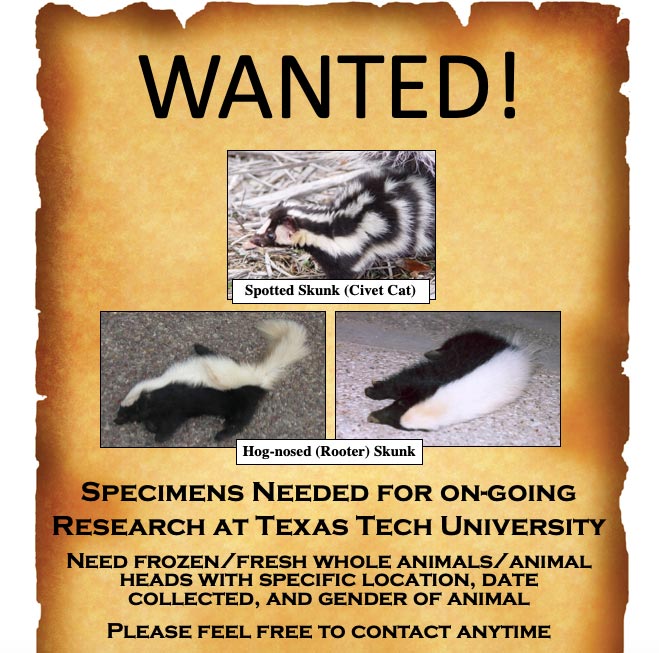
A “wanted” poster asking for roadkill skunk specimens to be used in research. Credit: (c) Adam Ferguson
Even though North American carnivores are by and large well-known, skunks are often understudied, in part because catching skunks is a good way to get sprayed. On top of that, spotted skunks are lithe and good at climbing trees, and they’re usually found in remote areas. To acquire the specimens needed for the study, the researchers had to get creative.
“We made wanted posters that we distributed across Texas in case people trapped them or found them as roadkill,” says Ferguson, who began collecting specimens used in this project while working on his MSc at Angelo State University. “People recognize spotted skunks as something special, because you don’t see them every day, so they’re not the kind of roadkill that people just paint over.”
In addition to modern specimens, the scientists used skunks in museum collections. “If we’re trying to tell the full story of skunk evolution we need as many samples as we can,” says Ferguson. “For example, we didn’t have any modern tissues from Central America or the Yucatan. We were able to use museum collections to fill those holes.” All in all, the researchers amassed a collection of 203 spotted skunk specimens.
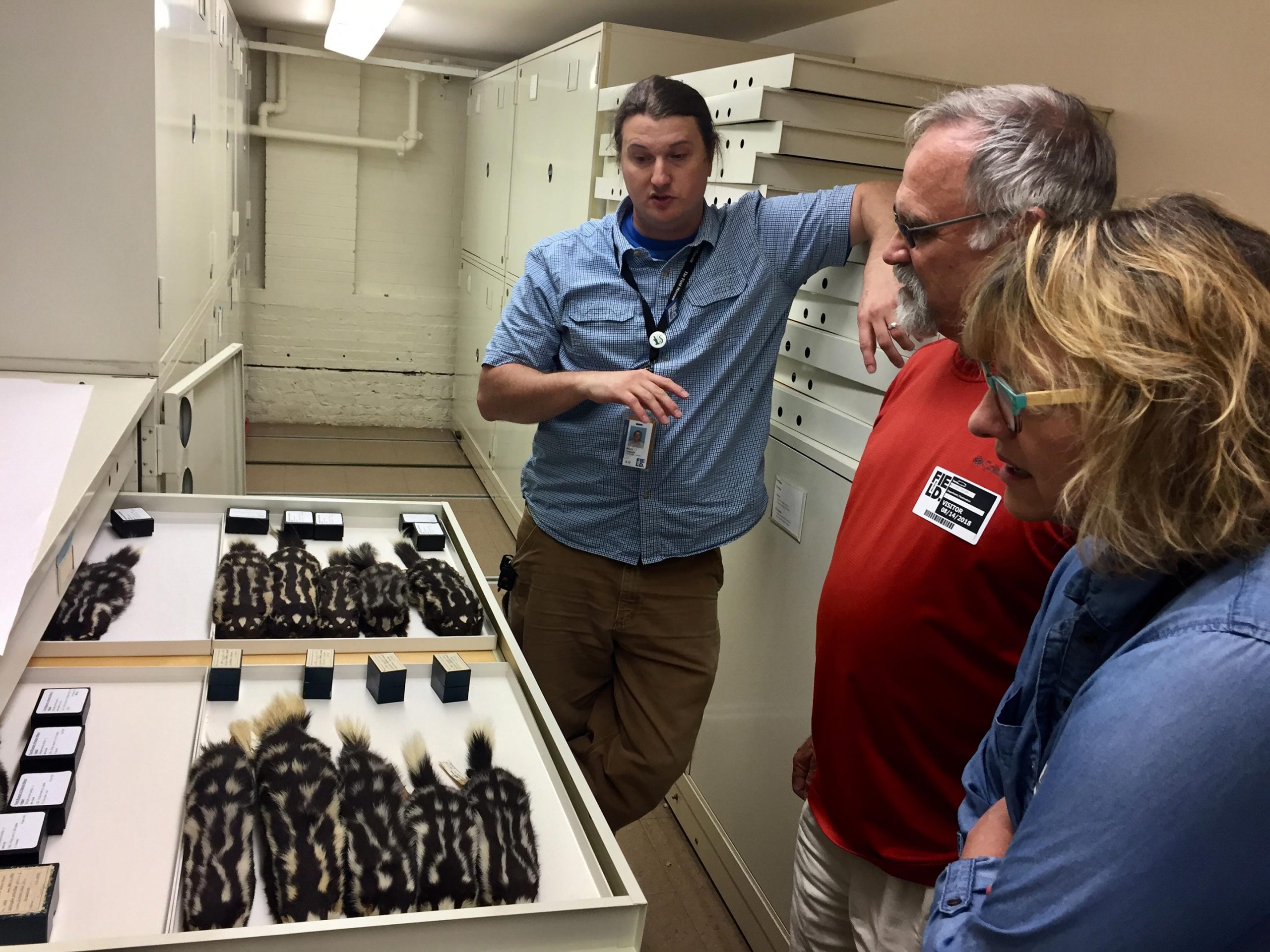
Adam Ferguson in the Field Museum’s collections with spotted skunk specimens. Credit: Courtesy of Adam Ferguson
The researchers took tissue samples from the skunks and analyzed their DNA. Comparing the DNA sequences revealed that some of the skunks that had previously been considered the same species were substantially different. These genetic differences led the researchers to regroup some of the skunks and resurrect several species names that haven’t been used in centuries.
“I was able to extract DNA from century-old museum samples and it was really exciting to see who those individuals were related to. It turns out that one of those was a currently unrecognized, endemic species in the Yucatan,” says Molly McDonough, a biology professor at Chicago State University, research associate at the Field Museum, and the paper’s first author.
Among the new species described are the Yucatan spotted skunk, a squirrel-sized skunk found only in the Yucatan Peninsula, and the Plains spotted skunk. Plains spotted skunks have been in decline for the past century, and conservationists have petitioned for them to be listed as an endangered subspecies. “If a subspecies is in trouble, there’s sometimes less emphasis on protecting it because it’s not as distinct an evolutionary lineage as a species,” says Ferguson. “We’ve shown that the Plains spotted skunks are distinct at the species level, which means they’ve been evolving independently of the other skunks for a long time. Once something has a species name, it’s easier to conserve and protect.”
The revised skunk family tree could also be a tool for scientists looking to understand skunk reproductive biology. “Besides the fact that they do handstands, the coolest thing about spotted skunks is that some of them practice delayed egg implantation—they breed in the fall, but they don’t give birth until the spring. They delay implanting the egg in the uterus, it just sits in suspension for a while,” says Ferguson. “We want to know why some species have delayed implantation and others don’t, and figuring out how these different species of skunks evolved can help us do that.”
And while skunks aren’t always the most popular animals, the researchers say that understanding how they evolved and protecting them from extinction is important to our whole ecosystem.
“By analyzing the genome of spotted skunks, we’ve been able to learn that their evolution and splitting into different species was driven by climate change during the Ice Age,” says Ferguson. “The different lineages we found might help us find different conservation angles for protecting them in the future.”
Reference: “Phylogenomic systematics of the spotted skunks (Carnivora, Mephitidae, Spilogale): Additional species diversity and Pleistocene climate change as a major driver of diversification” by Molly M. McDonough, Adam W. Ferguson, Robert C. Dowler, Matthew E. Gompper and Jesús E. Maldonado, 22 July 2021, Molecular Phylogenetics and Evolution. DOI: 10.1016/j.ympev.2021.107266
Three New Species of Hand-Standing Spotted Skunks Discovered
A spotted skunk doing its signature handstand. Credit: (c) Jerry W. Dragoo
Redesignating an endangered subspecies as a separate species could help it get protected.
Picture a skunk. You’re probably thinking of a stocky animal, around the size of a housecat, black with white stripes, like Pepé Le Pew. That describes North America’s most common skunk, the striped skunk, but they also have smaller, spotted cousins. Scientists still have a lot to learn about spotted skunks, starting with how many kinds of them even exist—over the years, the number of recognized species has ranged from two to fourteen, and lately, scientists have agreed there are four. But in a new paper in Molecular Phylogenetics and Evolution, researchers analyzed skunk DNA and found that there aren’t four species of spotted skunk after all: there are seven.
“North America is one of the most-studied continents in terms of mammals, and carnivores are one of the most-studied groups,” says Adam Ferguson, one of the paper’s authors and the Negaunee collections manager of mammals at Chicago’s Field Museum. “Everyone thinks we know everything about mammalian carnivore systematics, so being able to redraw the skunk family tree is very exciting.”
Spotted skunk. Credit: (c) Robby Fleischman
Skunks, like raccoons, otters, and weasels, are part of the Carnivora order of mammals (they’re omnivores, though). They’re distantly related to dogs, and even more distantly related to cats. Spotted skunks are found throughout North America, but they haven’t made themselves at home in urban areas the way their striped cousins have. Most spotted skunks weigh less than two pounds, whereas striped skunks can tip the scales at over ten. Like their name suggests, they have spots instead of stripes (although technically they’re just broken stripes). And while all skunks produce a nasty-smelling spray to deter predators, spotted skunks have the flashiest means of deploying it: they do a hand-stand on their front legs as an extra warning before they spray. “Spotted skunks are sometimes called the acrobats of the skunk world,” says Ferguson.
Scientists have been interested in spotted skunks for a long time—the first species formally recognized by Western science was described in 1758 by Carl Linnaeus, the inventor of the biological naming system still used today. Over the years, as many as fourteen species were recognized, though in recent decades that number’s been condensed to four. However, Ferguson suspected that there might be more, due to the lack of genetic sequence data from morphologically distinct or geographically isolated populations of this wide-ranging genus. “We figured there had to be some surprises when it came to spotted skunk diversity, because the genus as a whole had never been properly analyzed using genetic data,” says Ferguson.
A “wanted” poster asking for roadkill skunk specimens to be used in research. Credit: (c) Adam Ferguson
Even though North American carnivores are by and large well-known, skunks are often understudied, in part because catching skunks is a good way to get sprayed. On top of that, spotted skunks are lithe and good at climbing trees, and they’re usually found in remote areas. To acquire the specimens needed for the study, the researchers had to get creative.
“We made wanted posters that we distributed across Texas in case people trapped them or found them as roadkill,” says Ferguson, who began collecting specimens used in this project while working on his MSc at Angelo State University. “People recognize spotted skunks as something special, because you don’t see them every day, so they’re not the kind of roadkill that people just paint over.”
In addition to modern specimens, the scientists used skunks in museum collections. “If we’re trying to tell the full story of skunk evolution we need as many samples as we can,” says Ferguson. “For example, we didn’t have any modern tissues from Central America or the Yucatan. We were able to use museum collections to fill those holes.” All in all, the researchers amassed a collection of 203 spotted skunk specimens.
Adam Ferguson in the Field Museum’s collections with spotted skunk specimens. Credit: Courtesy of Adam Ferguson
The researchers took tissue samples from the skunks and analyzed their DNA. Comparing the DNA sequences revealed that some of the skunks that had previously been considered the same species were substantially different. These genetic differences led the researchers to regroup some of the skunks and resurrect several species names that haven’t been used in centuries.
“I was able to extract DNA from century-old museum samples and it was really exciting to see who those individuals were related to. It turns out that one of those was a currently unrecognized, endemic species in the Yucatan,” says Molly McDonough, a biology professor at Chicago State University, research associate at the Field Museum, and the paper’s first author.
Among the new species described are the Yucatan spotted skunk, a squirrel-sized skunk found only in the Yucatan Peninsula, and the Plains spotted skunk. Plains spotted skunks have been in decline for the past century, and conservationists have petitioned for them to be listed as an endangered subspecies. “If a subspecies is in trouble, there’s sometimes less emphasis on protecting it because it’s not as distinct an evolutionary lineage as a species,” says Ferguson. “We’ve shown that the Plains spotted skunks are distinct at the species level, which means they’ve been evolving independently of the other skunks for a long time. Once something has a species name, it’s easier to conserve and protect.”
The revised skunk family tree could also be a tool for scientists looking to understand skunk reproductive biology. “Besides the fact that they do handstands, the coolest thing about spotted skunks is that some of them practice delayed egg implantation—they breed in the fall, but they don’t give birth until the spring. They delay implanting the egg in the uterus, it just sits in suspension for a while,” says Ferguson. “We want to know why some species have delayed implantation and others don’t, and figuring out how these different species of skunks evolved can help us do that.”
And while skunks aren’t always the most popular animals, the researchers say that understanding how they evolved and protecting them from extinction is important to our whole ecosystem.
“By analyzing the genome of spotted skunks, we’ve been able to learn that their evolution and splitting into different species was driven by climate change during the Ice Age,” says Ferguson. “The different lineages we found might help us find different conservation angles for protecting them in the future.”
Reference: “Phylogenomic systematics of the spotted skunks (Carnivora, Mephitidae, Spilogale): Additional species diversity and Pleistocene climate change as a major driver of diversification” by Molly M. McDonough, Adam W. Ferguson, Robert C. Dowler, Matthew E. Gompper and Jesús E. Maldonado, 22 July 2021, Molecular Phylogenetics and Evolution. DOI: 10.1016/j.ympev.2021.107266
ROB BESCHIZZA12:34 PM THUSEP 2, 2021Photo courtesy of Binoche et Giquello
Auctioneers at Binoche et Giquello hope that it’s a good year for vintage furnishings—and that someone out there has at least $1.2m Euros anda lot of space to stash a full-size Triceratops skeleton. The 66m-year-old fossil’s skull alone is 2.62m (8′ 7″) long and 2m (6′ 7″) wide. With a total length of 8m (26′), it’s the largest Triceratops ever dug up.
The dinosaur lived in Laramidia, an island continent which stretched from present day Alaska to Mexico, and perished in an ancient flood plain currently known as the Hell Creek formation in South Dakota, where he was discovered by geologist Walter W. Stein Bill in May 2014. The dinosaur was excavated a year later, and later restored in Italy, the company said in a statement.
New research indicates that over 80% of American adults now have antibodies to the coronavirus, earned either through infection or vaccination. The study, based on data collected from blood donors, estimates that over 80% of Americans over the age of 16 had these antibodies as of May 2021. The authors do caution, however, that their results may not be generalizable to the entire U.S. population.
The study,publishedThursday in JAMA, is the work of researchers from various blood donation organizations as well as the Centers for Disease Control and Prevention’s pandemic response group.
Every month starting in July 2020, the team has been analyzing samples of donated blood collected from people over 16 in the…
It reads: “The inalienable rights of the person must be recognized and respected by civil society and the political authority.” The Catechism also warns that “when the state does not place its power at the service of the rights of each citizen, and in particular of the more vulnerable, the very foundations of a state based on law are undermined.”
Biden has long maintained that the government shouldn’t force particular beliefs on Americans. That’s part of the reason he supported the Hyde Amendment, which blocks federal funding for most abortions. But amid pressure in the 2020 campaign, he reversed his decades-old stance on the issue.
The White House did not immediately respond to Fox News’ request for comment.
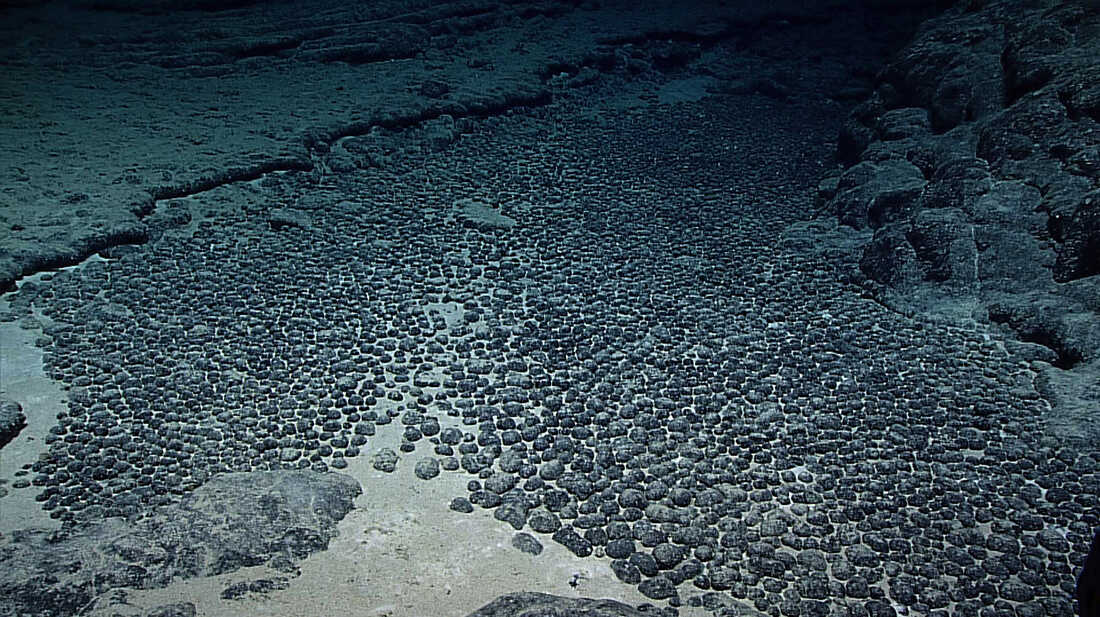
Polymetallic nodules coat fields of the ocean floor and are rich in critical minerals needed to make batteries for electric vehicles.NOAA Office of Ocean Exploration and Research
Sprawling fields of rocks about the size of your fist coat the Pacific seabed. Below miles of ocean, these nodules burst with copper, nickel, manganese and cobalt, all key to building batteries for electric vehicles.
As the global push for electric transportation grows, these metals have converted a remote underwater plain into a battleground over the hard decisions required to address climate change. A nascent industry of deep sea mining is growing to harvest these rocks. The industry’s first commercial mining applications may be filed in as little as two years despite incomplete regulations and unsettled science about mining’s effects.
Industry proponents say deep sea mining is more environmentally friendly than land-based mining, making it the best option in the face of looming mineral shortages for electric vehicles and a tight timeline to decarbonize transit. Marine and climate scientists counter that there’s scant data on the deep sea to gauge potential consequences for oceanic biodiversity and carbon sequestration, and that it would take decades of study to get a holistic assessment.Article continues after sponsor message
Because of such serious uncertainties, conservation groups, hundreds of scientists and some battery-reliant manufacturers are calling for a moratorium on deep sea mining. In March, BMW and Volvo Group, along with Samsung and Google, pledged to abstain from sourcing deep sea minerals.
It’s a “sustainability paradox,” says Kris Van Nijen, managing director of Global Sea Mineral Resources, a deep sea mining contractor for Belgium and Germany. “On the one hand, we have a whole world demanding we deal with climate change … [but] there is not one solution that does not impact biodiversity that actually helps to mitigate climate change, because, in the end, we have to do something and we have to make choices.”https://www.youtube.com/embed/Lwq1j3nOODA?rel=0Massachusetts Institute of Technology Mechanical Engineering via YouTube
The world does not have decades to decide how to handle climate change. And, when it comes to regulating deep sea mining, the international community may have even less time.
In June, the 8-square-mile, Pacific island nation of Nauru took the first step in launching the industry. It announced plans to submit an application for commercial extraction as early as 2023 to the International Seabed Authority, the organization overseeing deep sea mining. Such an application will be judged against whatever the deep sea mining rules are at that time — finalized or otherwise.
It’s a “concerning move,” says Andrew Friedman, who oversees the Pew Charitable Trusts’ deep sea mining project. “We’re taking what was intended to be a deliberative, consensus-based process to regulate an untested industry in a part of the world that remains largely unexplored, and we’re compressing it somewhat arbitrarily into a two-year window. It’s raising a lot of questions about what’s going to happen next.”
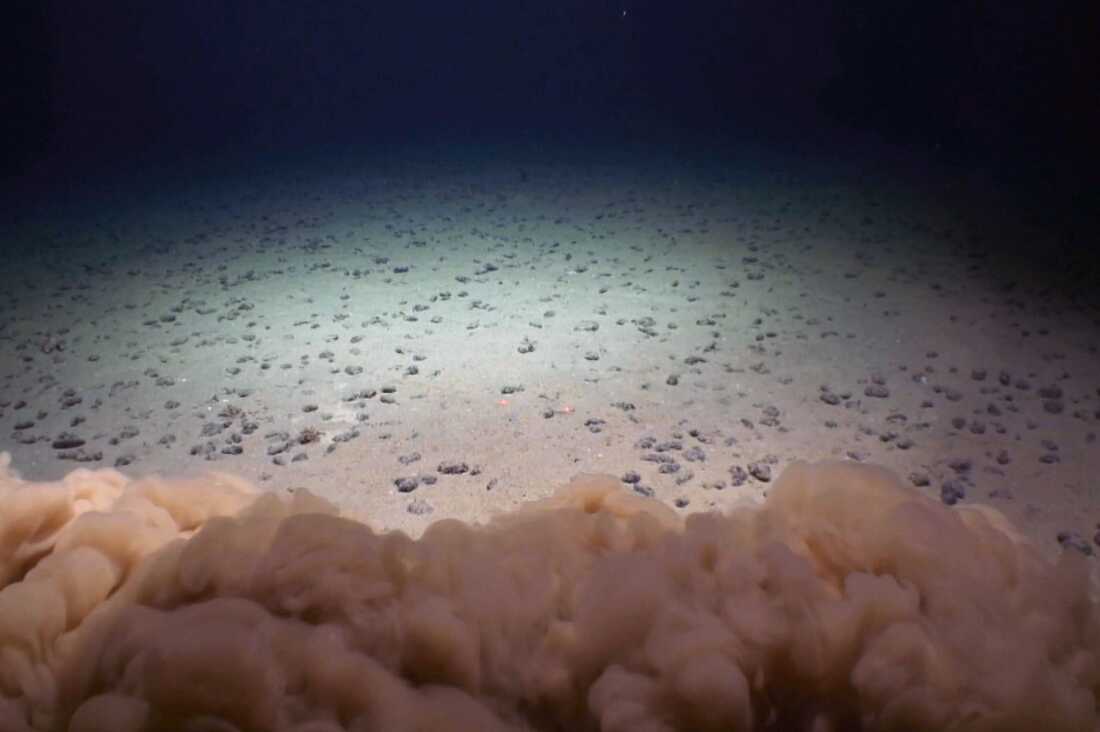
A sediment plume (above in the foreground) created by deep sea mining vehicles unfurls over a field of deep sea polymetallic nodules. Scientists are researching and developing models to determine how far this sediment will spread across the seafloor.NOAA/DeepCCZ expedition
Getting critical metals is complicated
Metals to make clean energy batteries can be extracted from the land, sea or recycling. Advocates for marine mining say harvesting ocean minerals would be safer for workers than traditional mining and would have a lower carbon footprint by avoiding deforestation. A traditional land mining project for lithium has already sparked controversy in Nevada because of alleged environmental degradation. Cobalt mining in the Democratic Republic of Congo has long faced accusations of child labor abuses.
“If your nickel comes from [a traditional terrestrial mine in] Indonesia, you are guaranteed that your atmospheric carbon emissions will be many times higher than if your nickel was coming from nodules,” DeepGreen, Nauru’s Canadian-based contractor, tells NPR. The company points to a peer-reviewed paper in the Journal of Cleaner Production, which it commissioned, that found “nodules put 94 percent less sequestered carbon at risk and disrupt sequestration by 88 percent less” than terrestrial ores. Just like with land mining, DeepGreen says, permits should be decided on a “project-by-project” basis.
Mineral production on land is also concentrated in certain countries, giving them outsize power over extraction and distribution. More than 75% of lithium and rare-earth elements come from Australia, China and Congo, which also holds more than 70% of the world’s cobalt.
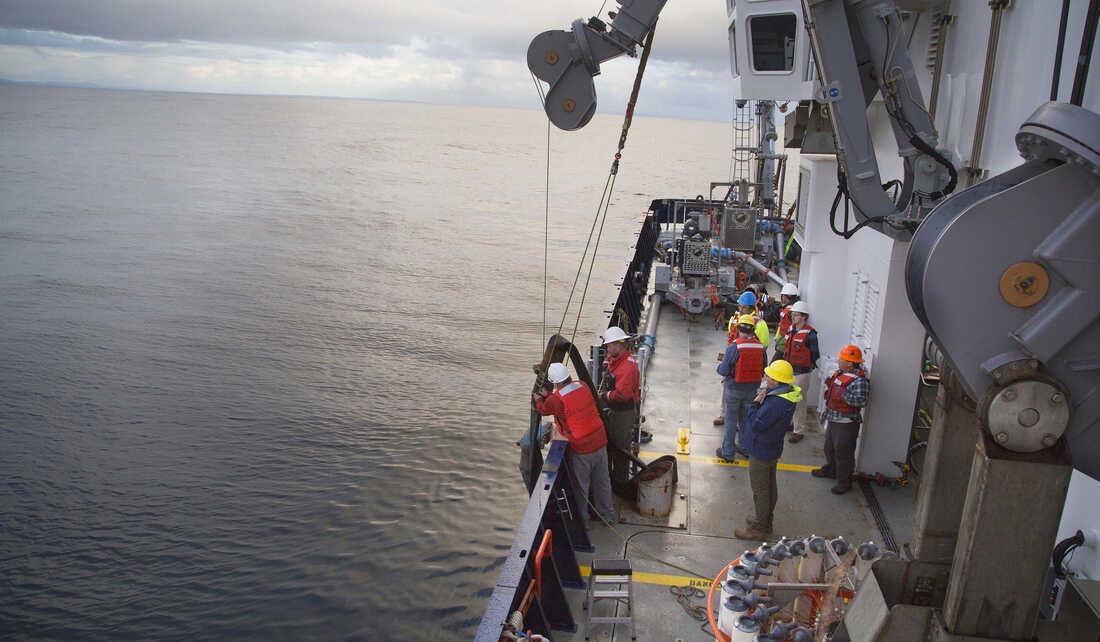
Researchers deploy a hose off the coast of San Diego to study how discharged mining sediment would move in the ocean.John Freidah
By contrast, the international waters of the deep sea are home to trillions of mineral-rich nodules. The nodule fields between Hawaii and Mexico known as the Clarion-Clipperton Fracture Zone — about the size of the United States — are estimated to contain six times more cobalt and three times more nickel than land reserves.
Environmentalists argue the best option is to forgo all mining and gather critical materials instead through electronics recycling. But reports by the World Bank and the International Energy Agency conclude recycling alone will not address the world’s clean energy mineral needs. By 2050, global demand for minerals such as cobalt and nickel will shoot up nearly 500%, the World Bank predicts.
“Recycling can have a major role, probably, after the 2030s,” says Tae-Yoon Kim, an energy analyst for the International Energy Agency and an author of its recent report, when technology has improved and spent clean energy batteries are ready to be recycled.
Until then, experts say, a steady flow of freshly mined minerals will be key to decarbonizing transportation. Shortages could drive up the price of electric vehicles or hamper production, slowing their adoption.
The deep sea holds more than critical minerals
Among the different kinds of deep sea mineral deposits, those that draw the most commercial interest are metal-rich nodules. Though the nodules were discovered more than a century ago, attempts at commercial extraction started only in the 1970s.
The International Seabed Authority was created in 1994 to oversee mining in the high seas. While continuing to draft the Mining Code, or the rules of international seabed mining, it has already issued at least 29 exploratory permits to allow nations and their contractors to search for nodules, test mining equipment and conduct environmental analyses. Sixteen of the permits are for harvesting polymetallic nodules in the Clarion-Clipperton Fracture Zone. The organization did not respond to repeated interview requests for this story.
Polymetallic nodules, which take millions of years to form, support life in the deep sea ecosystem
Credit: NOAA
Unlike the lifeless barrens most people expect the deep sea to be, the remote ocean floors are a biodiverse and complex ecosystem. The intensive logistics to reach the deep sea thwart most research. It’s only in the last several decades that scientists have begun to piece this picture together.
Interest in deep sea mining is now drawing industrial and academic dollars, broadening our understanding of this plain. DeepGreen has spent millions of dollars since 2012 to study its leases’ environmental “baseline and [ways to] mitigate impacts of nodule collection on the marine environment,” it told NPR via email.
Citing an impending merger in which DeepGreen will become The Metals Co., the corporation declined to comment on whether the science of deep sea mining will be settled by 2023, when the Nauru-sponsored mining application is likely to be submitted to the International Seabed Authority.
Other companies also seek a picture of what the deep sea environment is right now. The mining company GSR, which anticipates starting commercial extraction by 2030, is collaborating with an independent European Union scientific consortium, MiningImpact, to assess its leases. MiningImpact periodically monitors the deep sea environment and GSR’s mining tests. In April, MiningImpact collected data during field tests of GSR’s second vehicle prototype. But this data will not be fully analyzed for several years.
DeepGreen CEO Gerard Barron and the company’s chief ocean scientist, Greg Stone, then-Nauru President Baron Waqa and International Seabed Authority Secretary-General Michael Lodge speak with the crew of the Maersk, an international shipping container company, in San Diego in 2018 while the Maersk Launcher undertakes a DeepGreen research mission.Sandy Huffaker/AP for DeepGreen Resources
Could mining affect the ocean’s storage of carbon dioxide?
As the world’s largest carbon sink, the ocean has absorbed a substantial portion of our greenhouse gas emissions, with rising water temperatures and acidification to show for it.
Ocean carbon moves from the surface down into the seabed. Most of this occurs in the relatively shallow continental shelves where plentiful light and animals push carbon down the water column. A small portion makes its way down to the deep seabed. How exactly mining could affect this deep sea carbon is unclear, scientists say, and depends, in part, on exactly how mining technology functions.
If carbon-packed sediment that’s dislodged by mining stays near the seabed, it is unlikely to contribute to atmospheric carbon levels on a meaningful time scale, says Trisha Atwood, an associate professor of watershed sciences at Utah State University. Atwood is co-author of a recent study that discovered bottom trawling releases as much carbon dioxide annually as global aviation.
“Once you get below 2,000 meters, carbon cycling slows down a lot,” Atwood says. While deep sea mining “might expose carbon … there’s a pretty big time lag between when microbes would turn that into CO2, and when that CO2 is likely to hit the atmosphere,” potentially thousands of years.
Still, Atwood is one of the nearly 500 scientists who called in June for a deep sea mining moratorium. “Even if that carbon isn’t coming out into the atmosphere, we are weakening the oceans’ capacity to take up more CO2,” she says.
But it’s uncertain if mining sediment will remain at the bottom of the ocean. Both GSR’s and DeepGreen’s mining vehicles use seawater to displace several centimeters of sediment and nodules so they can be sucked into the vehicle, which separates muck from rocks. The nodules are then raised to the surface for processing while the sediment is returned to the seafloor. Early tests indicate the sediment plumes generated by their activities disperse several kilometers across the seabed but do not rise significantly. Scientists recently developed a model to estimate how plumes will move around in the water to inform regulations and affect estimates.
Keeping the sediment close to the seabed is relatively expensive, says Matthias Haeckel,who oversees MiningImpact. It requires additional technology to re-cool the sediment so it stays dense and does not rise in the water column. Mining operators looking to save money could decide to release the sediment at or near the surface.
There are currently no provisions in the Mining Code that regulate the height at which sediment can be released in the water column, according to Pew’s Friedman.
Hoovering up deep ocean mud may also affect microbes living in the seabed that consume carbon dioxide. These microbes absorb so-called natural carbon dioxide, or carbon that was not emitted by people but from ongoing organic and inorganic processes instead. The bacteria could be responsible for up to 10% of background “natural” carbon absorbed by the ocean annually.
Scientists do not know if disturbing the microbes through mining would alter the ocean’s ability to capture and hold carbonlong term. What is evident is that this bacteria recover slowly from disturbances. Researchers dragged small plows in the Peru Basin in 1989 to simulate small-scale mining. Decades later, the sites remain scarred, and they house decreased microbial activity.
“The microbial community does take a long time to recover following simulated mining disturbance,” says Andrew Sweetman, a deep sea ecologist at Heriot-Watt University, who discovered carbon-consuming bacteria in theClarion-Clipperton Fracture Zonein 2018. “So if these processes are important and are taking up CO2, then it’s possible that mining may impact those processes to a large extent.”
Deep sea mining companies say the amount of seabed that could be disturbed is inconsequential to carbon levels. Even if “nodule collection severely disrupted the carbon-cycling” in mining areas, writes sustainability researcher Daina Paulikas in the Cleaner Production paper, harvesting enough rocks to build 1 billion electric vehicles would disturb only 0.2% of the ocean’s deep sea bacteria.
Down the road, DeepGreen anticipates pivoting from oceanic mining to recycling minerals in support of a circular economy. Several U.S. port cities are under consideration as potential sites for future recycling plants.
Energy Secretary Jennifer Granholm said in June that the Biden administration wants to see the supply for clean energy minerals met through “responsible” mining “that respects the environment.”
A June report from the White House on potential supply chain shortages notes that “significant quantities of strategic and critical materials may be found on the seabed, but the industry to extract these resources remains nascent, given both technical challenges of mining in the marine environment and the potential for significant environmental harm.”
In the end, experts say, mining the deep sea will likely come down to a value judgment.
The carbon impact of deep sea mining “is probably not going to be huge,” Heriot-Watt’s Sweetman says, “but I would say, at what point does a small number become significant?”
Indiana Republican reacts to Democrat plans to target GOP lawmakers’ phone records on ‘Tucker Carlson Tonight’
House Speaker Nancy Pelosi, D-Calif., Thursday pledged to bring a bill codifying the Supreme Courtabortion decision Roe v. Wade to the House floor in the wake of the Supreme Court’s decision to allow a Texas abortion law to go into effect.
“When we go back to Washington, we will be putting Roe v. Wade codification on the floor of the House, to make sure that women everywhere have access to the reproductive health that they need,” Pelosi said in a news conference.
Pelosi announced that the House would vote on a bill sponsored by Rep. Judy Chu, D-Calif., H.B. 3755, the Women’s Health Protection Act. The bill aims “to protect a person’s ability to determine whether to continue or end a pregnancy, and to protect a health care provider’s ability to provide abortion services.”
The law would strike down current state restrictions on abortion and prevent states from imposing new restrictions on abortion, which pro-life advocates claim involves the killing of an unborn baby, except in limited circumstances.
Pro-life advocates celebrated the court’s ruling.
“March for Life celebrates the Supreme Court’s decision to allow – for now – the state of Texas to protect babies who have a detectable heartbeat. Americans, through their elected representatives, deserve to be able to enact laws that reflect their own values and compassion for our most vulnerable citizens,” Jeanne Mancini, president of the March for Life, said in a statement.
“The Supreme Court’s ruling allows Texas to protect unborn babies with beating hearts while litigation continues,” Marjorie Dannenfelser, president of the Susan B. Anthony List, said in a statement. “The Texas legislature, acting on the will of the people, debated and passed this law with the very simple goal of protecting unborn children with beating hearts from death in the womb. This is how democracy works.”
Dannenfelser condemned H.B. 3755, claiming that the bill would “permanently stifle American debate on abortion.”
“Joe Biden and Nancy Pelosi want to permanently stifle American debate on abortion and instead impose a regime of abortion on demand, up until the moment of birth, paid for by the taxpayer,” Dannenfelser wrote in a statement after Pelosi’s announcement. “The deceptively named ‘Women’s Health Protection Act’ should really be called the ‘National Abortion on Demand Act.’ Existing laws at risk if the legislation passes include limits on late-term abortions, waiting periods, informed consent laws, and limits on discriminatory abortions, and many others.”
President Biden announced that he is launching a “whole-of-government effort to respond to this decision, looking specifically to the Department of Health and Human Services and the Department of Justice to see what steps the Federal Government can take to ensure that women in Texas have access to safe and legal abortions as protected by Roe, and what legal tools we have to insulate women and providers from the impact of Texas’ bizarre scheme of outsourced enforcement to private parties.”
Some Democrats have renewed their push to pack the Supreme Court in the wake of the ruling.
Democrat-controlled state legislatures have passed their own attempts to codify Roe v. Wade should the conservative-majority Supreme Court strike down the ruling. The New York version not only codified abortion but removed protections for babies in the womb, even those wanted by their mothers. It struck down laws treating the death of an unborn baby as a homicide.
Editor’s note: This article contains details that some readers may find disturbing.
Nearly three years ago when British dog behaviorist Kasey Carlin arrived at Heathrow Airport to meet a rescue dog flown in from Lebanon, she thought the airport staff brought her the wrong dog. She knew the mixed-breed dog had been horribly abused and expected to see signs of trauma.
It’s a remarkable personality trait considering all Maggie endured before her rescue.
“They used a BB gun and used her as target practice. They had tied her up and shot her. She has about 200 pellets from her nose to her chest and some in her shoulders, but they’re all concentrated in her face,” Carlin said. “Then they pulled her eyes out. She had a broken jaw. They started cutting off her ears before somebody intervened. And she was heavily pregnant at the time.” (The puppies Maggie was carrying did not survive.)
But Maggie’s situation proved increasingly desperate.
“Nobody wanted her,” she said. “She had six days before she was due to fly and nowhere to go, and they were going to have to delay the flight or she was going to have to go in kennels, but I couldn’t let a poor little blind dog go in kennels.”
The plan was never to adopt Maggie, just to foster her — which initially seemed prudent. Maggie and Mishka, Carlin’s recently adopted dog, did not get along. Mishka’s former owners kept her in a crate that she tried desperately to escape, and she emerged aggressive toward both dogs and people. But Carlin worked every day to help make them comfortable with one another, and they became best friends.
Though Maggie delighted in meeting new friends on walks, her past haunted her sleep.
“She’d be in dreams, and she’d wake me up screaming. I don’t know if you’ve ever heard a dog scream, but it is horrific,” Carlin said through tears. “I used to have to go, ‘Maggie, it’s OK. It’s OK.’ But now there’s (a) difference between her dreams. She’ll run in her dreams. These horrible nightmares that she used to have don’t happen often now — she had one maybe six months ago. She’s happy now.”
“When we go to the schools, we do these little headbands the children make, where they have just one little ear on them,” Carlin said. “It’s really cute to see all these kids with this one little Maggie ear on their heads.”
With pandemic restrictions lifting in the United Kingdom, Carlin hopes Maggie can begin visiting hospital patients. They recently visited a care home, where Maggie reunited with one of her favorite residents, Anne.
“Even after a year of lockdown — she hasn’t seen Anne — when we went to go see her, she knew exactly where she was going. She’s completely blind, but she’ll lead you straight to Anne’s room first and then she can go see other residents,” Carlin said. “She just wants to love everyone.”https://www.instagram.com/p/CQrHVu6pTTl/embed/captioned/?cr=1&v=13&wp=600&rd=https%3A%2F%2Fwww.msn.com&rp=%2Fen-us%2Flifestyle%2Flifestyle-buzz%2Fblind-dog-once-used-as-target-practice-now-brings-comfort-to-others-as-therapy-dog%2Far-AAO3TNs%3Focid%3Duxbndlbing#%7B%22ci%22%3A0%2C%22os%22%3A12927%2C%22ls%22%3A6789.799999952316%2C%22le%22%3A6996.200000047684%7D
Maggie is trusting as well as loving. She walks in a perfect heel — off leash — even on the streets of London. When Carlin calls to her dog from across a field, Maggie runs happily toward her.
She hopes people inspired by Maggie’s story will consider adopting overlooked pets, particularly older dogs and those with disabilities.
“Nobody wanted Maggie, and now she’s got half a million people that would take her in an instant if I offered her up because she’s a good dog,” she said. “Every dog is a good dog. You just have to work with them, understand their limits, respect those limits and build that bond. Then they’re good dogs. … Maggie does all this good, and she’s just being herself.”
Aerolíneas Argentinas has just announced that it will no longer carry hunting trophies on its domestic and international flights. The airline is launching this initiative to help protect the environment and wildlife worldwide. Let’s investigate further.
Aerolineas Argentinas has banned hunting trophies on its domestic and international flights. Photo: Getty Images
Wildlife protection
Trophy hunters invest tons of money every year to kill wild animals for in-home displays. According to the Humane Society International, more than 200,000 threatened or endangered animals are killed for trophies each year.
Moreover, trophy hunters prefer to kill the largest, strongest animals, causing further population declines. The United States is the biggest importer of wildlife trophies, and New York is the biggest port of entry.ADVERTISEMENThttps://imasdk.googleapis.com/js/core/bridge3.478.1_en.html#goog_106002227235.2KThe Fall Of The Airbus A318 Baby Bus
Argentina is in the top ten countries that import animals as trophies to the US, according to the Humane Society International. This has led Aerolíneas Argentinas to take radical action and stop this activity.
In a statement, the airline said,
“This initiative aims to protect the Argentinian wildlife, and it complies with the international conservation standards such as the Convention on International Trade in Endangered Species of Wild Fauna and Flora (CITES).”ADVERTISEMENThttps://7a78d8c9bda7d191c639f74059524244.safeframe.googlesyndication.com/safeframe/1-0-38/html/container.html
Aerolíneas Argentinas cited that many wildlife species are directly impacted by hunting activities, including the American cougar.
“This type of policies are important, they show progress and have the common objective of moving forward to a more conscious world towards wild fauna and flora protection,” said Pablo Ceriani, Aerolíneas Argentinas CEO.ADVERTISEMENThttps://7a78d8c9bda7d191c639f74059524244.safeframe.googlesyndication.com/safeframe/1-0-38/html/container.html
Marina Ratchford, the Humane Society International country manager in Argentina, told Simple Flying,
“We commend Aerolineas Argentinas for joining the list of 45 airlines that have made a commitment not to transport hunting trophies. Trophy hunting harms wildlife populations and killing wild animals for fun has no place in modern society. Aerolineas Argentina’s decision ends their role in this harmful activity. We urge other airlines who have not joined this list yet to do so as well.”
Aerolíneas Argentinas wants to protect the wild fauna and flora in Argentina. Photo: Getty Images.
Are there any other airlines that ban hunting trophies?
As of January 2020, 45 airlines worldwide had some sort of ban on carrying hunting trophies, according to data of the Humane Society International. One of them is Emirates.ADVERTISEMENThttps://7a78d8c9bda7d191c639f74059524244.safeframe.googlesyndication.com/safeframe/1-0-38/html/container.html
In Latin America, besides Aerolíneas Argentinas, only Aeromexico has made a commitment to disincentive hunting of animals.
Meanwhile, in the United States and Europe, many airlines have banned hunting trophies, such as KLM, Virgin, Lufthansa, Brussels Airlines, Air France, British Airways, Delta Air Lines, United Airlines, American Airlines, JetBlue, Hawaiian Airlines, SWISS, Iberia, Cargolux, and others.
Many US carriers first launch their ban on carrying hunting trophies in 2015. The decision came following the illegal killing of Cecil the lion in Zimbabwe by US dentist Walter Palmer (who wasn’t deferred from his activities following the backlash after Cecil’s controversy).
Nevertheless, not every US airline banned the transport of any hunting trophies. For instance, Delta and American only prohibited the shipment of lion, leopard, elephant, rhino, and buffalo trophies, meaning they allow the transportation of other species.
Many airlines across the world have banned the transportation of hunting trophies – for example, Cargolux completely prohibited it in 2018. Photo: Guillermo Quiroz Martínez via @gquimar.
Stay informed:Sign up for our daily and weekly aviation news digests.
Which airlines have completely banned hunting trophies?
Of the 46 airlines (including Aerolíneas Argentinas) that the Humane Society International has listed to have some sort of ban on hunting trophy carriage, 33 have a 100% prohibition.
For instance, Cargolux completely banned the transportation of hunting trophies in 2018. The airline said that practice “does not align with the company’s ethical engagements and policies.” It later added that Cargolux is committed to building a sustainable business model which preserves the environment and its natural resources.
Finally, other carriers like Air Canada and WestJet have only banned trophies from the “Big Five”. The Big Five refers to these species: the African buffalo, African lions, African elephants, African leopards, and Southern white rhinos.
What do you think of Aerolíneas Argentinas decision? Let us know in the comments.ADVERTISEMENThttps://7a78d8c9bda7d191c639f74059524244.safeframe.googlesyndication.com/safeframe/1-0-38/html/container.html84
Lead Journalist – South America – Daniel comes to Simple Flying with many years of aviation journalism experience, having worked with Mexican publication A21, Roads & Kingdoms, El Economista and more. His degree in journalism allows him to form beautifully crafted and insightful pieces. His specialist knowledge of Latin American airlines and close relationship with the likes of Aeromexico, Avianca, Volaris brings depth to our coverage in the region. Based in Mexico City, Mexico.



 Photo courtesy of Binoche et Giquello




 © Kasey Carlin Maggie wears a large flower collar (Kasey Carlin)
 © Courtesy of Kasey Carlin Maggie in Lebanon (Courtesy of Kasey Carlin)
 © Kasey Carlin Maggie wears pink (Kasey Carlin)
 © Kasey Carlin Maggie promotes kindness. (Kasey Carlin)
 © Kasey Carlin Maggie offers free hugs. (Kasey Carlin)
 © Kasey Carlin Maggie, Mishka, Leia and Millie (Kasey Carlin)
 © Kasey Carlin Maggie outside (Kasey Carlin)



 Exposing the Big Game