The Wolf Poster Man Then and Now
2

BY STUART MACKINTOSH, OPINION CONTRIBUTOR – 04/11/24 1:30 PM ET
SHAREPOST https://thehill.com/opinion/energy-environment/4585835-after-climate-tipping-points-change-will-come-slowly-then-all-at-once/
Video Player is loading.
https://imasdk.googleapis.com/js/core/bridge3.633.0_en.html#goog_1509162396
Advertisement

Anyone paying attention in 2023 and the start of this year will have seen and felt the extreme weather signs of a potential looming climate tipping point.
Hurricanes raged in the Atlantic. The Amazon forest baked in a drought 30 times worse than prior instances. One of the largest rivers on Earth, the Amazon tributary Rio Negro, shrank to a trickle, stranding communities reliant on river transport. European and North American populations suffered under extreme heat and thousands of people died.
In 2023, nearly two billion people felt the effects of warming. February saw an average global temperature of 1.8 degrees Celsius — far above the Paris Accord target of 1.5 degrees Celsius over preindustrial times. This was the highest average global temperature ever recorded.
This terrible global climate record obscures even more alarming regional temperature jumps.
Europe in February was 3.3 degrees Celsius above previous levels, far above 19th century averages. Meanwhile, sea temperatures averaged 21 degrees Celsius in the Northern Hemisphere, 1.5 degrees Celsius above normal, while the Southern Hemisphere was 0.8 degrees Celsius above historic average.
Consequently, the maximal Arctic and Antarctic sea ice levels hit record lows. The ice shelves and glaciers in the East and West Antarctic appear to be under increased melt and threat from warming seas.
The planetary danger signals are increasing. Climate scientists are beginning to worry we may be at a terrifying juncture, where the climate shifts dramatically from one state to another. An abrupt global warming episode, during which climate changes happen in decades, not centuries, and interrelated tipping points cascade into one another amplifying the sudden shift in the world climate, pushing the planet out of the temperate sweet spot we humans have been lucky enough to live in.
Could this sudden shift happen? Unfortunately, the answer is yes.
We can see it in the ice core record. About 11,500 years ago, during the Younger Dryas era, temperatures in Greenland leapt 10 degrees Celsius in a decade, with the rest of the world seeing a matching jump to a new state in a matter of decades, not centuries.
Sea levels rose rapidly by tens of meters, driven by Greenland ice melt and other ice loss in the Arctic and Antarctic. An entire area of northern Europe, Known as Doggerland, which linked the United Kingdom to Europe, disappeared forever beneath the waves. Until the shock of the Younger Dryas warming, my ancestors could have walked from Scotland to the Netherlands.
Of course, the tragedy of our limited, shortened horizons means we cannot remember such past planetary disasters, except through myths and stories. Cultural paleo-anthropologists point to the Biblical story of Noah and the Great Flood as an artifact of this past disaster, when rising seas flooded the isthmus between Asia and the Mediterranean North to South.
We can see creation myths across the globe also talk about flooding, rising seas and storms in prehistory. It is possible these stories are a dim warning of what could yet happen to us, and sooner than we think.
Politicians, planners, consumers and citizens operate day-to-day. They worry about small problems like singular severe weather events and then move on without comprehending that the entire planetary climate system is interlinked, interdependent and at risk.
Yet we have abused and polluted that system. Governments, while promising much, have repeatedly failed to heed climate scientists’ hoarse shouts of alarm. There is always something else to do and worry about. The climate can wait until tomorrow.
The danger of an abrupt jump in temperatures should be taken seriously. The Younger Dryas era shows us climate change happens slowly until it happens very fast. And if the climate state shifts, it cannot be reversed. It will be permanently hotter, more dangerous and more destabilizing for humanity and non-humans alike.

The risk of abrupt climate change from stability to a hothouse future is not zero — I would say it’s more like 10 percent or higher. Surely, then we must do whatever it takes to avoid the outcome? The cost of inaction is too high economically and societally and impacts all species on Earth.
Meanwhile, if we massively accelerate the net zero shift, the upside is a sustainable, more livable, less dangerous, future. The right course is clear. We need to take it before it is too late.
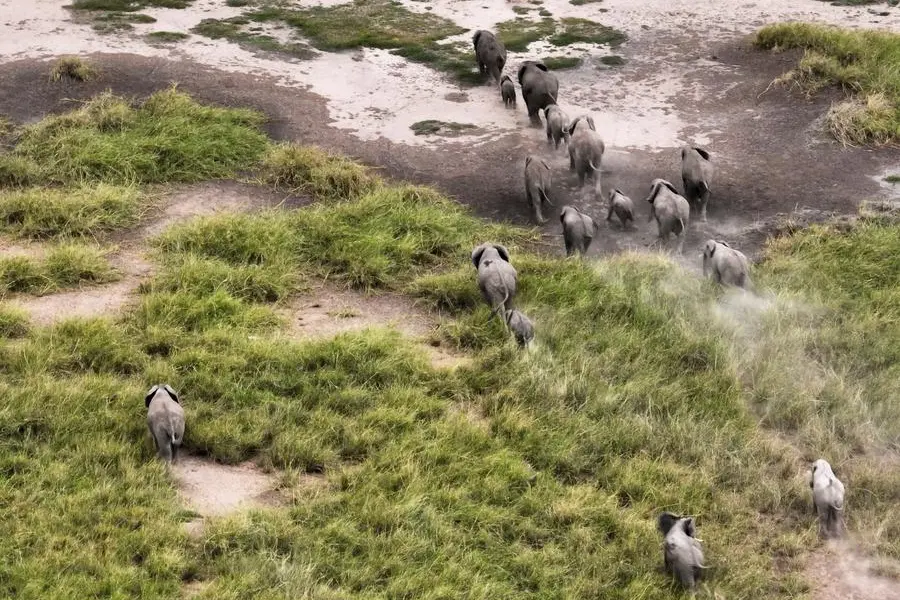
The two East African neighbours manage elephant herds differently. Tanzania issues some trophy hunting licences to wealthy sport hunters every year, while Kenya gets all its revenue from wildlife safaris
Duncan Miriri, Reuters News
April 11, 2024
AMBOSELI, Kenya – In the rolling grasslands of the Amboseli wildlife park, conservationists fret about an emerging threat to Kenyan elephants that are crucial to its tourism business: licensed hunters across the border in Tanzania.
The two East African neighbours manage elephant herds differently. Tanzania issues some trophy hunting licences to wealthy sport hunters every year, while Kenya gets all its revenue from wildlife safaris.
Tanzania’s way of supervising elephant herds is aligned with many southern African nations like Zimbabwe, Namibia, Botswana and South Africa, while Kenya’s zero tolerance of wildlife hunting or sale of ivory mirrors that of Gabon.
Conservationists and Kenyan officials, however, are now urging Tanzania to restrict trophy hunters to its heartland, to protect Kenyan elephants, after three of them were shot across the border in recent months.
“It is not right to license trophy hunting near the border with Kenya,” said Joseph Ole Lenku, the governor of Kenya’s Kajiado county, which relies on tourism.
Tanzania’s wildlife regulator, and its government, did not comment.
Last September, a Kenyan elephant with tusks that weighed 50 kg (110 lb) each was shot by licensed hunters some 23 km (14 miles) inside the border with Tanzania, conservationists said.
The killing broke an unofficial moratorium on hunting elephants near the Kenyan border. The ban was agreed in 1995 after an outcry over the shooting of four Kenyan elephants on the Tanzanian side in 1994, conservationists said, although the prohibition did not set out detailed regulations.
After the first Kenyan elephant was gunned down in September in the Enduimet Wildlife Management Area, two more have been shot, all belonging to a group known as “super-tuskers” due to their large tusks, the wildlife campaigners said.
“The Amboseli bloodline of tuskers is probably one of the best in the world, so from a genetics perspective it is really important,” said Richard Bonham, co-founder and executive chairman of Big Life Foundation in Kenya, a conservation group.
Visitors from around the world flock to Amboseli every year to see the huge elephants, he said, making them valuable from a tourism perspective.
Tourism is one of the top foreign exchange earners for Kenya and the sector employs millions of people directly and indirectly.
The conservationists say they now want Tanzania to reinstate the trophy hunting moratorium, reinforcing it with more definite terms on land within 40 km (25 miles) of the Kenyan frontier.
Tanzania charges a fee of $10,000-$20,000 for a licence to hunt an elephant trophy, which is split between the government and the community if the trophy is hunted in conservation areas run by local groups.
Conservationists said they were not calling for a hunting ban in all of Tanzania, but for protection of precious Kenyan tuskers that wander back and forth across the border.
“The problem is that the hunted elephants were among the very few elephants with such large ivory,” they said.
 Exposing the Big Game