Bird flu continues to spread in cows in US, human infected
Reply

FP Explainers • April 6, 2024, 18:21:13 IST
A Texas farm worker has tested positive for the H5N1 virus. This comes after bird flu spread to dairy cow herds in five states in the US this year, the first such instance in the country. Should the contagious virus alarm us?
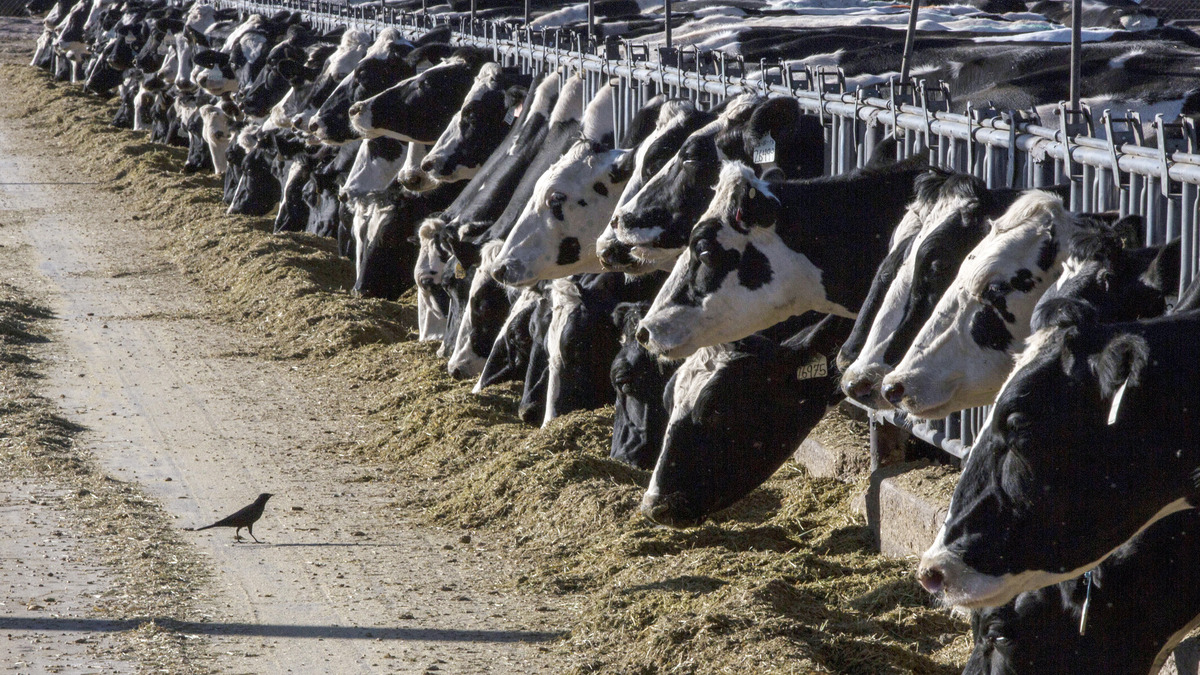)
Dairy cow herds in five US states have tested positive for bird flu. AP (Representational Image)
The outbreak of bird flu in dairy cows in the United States and the case of a human in Texas testing positive for the virus have caused widespread concerns. The US Centers for Disease Control and Prevention (CDC) said earlier this week that a dairy worker in Texas was found infected with avian influenza.
Advertisement
This is only the second human case of the H5N1 virus in the US, with the first reported in 2022 in a poultry worker in Colorado. It is also the first time bird flu has been detected in dairy cattle in the US.
Let’s take a closer look.
How deadly is bird flu?
You May Like
Mom Instructs Son To Keep Kicking Man’s Seat, So He Turns The Tables On HerFunnyAnd.com
It is a disease in birds triggered by infection with highly contagious avian influenza Type A viruses. “These viruses naturally spread among wild aquatic birds worldwide and can infect domestic poultry and other bird and animal species,” according to the CDC.
Its H5N1 strain was first detected in domestic waterfowl in China in 1996. Later, it was spread across the world by migratory birds.
Advertisement
For at least the past two years, avian influenza has spilled over from birds to mammals.
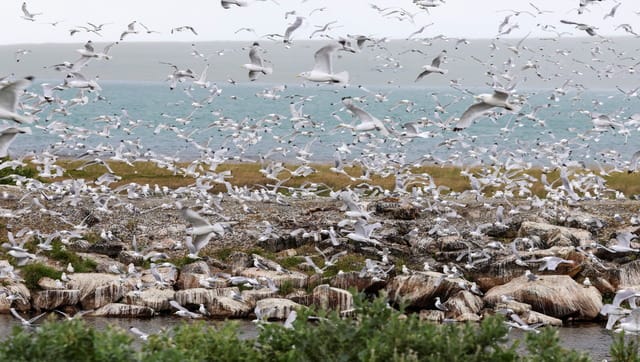
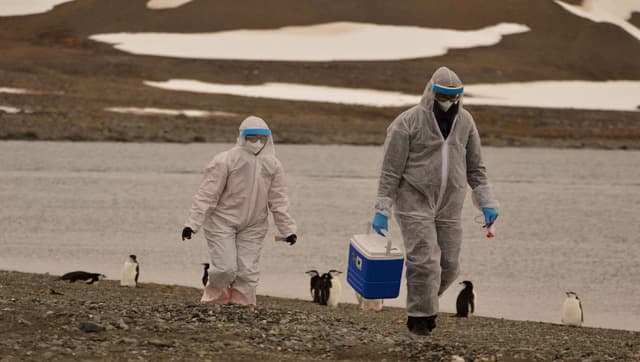
Sea birds, foxes, goats, cats, racoons, skunks, elephant seals, and large mammals like bears and cows have been reported to be infected with bird flu.
Since late March, bird flu has been confirmed in dairy cow herds across five states in the US, including Idaho, Kansas, Michigan, New Mexico, and Texas.
Advertisement
Bird flu in humans
This is not the first time bird flu has been identified in humans. There have been sporadic cases since 1997 when several people were infected during a poultry outbreak in Hong Kong.
While most human infections were detected in Asia, cases have also been reported in Africa, Americas, and Europe. India reported its first case and death due to H5N1 in 2021, reported Indian Express.
Advertisement
According to the World Health Organisation (WHO) data, there were 887 human cases of H5N1 between 2003 and 2024, of which 462 died. The fatality rate of the virus is estimated to be 52 per cent.
As per Pan-American Health Organization, infected humans can show several symptoms like fever, cough, body aches, pneumonia, shock, breathing difficulty, and even death sometimes.
Advertisement
How worried should we be now?
Although avian flu infections in humans have been few, many have been deadly. If bird flu emerges as the next pandemic, it would be more dangerous than COVID-19, experts warn.
Citing virus researchers, Daily Mail reported that a bird flu pandemic could be “100 times worse than COVID”, killing up to half of the infected patients.
John Fulton, founder of Canada-based pharmaceutical company BioNiagara, said at a meeting attended by bird flu researchers, doctors and officials from government agencies that the H5N1 strain “appears to be 100 times worse than COVID, or it could be if it mutates and maintains its high case fatality rate.
“Once it’s mutated to infect humans, we can only hope that the [fatality rate] drops.”
According to Dr Suresh Kuchipudi, a bird flu researcher in Pittsburgh, Pennsylvania, bird flu has been on the “top of the pandemic list for many, many years and probably decades.”
Speaking at the briefing, Dr Kuchipudi said that “now we are getting dangerously close to this virus potentially causing a pandemic,” reported Daily Mail.
It must be noted that bird flu is already a panzootic, akin to a pandemic in the animal world. Its cases have been found in every continent except Australia, noted New York Times (NYT).
However, experts maintain that the virus has not evolved yet to transmit from one person to another. Most humans identified with bird flu worldwide came in close contact with infected birds, or mammals. They did not spread the disease to other humans.
As per the US CDC, the patient in Texas contracted the virus presumably from infected dairy cows. This would be the maiden instance of the cow-to-human spread of bird flu. The only symptom shown by the infected farm worker was eye redness or conjunctivitis.
The human infections so far “fortunately are all still single-time cross-species transmission,” Vincent Munster, a virologist at the National Institute of Allergy and Infectious Diseases, told NYT.
The genome sequencing of the virus in the Texas patient showed “minor changes”, NPR reported citing CDC. Thus, arresting the spread of the virus is important so that it cannot mutate further.
So, is it a cause for alarm?
Speaking to Indian Express, Dr E Sreekumar, director of the Institute of Advanced Virology, Thiruvananthapuram, said, “One case is not enough to say that the infection can cause a pandemic. It is too early. However, it is important to keep an eye on the pathogen for changes that can make it more transmissible”.
US federal officials and scientists maintain that the risk of bird flu to the public continues to be low, reported NPR.
KDVR-TV DenverFollow
14.3K Followers
Story by Rogelio Mares
• 6mo • 2 min read

Group seeks ban on trophy hunting of mountain lions, bobcats in Colorado© Provided by KDVR-TV Denver
DENVER (KDVR) — There’s a new push by a group to outlaw the trophy hunting of mountain lions and other large cats in Colorado.
The group, CATs (Cats Aren’t Trophies), is hoping to get this initiative on ballots for voters in Colorado to decide next November.
The real reason to ‘keep wildlife wild and leave wildlife alone’
CATs is a collection of veterinarians, wildlife photographers and other outdoor enthusiasts. The group wants to outlaw this kind of hunting of large cats in the state because of what they say is the inhumane way that it’s done.
Savings AccountThree banks in Omak Are Offering Crazy High Returns on Savings Accounts.
“We’re doing what we need to do to protect the wildlife of Colorado and bringing it directly to the voters,” CATs member Mark Surls said.
There is a stark difference between trophy hunting and wildlife management, according to Surls.
“It doesn’t do any public good,” Surls said, “it’s not a public safety issue.”
Where management controls the populations of wildlife, trophy hunting, Surls said, is a business.
“All it does is get trophies on the wall for the hunter that paid $8,000 to hire a professional hunter,” Surls said.
Surls described the process by which many large cats are hunted in the state, using hunting dogs to chase them up trees.
“You see the cat fall down from 30 feet in a tree,” Surls said. “It’s not sporting to hunt an animal that is trapped in a tree.”
Surls called this manner of hunting inhumane, motivating the group’s efforts to ban it. The group also said female mountain lions are often hunted, leading to a bigger problem for the species.
 Related video: Denver group rallying to save mountain lions (Scripps News)
Wildlife capture an ongoing problem,
Loaded: 9.87%Pause

Current Time 0:04
/
Duration 3:02Quality SettingsCaptionsFullscreen

Denver group rallying to save mountain lionsUnmute
0
“Over 75% of a female mountain lion’s life, she has dependent young with her,” Surls said.
One hunter’s group “Backcountry Hunters and Anglers” commented on the group’s Facebook page on the issue, saying it “does not endorse advancing policies on wildlife management and decisions by state or federal legislation or voter referendums and ballot initiatives,” adding “we are obligated as an organization committed to hunters and anglers to advance sound stewardship policies that are guided by science over politics, emotion, and conjecture.”
The petition process by CATs will begin in January, they will have six months to collect 125,000 signatures for this measure to be put on a ballot for voters to decide.
By Reuters
April 5, 202412:40 PM PDTUpdated a day ago
https://www.reuters.com/world/us/cdc-issues-health-alert-bird-flu-infection-us-2024-04-05
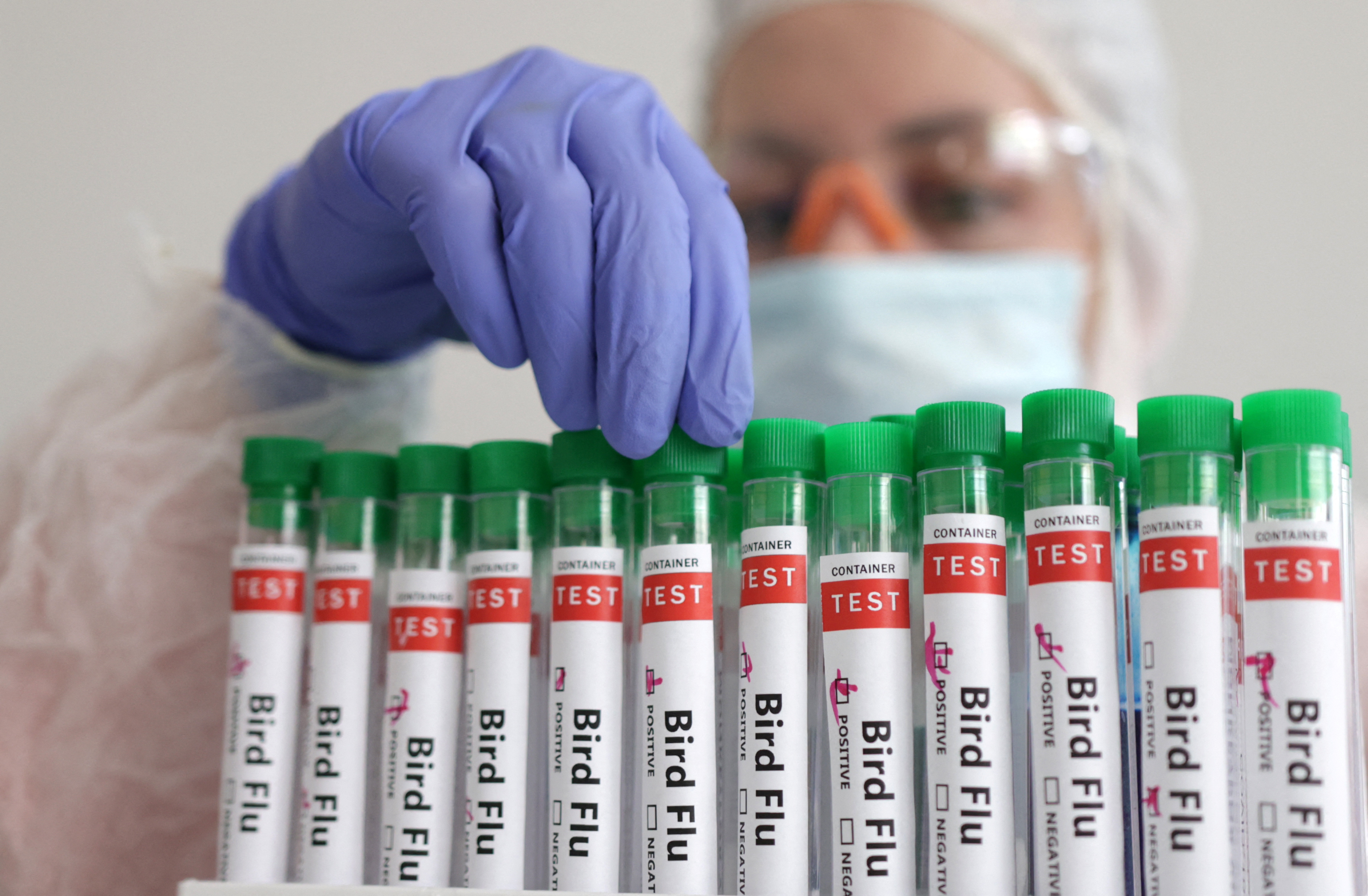
April 5 (Reuters) – The U.S. CDC on Friday issued a health alert to inform clinicians, state health departments and the public of a case of avian influenza in a person who had contact with dairy cows presumed to be infected with the virus.
The farm worker from Texas was reported to be infected on April 1, making it the second case of the H5N1 strain of avian influenza, commonly known as bird flu, identified in a person in the United States.
Advertisement · Scroll to continue
It follows a 2022 case in Colorado, and comes as the virus is spreading to new mammals, including dairy cattle for the first time.
To prevent infection from the virus, the CDC recommends the use of personal protective equipment (PPE), testing, antiviral treatment, patient investigations and monitoring of persons exposed to sick or dead, wild and domesticated animals and livestock that may have been infected with the virus.
Advertisement · Scroll to continueReport this ad
Earlier this week, the CDC said the infection does not change the risk assessment for the U.S. general public from H5N1 bird flu, which it considers to be low. The Texas patient’s only symptom was eye inflammation, according to the state’s health department.
An unprecedented leap of 38.5C in the coldest place on Earth is a harbinger of a disaster for humans and the local ecosystem
Robin McKie Science editorSat 6 Apr 2024 10.00 EDTShare
On 18 March, 2022, scientists at the Concordia research station on the east Antarctic plateau documented a remarkable event. They recorded the largest jump in temperature ever measured at a meteorological centre on Earth. According to their instruments, the region that day experienced a rise of 38.5C above its seasonal average: a world record.
This startling leap – in the coldest place on the planet – left polar researchers struggling for words to describe it. “It is simply mind-boggling,” said Prof Michael Meredith, science leader at the British Antarctic Survey. “In sub-zero temperatures such a massive leap is tolerable but if we had a 40C rise in the UK now that would take temperatures for a spring day to over 50C – and that would be deadly for the population.”
This amazement was shared by glaciologist Prof Martin Siegert, of the University of Exeter. “No one in our community thought that anything like this could ever happen. It is extraordinary and a real concern,” he told the Observer. “We are now having to wrestle with something that is completely unprecedented.”
Poleward winds, which previously made few inroads into the atmosphere above Antarctica, are now carrying more and more warm, moist air from lower latitudes – including Australia – deep into the continent, say scientists, and these have been blamed for the dramatic polar “heatwave” that hit Concordia. Exactly why these currents are now able to plunge so deep into the continent’s air space is not yet clear, however.
Nor has this huge temperature hike turned out to be an isolated event, scientists have discovered. For the past two years they have been inundated with rising numbers of reports of disturbing meteorological anomalies on the continent. Glaciers bordering the west Antarctic ice-sheet are losing mass to the ocean at an increasing rate, while levels of sea ice, which float on the oceans around the continent, have plunged dramatically, having remained stable for more than a century.https://interactive.guim.co.uk/uploader/embed/2024/04/archive-zip/giv-13425WC79HMmcEe8y/
These events have raised fears that the Antarctic, once thought to be too cold to experience the early impacts of global warming, is now succumbing dramatically and rapidly to the swelling levels of greenhouse gases that humans continue to pump into the atmosphere.
These dangers were highlighted by a team of scientists, led by Will Hobbs of the University of Tasmania, in a paper that was published last week in the Journal of Climate. After examining recent changes in sea ice coverage in Antarctica, the group concluded there had been an “abrupt critical transition” in the continent’s climate that could have repercussions for both local Antarctic ecosystems and the global climate system.
“The extreme lows in Antarctic sea ice have led researchers to suggest that a regime shift is under way in the Southern Ocean, and we found multiple lines of evidence that support such a shift to a new sea ice state,” said Hobbs.https://interactive.guim.co.uk/uploader/embed/2024/04/archive-2-zip/giv-13425x5sm3FJkGC7J/
The dramatic nature of this transformation was emphasised by Meredith. “Antarctic sea ice coverage actually increased slightly in the late 20th and early 21st century. However, in the middle of the last decade it fell off a cliff. It is a harbinger of the new ground with the Antarctic climate system, and that could be very troubling for the region and for the rest of the planet.”
The continent is now catching up with the Arctic, where the impacts of global warming have, until now, been the most intense experienced across the planet, added Siegert. “The Arctic is currently warming at four times the rate experienced by the rest of the planet. But the Antarctic has started to catch up, so that it is already warming twice as quickly as the planet overall.”
A key reason for the Arctic and Antarctic to be taking disproportionate hits from global warming is because the Earth’s oceans – warmed by fossil-fuel burning – are losing their sea ice at their polar extremities. The dark waters that used to lie below the ice are being exposed and solar radiation is no longer reflected back into space. Instead, it is being absorbed by the sea, further heating the oceans there.
“Essentially, it is a vicious circle of warming oceans and melting of sea ice, though the root cause is humanity and its continuing burning of fossil fuels and its production of greenhouse gases,” said Meredith. “This whole business has to be laid at our door.”
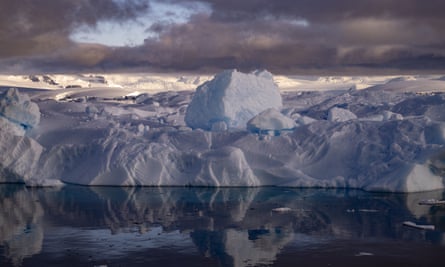
As to the consequences of this meteorological metamorphosis, these could be devastating, researchers warn. If all the ice on Antarctica were to melt, this would raise sea levels around the globe by more than 60 metres. Islands and coastal zones where much of the world’s population now have homes would be inundated.

00:00
03:12
Read More
https://imasdk.googleapis.com/js/core/bridge3.632.0_en.html#goog_822163252
https://imasdk.googleapis.com/js/core/bridge3.632.0_en.html#goog_822163253
https://imasdk.googleapis.com/js/core/bridge3.632.0_en.html#goog_822163254
Such an apocalypse is unlikely to occur for some time, however. Antarctica’s ice sheet covers 14m square kilometres (about 5.4m square miles), roughly the area of the United States and Mexico combined, and contains about 30m cubic kilometres (7.2m cubic miles) of ice – about 60% of the world’s fresh water. This vast covering hides a mountain range that is nearly as high as the Alps, so it will take a very long time for that to melt completely, say scientists.
Nevertheless, there is now a real danger that some significant sea level rises will occur in the next few decades as the ice sheets and glaciers of west Antarctica continue to shrink. These are being eroded at their bases by warming ocean water and could disintegrate in a few decades. If they disappear entirely, that would raise sea levels by 5m – sufficient to cause damage to coastal populations around the world. How quickly that will happen is difficult to assess. The Intergovernmental Panel on Climate Change has said that sea levels are likely to rise between 0.3m to 1.1m by the end of the century. Many experts now fear this is a dangerous underestimate. In the past, climate change deniers accused scientists of exaggerating the threat of global warming. However, the evidence that is now emerging from Antarctica and other parts of the world makes it very clear that scientists did not exaggerate. Indeed, they very probably underrated by a considerable degree the threat that now faces humanity.
“The picture is further confused in Antarctica because, historically, we have had problems getting data,” added Meredith. “We have never had the information about weather and ecosystem, compared with the data we get from the rest of the world, because the continent is so remote and so hostile. Our records are comparatively short and that means that the climate models we have created, although very capable, are based on sparse data. They cannot capture all of the physics, chemistry and biology. They can make predictions that are coherent but they cannot capture the sort of extremes that we’re now beginning to observe.”
The woes facing Antarctica are not merely of human concern, however. “We are already seeing serious ecological impacts that threaten to spread through the food chain,” said Prof Kate Hendry, a chemical oceanographer based at the British Antarctic Survey.
A critical example is provided by the algae which grow under and around sea ice in west Antarctica. This is starting to disappear, with very serious implications, added Hendry. Algae is eaten by krill, the tiny marine crustaceans that are one of the most abundant animals on Earth and which provide food for predators that include fish, penguins, seals and whales. “If krill starts to disappear in the wake of algae, then all sorts of disruption to the food chain will occur,” said Hendry.
The threat posed by the disappearance of krill goes deeper, however. They play a key role in limiting global warming. Algae absorb carbon dioxide. Krill then eat them and excrete it, the faeces sinking to the seabed and staying there. Decreased levels of algae and krill would then mean less carbon from the atmosphere would be deposited on the ocean floor and would instead remain near the sea surface, where it would return to the atmosphere.
“They act like a conveyor belt that takes carbon out of the atmosphere and carries it down to the deep ocean floor where it can be locked away. So if we start messing with that system, there could be all sorts of other knock-on effects for our attempts to cope with the impact of global warming,” added Hendry. “It is a scary scenario. Nevertheless that, unfortunately, is what we are now facing.”
Another victim of the sudden, catastrophic warming that has gripped the continent is its most famous resident: the emperor penguin. Last year the species, which is found only in Antarctica, suffered a catastrophic breeding failure because the platforms of sea ice on which they are born started to break up long before the young penguins could grow waterproof feathers.
“We have never seen emperor penguins fail to breed, at this scale, in a single season,” said Peter Fretwell, of the British Antarctic Survey. “The loss of sea ice in this region during the Antarctic summer made it very unlikely that displaced chicks would survive.”
Researchers say that the discovery of the loss of emperor penguins suggests that more than 90% of colonies will be wiped out by the end of the century, if global warming trends continue at their current disastrous rate. “The chicks cannot live on sea ice until they have fledged,” said Meredith. “After that, they can look after themselves. But the sea ice is breaking up before they reach that stage and mass drowning events are now happening. Colonies of penguins are being wiped out. And that’s a tragedy. This is an iconic species, one that is emblematic of Antarctica and the new vulnerability of its ecosystems.”
The crisis facing the continent has widespread implications. More than 40 nations are signatories of the Antarctic Treaty’s environmental protocol, which is supposed to shield it from a host of different threats, with habitat degradation being one of the most important. The fact that the continent is now undergoing alarming shifts in its ice covering, eco-systems and climate is a clear sign that this protection is no longer being provided.
“The cause of this ecological and meteorological change lies outside the continent,” added Siegert. “It is being caused because the rest of the world is continuing to emit vast amounts carbon dioxide.
“Nevertheless, there is a good case for arguing that if countries are knowingly polluting the atmosphere with greenhouse gases, and Antarctica is being affected as a consequence, then the treaty protocol is being breached by its signatories and their behaviour could be challenged on legal and political grounds. It should certainly make for some challenging meetings at the UN in the coming years.”
 Exposing the Big Game