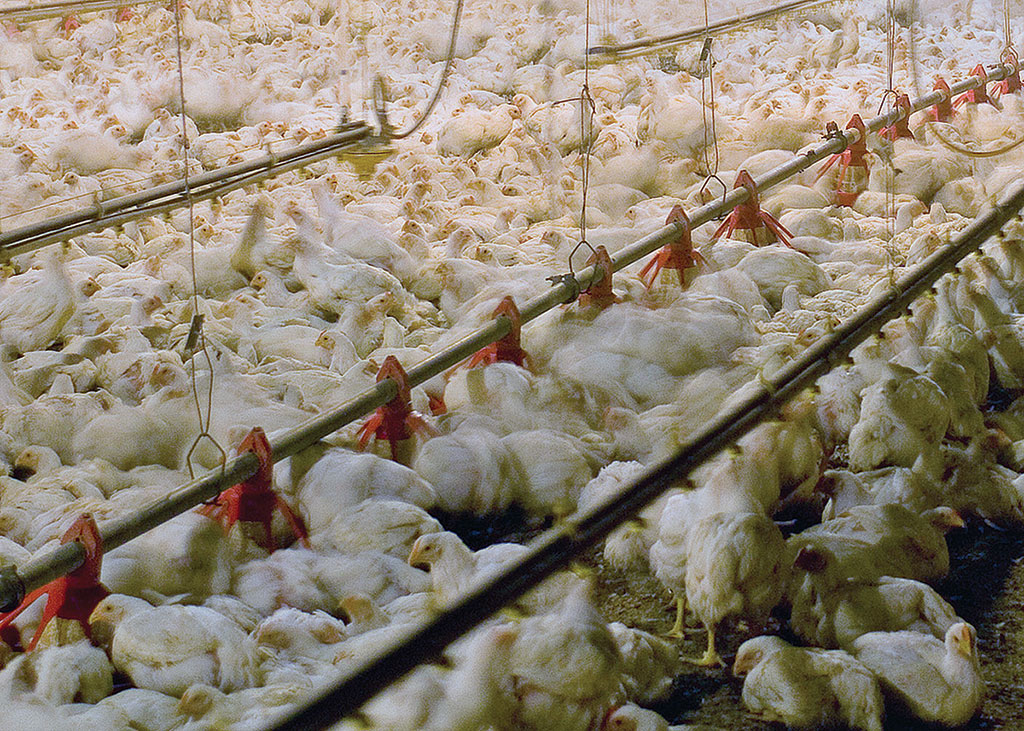
Article summary: Since 2021, a highly lethal form of avian influenza (H5N1) has spread globally, resulting in the deaths of millions of birds and significant economic losses for poultry farmers in the United States. The US Department of Agriculture paid over half a billion dollars in indemnification to poultry producers such as Tyson and Jennie-O who were required to cull their flocks due to the outbreak. These payments at the expense of US taxpayers, reinforce industrial farming methods, which produce concentrated animal waste and create environments conducive to pathogen mutation.
“Critics say the program also promotes animal cruelty by allowing farmers to euthanize their flocks by shutting down a barn’s ventilation system and pumping in hot air, a method that can take hours. Chickens and turkeys that survive are often dispatched by a twist of the neck.”
Please take the time to read and advocate for the birds by submitting a comment at the bottom of the article. Update: Comments are closed, but you can still submit a letter to the editor at letters@nytimes.com.
Experts have raised alarm over the potential threat of a bird flu pandemic, warning that it could be ‘100 times worse than Covid’ and potentially lead to fatalities in up to half of those infected.
The concerns were raised during a recent briefing where researchers discussed on the H5N1 strain of bird flu. They expressed apprehension that the virus may be approaching a critical threshold that could spark a global pandemic, according to a report by UK-based tabloid Daily Mail.
During the briefing, Dr. Suresh Kuchipudi, a prominent bird flu researcher in Pittsburgh, warned that H5N1 has the potential to cause a pandemic, given its ability to infect a range of mammalian hosts, including humans, stating, “we are getting dangerously close to this virus potentially causing a pandemic.”
‘We are not really talking about a virus that is yet to make a jump, we are talking about a virus that is globally present, already infecting a range of mammals and is circulating… It is really high time that we are prepared,” he added.
John Fulton, a pharmaceutical industry consultant and founder of Canada-based pharmaceutical company BioNiagara, echoed these concerns, emphasising the severity of a potential H5N1 pandemic and suggesting it could be far deadlier than Covid-19.
“This appears to be 100 times worse than Covid, or it could be if it mutates and maintains its high case fatality rate. Once it’s mutated to infect humans, we can only hope that the [fatality rate] drops,” Fulton stated.
According to the World Health Organization (WHO), 52 out of every 100 people diagnosed with H5N1 bird flu have died since 2003, with a total of 462 deaths out of 887 cases. In contrast, the current fatality rate for Covid is less than 0.1 percent. However, at the start of the pandemic, it was around 20 percent.
FIRST CASE OF HUMAN INFECTION FROM MAMMAL
The latest development comes after a poultry facility in Michigan and an egg producer in Texas in the US reported outbreaks of avian flu this week. Additionally, reports have surfaced of infected dairy cows and the first documented case of a human contracting bird flu from a mammal.
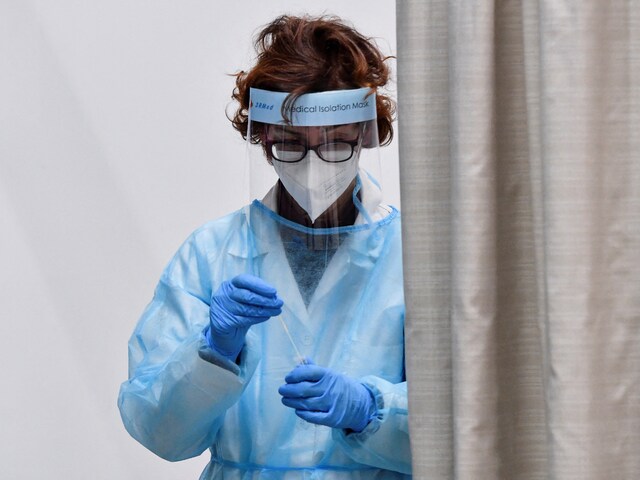
The US Centers for Disease Control and Prevention (CDC) confirmed an H5N1 infection in a dairy farm worker in Texas, prompting the White House to initiate ‘close monitoring’.
This marks the first instance of a person contracting bird flu from dairy cattle, contrasting with a previous case in Colorado in 2022, where an individual tested positive for bird flu after direct exposure to poultry and subsequent bird culling.
The virus has rapidly spread among dairy herds in five states across the country — Idaho, Kansas, Michigan, New Mexico, and Texas — affecting millions of animals on both land and sea.
Although US health officials said that the risk to the public remains low, there is mounting concern, in part due to news of an outbreak reported by the largest producer of fresh eggs in the country.
What is H5N1?
According to a report by Live Science, H5N1 is a subtype of avian influenza A, a group of related bird flu viruses. It’s considered highly pathogenic because it causes severe and often fatal illness in poultry. While it mainly affects birds, H5N1 can also infect wild birds and occasionally mammals, including humans. In non-bird species, the disease can be fatal, but some cases may be mild or show no symptoms.
SEQUIM, Wash. — This week Clallam County investigators seized 240 animals from a property outside the Sequim city limits.
The owner of the property, a 51-year-old woman, was placed under arrest for investigation of second-degree animal cruelty.
Investigators said the creatures were living in “deplorable conditions.”
“I was greeted by five dogs – one had an obvious cut to his side,” said Amy Bundy, Clallam County chief criminal deputy. “One had blood on his body. We didn’t know what from.”
The animals were brought to Center Valley Animal Rescue in Quilcene where the sheer volume has overwhelmed the staff.
“They’re all in rough shape,” said Sara Penhallegon, director of Central Valley Animal Rescue. “They’re malnourished. Many have injuries and they’re needing a lot of medical care. We had to put two animals down.”
It was the second time in two years the Todd Road property was raided.
The last was in January of 2022 when investigators found the same exact situation – hundreds of animals, even an emu being neglected.
The owner of the property was arrested back then, as well.
A total of 478 animals were confiscated in the two raids.
Police said the suspect was able to amass so many animals a second time because that first case is still being reviewed by a special prosecutor with the State Attorney General’s office.
Bundy believes the cases likely involve mental health issues.
“I think there is a failure to recognize the conditions in which the animals are living,” Bundy said. “I think she’s doing her best, but not really able to see that it’s not an acceptable way to keep animals.”
“This is why we need to arrest and prosecute these people,” Penhallegon said. “We need to make it so she can’t own animals again.”
Penhallegon said most of the animals, including dozens of chickens, were living inside the woman’s home.
“My initial response was it is sad,” Bundy said. “It’s a sad situation for the animals and a sad situation for her.”
Workers at Center Valley were seizing, processing and treating the animals from 8 a.m. Tuesday until 4:00 a.m. on Wednesday.
The situation is putting a terrible strain on the animal rescue’s staff and budget.
Penhallegon said the operation will cost the center tens of thousands of dollars and it will need help from the community.to treat all of the animals. You can donate here.
“We’re so sad for the animals, but we’re so angry that they got put in this position in the first place,” Penhallegon said.
The suspect faces two counts of second-degree animal cruelty.
KING 5 News has learned state prosecutors expect to charge her by the end of the month. She could end up facing a judge in a Clallam County mental health court.
We have not named the suspect because she has not been formally charged.
News that H5N1 avian influenza has breached another mammalian species — this time dairy cows — has taken the flu science community aback. Though cows previously had been seen to be susceptible to human flu viruses, and could be experimentally infected with H5 in a lab, the absence of cow involvement until now in H5’s nearly 30-year history lulled scientists into thinking the species was outside the virus’s remit.
Further elevating the concern this discovery has triggered is the fact that a dairy farm worker in Texas was infected with H5N1, though the unnamed individual’s only symptom was conjunctivitis.
To put these developments in perspective, STAT turned to Dutch virologist Ron Fouchier, a leading expert on H5N1, for his assessment of these latest twists in the H5 saga. Fouchier, who studies avian influenza at the Erasmus Medical Center in Rotterdam, was at the center of a controversy about H5N1 in 2012, when a U.S. scientific advisory group moved to restrict publication of research he and a team at the University of Wisconsin-Madison had done — separately — to see what mutations would be needed for the virus to be able to spread efficiently among people, so-called gain of function research.
Fouchier takes little solace from the fact that current versions of H5N1 seem to infect people less frequently, and to cause mostly mild illness when they do. The global range of H5 viruses — the sheer volume of the virus in nature — and the numbers of mammals H5 has shown itself capable of sickening is unprecedented, he said, making anticipating its future path harder than ever to gauge.
(Note: A zoonosis or zoonotic event is the infection of a person with an animal virus, in this case H5N1. Reassortment is a process by which flu viruses swap genes in an infected species, giving rise to hybrid viruses that could behave differently than their parent viruses.)
Is it possible that we’ve seen the H5N1 evolve to become more dangerous to a bunch of other species, but less dangerous to us?
It’s what I’d like to think.
In the years after the first human cases of infections in Hong Kong in 1997 right up to 2015, we saw relatively large numbers of zoonotic events with H5N1, ending in 2015, with very large numbers in Egypt. There were quite large numbers of human cases, despite restricted replication of the virus around the globe.
Then, from 2014 onwards, the virus really started to spread massively with wild birds into Europe, crossing over into the U.S. two times now, also landing in Africa, spreading throughout Asia, all in wild migratory birds. We’ve never seen such big outbreaks all across Europe and the Americas. And we see the number of zoonotic events decrease.
You have massive outbreaks in wild birds. It spreads over into poultry quite easily. But in humans we see lower numbers, and that to me suggests that the zoonotic risk has decreased. And I am more or less supported by that by noticing that in the Western world — in England, in Russia, and in the U.S. — most of the [human] cases that we have seen were not particularly severe.
After 2015, one thing that has happened is that these H5 viruses have continuously reassorted with wild bird avian influenza viruses. So what I think has happened is that these viruses are now better adapted to wild birds, but less adapted to poultry and to humans.
That increases the environmental load of virus on occasion. There’s different species, time and time again, where you see massive bursts of virus. And carnivores, they feast on [dead birds]. It could also increase the environmental virus load on grasslands where birds poop or in surface waters. And that could increase the risk even to non-carnivorous mammals like goats or cows.
That kind of gives me a feeling of reassurance.
It just provides an explanation where you wouldn’t have to really take into account yet an increased zoonotic risk.
Of course, when we see this virus in a milking farm and you see incredibly high virus load in some milk cows and their milk, that is a new risk. Because I’m not sure how familiar you are with the milking procedures, but there’s very little that people do to prevent human contact with milk. During the milking process, there’s massive generation of aerosol formation. If you have high amounts of aerosol with virus, the chances increase that you will get conjunctivitis.
There’s very little hygiene to protect the farmers that are milking. If people aren’t washing their hands a lot and somebody’s infected with conjunctivitis, you could see how that could spread, couldn’t you?
Yes. The majority of cases then were conjunctivitis cases. There were very few respiratory illnesses, except for that one fatal case. But the cases of conjunctivitis were linked to direct contact with poultry, and not with human-to-human transmission.
There was only one investigation where two household members got conjunctivitis, and they shared a towel to wash their face. I think it is not very likely that you will see massive spread of conjunctivitis due to avian influenza. I don’t think that it’s likely that it will spread human to human. It’s more likely that it will spread from the animal source into humans.
I think you disagreed earlier when I used the word “reassuring.” But to me this pattern of becoming much better at infecting wild birds, and seemingly less inclined to infect people seems reassuring.
Well, let me explain why I don’t think it’s too reassuring.
We have never seen this scale of infections in mammals, and in such diversity of mammals. We have now seen more than 40 species of mammals infected during the last outbreaks, which is unprecedented. We know that flu is unpredictable. But we also know that adaptation of virus to mammals is not a good thing.
Many of the adaptive mutations that you see occur when H5 has infected marine mammals, or foxes or martens or minks have been seen with the viruses that caused previous human pandemics. And that I find not reassuring. And with 40 species happening at the same time all over the world, sometimes with little option to intervene, that is not so reassuring to me.
What do you mean by options to intervene?
Well, if there are infections in cows, we can offer personal protective equipment to the milkers and we can offer antiviral drugs to people who start to develop symptoms or conjunctivitis. But when tens of thousands of seals wash up on your shore, what are you going to do? And how are you going to prevent onward spread?
And these are the animals that we see. What about the animals that we don’t see so easily, like rats or mice? What’s happening? The large species we now know get infected easily. But the small species, we don’t even know.
And so the high presence in nature, and the large number of infections I find concerning, despite the fact that we think current zoonotic risk is low. And that’s because these viruses are changing. And we have no experience [of how H5 behaves] in all these species. We can’t predict what’s going to happen.
One of the things H5 has taught me is that it’s ever-changing, and just because it seems to infect people less frequently right now, that doesn’t mean it’s always going to be that way.
Also the fact that the first human now is diagnosed with conjunctivitis is not a guarantee. There’s a small chance that if you have an infection in the eye, that you will actually get virus also in your respiratory tract. And then we know that if the virus ends up in your lower airways, you could develop pneumonia.
One case in a farmer who only develops conjunctivitis is not a reason to celebrate the fact that this virus is not virulent. Let’s be careful now, and monitor the people and treat them with drugs as soon as you see that there’s something more happening.
What are you working on now? What are you looking for?
I would like to know if there is indeed decreased zoonotic risk through the reassortment patterns.
How do you investigate that question?
We identified reassortment patterns. And then we take one of the earlier parental viruses that didn’t spread so well in wild birds and compare it to the current versions and inoculate different bird species, including ducks, or cell cultures. And you can look for all of the different variants, and how they vary in their replicative capacity in wild birds.
We can inoculate human organoid cells and see how permissive the cells are to the different variants, whether the early Asian variants that caused many zoonoses, whether they were, in fact, more prone to infect human tissue than the current viruses.
And if you see those same opposing patterns — so more adaptation to wild birds, less efficient in infecting human cells — that would explain the current situation compared to what we’ve seen before.
But of course, it’s important to note that we’re all doing our research with our hands tied behind our back because of the gain-of-function issues. We have to be careful in what we do and how we design the experiments. So we can take natural viruses and show that the old viruses were less likely to infect wild birds and more likely to infect human cells, and the current virus is the other way around. But really getting to the bottom of things is getting harder and harder.
Is there anything you’ve been waiting for a chance to say but I haven’t asked the right question to elicit it?
Well, the questions are really about what’s going on with the cows. And U.S. scientists and officials are hopefully going to resolve that quickly. How does this virus enter cows?
If there is cow-to-cow transmission, how does it work? It’s clear that it’s dairy cows, and it could be that it’s due to the milking instruments that do not get cleaned enough. It’s human driven cow-to-cow transmission. And if that’s the case, you can stop it. You can try to actually clean your machine. So I’m really looking forward to in-depth investigations, epidemiological investigations of how the cows get this disease.
It could also be from a common feeding source. So what are these cows being fed? Do they eat fresh grass? Do they eat hay from a common source that has been contaminated by birds being out there? I think this is really crucial information, because this is going to lead to what are the options to stop this outbreak.



 Exposing the Big Game