On March 29 near Lookingglass Hatchery in northeast Oregon, a fish tanker truck was involved in an accident while transporting approximately 102,000 spring Chinook smolts for release in the Imnaha River.
The ODFW employee who was driving the truck is safe but received minor injuries. The accident occurred on a sharp corner with the 53-foot truck rolling onto the passenger side, skidding on its side on the pavement, and then going over a rocky embankment causing it to roll onto its roof.
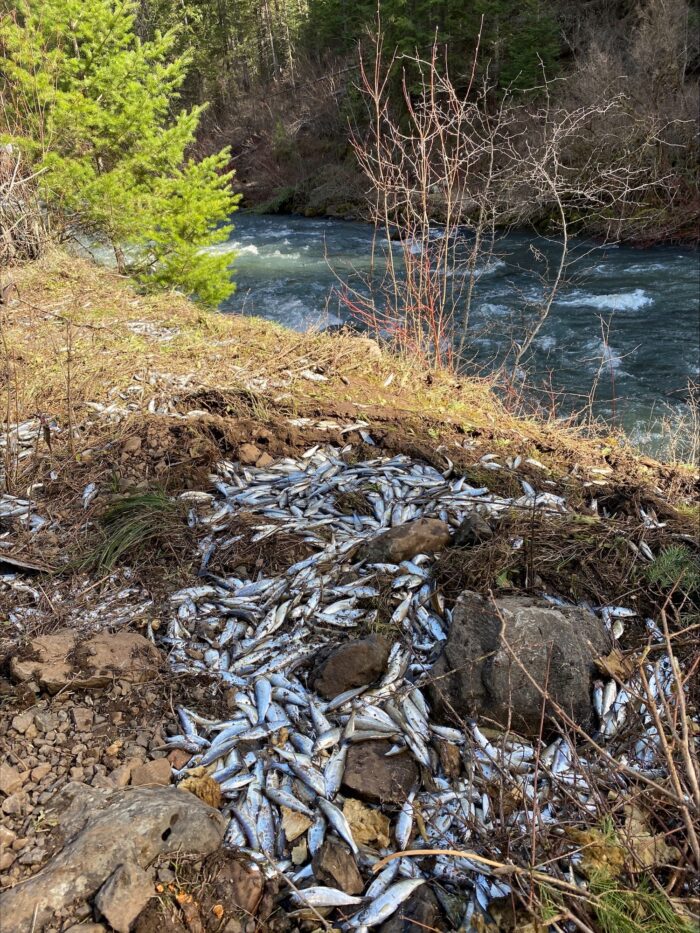
The accident occurred alongside Lookingglass Creek, a tributary of the Grande Ronde River. About 77,000 smolts made it into the creek when the tanker overturned but 25,529 smolts died and their carcasses were recovered either in the tanker or on the streambank.
The Union County Sheriff’s department responded immediately and assisted with on-scene assessments and vehicle recovery operations. Small amounts of diesel fuel were quickly contained and did not result in a hazardous material spill response.
Lookingglass Hatchery raises spring Chinook as part of hydropower mitigation under the Lower Snake River Compensation Plan, for tribal and sport harvest, and to supplement the wild population on the Imnaha which is listed as Threatened.
ODFW also notified fishery co-managers, the Nez Perce Tribe (NPT), and the Confederated Tribes of the Umatilla Indian Reservation (CTUIR) when the incident occurred. NPT staff responded and provided additional assistance by helping to collect, count and scan dead fish for PIT tags (Passive Integrated Transponders). Information collected from PIT tags, including those that weren’t released, will help ensure the best possible estimates of survival and future adult returns.
The smolts lost represent about 20 percent of the total that will be released into the Imnaha River this year. Fishery managers expect to see about 500-900 fewer adult fish returning in 2026 and 2027 due to the loss. The 77,000 fish that made it into Lookingglass Creek will likely return there and produce approximately 350-700 additional adults.
“We are thankful the ODFW employee driving the truck was not seriously injured, said Andrew Gibbs, ODFW fish hatchery coordinator for Eastern Oregon. “This should not impact our ability to collect future brood stock or maintain full production goals in the future.”
Summary: Dogs possess a ‘g factor’ akin to humans, illuminating the hierarchical structure of canine intelligence and its implications for aging. By evaluating 129 family dogs over two and a half years, the team identified broad cognitive domains—problem-solving and learning ability—that interlink to form a canine general cognitive factor.
This ‘g factor’ not only correlates with traits like exploratory behavior, novelty interest, and trainability but also declines with age, particularly in dogs with poorer health. These findings not only advance our comprehension of canine cognition and its parallels with human intelligence but also underscore the potential of dogs as model species for aging research.
Key Facts:
The study reveals dogs have a general cognitive factor (‘g factor’) that mirrors the hierarchical organization of human intelligence, encompassing problem-solving and learning abilities.
Higher ‘g factor’ scores in dogs are associated with greater exploratory behavior, novelty interest, and better performance in new learning situations, similar to humans.
Canine cognitive abilities decline with age, with health status significantly influencing the rate of decline, highlighting parallels between canine and human aging patterns.
Source: ELTE
The quest to understand intelligence and unravel the workings of the mind has always been considered the holy grail of natural sciences. While we’re still uncovering many mysteries, animals can provide valuable insights into the origins and organisation of both mind and intellect.
In their latest, study researchers at the Department of Ethology at Eötvös Loránd University (ELTE) discovered that dogs may possess a key component of intelligence known as the ‘g factor’. Importantly, this factor shares many characteristics with its human counterpart, including its ageing patterns.
These findings could bring us closer to understanding how dog (and human) cognition is organised, and how cognitive decline progresses with age.
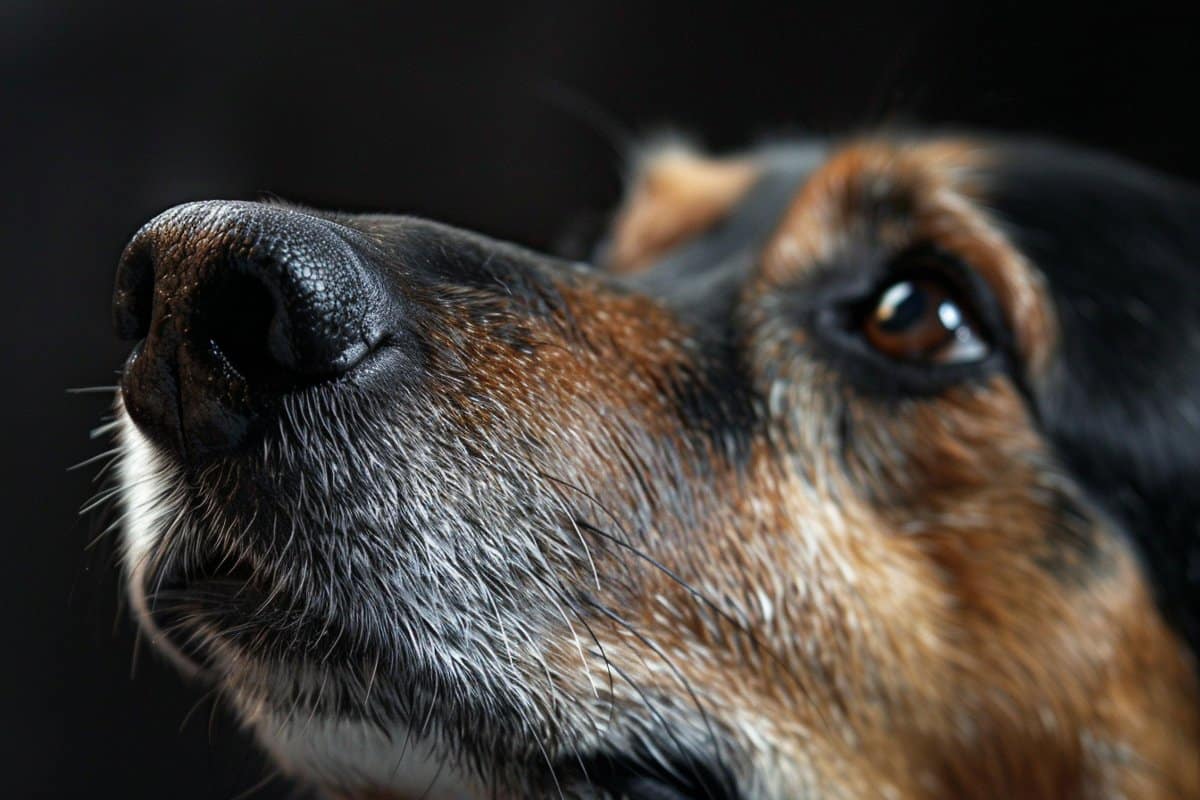
These findings confirmed that the ‘canine g factor’ resembles the human g factor not only in the structure but also in external correlations. Credit: Neuroscience News
In humans, success in various cognitive tests tends to correlate positively; individuals who e.g. excel in math may also ace their literature essay. Human cognitive abilities are thus somewhat centralised, but also organised hierarchically, from specific task performances to broader cognitive domains. At the apex of this hierarchy lies the so-called general cognitive factor, or the ‘g factor’.
This ‘g factor’ is a fundamental component of intelligence, it encompasses and influences all underlying cognitive abilities, and is also closely related to academic, workplace, and career success.
In their latest research, researchers at the Department of Ethology at ELTE inquired about the existence of such a general cognitive factor in the case of dogs.
‘The cognitive and socio-cognitive performance of dogs is a highly popular topic in scientific literature, yet most studies are comparative, focusing on how well dogs perform as a species.
Surprisingly, these studies have largely overlooked the individual differences in specific skills and the reasons behind them.
As a result, we know very little about how dogs’ cognitive abilities are structured,’ said Borbála Turcsán, one of the lead authors of the study published in GeroScience.
To investigate this, researchers compiled a series of seven tasks to assess the cognitive performance of 129 family dogs aged between three and fifteen years, tracking them over two and a half years. The performances in these tests formed a hierarchical structure similar to the one seen in human cognition.
Researchers identified two broad cognitive domains: Independent problem-solving, which included tests of persistence, problem-solving, and memory, and Learning ability, which encompassed associative learning and one-trial learning tests.
These domains were interconnected, indicating that dogs with better problem-solving skills generally learned new tasks more quickly, confirming the existence of a higher-order, general cognitive factor that ties them together. Drawing from human literature, the authors referred to this as the ‘canine g factor.’
The researchers were not satisfied with just finding the ‘canine g factor’; they also wanted to confirm if it has a predictive power similar to that described for g in humans.
‘To confirm that we have indeed identified the general cognitive factor, we examined whether this factor correlates with individual characteristics known from the literature of humans and other animal species to be associated with the ‘g factor,’ explained Tamás Faragó, researcher at the ELTE Department of Ethology.
The results revealed that dogs with high ‘g factor’ scores were more inclined to explore unfamiliar environments, showed greater interest in novelties, and performed better in new learning situations
than dogs with lower scores. Moreover, the dogs’ g score was also related to their personality which was measured using a questionnaire filled out by the dog owners. High ‘g factor’ score was associated with higher levels of activity, training level, and trainability.
These findings confirmed that the ‘canine g factor’ resembles the human g factor not only in the structure but also in external correlations.
In addition to the numerous parallels between canine and human g factors, exploring the correlations of canine cognitive abilities has opened new perspectives in the field of ageing research. ‘It is well-known that as dogs age, their attention, learning ability, and memory naturally decline.
“However, if cognitive abilities are interconnected, it’s plausible that their decline with age is not independent but rather linked to a common underlying factor behind the deterioration of various abilities,’ – emphasised Zsófia Bognár, PhD student, the other lead author of the study.
The researchers also tracked the changes in the dogs’ cognitive performance over two and a half years and based on this longitudinal assessment they demonstrated that indeed, there is a global cognitive decline, the ‘canine g factor’ score decreased with age.
However, this decline was influenced by the health status of the dogs: dogs in poorer health exhibited a faster decline in the ‘g factor’ value with age, whereas no significant change with age was observed in dogs in good health.
While this global decline affected all cognitive abilities, the results also revealed that age-related changes in memory and associative learning abilities are influenced by other factors, leading to diverse ageing dynamics.
“This aging-pattern resembles human aging, and it is an important finding for later efforts to identify the molecular and neurological causes of cognitive decline.”
‘This new research highlights intriguing parallels between human and canine ageing, further strengthening the argument that dogs serve as an excellent model species for aging research,’ – emphasised Enikő Kubinyi, leader of the MTA-ELTE Companion Animal Research Group and the Senior Family Dog Program.
‘Moreover, our findings support the existence of the ‘canine g factor’, suggesting that dogs can also help in understanding the evolution and background of human intelligence.’
About this animal intelligence research news
Author: Sara Bohm Source; ELTE Contact: Sara Bohm – ELTE Image: The image is credited to Neuroscience News
NBC Universal, Inc.Avian influenza or bird flu is a disease that naturally spreads among wild aquatic birds worldwide, as well as domestic poultry and other bird and animal species.
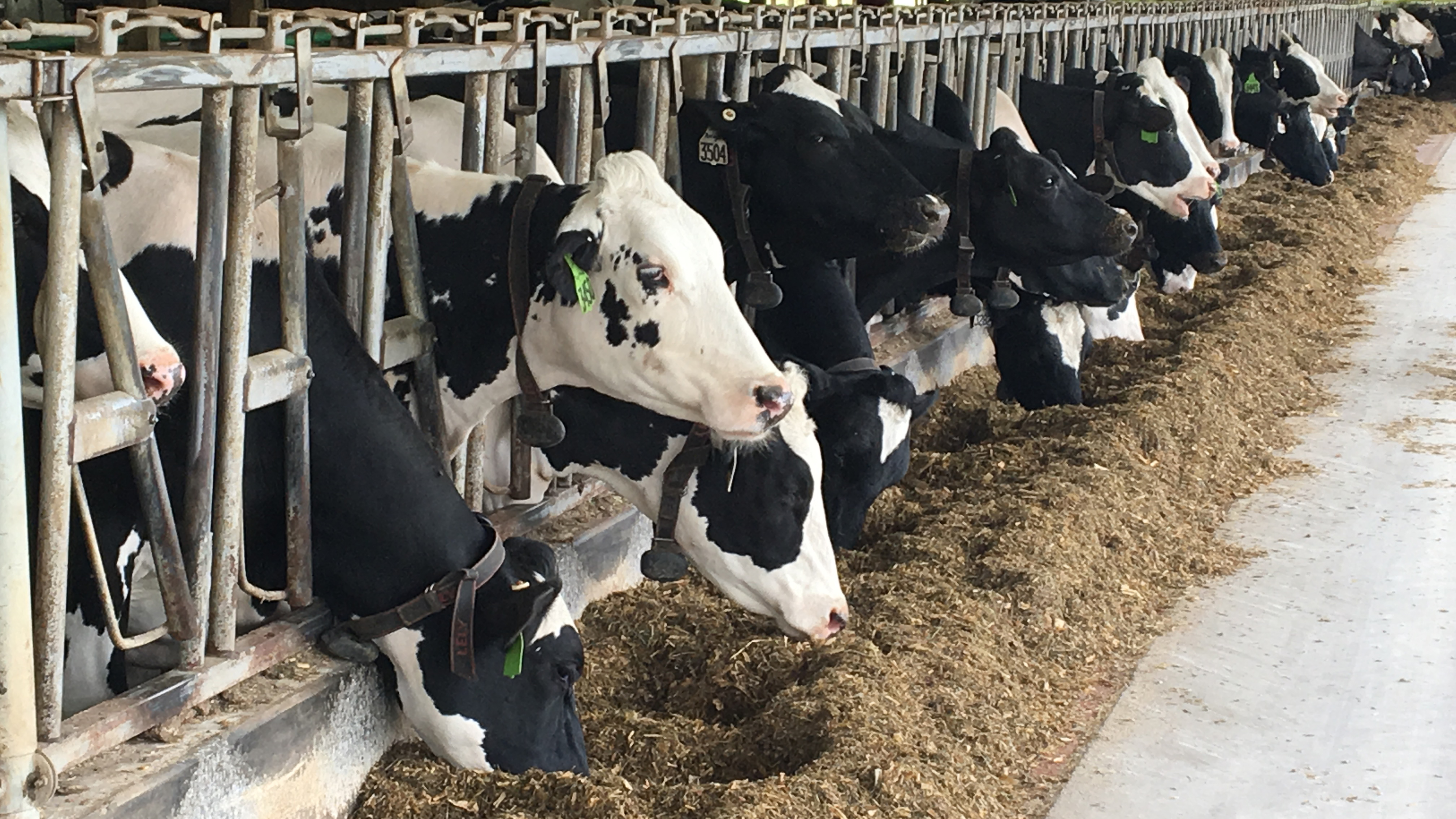
The largest producer of fresh eggs in the United States said Tuesday that it has stopped production at a Texas plant after bird flu was found in chickens there.
Ridgeland, Mississippi-based Cal-Maine Foods, Inc. said in a statement that approximately 1.6 million laying hens and 337,000 pullets, about 3.6% of its total flock, were destroyed after the infection, avian influenza, was found at the facility in Parmer County, Texas.
This is absolutely devastating news for Cal-Maine and the entire Panhandle region which has already suffered so much already. Given this latest development, all producers must practice heightened biosecurity measures. The rapid spread of this virus means we must act quickly.Commissioner Sid Miller, Texas Department of Agriculture
The plant is on the Texas-New Mexico border in the Texas Panhandle about 85 miles southwest of Amarillo and about 370 miles northwest of Dallas.
“The company continues to work closely with federal, state and local government officials and focused industry groups to mitigate the risk of future outbreaks and effectively manage the response,” according to the statement. “Cal-Maine Foods is working to secure production from other facilities to minimize disruption to its customers.”
The company said there is no known bird flu risk associated with eggs that are currently in the market and no eggs have been recalled. Miller echoed the statement, saying the risk to the public is minimal.
“The current risk to the public remains minimal,” Miller said. “It is important for us as an industry to maintain a high level of vigilance. State and national agencies will continue to provide updated guidance as developments warrant.”
The announcement by Cal-Maine comes a day after state health officials said a person had been diagnosed with bird flu after being in contact with cows presumed to be infected, and that the risk to the public remains low.
The human case marks the first known instance globally of a person catching this version of bird flu from a mammal, federal health officials said.
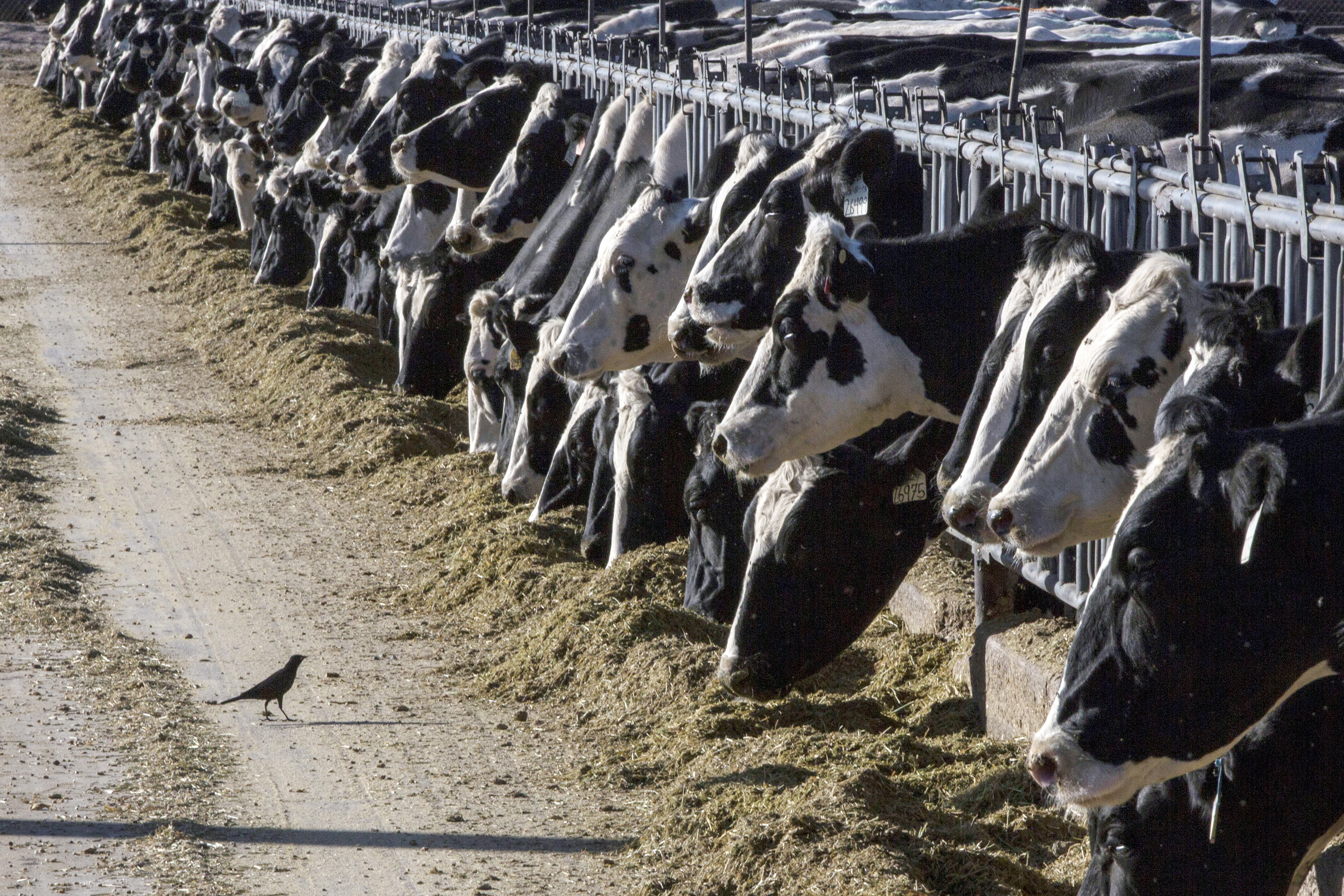
Dairy cows in Texas and Kansas were reported to be infected with bird flu last week — and federal agriculture officials later confirmed infections in a Michigan dairy herd that had recently received cows from Texas.
Cal-Maine sells the majority of its eggs in the Southwestern, Southeastern, Midwestern and mid-Atlantic regions of the United States, the company said.
Federal authorities are downplaying the public health risk after the second ever case of a human contracting the “highly pathogenic” bird flu in the United States was confirmed in Texas on Monday.
The infected man was exposed while he worked as a dairy worker, the Texas Department of State Health Services said. The person had minor symptoms but has received treatment, state health officials said.
“This infection does not change the H5N1 bird flu human health risk assessment for the U.S. general public, which CDC considers to be low,” the Centers for Disease Control and Prevention (CDC) said in a statement on Monday.
The CDC added that people with “close or prolonged, unprotected exposures to infected birds or other animals (including livestock), or to environments contaminated by infected birds or other animals” are at greater risk of infection.
USDA has confirmed infections of dairy cattle herds in five states — Texas, Kansas, Michigan, New Mexico — with results in Idaho “presumed” to be positive.
Bird flu, also known as H5N1 or avian influenza, has ravaged billions of dollars of poultry across the world, but mass infections of cattle — and human infections — are rare.
The avian flu’s modern history in humans begins in China in 1996, where it spread from geese to people in Hong Kong the following year. In a two month period, it killed a third of the 18 people it infected, according to the CDC.
The Hong Kong outbreak showed for the first time that the virus could transmit from birds to humans directly. Direct, prolonged contact with or consumption of infected birds has often explained avian flu transmission in the nearly three decades since.
However, cases of humans contracting the disease since have been sporadic and isolated. The worst fear among public health experts is human-to-human transmission of the virus, which has yet to occur.
The infection of the Texan dairy worker is the second–ever infection in the U.S., but the first contracted from cattle.
In 2022, a Colorado prisoner, participating in a work program at a poultry facility, contracted the virus after killing infected birds.
Neither the Texas dairy worker nor the Colorado prisoner experienced serious symptoms, and both have recovered after treatment, according to the CDC.
Record outbreak among poultry
In the U.S, the highly pathogenic avian influenza (HPAI) has spread to affect 82 million birds in 48 states, resulting in massive culls of commercial poultry and billions of dollars in losses — the worst outbreak of bird flu in U.S. history, according to the USDA.
Just a day after the dairy worker infection, Cal-Maine Foods, a major poultry producer, was ordered to “depopulate” nearly 2 million chickens after a positive test for HPAI at their facility in Farwell, Texas.
Sid Miller, commissioner of the Texas Department of Agriculture, ordered the plant’s temporary closure and called on producers to act.
“Given this latest development, all producers must practice heightened biosecurity measures. The rapid spread of this virus means we must act quickly,” he said.
Because the virus is an influenza variant with a “natural reservoir” in wild aquatic birds, it is impossible to eradicate and zoonotic infections will continue, according to the World Health Organization (WHO).
The CDC has labeled the risk to the public “low” after finding no mutations for human transmission, and has said commercial products like milk, eggs and poultry remain safe.
The spread of avian influenza has public health officials on guard.
WHO has called for extensive monitoring of all cases of HPAI, animal or human, for signs that it may be mutating to threaten humans.
“The emergence of an influenza A virus with the ability to infect people and sustain human-to-human transmission could cause an influenza pandemic,” WHO said. “[The] human population has little to no immunity against the virus,” it added.
The CDC has recommended people practice good hygiene, avoid sick or dead animals, animal fecal matter and consumption of untreated or uncooked animal products like raw milk or raw eggs.
Sumatran tigers are the only endemic tigers left in Indonesia.Image credit: Tom Lee via Flickr (CC BY-NC-ND 2.0)
Once declared extinct, a type of Indonesian tiger may still be around, recent DNA analysis has tentatively suggested. Much more research is needed to be certain, but conservationists say there is now a glimmer of hope the Javan tiger could still be out there, roaming the island’s forests.
The Javan tiger (Panthera tigris sondaica) was categorized as Extinct on the IUCN Red List back in 2008. Since then, there have been a handful of potential observations, each without substantiative evidence to back them up. However, in 2019, locals sighted what they thought was a Javan tiger near the village of Cipendeuy in the forest of South Sukabumi, West Java, alongside footprints and claw marks. They collected a single hair from a nearby fence.
Analysis of this hair points towards it belonging to a Javan tiger, although further research is needed to confirm its existence. “Whether the Javan tiger actually still occurs in the wild needs to be confirmed with further genetic and field studies,” the team concludes in their study.
Still, the prospect has stirred public interest, and even efforts among Indonesian conservationists to investigate whether this “extinct” big cat is indeed still alive and kicking.
“The research has sparked speculation that the Javan tiger is still in the wild,” Satyawan Pudyatmoko, the Indonesian ministry official who oversees conservation, told Reuters. “We have prepared and will prepare efforts to respond to it.”
According to Reuters, these include setting up camera traps and conducting extensive DNA sweeps, as well as seeking advice from genetics experts to identify any that may remain in the wild.
The Javan tiger was native to Indonesia, one of three subspecies of tiger formerly found in the country. In 2013, the Bali tiger (P. tigris balica) was also declared Extinct by the IUCN, leaving just the Sumatran tiger (P. tigris sumatrae) surviving.
Hunting and destruction of habitat are thought to be among the causes of the Javan subspecies’ extinction
In the new research, scientists studied mitochondrial DNA (mtDNA) – maternally inherited genetic material found outside the nucleus – from the hair and compared it with that of a Javan tiger museum specimen, collected in 1930. Hair samples of several tiger subspecies and the Javan leopard (Panthera pardus melas) were used as controls.
“From this comprehensive mtDNA analysis we conclude that the hair sample from South Sukabumi belongs to the Javan tiger, and that it falls in the same group as the Javan tiger museum specimen collected in 1930,” the team write.
Whether or not the subspecies still exists in the wild is another matter. But with the efforts the latest discovery has inspired, we might soon find out – and then, if it turns out there are still some Javan tigers out there, we’ll have to do what we can to protect them.
“If, for example, it is proven that it still exists, it will certainly become a protected animal,” Pudyatmoko told AFP. “It is the obligation of all parties, including the society, to participate in preserving their population.”
Nearly four years ago to the day, as America faced unprecedented challenges, the Forest Service began a rushed and rigged process to undermine the only protections for Eastern Oregon’s largest and oldest trees. Just hours before President Biden’s inauguration, a Trump political appointee signed a decision gutting protections known as “the Screens.”
Oregon Wild, conservation allies, tribes, and scientists all joined the fight and challenged the removal of these protections in court.
Late last Friday, those protections were fully reinstated!
This is a shared victory. In making her ruling, the judge noted the thousands of you who weighed in through comments, as well as our members and supporters who came from across the state to pack the courthouse.
Safeguards of Wildlife, Water, and Climate
Eastern Oregon’s diverse forests are often overlooked, but science is telling us they play a globally important role in the urgent fight against climate change and the biodiversity crisis. One of the safeguards of those important values are known as the Screens.
The Screens prohibit trees over 21” in diameter at breast height (dbh) from being logged in the National Forests of Eastern Oregon and Washington that were not included in the Northwest Forest Plan. They are the most meaningful – and arguably only – protections for big and old trees in those places.
These protections were initially put into place by herculean efforts from environmental champions, including our own Tim Lillebo. After three decades, we know they have effectively protected wildlife habitat, sequestered carbon, and conserved other important values.
Court Cites Public Concern, Restores the Screens
Represented by CRAG Law Center, joined by half a dozen conservation allies, and supported by the Nez Perce Tribe, we took the agency to court for its illegal actions to undermine public process and strip away the protections of the Screens. It was a relief when, last August, a magistrate agreed the agency had violated several of the country’s bedrock environmental laws. He recommended the Screens be reinstated.
However, in a quirk of the justice system, those recommendations had to be formally approved and adopted by another judge. We had to wait until March to know if those recommendations would stick. And they did!
Friday’s ruling affirms a Magistrate Judge’s decision last summer, saying the agency violated numerous bedrock environmental laws, and fully reinstates the Screens.
Threats on the Horizon
Still, we know the fight continues.
Forest Service leadership continues to push for more discretion to do the bidding of their industry collaborators. They may still appeal this case, wasting more time and money.
Even as the Biden Administration works to develop national rules to protect mature and old-growth trees, agency leadership continues to push in the opposite direction.
Specifically, for over six years, regional leadership has been working with an exclusive group dominated by industry allies to change forest plans in Eastern Oregon.
That’s why we hope you’ll sign our petition sending a clear message to the Forest Service that it’s time to do the right thing. We hope they’ll listen. If they don’t, at least we know the courts will.
Greater Hells Canyon Council, Oregon Wild, Central Oregon LandWatch, Great Old Broads for Wilderness, WildEarth Guardians, and the Sierra Club are represented by attorneys Meriel Darzen and Oliver Stiefel from the nonprofit Crag Law Center.



 760Shares
 Top Stories01:12


 Share
Share  Tweet
Tweet Share
Share Share
Share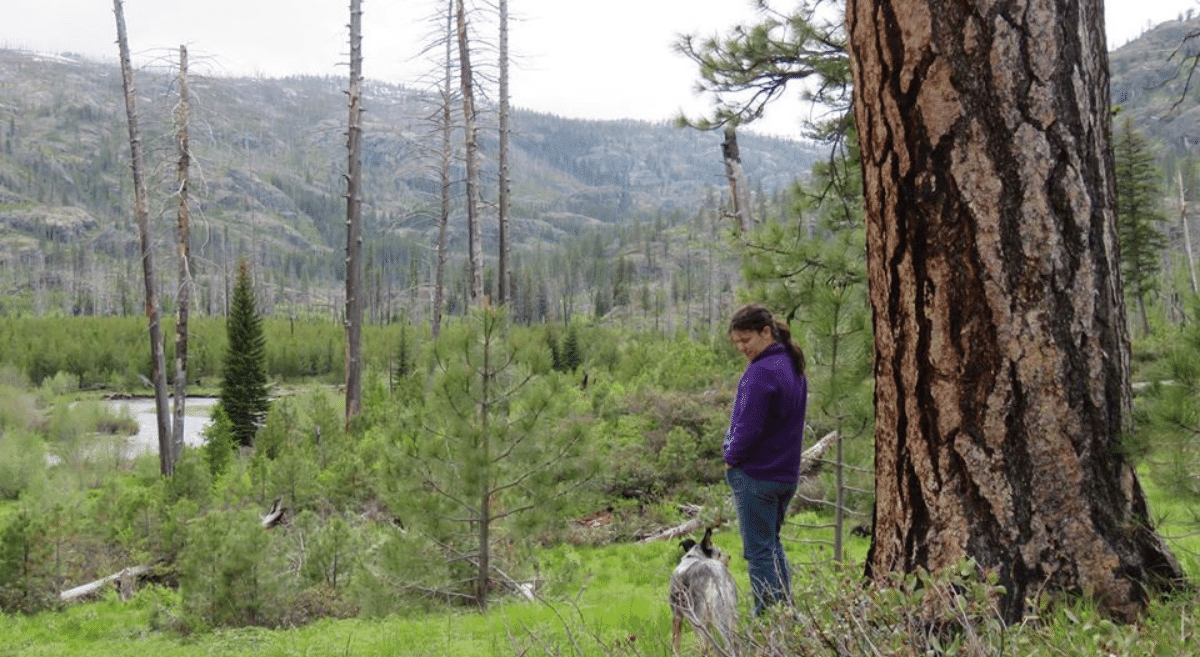
 Exposing the Big Game