
It’s dawn, July 12th, 2012, the day that nearly all 7 billion of the Earth’s human inhabitants decide to start killing wild animals for their dinner. (To be exact, the human population is actually 7,025,629,572, according to the current population clock…but who’s counting?)
All at once the teeming, unnaturally overcrowded human population leaves the congested towns and cities—fully armed—to take to the fields and forests in search of the last vestiges of wildlife out there. For many, the only animals besides pets they’ve ever seen are the ones that come sautéed, grilled, fried or fricasseed, but hunter propagandists have convinced them that they’ll be better environmentalists if they join the war on wildlife. Some are surprised at how easy thier devolution back to the savagery of hunting is for them.
It doesn’t matter if an animal is considered big “game” or “vermin,” protected or prosperous, not a single non-human is safe from Homo sapiens’ new-found devotion to their old ways. The first to get hunted to extinction are the critically endangered species, like the white-tailed prairie dog, the black-footed ferret and the California condor in the U.S., the Panda in China or the Okapi in Africa…
By noon, only a fraction of the seven billion have made their own kills, and the per-person success rate is already dropping. Instead of each new hunter killing their own wild animal, people start teaming up and sharing their kills, yet there still just isn’t enough wildlife left to go around. Naturally, they begin to turn their weapons on one another…
The authors of those trendy new pro-hunting books that extoll the virtues of killing wild animals for dinner—finally seeing the error in their ways—try in vain to call off the seven billion new super-predators, telling them, “We didn’t mean for all of you to start hunting, just a select, entitled few!”
(Upwards of 60 billion factory-farmed animals are killed across the globe annually, including 10 billion in the US alone, to appease hedonistic human carnivores. How far could anyone expect the Earth’s few remaining wildlife populations to go in feeding each and every obdurate meat-eating human?)
By the end of the day, the bloodlust is satiated, but the Earth is virtually a lifeless wasteland; every animal species has been hunted practically to extinction. Only now do the masses look around for a fresh, new answer. They’re ready to listen to a vision for a truly sustainable future that doesn’t involve killing animals for their dinner.
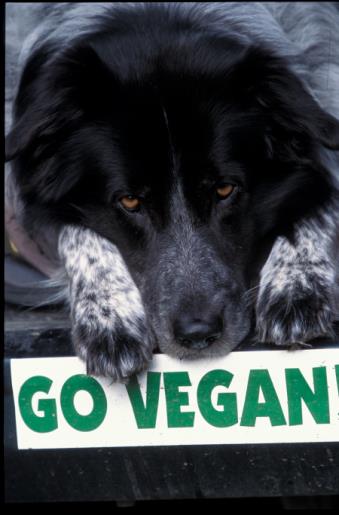
A vaguely familiar message comes from the few people who did not take part in the days’ killing spree. Their two-word slogan may not have sounded appealing to the masses before, but now people are willing to take the path of peace—to lay down their weapons and live a less destructive life.
Ultimately, this story has a happy ending: The Day the Human Race Went Vegan
 Exposing the Big Game
Reblogged this on Animal Connection.
This is fecking brilliant!
Thanks Maureen, If only this would put to rest the myth of “sustainable hunting”
Keep posting, I am sure you will reach many. I share, and email your info.
Thank you!
Thanks for sharing!
You mention the trend of new pro-hunting books …. thank you for addressing that. For me, that’s been one of the most depressing developments in cultural conversation. I’ve read quite a few of these writers, including those in the vegetarian-turned-hunter and the suburban-turned-self-sufficient genres. I hope the term “passing trend” best represents what this discussion will ultimately become. What concerns and troubles me is that these books and authors appeal to a large segment of society that’s been cut off from nature in any other capacity … and hunting represents for them their first immersion with wild animals and the natural world. That’s a powerful and tragic association, and one I’ve had the misfortune to encounter repeatedly in recent discussions. The old cliche, if I had a dollar for every young person who told me they picked up a hunting rife or shotgun to feel connected to nature ….
Right, I sure hope it’s a passing trend. I have been bothered by the same things that you say trouble and concerns you–that’s why I felt an anti-hunting book is so needed at this time, to counter some of their PR and give people another option beside killing wildlife.
Thank you, Jim, for the book~! I purchased it and read it in one sitting. I’m so grateful for your advocacy. It can feel a bit lonely, speaking out against violence toward wildlife, when hunting is so widely accepted. Even among fellow photographers and birders and wildlife watchers, I often find I’m in the minority. I attribute some of that to a very effective PR machine that has convinced many wildlife viewers and environmentalists that hunters are acting in “our” interest by conserving wildlife and habitat. I often think that if they saw what I’ve had the misfortune to see, they might change their views. It’s one thing to look at species by numbers, quite another to watch the suffering in person. When I’ve described to some birders, for instance, what I witness in a Snow Goose hunt, they’re surprised by the brutality. I don’t know why they are. It should be self-evident, but they’ve been convinced that hunting is quick and humane, and they haven’t seen anything personally to refute this impression.
Thank you, Ingrid,for buying and reading my book! You don’t ever have to feel lonely when sticking up for animals–we are in the majority. The killers–shrill and voluable as they may be–do not represent the interests of most people (and certainly not the animals’). Like you, I’ve had the misfortune to see what really goes on out there. The least we can do is use it to the animals’ advantage so that those who haven’t witnessed it will know the truth.
Pingback: Honor Thy Father and Mother—Especially When They’re Right | Exposing the Big Game