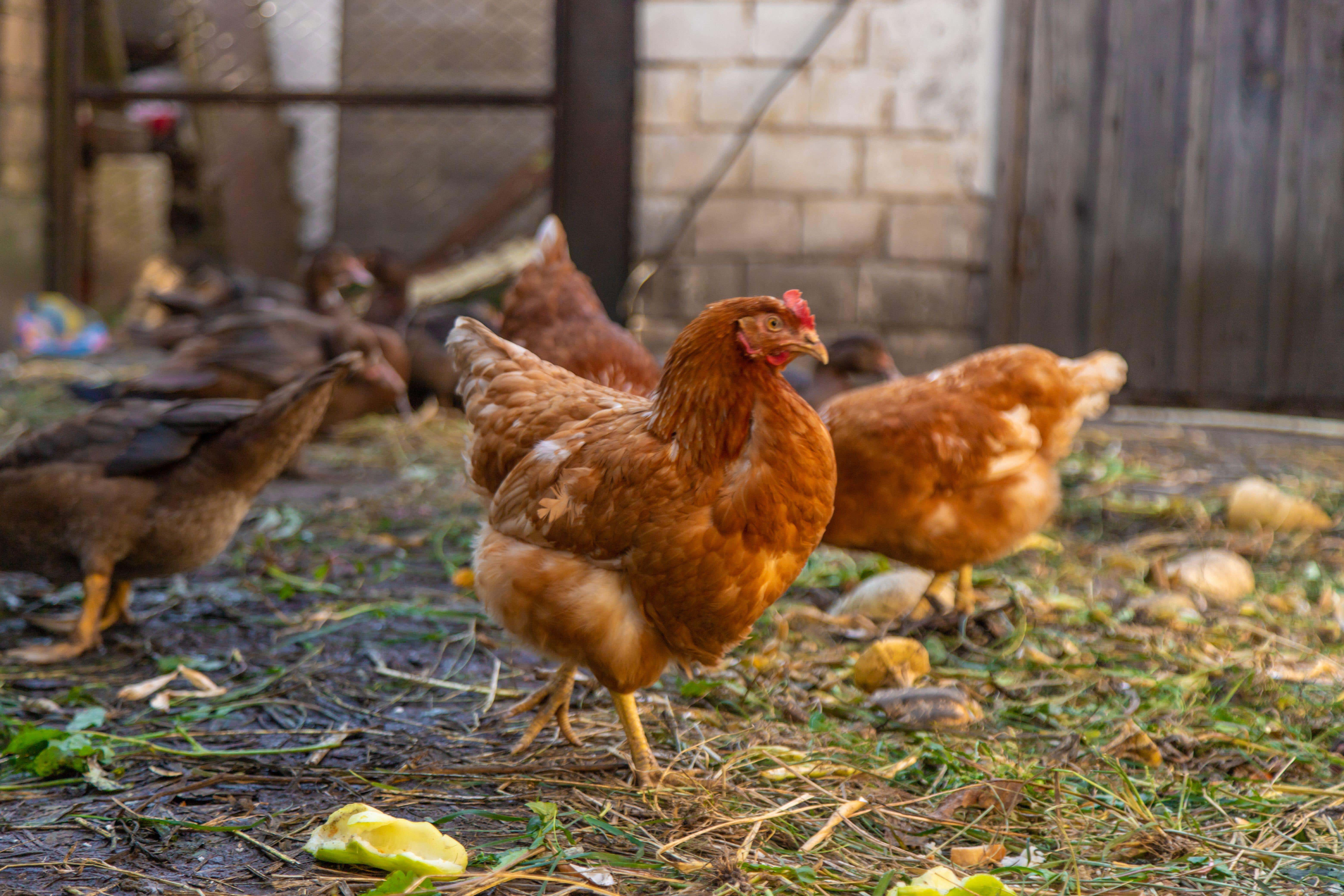
HPAI detected in Canada geese at a coastal park in Alameda, California, USA
Reply

October 26, 20262 min read
1Suspect named after ‘altercation’ at East Liverpool High School football game2Columbiana outlines plans for new city hall complex3REAL ESTATE4Six area football teams extend seasons5THE COURTS6Columbiana County Health District approve first reading of food service fees7Person seriously injured during ‘altercation’ at East Liverpool football game
SALINEVILLE — The Ohio State Trappers Association is hosting a free Trapping Workshop Friday and Saturday, Oct. 31 and Sunday, Nov. 1, in the wildlife office at the Highlandtown Wildlife Area, 16760 Spring Valley Road. The workshop is open to adults and children and will include classroom instruction, demonstrations and hands-on field work. Sign-in begins at 9 a.m. on Saturday. Sunday’s session begins at 8 a.m.
There is no fee to attend but registration is required. To register, contact Vern Snyder, at 330-692-6299. Snyder, who has over 30 years trapping experience, is the lead instructor for the workshop.
Organizer Buddy Bricker, who is a member of the Ohio State Trappers Association and the Leetonia Sportsman Club, said the workshop is one of 14 to be held across the state during October and November. He said the courses are taught by experienced trapping instructors who will discuss trapping history and regulations. Participants will also get hands-on experience and instructions on setting traps in the field.
“The presenters have a wealth of knowledge and experience to share with anyone who has interest in learning to trap. No previous experience is necessary,” Bricker said. “So bring some boots and let’s hit the trap line!”
Saturday’s itinerary includes in-class education and an opportunity to complete the Ohio Division of Wildlife’s Trappers Education Test to become licensed to take furs in Ohio. During the afternoon session, participants will go to the field to learn to set water and land traps.
On Sunday, participants will check traps and learn how to process furs.
Anyone with additional questions is asked to contact Eric Freeland, Ohio State Trappers Education
Erin Keller In OhioSaturday 24 October 2026 17:40 EDT
Removed from bookmarksClose popover
Ask The Independent anything
How many birds were affected in the Illinois outbreak?
Which states faced lawsuits over cage-free egg laws?
Ask The Independent
DeeperDive AI
Full Summary
Nearly a million chickens were culled at a Rose Acre Farms egg facility in Clinton County, Illinois after a bird flu outbreak, making it the largest active outbreak in the U.S. and likely tightening egg supplies and raising prices.
Nearly 1 million chickens were killed at an Illinois farm after a bird flu outbreak became the nation’s largest active outbreak this week.
The outbreak affected 934,600 birds at a commercial table egg layer facility in Clinton County, Illinois, the United States Department of Agriculture confirmed. It reportedly occurred at Rose Acre Farms, located outside Germantown, village officials told KSDK.
Rose Acre Farms is the second-largest egg producer in the U.S., according to the company’s website. With no treatment available for highly pathogenic avian influenza, better known as bird flu, authorities must kill infected and exposed birds to contain the virus.
Losing nearly a million hens could disrupt egg production and put further pressure on prices as supplies tighten.
The scale of the Illinois outbreak far exceeds other active cases nationwide. Minnesota had the next-highest number of birds affected, with 168,880 statewide, according to the USDA.
RECOMMENDED
Trump’s Oval Office outburst has social media questioning his mental state
Trump lost it and ordered me to be ‘quiet’ in the Oval Office. Then it got personal
What plumbers won’t tell you: how to unclog a drain with 1 simple ingredientWellnessJournal365|
Stop Ignoring Your Senior Dog’s Fatty Lumps — Do This InsteadPupsreport|
The outbreak is part of a nationwide bird flu epidemic first detected in the U.S. in February 2022. Since then, more than 210 million birds have died or been killed as a result of the outbreak, according to the report.
Bird flu detections typically increase during the fall and spring, when migrating wild birds can spread the virus to domestic poultry. The virus can spread through contact with infected birds, contaminated surfaces and materials, making farms vulnerable when the disease reaches their flocks.
Replacing nearly a million hens takes time, meaning fewer eggs could reach grocery stores and prices could rise. That’s what happened in 2024, when bird flu killed tens of millions of egg-laying hens, shrinking supplies and sending prices soaring.
By January that year, a dozen cage-free eggs averaged $5.26 in advertised retail prices, according to the USDA. As of last month, the national averages were sitting around $3.80 to $3.88, according to the agency.
The Trump administration even sued California and Michigan over cage-free egg laws, arguing the state requirements drive up prices and that egg production should be governed by federal standards. The lawsuits were dismissed, with judges finding the administration had not established it had legal grounds to bring the challenges.
The USDA’s Animal and Plant Health Inspection Service said it continues to work with state animal health officials to monitor commercial poultry operations, backyard flocks and wild birds for signs of infection.
An Arkansas farmer fed up with beavers eating his crop built a “Battle Buggy” with a gun platform that could be the envy of Wyoming pest hunters. “If you like driving around and shooting, I can’t imagine anything more fun,” said a prairie dog hunter.
Farmer Builds UTV ‘Battle Buggy’ With Gun Platform To Blast Pests And Predators | Cowboy State Daily
October 24, 20265 min read
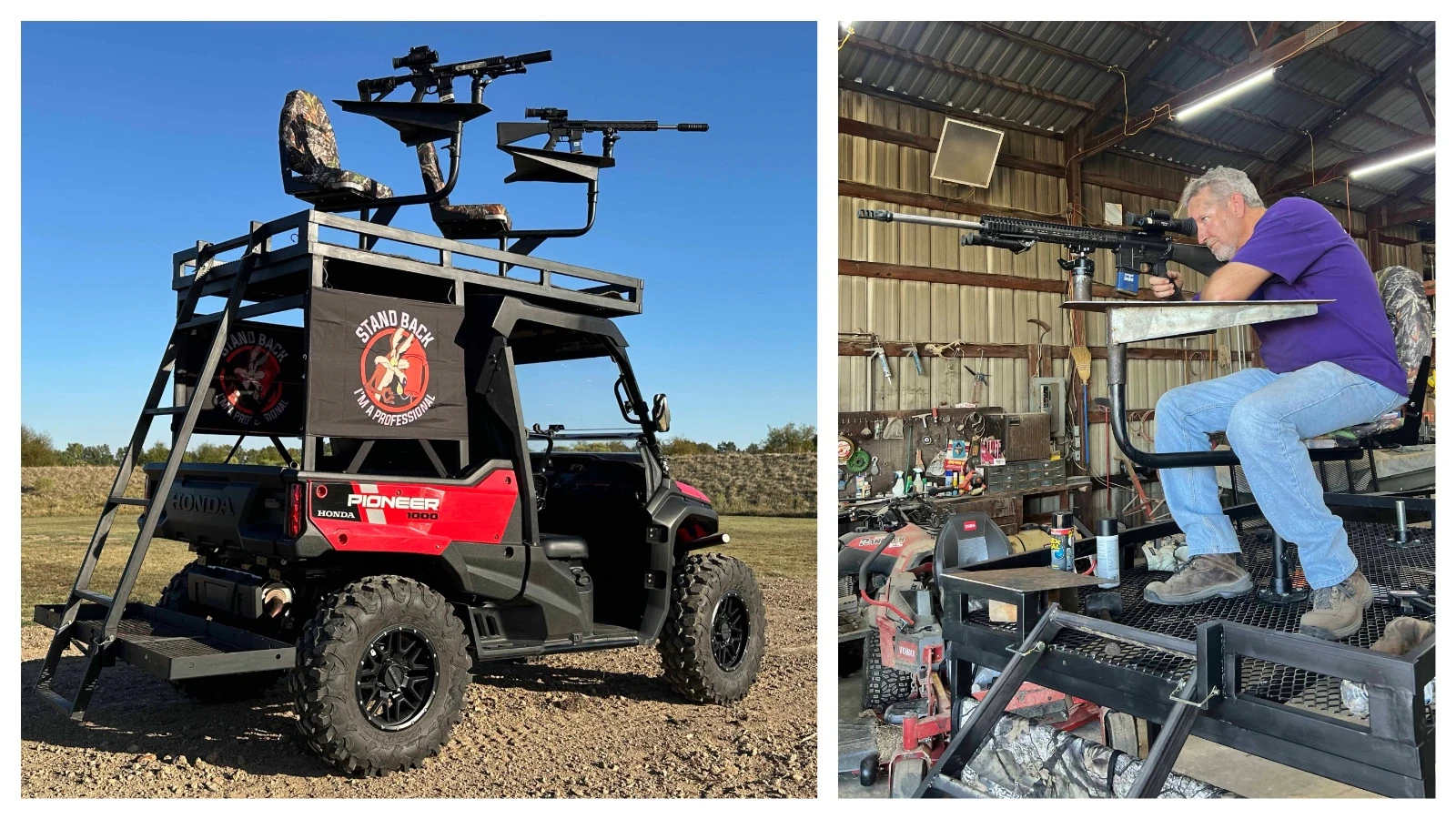
Todd Gibson’s UTV, outfitted with a rooftop gun platform, could be the envy of Wyoming prairie dog shooters and coyote hunters.
But it was his utter frustration with beavers ruining crops and duck hunting on his northeast Arkansas farm that drove him to tap into his creative prowess and build the thing in the first place.
As it turned out, he already had the beaver problem “basically solved” by the time he finished refitting his 2025 Honda Pioneer UTV as an anti-predator/pest battle buggy.
Now, he uses it mostly to hunt coyotes.
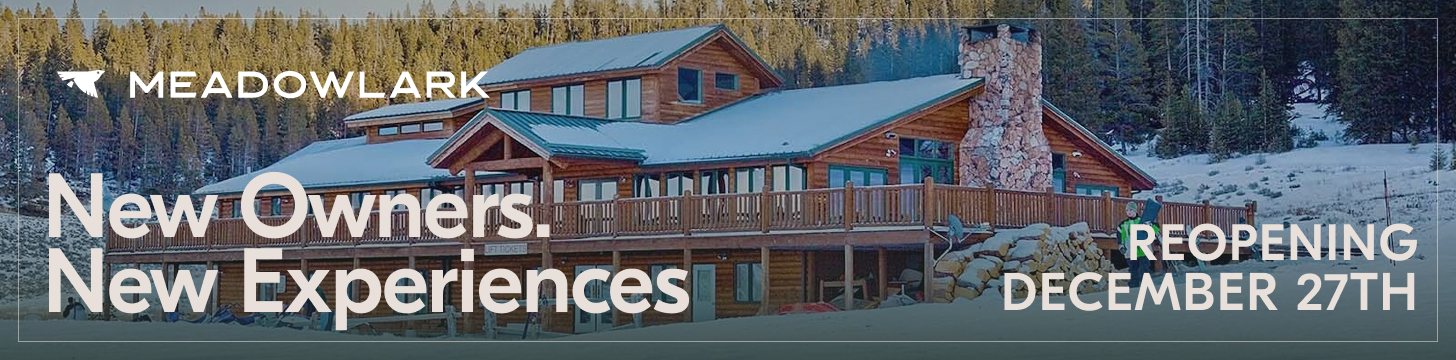
Hence, the wryly humorous flags on the sides of his vehicle bear the image of the famous Looney Tunes character Wile E. Coyote and the caption “Stand back, I’m a professional.”
“Honestly, I put the Wile E. Coyote flags on the back because I am mainly using the rig for coyotes, and it just struck me as funny,” he told Cowboy State Daily.
Gibson grew up on a rice farm in the Mississippi Alluvial Plain region of northeast Arkansas. His family still owns the farm.
He left to attend law school in 1994 and returned in 1999 to open the Gibson Law Firm.
He juggled practicing law and farming until 2017, when he sold farmland so he could devote his time to farming. But an injury ended that pursuit the same year.

In 2021, he cofounded the Hamilton Agriculture Farm Management Company. And he’s also continued to pursue his lifelong love of building things.
The UTV gun platform was his latest project. He started it in mid-September, shortly after he purchased the Honda Pioneer. The work was finished around Oct. 10.
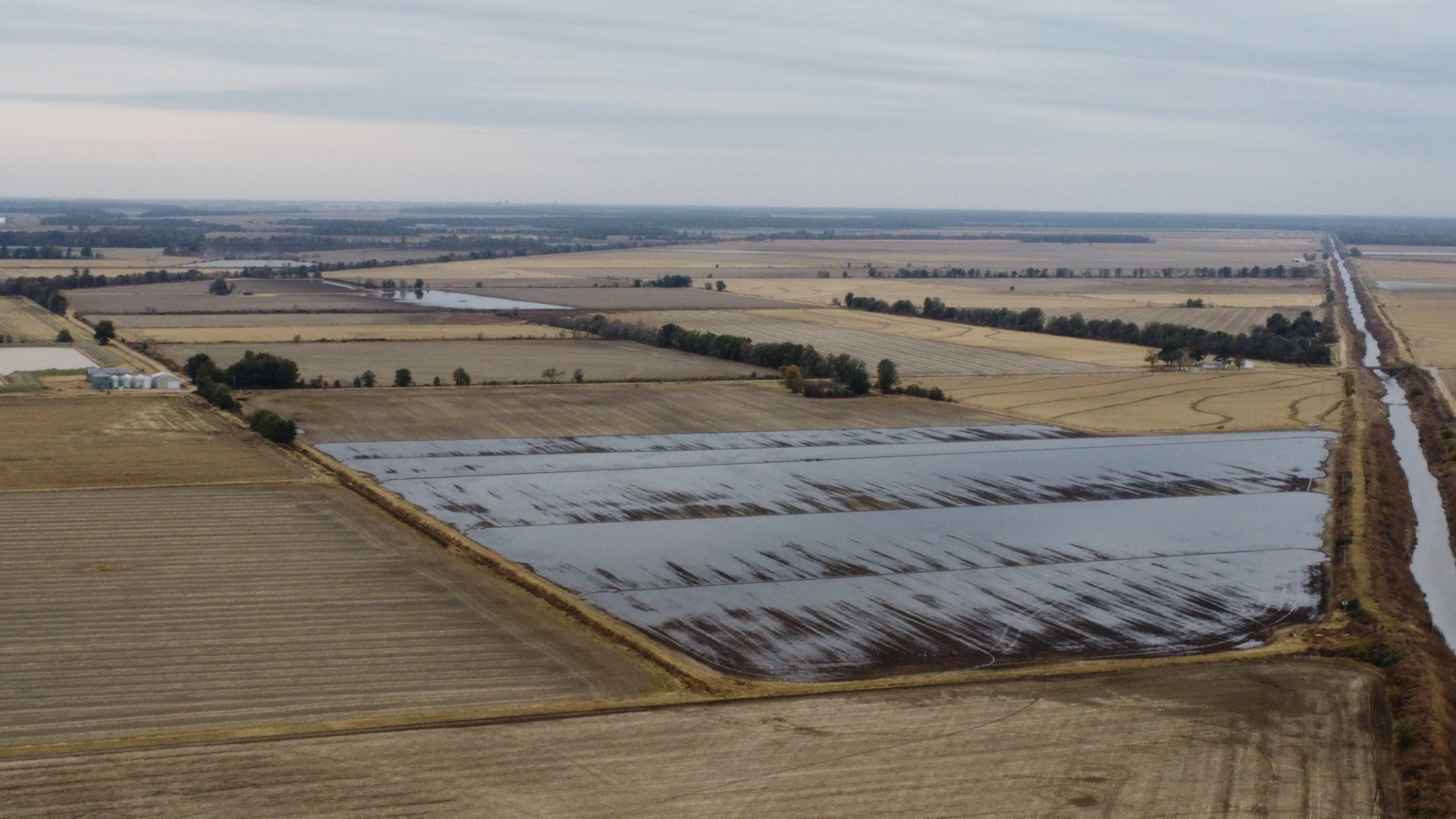
Left unchecked, the local beaver population can ruin two of northeast Arkansas’ greatest things: rice farming and duck hunting, Gibson said.
“The problem with beavers is they won’t allow you to drain water where you want to drain it, and they don’t allow you to hold water when you’re trying to hold it,” he said.
“With rice crops, weed control is established through flooding the fields,” he said.
Typically, farmers flood their fields from the first week in June until the second week of August.

However, beavers frequently try to plug holes and hamper the draining process, putting the rice crops at risk of being overwatered.
On the flip side, it’s common practice to flood low-lying areas during the off-season to attract huge flocks of waterfowl for hunting.
But beavers will come along and rip holes in the barriers, draining those areas, Gibson said.
“They get you coming and going,” he said.
Stalking beavers with a rifle morphed into a “passion for night hunting,” Gibson said.
He uses night vision rifle scopes. In 2023, the Wyoming Legislature passed a bill allowing predator hunters here to use night-vision scopes on public land.

The topography in northeast Arkansas is “flat. As in, pancake flat,” Gibson said.
So, he figured the best way to hunt beavers and predators at night would be from an elevated platform, allowing him a clear view over fields, brush, and the like.
And what could be better than an elevated platform that was also mobile?
Hence, the idea of mounting a gun platform on his UTV was born.
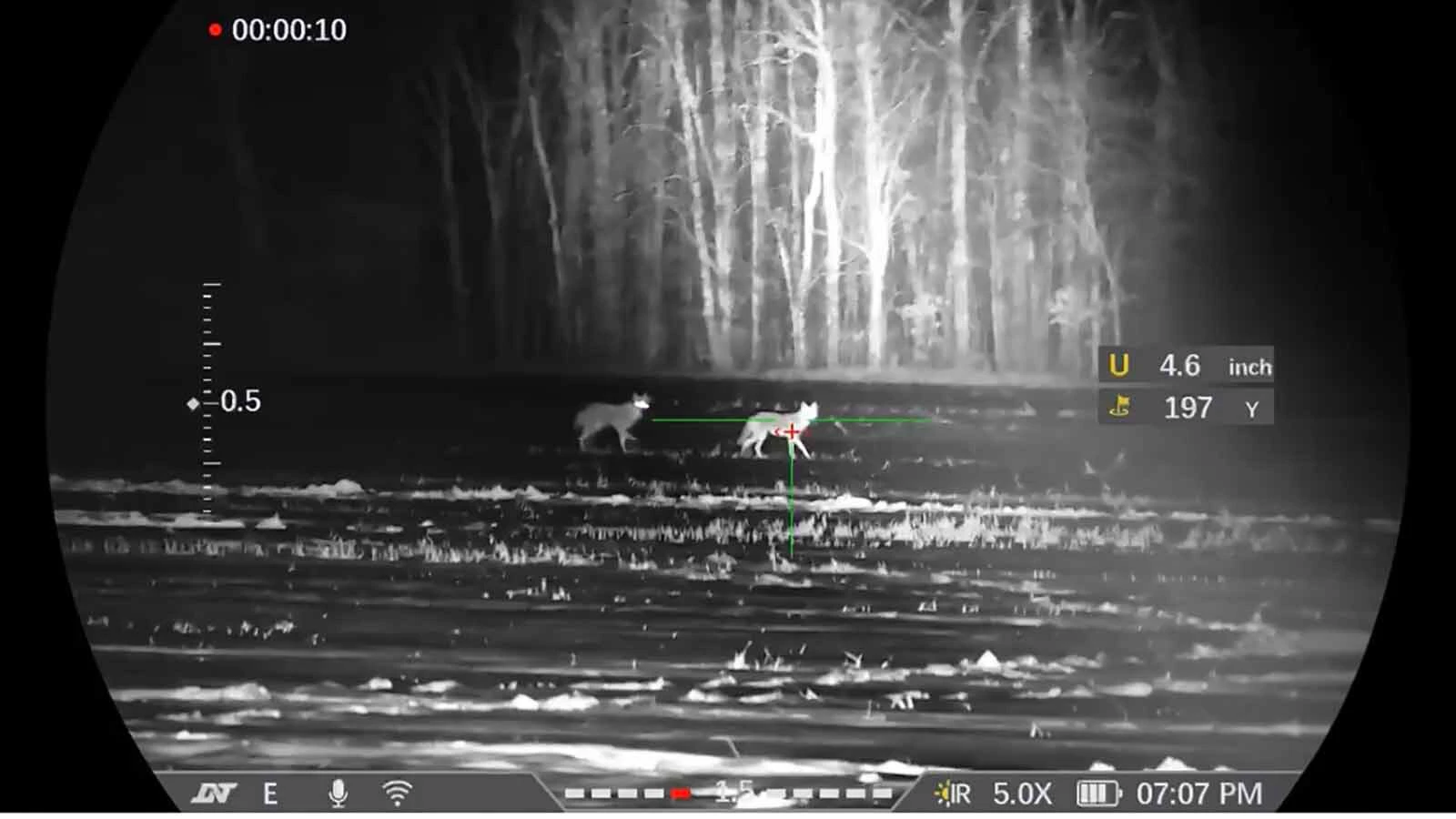
Whenever he starts a building project, the last thing Gibson wants to do is needlessly throw money away on it.
“I’m a miser,” he said.

He got the Honda Pioneer, with only 160 miles on it, for the reasonable price of $16,200.
Then he started looking on Amazon for various parts he’d need for his gun platform.
That would include two comfortable chairs, outfitted with rifle mounts and capable of swiveling 360 degrees.
He ended up spending about $900 on parts.
Then, “I just grabbed a measuring tape and started welding” until everything came together, he said.
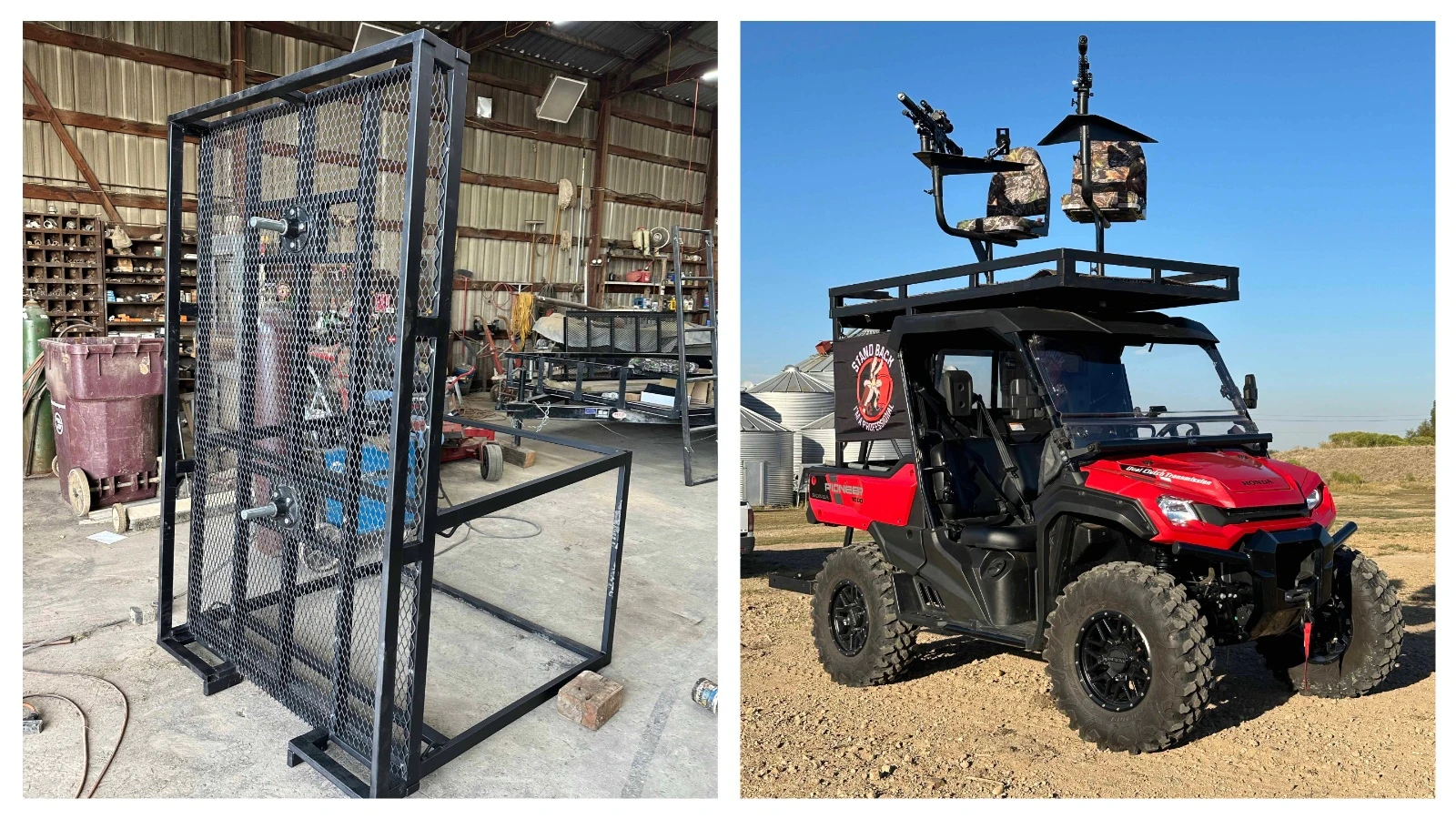
Some folks viewing photos of his creation online have questioned how stable it would be with two shooters on it.

“I’ve yet to hunt with two people up there. Maybe with two people it will be a little unstable,” he said.
“With one guy up there, just me by myself, it’s as stable as a bench rest,” he added.
Gibson said the platform gives him the field of view he needs to make shots at ranges from about 75 to 400 yards.
Regarding how well his rig might work in Wyoming, Gibson noted that its top-heaviness might cause problems.
“Where I am, to gain 5 feet in elevation, you might have to go 8 miles,” he said. “If I was in an area that had a lot of variation in topography, rollover might be a concern,” he said.
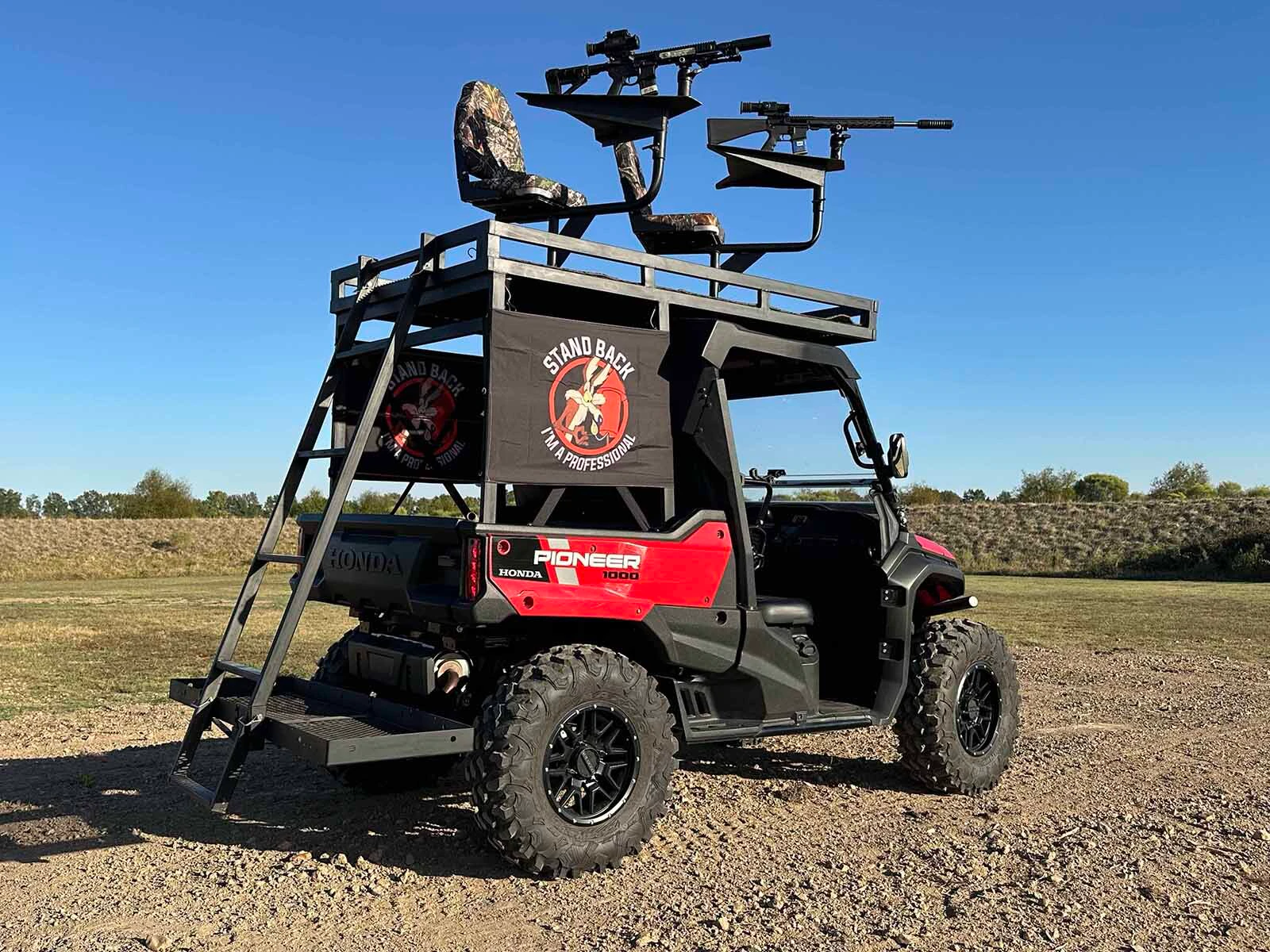
Willie Dvorak guides prairie dog hunts out West and was impressed by a photo of Gibson’s creation.
“If you like driving around and shooting, I can’t imagine anything more fun than that,” he told Cowboy State Daily.
For serious prairie dog hunts, “no matter what Mother Nature throws at you,” Dvorak said the battle buggy might not be the most practical choice on rugged Western landscapes.
“But for tearing around on the prairie, how could you get any better?” he added.

