
The Associated Press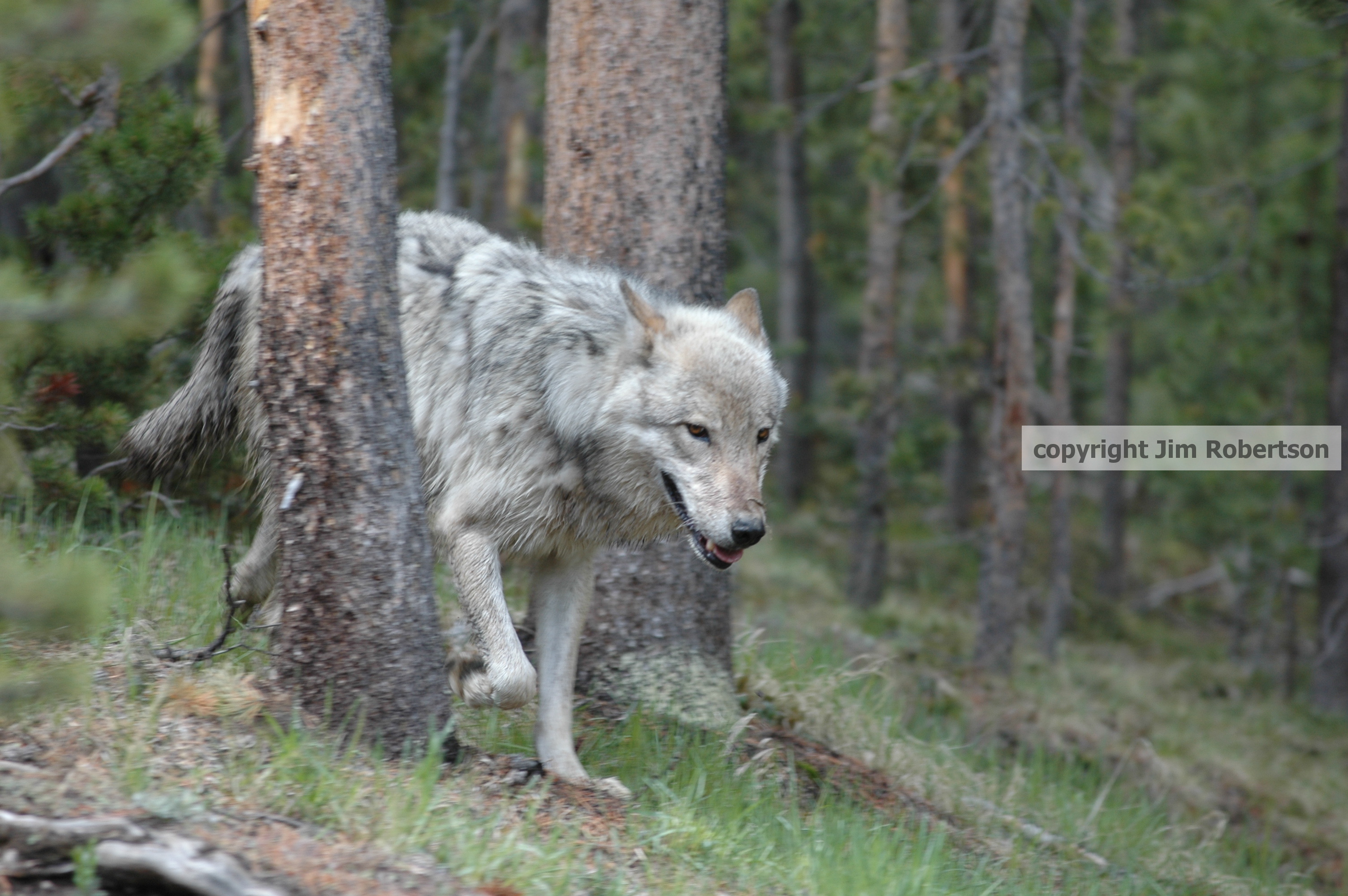
First Published Sep 14 2013
Billings, Mont. • Montana’s general wolf season opens Sunday with much looser rules than in past years, as state wildlife officials ramp up efforts to reduce the predators’ population in response to public pressure over livestock attacks and declines in some elk herds.
Lower license fees, a five-wolf per person bag limit and a longer season top the list of changes put in place for the 2012-2013 season.
Only two areas in the state — near Glacier and Yellowstone National Parks — have limits on how many gray wolves can be killed.
Conservation groups have criticized the state’s liberal wolf hunting rules as a threat to their long-term population. But livestock owners and hunters have pushed for even more wolves to be killed, and state officials say they intend to maintain a smaller, but still viable, wolf population.
At the beginning of 2013 Montana had 625 wolves. That was a slight drop from the prior year and the first decline since Canadian wolves were brought to the Northern Rockies in the mid-1990s as a way to bolster the population.
State officials hope to continue driving the population down this year but have not set a target number.
The number of out-of-state hunters buying licenses is up sharply this year, with 370 purchased through this week compared to 55 at the same point last year. That comes after the Legislature reduced out-of-state licenses from $250 to $50.
Almost 6,000 state residents have purchased wolf licenses so far for $19 apiece. That’s roughly in line with last year’s sales figures.
The general rifle season runs through March 15.
Trapping season for wolves starts Dec. 15 and runs through Feb. 28. The two-week archery season for wolves ends Saturday, with two harvested as of Friday.
 Exposing the Big Game
Montana I am ashamed that your state has the cloud of death hanging over it. I loved visiting all these years and was proud to have lived there but I do not ever want to get the bad KARMA you now have.
If these morons had any guts, they would hunt each other and leave the animals alone.
Wolf Mismanagement by MT FWP, Other State Wildlife Agencies and USFWS:
The bottom line is that the wolf massacre states are just too hostile to wolves and so are mismanaging them on a political basis and will continue to mismanage them, and some of those states make no apology because basically they do not want wolves on the landscape or want only the minimal number to keep re-listing threats off their backs. State management is an asinine idea for full wolf recovery across regions and into many available niches in their old ranges. Predators need full protections indefinitely.
Regarding visitors to and outside observers to Montana complaining about the wolf slaughter in the state and parochial-yokel responses: The usual myths pop up about wolves killing cattle and elk and with it the impression there are significant or rampant problems: Wolves killed 67 cattle in Montana in 2012, 74 cattle in 2011 per Montana Stock Loss Board. There are 2.6 million cattle in Montana. So, that is 0.002 %, albeit the stock depredation by wolves is in the western part of the state where the wolves are. However, it is an extremely small amount for which the rancher is reimbursed. Now, I wonder what percentage of those ranchers are ranching on public land at $1.35 per animal unit. There are 772 permits in Montana to ranch on national forests lands and 3776 permits to ranch on BLM land. So, how much complaining is going on here by ranchers about wildlife while they are ranching on public land at a pittance of a fee and playing the victimstance role. Wolves kill about 0.1% of sheep, with eagles killing more. The point is that stock depredation by wolves is mostly myth and folklore and lie and not a justification for the slaughter of wolves going on in this state or other wolf massacre states. What is going on is a continuation of wolf hating, fear, and folklore which Americans brought with them from Europe and put the first bounty on a wolf 30 days after the Mayflower landed. The US government has played a major role in wolf killing since.
Wolves and tourism: Wolf viewing brings in about $35 million in tourism dollars to the Greater Yellowstone Region. Visitors to Yellowstone Park mostly hope to see grizzlies and wolves. Wildlife viewing in the USA brings in more dollars than hunting and fishing, with even bird watching alone bringing in much more. The wolf population in Yellowstone is currently about 25 in the northern range of 80-100 in total at any time in YNP. It needs to be said again: Wildlife viewing in the USA brings in far more tax revenues, retail sales lodging, food servicing (job creations) than hunting and fishing. Montanans tend to treat public lands as Montana lands in their attitudes. National forests and Parks belong to the American public and wildlife, including the wolf as a national treasure, that is treasure not Montana varmints per Montana rancher, sportsmen and MT FWP. A few wolves are worth many more dollars to Montana than 67 cattle.
Another myth is the elk depredation myth. Elk populations have grown tremendously since wolf reintroduction, from around 89,000 before to 141,000 now per RMEF and elk have increased in WY and ID and even in the Bitterroots where we hear a lot of complaints by sportsmen. There are now and always have been too few wolves in Yellowstone to have had a negative effect there. It has been sportsmen over-hunting, weather, forage, and natural fluctuations in elk populations from an all time unsustainable high. Elk numbers there are now at historical levels and the calf-cow ratio has stabilized. Wolves belong in the ecology and have been found to have a positive cascading effect on the wildlife ecology; why is ecology and the role of this apex animal such a mystery to FWP-ranchers-sportsmen?
Outsiders have a right to complain about the wolf slaughter going on in Montana and other western and mid western states and to be concerned about the attitude of FWP and USFWS thinking they have to drive down the population of wolves (why?) which is not based on science, logic, facts or good tourism thinking. More and more I am seeing a call for a ban on tourism in MT and other wolf slaughter states and a ban on buying those states’ ranch products, i.e. “Don’t Fund the Wolf Massacre States”, a Facebook site), and justifiably so.
Problem wolves may have to be “managed” or problem packs, but there are no good reasons to drive down the total wolf numbers or to be hunting and trapping Yellowstone Park wolves who wander out of the Park. Wolves will manage their own populations as will bears and lions.
The traditional enemies of balanced wildlife ecology, a balance which wolves as apex animals bring, is and has been ranchers, hunters, outfitters the wildlife agencies, and the government and wolf hysterics; and various other forms of encroachment on wildlife and entitled thinking by ranchers and sportsmen and them playing the victimstance role and wildlife agencies who are in league with them in their attitudes toward predators. There is no evidence that wolves in general have to be managed or their numbers “driven down”, especially to the extent that MT FWP and other western and mid-western states are doing. It can only be called a political slaughter of an animal that was brought back from the brink, with the slaughter based on ignorance and bias and hysterics and politics, not science. MT FWP and the USFWS and other state wildlife agencies are not experts on the wolf issue. They are mismanaging the wolf, not managing the wolf. The wolf population will manage itself as all predator populations do. Man’s interference causes problems. Only specific wolves and maybe an occasional pack need to be “managed”. This basic question of need for management is seldom addressed even by wolf advocates. Wildlife ecologies are best left alone. Nature has had millennium to work it out. Man is and has been since the beginning (the march of civilization) the problem with wildlife populations rising and falling. Get man out of the apex animal management as much as possible, best for wildlife and best for man. Wildlife agencies should concentrate on managing man not the apex predators.