
http://theirturn.net/2015/04/07/animal-agriculture-water-shortage
April 7, 2015 by Donny Moss
In its extensive coverage of the California drought, the New York Times has consistently focused on the cultivation of crops without so much as mentioning animal agriculture, which is far more water intensive.
The glaring omission has sent readers the message that fruits, vegetables and nuts – not beef and dairy – are responsible for the state’s grave water shortage. Following are excerpts from the NY Times over the past three days.
April 6th: “Even as the worst drought in decades ravages California, . . . millions of pounds of thirsty crops like oranges, tomatoes and almonds continue to stream out of the state and onto the nation’s grocery shelves.”
April 5th: “The expansion of almonds, walnuts and other water-guzzling tree and vine crops has come under sharp criticism from some urban Californians.”
April 4th: ”There is likely to be increased pressure on the farms to move away from certain water-intensive crops — like almonds.”
Cultivating crops might be be water intensive, but it uses a fraction of the water consumed in animal agriculture. On California’s factory farms, which house tens of millions of chickens, pigs and cows, water is used not only to hydrate these animals but also to grow their feed and clean the facilities and slaughterhouses where they are raised and killed.
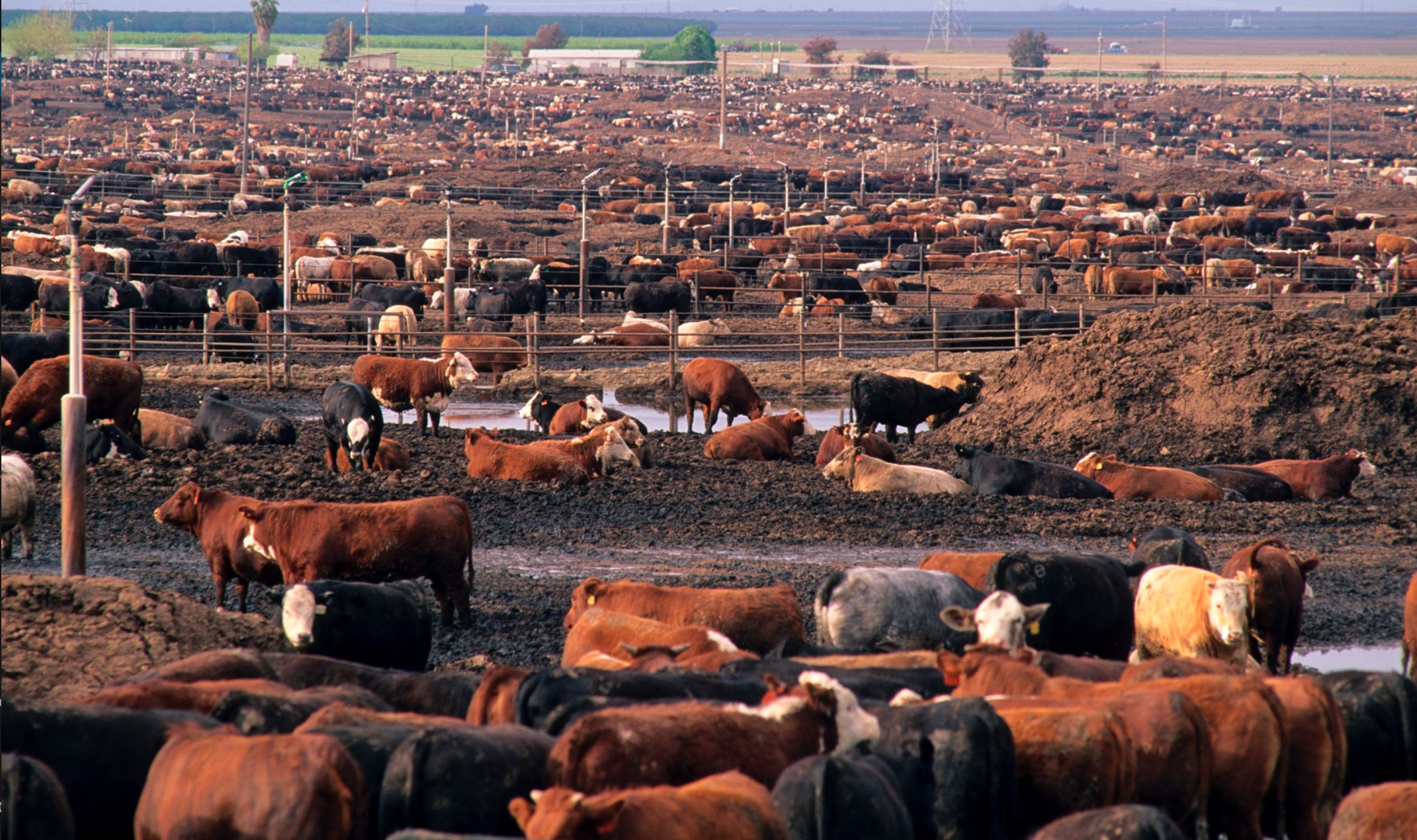
Eliminating animal agriculture, which inefficiently uses of a scarce resource and is altogether unnecessary, would undoubtedly help to curb California’s water shortage.
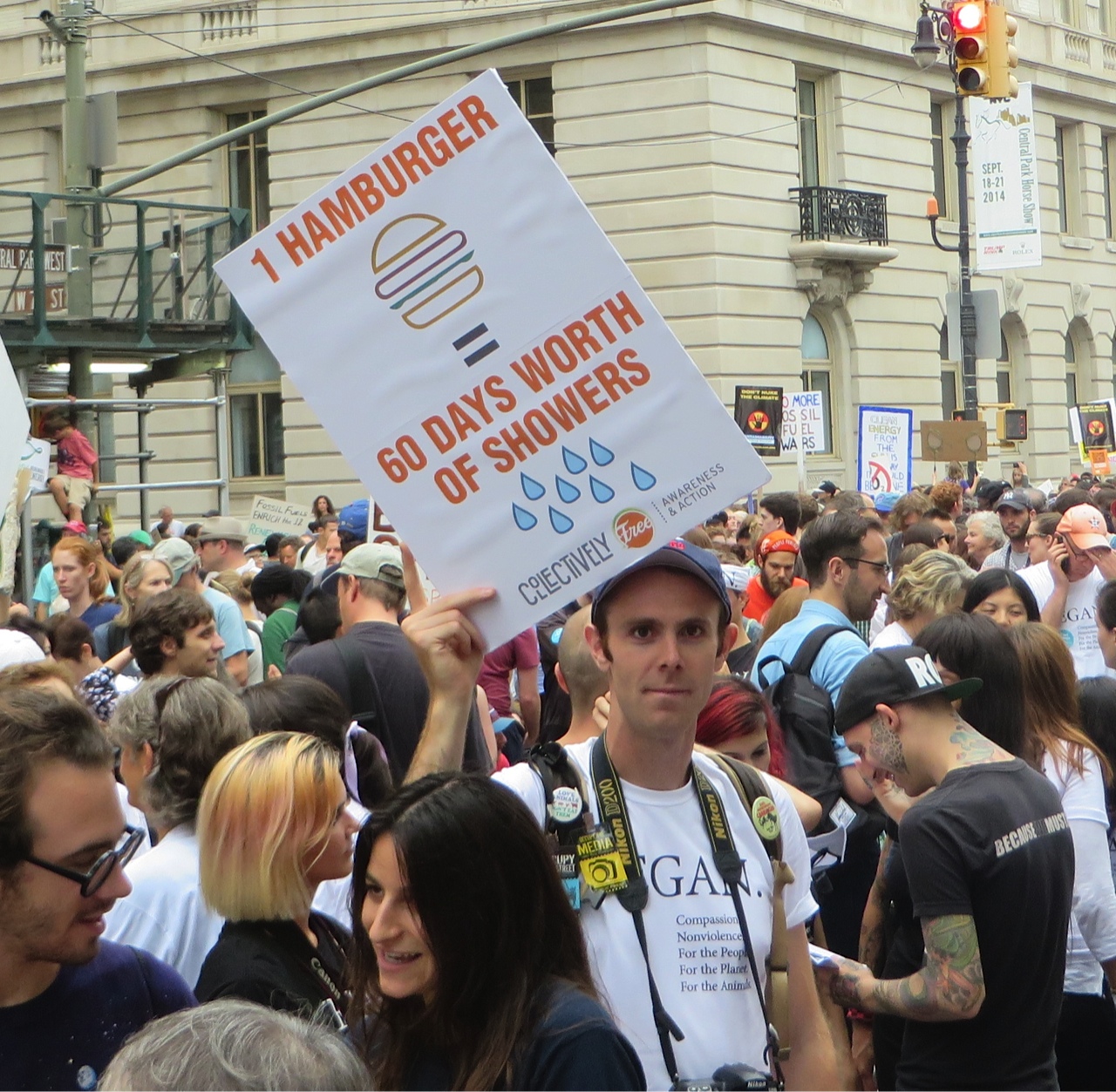
Following are just a few statistics that demonstrate the impact of animal agriculture on the water supply:
- 2,500 gallons of water are used to produce one pound of beef compared to 100 gallons for a pound of wheat.
- Vegetables use about 11,300 gallons of blue* water per ton. Pork, beef and butter use 121,000, 145,000 and 122,800 gallons per ton respectively. (*Blue water is water stored in lakes, rivers and aquifers.)
- Each day, cows consume 23 gallons of water; humans drink less than one.
- The amount of water needed to produce a gallon of milk is equivalent to one month of showers.
- 132 gallons of water are used every time an animal is slaughtered.
One year ago (March, 2014), the NY Times published an op-ed, Meat Makes the Planet Thirsty, that included statistics comparing the amount of water used for crops and animals. So why is it omitting this vital information in its current coverage of the drought? Could it be a mere oversight? Or is it something more sinister?
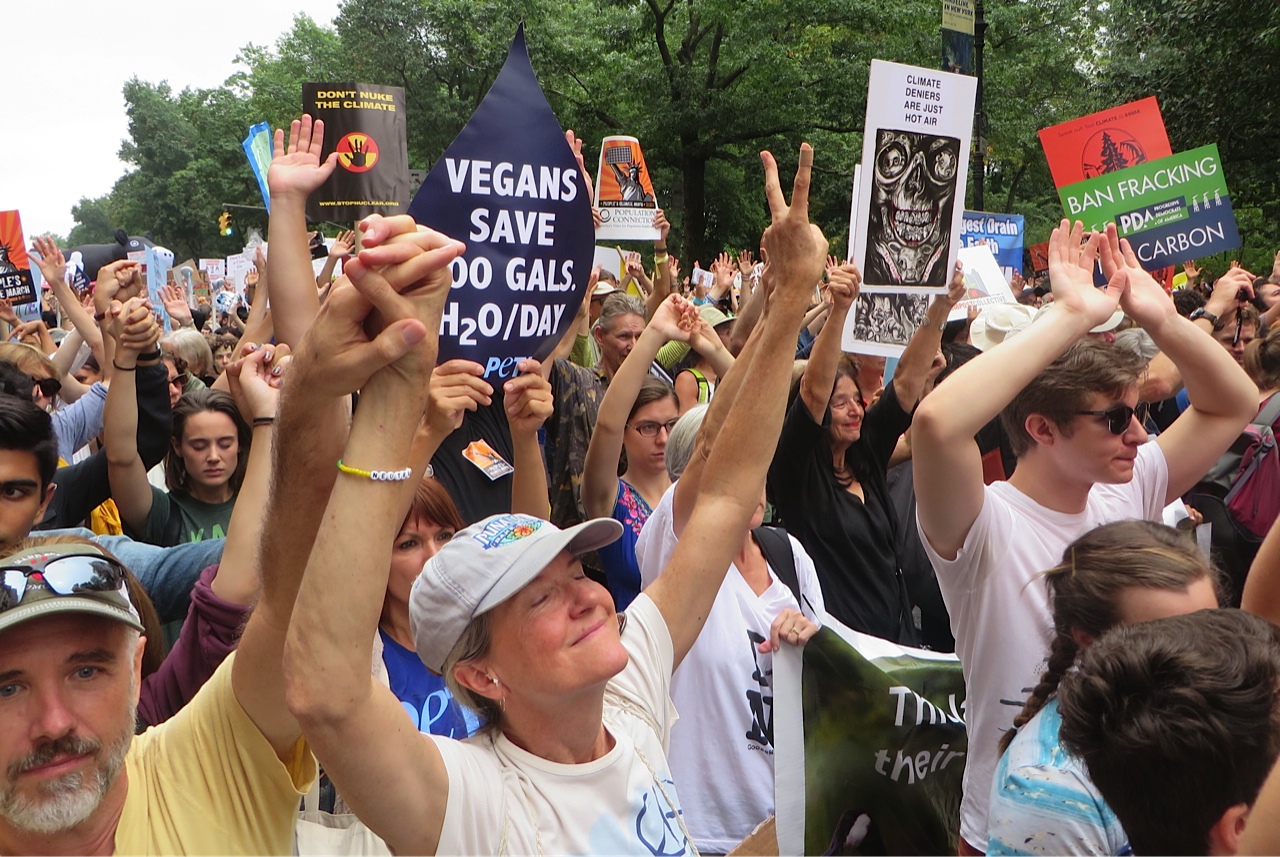
 Exposing the Big Game
What is wrong with the media lately – I notice a lot of circling-the-wagons type defensive reporting. Ugh. The horror of us is getting exceedingly frightening.
The truth keeps getting harder to find.
They want to blame the Almond growers. It’s simply crazy to me. The truth is slapping them in the face, but they refuse to see.
As we traveled up the CA coast to Oregon two years ago, the ecosystems were already in dire condition. Yet, domestic livestock grazing was everywhere. CA does not have as much Federal Public Lands as other western states, but grazing is prevalent on their state lands and on refuges, along with Point Reyes, where there is some notice being taken about the grazing interfering with the native animals, because the ranchers want the native animals “controlled.” If native animals and their habitat are to be saved at all, it is crucial that we get a strong, consistent, no-compromise movement going to Stop All Public Lands Grazing. Will it be easy? No. But, is it absolutely necessary? Yes.
I’m still so appalled that more 250 native Tule elk were allowed to die from lack of water from 2012 – 2014, on public lands! This is what makes me fear it is going to get really ugly in the future.
The only question is, how soon.