
When the wolves returned, they revived the same old anxieties that inspired the state-sponsored hunts and zealous poachers to originally drive the wolf out. Some locals in the wolf range, anxious about unchecked wolf populations preying on livestock and affecting deer herds, continue to grow less tolerant toward returning wolves.
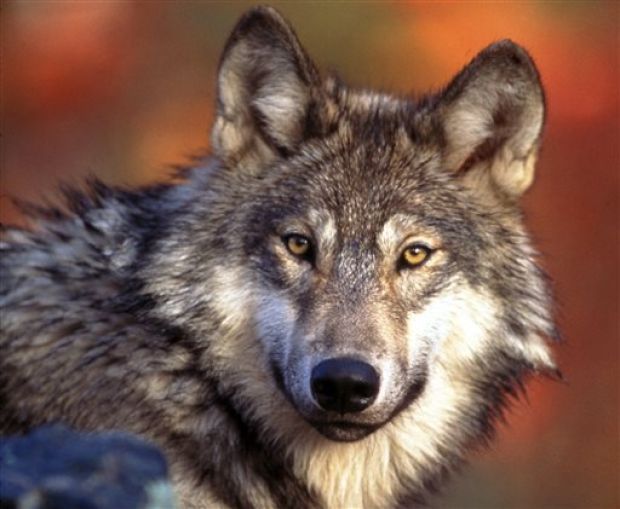
Four decades ago, wolves were added to the Endangered Species Act, and the once expulsed gray wolf trickled back into the Wisconsin wilderness. Protected by federal law, wolves were allowed to grow and spread out among the wooded north, resulting in a resurgence of a species once considered extirpated from the state.
When the wolves returned, they revived the same old anxieties that inspired the state-sponsored hunts and zealous poachers to originally drive the wolf out. Some locals in the wolf range, anxious about unchecked wolf populations preying on livestock and affecting deer herds, continue to grow less tolerant toward returning wolves. It is a trend that even a state-sponsored wolf hunt could not break, according to a recent study conducted by researchers at UW-Madison.
Led by Jamie Hogberg, a researcher at the Nelson Institute for Environmental Studies, the survey looked at public opinion about wolves from before and after the 2012 inaugural wolf hunt. According to a statement made by the Wisconsin Department of Natural Resources, the hunt was supposed to improve social intolerance toward the maligned wolf. Yet, according to Hogberg’s study, the harvest may have had the opposite effect, at least among hunters in the wolf range.
“One of the stated goals of the harvest was to maintain social tolerance,” said Hogberg. “But in just that first year of the hunt, we didn’t see that among a key stakeholder group.”
The survey focused primarily on male hunters in the wolf range, outspoken community members who were surveyed in previous studies to see if their attitudes changed. Researchers also surveyed people who reported conflict with wolves and people who lived outside of wolf range, though the majority of respondents were self-identifying hunters living within wolf range.
Hunters fear that wolves, who primarily hunt a deer herd’s weakest members, could be impacting deer herds and reducing hunting opportunities. However, the wolves’ stake in Wisconsin’s deer herd is dwarfed by the 340,000 taken annually by hunters, according to the Wisconsin DNR.
Wolves have been delisted and relisted seven times since 2001, and are once again protected under the Endangered Species Act. …[for now…]
 Exposing the Big Game
All hunters are concerned about is how much and how many animals they can kill. It’s all about the kill, nothing else.
There is a very slow process to changing redneck opinion, if it can be changed. That is the single most valid reason for keep wolves listed, for a very long time. State and even to a major extent, wildlife agencies reflect the attitudes and values of rednecks. The redneck thinks from a belief way of thinking, not science or logic, and they get their “knowledge” from folklore, from other rednecks. They will remain hostile to wolves indefinitely. They may be best addressed by repeated challenge to their basic values of hunting traditions, gun culture, states rights of federal, rural rights over the general population. They just want to shoot their deer and elk. They view the wolf and to a lesser extent, other predators as competition for “their” elk or “their” deer, and science, wildlife ecology will not dissuade them. Ranchers fit in the same redneck category with the way they get their misinformation, their faulty logic, their folklore. To put wolves and even wildlife ecology in the hands of ranchers, farmers, hunters, trappers and their ilk is a mistake. They are and will indefinitely remain the enemy of the predators and balanced wildlife ecology.
People who wanted to reintroduce wolves must not have done their homework. Anyone living in hunting/cattle country should have known that the wolves would become prime targets of the haters. Yes, the wolves are a major part of a healthy ecosystem. But bringing them back merely put them at risk for traps, snares, poison, guns, bows and arrows and aerial shooters. Now they are likely to be removed from the Endangered Species List, so they will be more available for the killing. The wolves were done no favors by those who love them.
Absolutely, and now that their gun and hunting values are being increasingly opposed, they are getting even more intransigent. I fear for the animals they go after. I doubt if just killing is enough in some cases. Their rage and their hatred are being inflicted on innocent wildlife–wolves, cougars, deer, and elk.
I think that those who originally proposed and promoted the wolf re-introduction program into the lower 48 states underestimated the stupidity and persistency of the redneck population infesting much of rural America. These (the 60 and 70s) were more optimistic times when it was believed, naively as it turned out, that enough education could cure any human failing. Through bitter experience we, who grew up during that happier time, now know better. We know that the redneck disease cannot be cured through reason or logic or scientific facts or appeals to morality. Since forced sterilization, attractive as the idea is, doesn’t appear to be a realistic strategy, containment, deterrence and ruthless suppression is the only practical approach to dealing with this subhuman species.
That’s “subhuman”, not to be confused with non-human species, of course.
“The wolves’ stake in Wisconsin’s deer herd is dwarfed by the 340,000 taken annually by hunters, according to the Wisconsin DNR.”
This article shows why wolves still need some kind of protection from humans. The terrible results of handing over ‘management’ of them by the 2011 delisting was just plain folly. People are not becoming more tolerant of them – and the recovery map areas are so small as to be ridiculous.
If anyone wants to join in on the action, here is something that is continuing in Michigan–not good news!
Save the Isle Royale Wolves
Dear Marcia,
Thank you for your work to stop the trophy hunting of Michigan’s wolves. Now, other wolves need your help. On Isle Royale National Park in Lake Superior, the wolves are nearly extinct, with only three left.
Without the presence of this apex predator, the park’s moose population will rapidly increase and risk irreparable damage to the forest. New wolves must be brought in to restore ecological integrity and resilience to the whole system. We need you to act now!
Please send a letter to National Park Service Director Jonathon B. Jarvis and ask him to strongly consider replenishing the park’s wolf pack as soon as possible.
Thank you for speaking up for wolves,
Jill Fritz
Jill Fritz
Campaign Director
Keep Michigan Wolves Protected
Jonathan B. Jarvis
National Park Service
1849 C Street NW
Washington, DC 20240
Phone
(202) 208-6843