

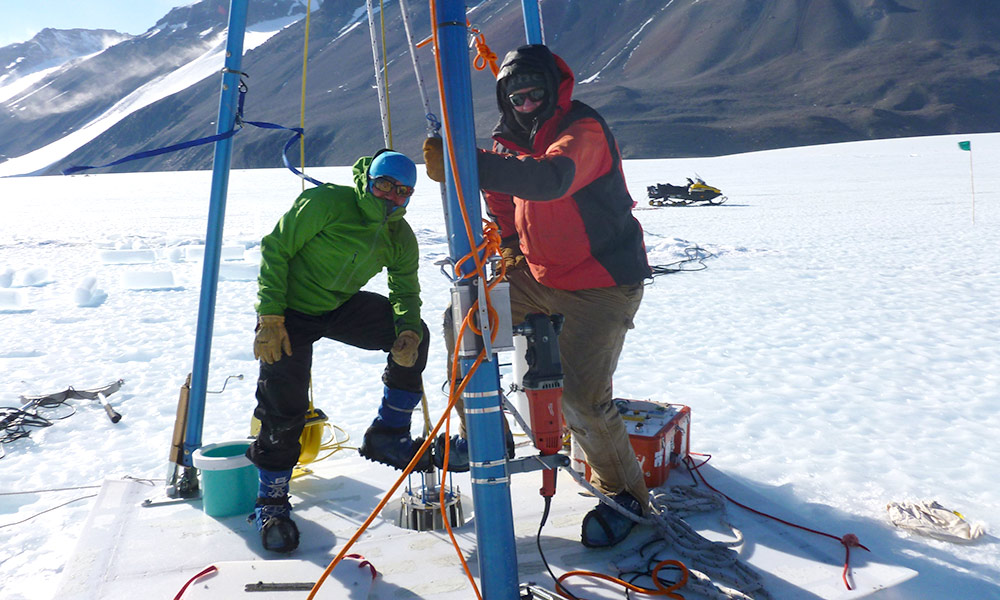
 Researchers including Michael Dyonisius , left, drill ice cores in Antarctica. The researchers used the ice cores to determine how much of the potent greenhouse gas methane from ancient carbon deposits might be released to the atmosphere in warming conditions. (University of Rochester image / Vasilii Petrenko)
Permafrost in the soil and methane hydrates deep in the ocean are large reservoirs of ancient carbon. As soil and ocean temperatures rise, the reservoirs have the potential to break down, releasing enormous quantities of the potent greenhouse gas methane. But would this methane actually make it to the atmosphere?
Researchers at the University of Rochester—including Michael Dyonisius, a graduate student in the lab of Vasilii Petrenko, professor of earth and environmental sciences—and their collaborators studied methane emissions from a period in Earth’s history partly analogous to the warming of Earth today. Their research, published in
View original post 900 more words
 Exposing the Big Game