

Posted byEarthSky VoicesinEARTH|October 25, 2020
The last time CO2 concentrations reached today’s level was 3 million years ago, during the Pliocene Epoch. Hear from geoscientists who see evolving conditions in the Arctic as an indicator of how climate change could transform the planet.Sharing is caring!

Ice floe drifting in Svalbard, Norway. Image via Sven-Erik Arndt/ Arterra/ Universal Images Group/Getty Images.https://dea15168b19b808c6dfb79a3bf4ced77.safeframe.googlesyndication.com/safeframe/1-0-37/html/container.html
ByJulie Brigham-Grette,University of Massachusetts AmherstandSteve Petsch,University of Massachusetts Amherst
Every year, sea ice cover in the Arctic Ocean shrinks to a low point in mid-September. This year it measures just 1.44 million square miles (3.74 million square km), thesecond-lowest valuein the 42 years since satellites began taking measurements. The ice today covers only50% of the area it covered 40 years agoin late summer.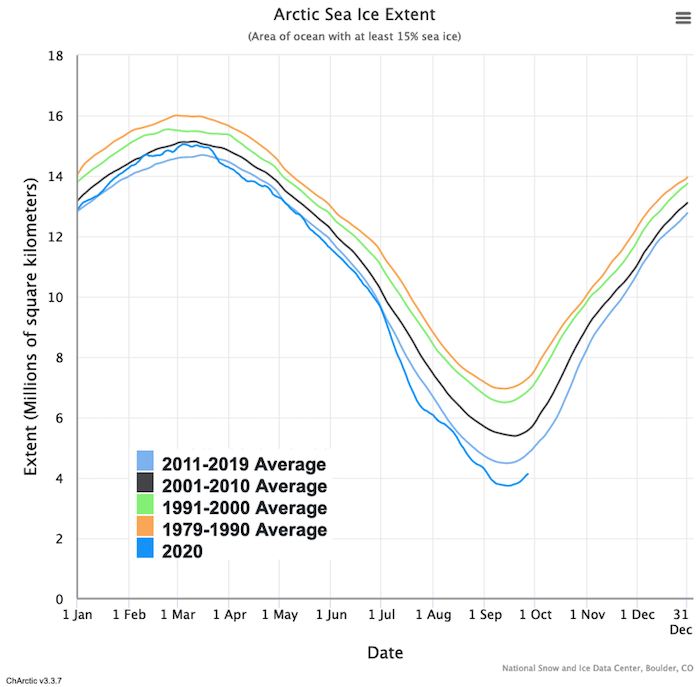
This year’s minimum ice extent is the…
View original post 1,247 more words
 Exposing the Big Game