

TOPICS:AstronomyAstrophysicsExoplanetHubble Space TelescopeNASASpace Telescope Science Institute
By SPACE TELESCOPE SCIENCE INSTITUTE MARCH 13, 2021
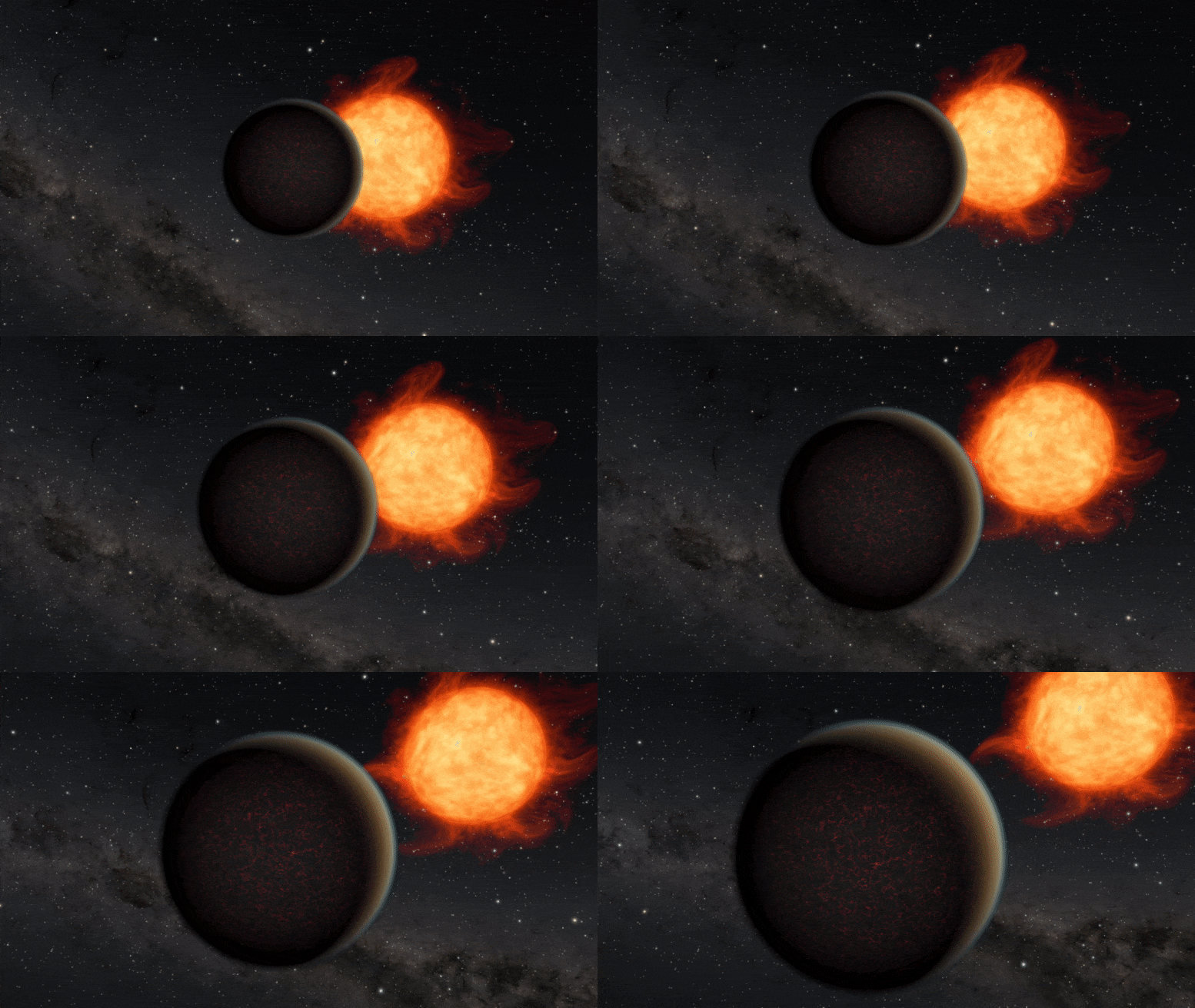
The Earth-sized exoplanet may have lost its original atmosphere but gained a second one through volcanism.
Orbiting a red dwarf star 41 light-years away is an Earth-sized, rockyexoplanetcalled GJ 1132 b. In some ways, GJ 1132 b has intriguing parallels to Earth, but in other ways it is very different. One of the differences is that its smoggy, hazy atmosphere contains a toxic mix of hydrogen, methane and hydrogen cyanide. Scientists usingNASA’sHubble Space Telescopehave found evidence this is not the planet’s original atmosphere, and that the first one was blasted away by blistering radiation from GJ 1132 b’s nearby parent star. The so-called “secondary atmosphere” is thought to be formed as molten lava beneath the planet’s surface continually oozes up through…
View original post 1,415 more words
 Exposing the Big Game