
By Kim ChipmanApril 27, 2021, 4:00 AM PDT
- Climate change seen as threat to Pacific Rim’s ‘keystone’ fish
- Wild salmon woes pose threats to Alaska’s $2 billion industry

LISTEN TO ARTICLE
5:57
SHARE THIS ARTICLE
In this article
0597575DUNIVERSITY OF ALASKA FAIRBANPrivate Company0179553DUNIVERSITY OF CALIFORNIA SANPrivate Company
At OBI Seafoods, a sprawling operation with outposts throughout Alaska, there’s all sorts of extra machinery for workers to master. At Whole Foods Market, there are new guidelines for purchasing salmon from wholesalers. And at Ivar’s, a fixture on Seattle’s waterfront for eight decades, the chef is sending back more and more salmon delivered to his kitchen.
Behind all these changes is an alarming trend that’s been building for years: The giant schools of wild Pacific salmon that can turn southeast Alaska’s ice-cold waters into a brilliant orange blur are thinning out, and those that do survive are shrinking in size.
It’s the shrinking part that’s causing the biggest logistical snarl right now. Many salmon are so small they’ve thrown off OBI’s fish-sorting process and no longer meet the purchasing specifications at Whole Foods and culinary demands at Ivar’s. There, head chef Craig Breeden snaps photos of the fish next to his knife to illustrate their diminutive size before shipping them back.
“It’s very irritating when the supplier sends it to me and I see the size of these fillets,” he said. “In the last eight to 10 years, the salmon sizes have started to get smaller and smaller.”
‘Critical Moment’
More fromDeep-Sea Mining Robot Lost on Cobalt-Rich Floor of PacificCalifornia’s $4 Gasoline May Mean a Price Shock Across U.S.Glaciers Are Melting More Rapidly, Risking Floods and DroughtsChina Wants More Steel at Home as Industry Faces Overhaul
These disruptions are, for now, more a nuisance than serious problem. But they almost certainly presage more costly changes to come and, much more importantly, raise alarm bells about the growing crisis in some key salmon populations that is being driven, according to many scientists, by climate change and more competition for food. Decades after the Atlantic cod fisheries collapsed, concern is now mounting among experts that wild Pacific salmon could face a similar fate.
“The whole thing is out of whack,” said Laurie Weitkamp, a U.S. fisheries biologist at the National Oceanic and Atmospheric Administration. “Salmon managers are realizing that climate change is impacting their stocks and it is generally not favorable and it’s only going to get worse.”
Salmon are so vital that scientists call them a “keystone” species, since animals such as bears and eagles depend on them, and the fish indirectly spread nutrients into ecosystems including forests. A salmon’s life journey from freshwater streams to the ocean and back again to reproduce and die makes them especially vulnerable to warming temperatures and a shifting environment.
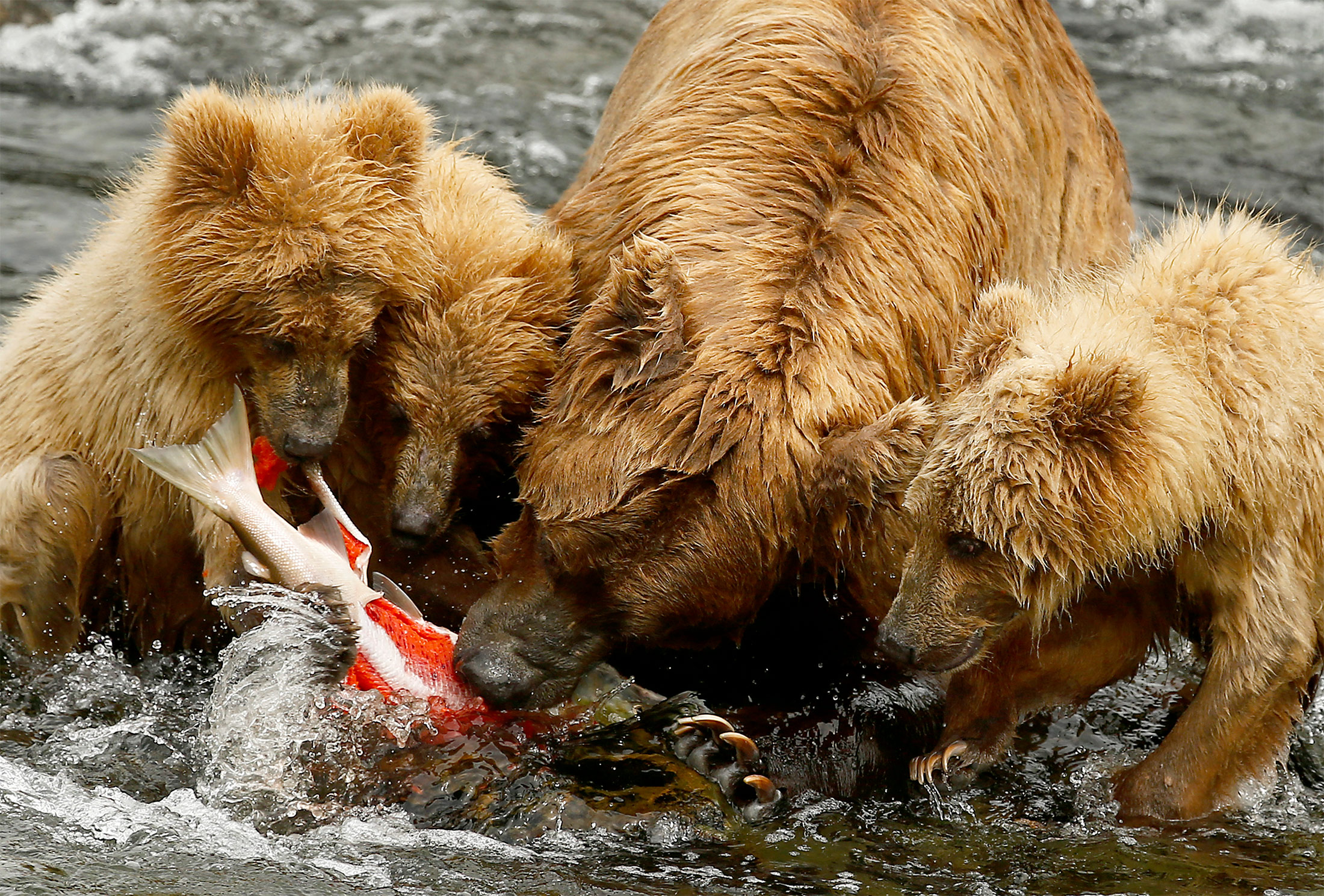
Alaskan salmon are getting smaller partly because they’re returning from the ocean at a younger age, though scientists don’t really know why. The trend is also playing out across the Pacific Rim, from the U.S. mainland and Canada to Russia and Japan.
“When the size and the numbers go down that’s a harbinger of change that is taken as a red flag among many scientists,” said Peter Westley of the University of Alaska Fairbanks, co-author of a study on salmon size published last year with the University of California Santa Cruz.
The scientists examined four of the five Pacific salmon species in Alaska. Chinook — pursued by anglers and valued by restaurants — had the biggest average decline, at 8%, compared with pre-1990 fish. All other species shrunk, with sockeye showing the smallest decline at 2.1%. The most rapid changes were in the past decade.
Dwindling sizes in other species signaled a fishery’s collapse, including Canada’s Atlantic cod three decades ago.
In Europe and New England, the memory of rivers teeming with wild Atlantic salmon is all but forgotten due to overfishing, habitat loss and dam construction that blocked spawning grounds, said David Montgomery, whose 2003 book “King of Fish: The Thousand Year Run of Salmon” warns that the Pacific species could face the same fate. “Sadly, the book is still current.”
Agriculture, mining and other man-made interactions have sent Pacific salmon numbers plummeting in places including the Pacific Northwest’s Columbia-Snake River Basin. In some parts of Canada and the U.S., they’re endangered. Key runs in Alaska and Canada’s British Columbia province are seeing some of the worst years.
B.C.’s Fraser River had record low sockeye run sizes in three of the last five years, with last season setting a new low, said the Pacific Salmon Commission, which oversees management of the fish in the U.S. and Canada.
Collapsing Fisheries
“We are seeing a march north on the declines and collapses of salmon fisheries,” said Guido Rahr, head of Portland, Oregon-based Wild Salmon Center. “Japan has almost no wild fish left. In parts of Russia, once massive salmon runs are collapsing due to overfishing.”
Russia and the U.S. make up 85% of the world’s remaining Pacific salmon.
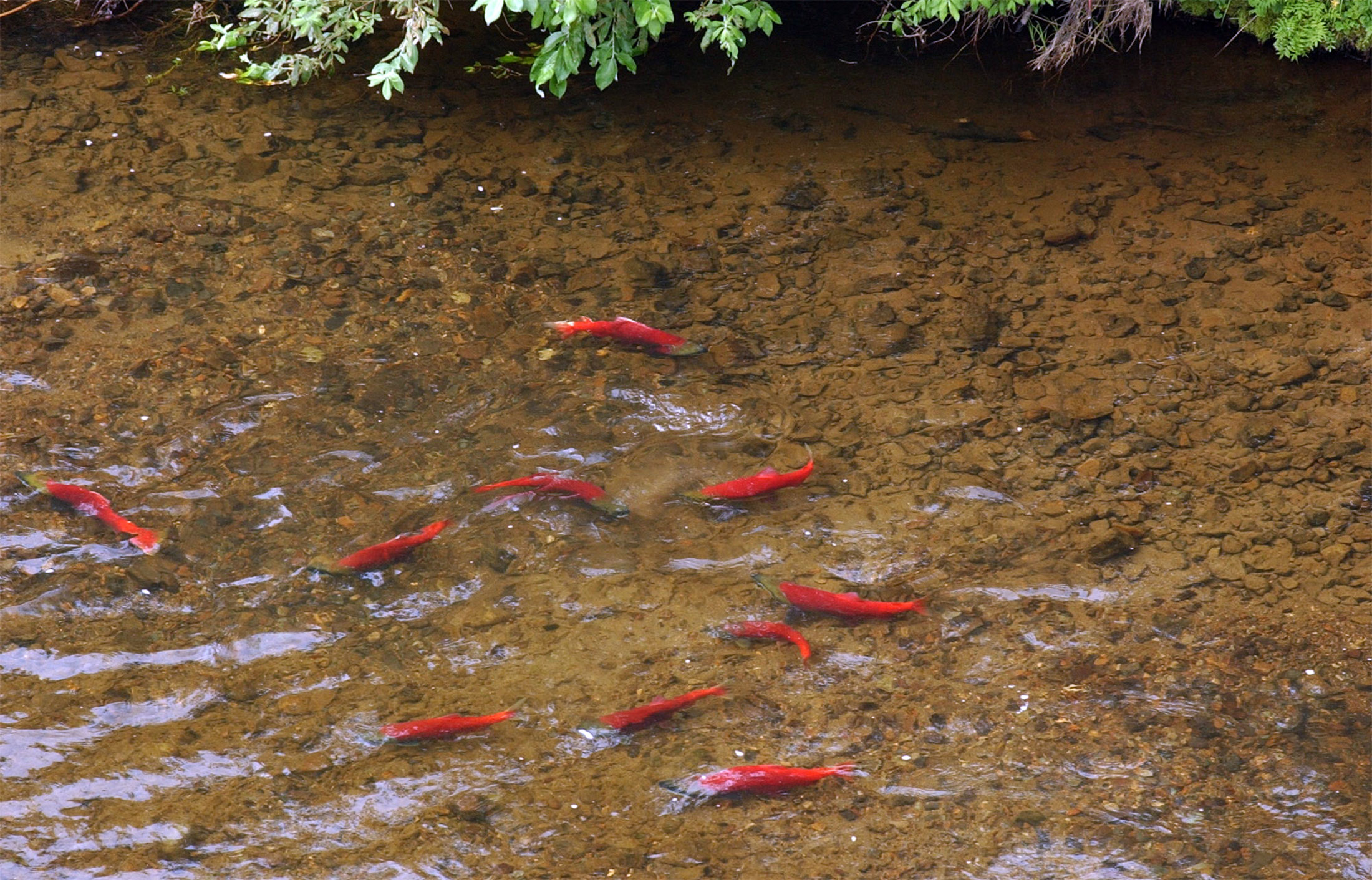
Less weighty catches mean fewer dollars for the $2 billion industry. Last year’s haul garnered $295.2 million, down 56% from 2019, Alaska estimates show.
“Salmon is such a nuanced and interconnected species — one little tweak when they are young can make a big change,” said Arron Kallenberg, founder and chief executive officer of seafood retailer Wild Alaskan Co. “From an industry standpoint it certainty makes an impact.”
While salmon runs in some areas saw steep population declines, Bristol Bay — supplier of about half the world’s sockeye — has had booming harvests. Even so, signs of smaller fish abound, OBI Seafoods CEO Mark Palmer said.What on Earth?The Bloomberg Green newsletter is your guide to the latest in climate news, zero-emission tech and green finance.EmailSign UpBy submitting my information, I agree to the Privacy Policy and Terms of Service and to receive offers and promotions from Bloomberg.
Historically, 4-pound sockeye and larger — key for commercial fisheries — comprise as much as 70% of each season’s Bristol Bay catch, Palmer said. Today, those larger salmon are no more than half the catch.
“Your yields go down a little bit with smaller fish,” he said.
At southeast Alaska’s Klukwan village, 115 miles north of Juneau, fishing nets have told the tale of shrinking salmon for years.
“Something is out of whack in the ocean and we wish we knew a way to fix it,” said Jones Hotch Jr., a tribal council member of this community of 40 families along a river whose indigenous name means “winter container for salmon.”
They depend on annual salmon return, which is why Hotch Jr. is pushing for stronger environmental protections against mining and other threats to the Chilkat River.
“My drive for saving our river for salmon runs to the very marrow of my being,” the 70-year-old said. “I believe that when we save our salmon, we save and preserve our culture.”
 Exposing the Big Game
Reblogged this on Committee to Abolish Sport Hunting Blog.
“Salmon are so vital that scientists call them a “keystone” species, since animals such as bears and eagles depend on them, and the fish indirectly spread nutrients into ecosystems including forests.” What’s left to say except ‘threatened species welcomes salmon to the club.’