

Earlier this month, the USDA reported the first case of Eurasian H5 avian influenza in the US since 2016.
By TZVI JOFFRE Published: JANUARY 24, 2022 08:55
https://www.jpost.com/health-and-wellness/article-694366


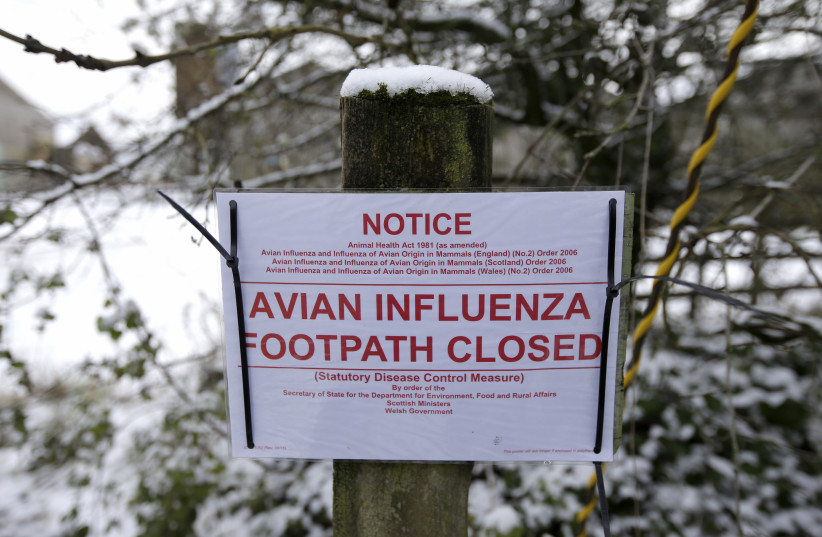
A sign at the edge of an exclusion zone warns of the closure of a footpath after an outbreak of bird flu in the village of Upham in southern England, February 3, 2015.(photo credit: REUTERS/PETER NICHOLLS)Advertisementhttps://trinitymedia.ai/player/trinity-player.php?pageURL=https%3A%2F%2Fwww.jpost.com%2Fhealth-and-wellness%2Farticle-694366&unitId=2900003088&userId=43dabe08-2b1a-4c7c-bafe-85ac9a956566&isLegacyBrowser=false&version=20220124_f72f860bfd9c3551b2d6b109e6a4485f247ff3b3&useCFCDN=0&themeId=140
Two additional wild birds have been found to be infected with highly pathogenic avian influenza (HPAI) A(H5N1) virus in South and North Carolina, the United States Department of Agriculture’s (USDA) Animal and Plant Health Inspection Service (APHIS) announced on Tuesday.
The two birds were found to be infected just days after a wild American wigeon was found to be infected with the virus in Colleton County, South Carolina, thefirst case of Eurasian H5 avian influenzain the US since 2016. Other variants of the bird flu…
View original post 590 more words
 Exposing the Big Game