

The Devoncoastline reveals that Earth was in a near-lifeless state for up to five million years after the last extinction event
Thu 3 Nov 2022 04.00 EDT
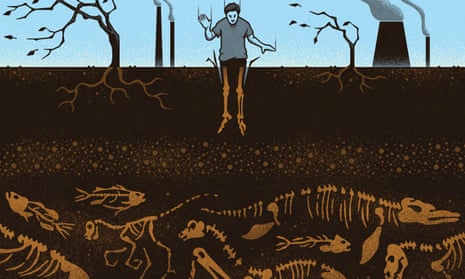
Budleigh Salterton, on the south coast of Devon, sits above the most frightening cliffs on Earth. They are not particularly high. Though you don’t want to stand beneath them, they are not especially prone to collapse. The horror takes another form. It is contained in the story they tell. For they capture the moment at which life on Earth almost came to an end.
The sediments preserved in these cliffs were laid down in the early Triassic period, just after the greatest mass extinction in the history of multicellular life that brought the Permian period to an end 252m years ago. Around90% of species died, and fish and four-footed animals weremore…
View original post 1,010 more words
 Exposing the Big Game