

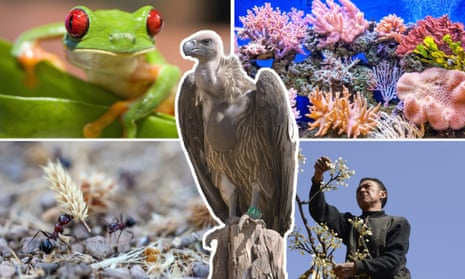
Seven ways in which our destruction of the natural world has led to deadly outcomes
The age of extinction is supported by

@phoeb0Tue 22 Nov 2022 02.00 EST
1.As Indian vultures decline, the number of rabies cases rise
In the early 1990s, vultures across India started dying inexplicably. Long-billed, slender-billed and oriental white-backed vultures declined to the brink of extinction, with the number of India’s most common three vulture species falling by more than97% between 1992 and 2007. Six other species were in sharp decline too. Scientists started testing the dead birds and worked outthey had been exposed to diclofenac, an anti-inflammatory drug routinely given to cattle in south Asia…
View original post 1,189 more words
 Exposing the Big Game