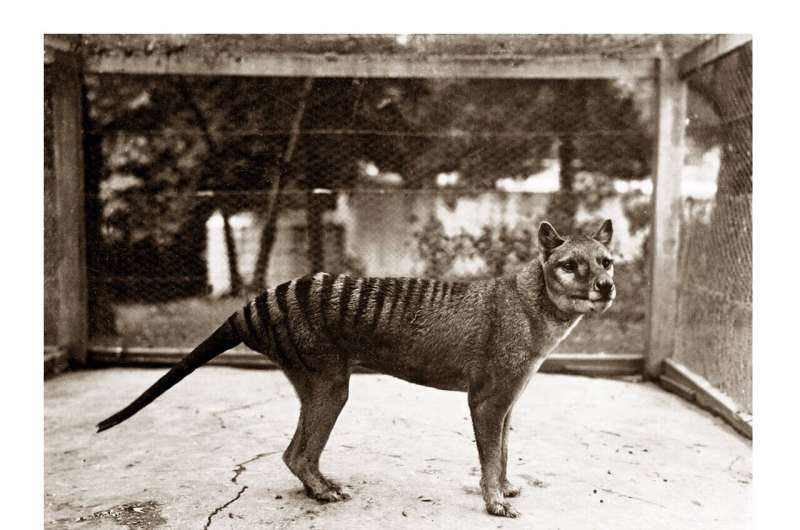
Simulated extinction dates for the Thylacine in Tasmania, using all 1,237 quality-rated sighting records. a. Probability-density distribution of the inferred extinction date from the optimal linear estimator, based on probabilistic re-sampling of all 1,237 specimens and observational records from 1910–2019, with the low scenario for probability weightings on the uncertain records. b. Cumulative probability of persistence at a given calendar year, as derived from the distribution shown in a. In each panel, the blue and red vertical lines show the mean time of extinction and upper 95% confidence bound, respectively. c. Sensitivity heatmap, a merger of upper/lower -bound weights assigned to the sighting-type probabilities (default/conservative): physical records = 1/1, expert observations = 0.25/0.05, expert indications (e.g., footprints, scats) = 0.1/0.01, other observations = 0.05/0.005, other indications = 0.01/0.001. Photograph is of the last captive Thylacine, taken on 19th December 1933 at the Hobart Zoo…
1 thought on “Researchers tentatively place Tasmanian tiger extinction in the late 1990s”
Wiped out by blatantly lying hunters and farmers claiming these creatures decimated their livestock – an action the Thylacine couldn’t physically achieve. The last Thylacine was a male named Benjamin who died in Hobart Zoo due to neglect.


 Exposing the Big Game
Wiped out by blatantly lying hunters and farmers claiming these creatures decimated their livestock – an action the Thylacine couldn’t physically achieve. The last Thylacine was a male named Benjamin who died in Hobart Zoo due to neglect.