
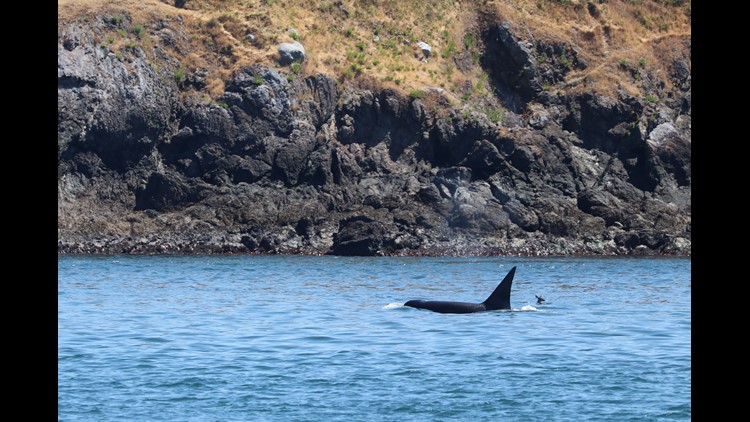
The naturalist who captured the photo said the orca seemed uninterested in the deer; however, the deer was likely intimidated by the whale.
03:4631:31
- https://www.king5.com/article/news/local/deer-swims-past-orca-battleship-island-san-juan/281-84d3d8e2-a296-442c-a383-53d783ab5634
Author: KING 5 Staff
Published: 4:02 PM PDT June 6, 2023
Updated: 7:02 PM PDT June 6, 2023


SAN JUAN COUNTY, Wash. — Photos snapped near San Juan Island show a swimming black-tail deer crossing paths with a Bigg’s orca.
A naturalist, Sam Murphy with Island Adventures Whale Watching and the Pacific Whale Watching Association (PWWA), captured the photos on Sunday, June 4 at Battleship Island. Murphy didn’t see the deer initially, according to PWWA Executive Director Erin Gless, who shared the photos with KING 5.
“She said that the whale swam right by and didn’t seem interested in the deer at all,” Gless wrote. “Sam didn’t notice the deer until she was looking at her pictures afterward, making for a fun surprise. Probably not enough meat/fat on a deer’s bones to tempt these whales, who are used to eating seals and sea lions, but would probably be an intimidating experience for the deer, I’m sure!”
Deer swims past Bigg’s orca off Battleship Island


1/3×
Sam Murphy, Island Adventures Whale Watching, Pacific Whale Watching Association
Bigg’s killer whales are also known as transients, with a home range that spans from Alaska to Northern California, according to the Georgia Strait Alliance. In recent years, the whales have been spotted more and more often in the Salish Sea, with sightings reported year-round. The orcas are apex predators and hunt other marine mammals in groups, including sea lions, seals, and other types of whales, including juvenile gray and humpback whales, according to the Georgia Strait Alliance.
Deer are excellent swimmers and are known to be frequent visitors to the San Juan Islands. However, the deer population has decreased in recent years according to the Washington State Department of Natural Resources, thought to be related to a deadly adenovirus hemorrhagic disease that is believed to have reached the San Juans in 2021. However, the Department of Fish and Wildlife estimated the population could rebound relatively quickly.
 Exposing the Big Game
Reblogged this on Committee to Abolish Sport Hunting Blog.