
24 December 2023
3 minutes https://geographical.co.uk/news/wolf-hunting-could-be-allowed-within-the-eu
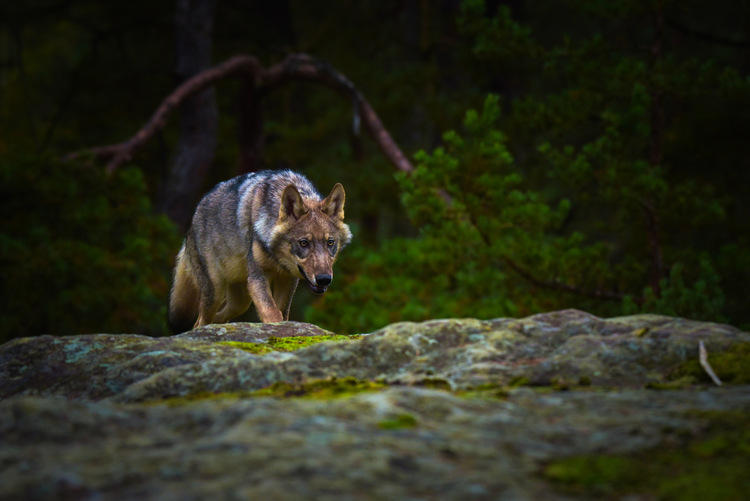
The European Commission recomends the downgrading of wolf protection status in a move that could lead to the resumption of controlled hunting of wolves in Europe.
There is perhaps no more iconic a creature in Europe than the grey wolf. It is an integral part of our shared European history and culture. Rome itself was said to have been founded by two brothers raised by a she-wolf. The wolf is also prominent in Norse mythology and Germanic culture. There is also the long symbolism in European Christianity, with the wolf representing the devil chasing after ‘sheep’ (the faithful flock). And, last but not least, what sort of European fairy tale doesn’t feature a Big Bad Wolf?
In so many of these cultural representations the wolf in Europe was portrayed in a negative light, and as a dangerous creature that it would be better to be rid of. And, unfortunately, that is pretty much what we did. But, while the last wild European wolf was killed in the UK in 1760, it remained widespread across almost all of mainland Europe until 1800 after which – thanks to persecutaion – populations started to decline. By 1960 its range was limited to eastern Europe and small mountainous pockets of Italy and northwest Spain.
Enjoying this article? We have thousands more for you.
Get immediate access to over 1,000 Geographical magazines in our archive back to 1935.
Sign up today and you will soon be travelling back through time reading all our amazing features of the last eight decades PLUS… you also get to enjoy every new issue of Geographical each month going forward in both print and digital formats.
Simply press the button below to choose the perfect package for you.

But then, after centuries of persecution, in the 1980’s and ‘90’s strong EU wide laws were brought in to protect the remaining wolf populations and their habitats. At the same time, in eastern Europe (as well as other parts of Europe) the trend of rural depopulation meant that farmland was being abandoned and wolves suddenly had more space open to them. And all this has meant that in the past few decades Europe’s wolf population has been bouncing back and is quickly reclaiming large parts of its former 19th Century territory. According to a 2022 report prepared for the Large Carnivore Initiative for Europe there are now 19,000 wolves distributed across the 27 EU member states (up from 14,300 in 2016) and 21,500 across Europe as a whole.
As the wolf population has risen within the EU, so attitudes to wolves in Europe have changed and, according to a November 2023 survey, a majority of rural inhabitants (68 per cent) in the EU – including farmers (65 per cent) – welcome the return of the wolf and believe that wolves should remain strictly protected.
However, the European Commission itself does not agree and has proposed a downgrading the wolfs protected status from that of Strictly Protected to simply Protected, and the change matters because by downgrading the wolves status controlled hunting will once again be authorised within the EU.
Naturally, conservationists are up in arms about the decision with 300 conservation NGO’s writing to European Commission President, Ursula von der Leyen to express concern at the decision and arguing that the current scientific assessment of the wolf population in western Europe does not justify a change in protection. However, von der Leyen is not likely to be championing the cause of the wolf. In September 2022 her pony, Dolly, was famously killed by a wolf that had managed to creep into the animals well-guarded compound in north-west Germany. Speaking about the proposed downgrading of wolf protection status, the European Commission President has said, ‘The comeback of wolves is good news for biodiversity in Europe. But the concentration of wolf packs in some European regions has become a real danger, especially for livestock. To manage critical wolf concentrations more actively, local authorities have been asking more flexibility’.

Before any change to the wolf’s protected status takes place, it must first be agreed by EU member states and other parties to the Berne convention.
Related articles:
 Exposing the Big Game
Protecting livestock and managing populations for human comfort. Heard it all before – it’s the same tired lie that’s been pushed by hunters and farmers for generations. The truth is it’s to line their pockets with money from wolf pelts and all because some stuck up, self-important, heartless narcissist can think they look good in fur.
Getting real sick of the uptick in idiots being given any authority whatsoever.
You know, I saw this headline elsewhere a few days ago and I didn’t say anything, hoping it was fake news. The EU president needs to watch over her animals better. It’s just impossible for people to behave rationally around the subject of wolves. I really don’t even accept that as the truth.
I am dreadfully disappointed in Europe – the birthplace of wolf hate, and who brought that irrational, superstitious hate to this country, the US.
” ‘Deep ecology’ and the equal right to exist
In this task, the work of Norwegian environmental philosopher Arne Næss (1912-2009) might be of help. Næss is known as the father of “deep ecology”, an ethical theory that contends that all life has intrinsic value. Næss argued that all beings, whether human or nonhuman, have an equal right to exist and flourish, a principle he called “biospheric egalitarianism.”
As this applies to wolves, Næss was clear: wolves have just as much a right to be here as we do.”
https://phys.org/news/2023-12-viewpoint-europe-wolf-problem-late.html
Everywhere wolves exist, they need permanent protection, because people cannot be trusted to do it fairly on their own. Have not for centuries, and probably never will.