
Curated By: News Desk
Edited By: Shilpy Bisht
Last Updated: JUNE 11, 2024, 00:58 IST
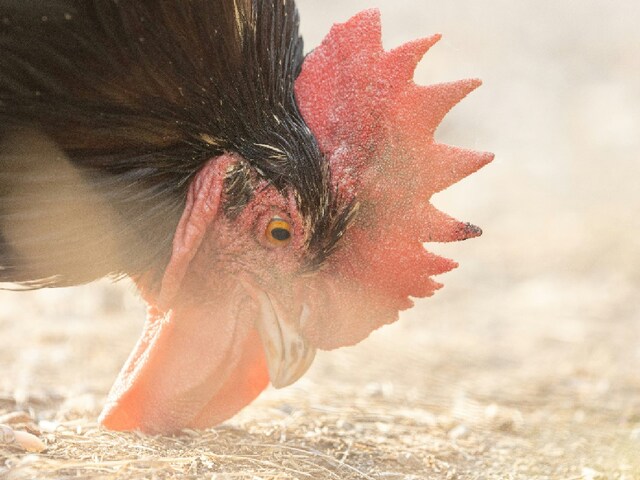
The threat of avian flu for people has become a priority for health officials and learning how the virus is moving from species to species. (Image: Unsplash)
According to the Mexican health ministry, the man had a history of chronic kidney disease, type 2 diabetes and long-standing systemic arterial hypertension. An FAO official said the risk of getting avian flu through eating poultry was ‘negligibly low’
Why NEET Candidates Are Demanding Probe Into UG Exam, How Come There Were 67 Toppers This YearNEXT »How BJP Has Fine-Tuned Bihar Caste Equations By Giving 8 Ministerial Berths In Modi Govt 3.0
The death of a person due to H5N2 bird flu is keeping many scientists and experts worried. The World Health Organization (WHO) confirmed that the death of a 59-year-old man in Mexico caused by a strain of bird flu was unusual.
Unlike the recent cases of H5N1 in people in the US, the patient did not have any known exposure to infected animals, but outbreak of H5N2 was reported in poultry in Mexico.
So, what does this mean?
The H5N1 has been found in 11 house mice in New Mexico, according to the US Department of Agriculture. Farms also reported H5N1 outbreaks in cows. So, it is possible that the mice consumed unpasteurized milk, which infected them. This means, the virus in inching closer to humans since most people are likely to encounter house mice than dairy cattle.
The threat of avian flu for people has become a priority for health officials and learning how the virus is moving from species to species. It is also not clear what tissue samples from the mice were positive. So, it is not known if the mice are transmitting the virus through urine or feces.
IS THE MEXICAN MAN’S DEATH A CONCERN?
According to the Mexican health ministry, the man had a history of chronic kidney disease, type 2 diabetes and long-standing systemic arterial hypertension. He had been bedridden for three weeks before the onset of acute symptoms, developing fever, shortness of breath, diarrhoea, nausea and general malaise on April 17.
The man was taken to the hospital in Mexico City on April 24 and died later that day. “The death is a multi-factorial death, not a death attributable to H5N2,” WHO spokesman Christian Lindmeier told journalists in Geneva.
Seventeen contacts of the case in the hospital were identified. All tested negative for influenza. “The infection of H2N5 is being investigated to see if the man was infected by somebody visiting or by any contact with any animals before,” Lindmeier said.
RELATED STORIES
- Why NEET Candidates Are Demanding Probe Into UG Exam, How Come There W…
- What is China’s Moon Mission Chang’e-6? How Far It Can Go To Explore T…
- From Jawaharlal Nehru To Narendra Modi, A Look At Longest-Serving Prim…
- Why NEET Candidates Are Demanding Probe Into UG Exam, How Come There W…
- What is China’s Moon Mission Chang’e-6? How Far It Can Go To Explore T…
- From Jawaharlal Nehru To Narendra Modi, A Look At Longest-Serving Prim…
- Why NEET Candidates Are Demanding Probe Into UG Exam, How Come There W…
- What is China’s Moon Mission Chang’e-6? How Far It Can Go To Explore T…
- From Jawaharlal Nehru To Narendra Modi, A Look At Longest-Serving Prim…
The UN’s Food and Agriculture Organization (FAO) said the risk of getting avian flu through eating poultry was “negligibly low”. “In all the hundred years of avian influenza… there has not been any demonstrated food-borne transmission,” Markus Lipp, senior food safety officer at FAO told the media via a video link.
You May Like
Ready for a challenge?Hero WarsPlay Now
He explained humans do not have “avian influenza receptors in their gastro-intestinal tract, contrary to certain animal species, as far as we know. So, there is a very slim likelihood, just from that perspective”.
However, the H5N1 was first identified in humans in 1997.
WHAT IS H5N2?
H5N2 is just one of several kinds of avian influenza viruses. The viruses are classified based on two types of protein on their surfaces: hemagglutinin, or H, which plays a crucial role in allowing the virus to infect cells, and neuraminidase, or N, which helps the virus spread. Many different combinations of H and N proteins are possible.
H5N2 belongs to a family of bird flu viruses called H5, which primarily infects wild birds. There are a total of nine known subtypes of H5 viruses, according to the Centers for Disease Control and Prevention.
H5N1, which was detected in dairy cows in the US in March, also belongs to this family.
Top VideosView All
- June 11, 2024, 11:06 ISTFar Right Makes Strong Gains In EU Elections As Center Holds Majority
- June 11, 2024, 11:06 ISTHezbollah Tries To Down Fighter Jets As Border Fighting Further Ratchets Up
- June 11, 2024, 11:06 ISTUS Provided Intelligence That Helped Israel’s Hostage Rescue Operation
- June 11, 2024, 11:06 ISTRise Of Chirag Paswan: From Failed Actor To Minister In Modi 3.0 Cabinet
- June 11, 2024, 11:06 ISTDelhi Records 32 Days of 40°C+ Temperatures, Longest Spell in 14 Years
In India, the virus has been found in Kerala. The state health minister, Veena George, stressed that bird flu has not affected humans in the state, but it’s important to take precautions to prevent its spread. Around 21,000 ducks were culled in Edathua and Cheruthana, the epicenters of the bird flu outbreak. Additionally, all domesticated birds within a one-kilometer radius of the outbreak zones will be killed.
H5N1 has infected people in 23 countries since 1997, according to the CDC, resulting in severe pneumonia and death in about 50% of cases.
 Exposing the Big Game