
- facebook (opens in new window)
- twitter (opens in new window)
- linkedin (opens in new window)
- email (opens in new window)

The escalating bird flu crisis is ravaging the nation’s supply of eggs, leading to increased prices and low-to-no stock at grocery stores, while chicken supply appears largely unchanged.
The big picture: The hens that lay eggs are not the same as the chickens raised for consumption.
- Broiler chickens, raised for meat, are completely different from layer hens raised to lay eggs, according to Tom Super of the National Chicken Council, which represents the country’s chicken producers.
- “They’re raised on different farms in completely different industries,” Super told Axios.
Zoom in: Egg-laying hens typically start laying eggs after around 18 weeks, at which point they can stay productive for a year or longer, said Matt Sutton-Vermeulen, a supply chain expert on eggs, milk and meat for management consultancy Kearney.
- Broiler chickens, on the other hand, are typically led to the slaughterhouse after anywhere from six to eight weeks, he told Axios.
- “It’s a whole different cycle,” Sutton-Vermeulen said. “You don’t have the pressure of time that they can be exposed to the virus.”
Between the lines: This helps explain why Tyson Foods recently projected a 2% increase in its chicken production for its 2025 fiscal year even as the bird flu ravages egg production.
- The company said its chicken business turned in its best performance in eight quarters in the latest three-month period on an adjusted operating income basis.
- Tyson also says it has a strong biosecurity plan to protect its operations from the bird flu.
Yes, but: Chickens have also been susceptible to the bird flu, just not to the same extent.
- Between Feb. 8, 2022, and Jan. 29, 2025, less than .0005% of all broiler production in the U.S. was impacted by the bird flu, per data from the Animal and Plant Health Inspection Service of the USDA.
- The age of the chicken, geographic region and relation to migrant bird flyways can affect its susceptibility to avian influenza, Super said. Biosecurity on farms and different housing styles could also be factors.
More from Axios:
- Waffle House adds egg surcharge, citing bird flu-fueled shortage
- Egg shortages, higher prices spike as bird flu grows
- Bird flu causing egg prices to soar to new record high
- facebook (opens in new window)
- twitter (opens in new window)
- linkedin (opens in new window)
- email (opens in new window)
Go deeper


Jan 23, 2025
Bird flu is causing an egg-istential crisis
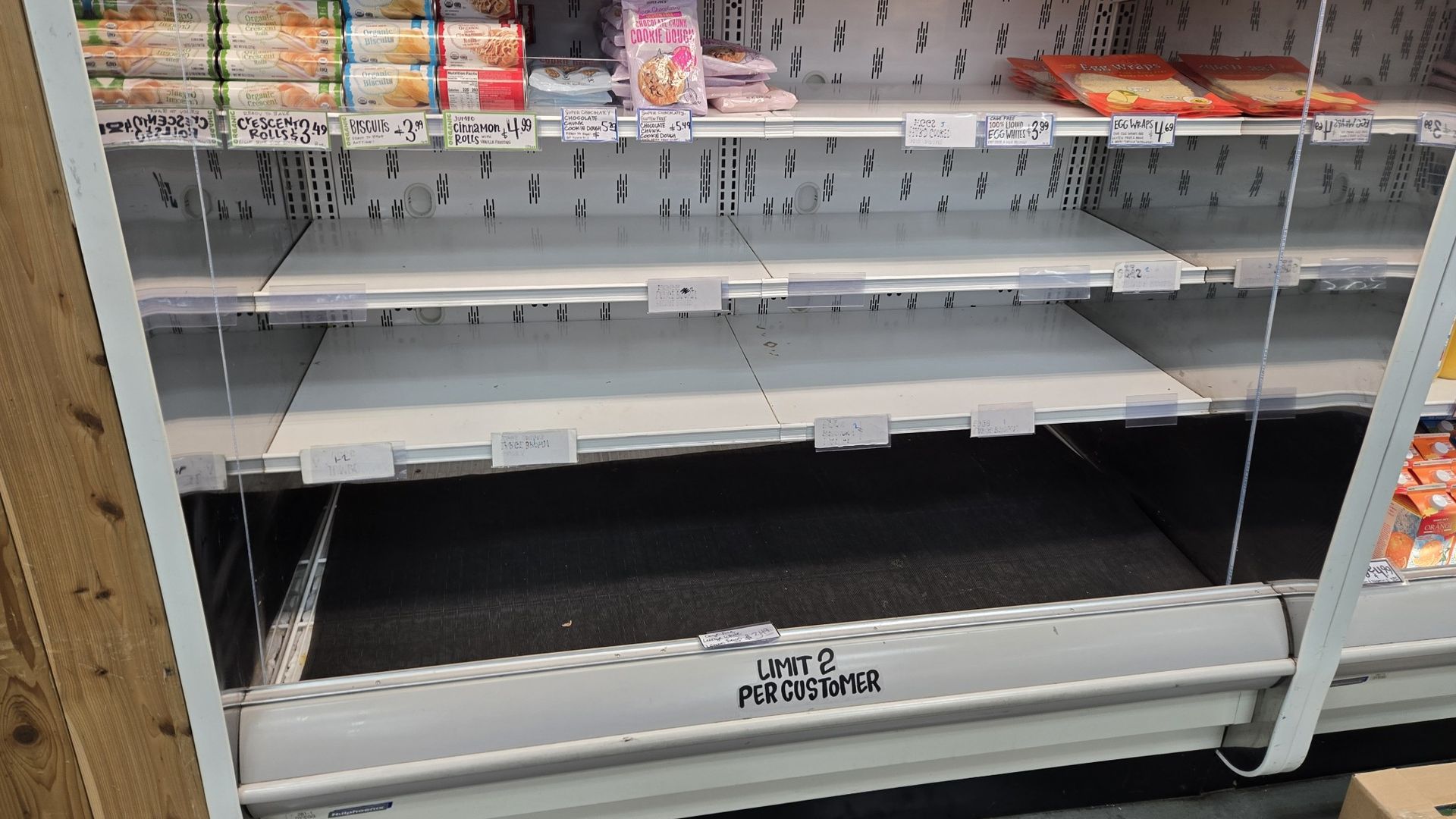
Bird flu is to blame for the elevated egg prices, rations and empty shelves at local grocery stores.
The big picture: A growing outbreak of avian influenza has affected nearly 13 million birds in the last 30 days, according to USDA data, and it’s causing a nationwide egg shortage.
- facebook (opens in new window)
- twitter (opens in new window)
- linkedin (opens in new window)
- email (opens in new window)
Jan 21, 2025 –Business
Egg shortages, higher prices spike as bird flu grows
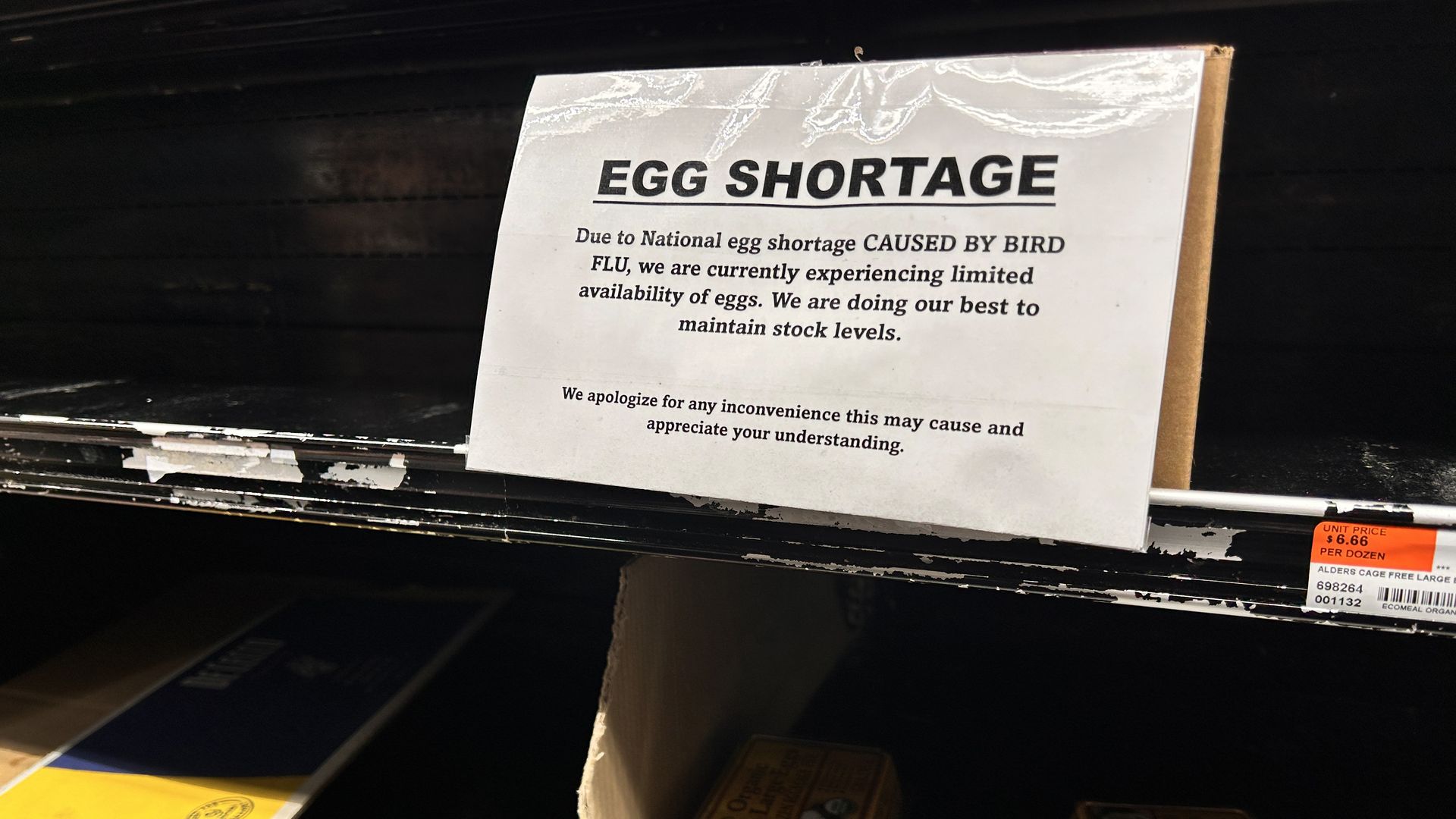
The escalating bird flu crisis is ravaging the nation’s supply of eggs, leading to increased prices and presenting an immediate challenge for the Trump administration.
Why it matters: An outbreak of avian influenza is growing and has affected nearly 13 million birds in the last 30 days, according to USDA data.
- facebook (opens in new window)
- twitter (opens in new window)
- linkedin (opens in new window)
- email (opens in new window)
Feb 4, 2025 –Business
 Exposing the Big Game