
A new book argues against human exceptionalism about what animals truly feel.
Updated August 23, 2025 | Reviewed by Margaret Foley
- Share
- https://www.psychologytoday.com/us/blog/animal-emotions/202508/why-animal-sentience-must-be-used-to-reform-constitutions
- Tweet
- Share on Bluesky
- Share
Key points
- This book breaks new ground by challenging the human-centeredness of constitutional theory.
- Constitutions must respect animals’ intrinsic value to protect their bodily integrity and liberty.
- Sentient beings governed by a constitution need to be granted an equal right to democratic participation.
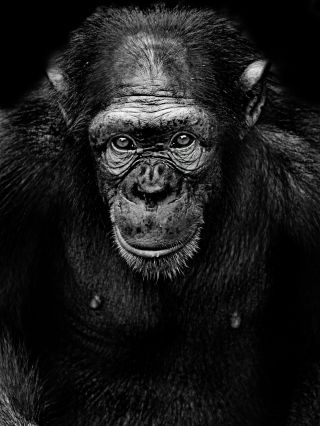
Source: Ishara Kasthuriarachchi/Pexels
A large body of scientific evidence stemming from studies of diverse species clearly shows that many nonhuman animals (animals) are sentient beings.1 Because these studies show that the biodiversity of sentience is large and growing, in their new book Animals and the Constitution: Towards Sentience-Based Constitutionalism, Drs. John Olusegun Adenitire and Raffael Fasel wonder why animals are excluded from enjoying constitutional rights and protection. Here’s what Raffael had to say about their very important, challenging, and forward-looking book.
Marc Bekoff: Why did you write Animals and the Constitution: Towards Sentience-Based Constitutionalism?
Raffael Fasel: The seed for this co-authored book was planted when my co-author John Olusegun Adenitire and I started discussing our respective Ph.D. projects at the University of Cambridge―animal rights and human rights in my case, and constitutional law and freedom of religion in his. As we were immersing ourselves in the existing literatures in our fields, we soon noticed a gap in the constitutional theory literature. While political philosophy and ethics had their ‘animal turn’ decades ago, constitutional theory and constitutional law more broadly are still firmly anthropocentric. Our book aims to fill this gap by making the case for a more capacious understanding of constitutionalism based on sentience and by reimagining what democracy, the rule of law, and other central constitutional principles would look like if they catered to the interests of all sentient animals.
MB: Is this book a one-off collaboration for you, or does it reflect your research interests more broadly?
RF: The book represents my wider interest in exploring the intersection of constitutional law and animal law, and it ties in to previous work of mine on the relationship between human and animal rights. Constitutions are at the top of the legal hierarchy―or, as my co-author John likes to put it, they form the very foundation of the legal system. As such, they embody the central values and enshrine the key principles that governments, legislators, and courts need to further in their actions. It is therefore essential to demonstrate how animal law can inform constitutional law―and vice versa―so that animals are given their due.
MB: What is the book’s target audience?
RF: As anyone who reads the book will appreciate, it adopts an interdisciplinary approach that combines insights from political philosophy, constitutional law, and human rights practice. Although it might seem a fairly theoretical work, we did our best to present it as accessibly as possible. Hence, it should attract scholars, students, policymakers, and activists alike. Also, because the book does not focus on any one constitution but rather draws on examples from around the world, it should be appealing to an international audience.
article continues after advertisement
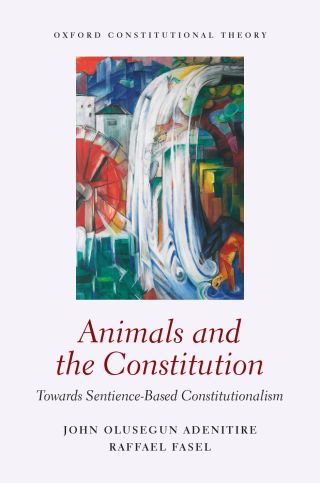
Source: Oxford University Press/Used with permission
MB: Why should constitutions become less anthropocentric in your view?
RF: For a simple reason: Constitutions govern animals’ lives, yet their interests remain largely disregarded. Let me unpack this. Constitutions govern the lives of animals by creating the legal structures that allow treating animals as ownable things that we can use as resources for our own purposes. If constitutions did not permit this―for example, by giving animals certain fundamental rights―then neither state authorities nor private individuals and corporations could use animals in the exploitative ways they do today. What is more, animals are not inanimate entities like buildings, which lack the capacity to care about whether or not they are legally regulated. By contrast, many animals are sentient beings and therefore have inherent value that constitutions need to protect. Our book proposes that constitutions can do so by giving all sentient beings whom they govern due concern. This entails showing respect for animals’ intrinsic value by protecting their basic interests, such as their interest in life, bodily integrity, or liberty.
MB: How do you propose to “reimagine” democracy, the rule of law, and other constitutional concepts?
RF: The book focuses on four pivotal constitutional principles―the rule of law, fundamental rights, proportionality, and democracy―and it rethinks them in a sentience-based way. Let me give you an example: democracy. We argue that all sentient beings governed by a constitution need to be granted an equal right to democratic participation. This does not mean that animals should be granted exactly the same rights as humans. For example, animals would not receive the right to vote or to run for office. However, importantly, they still need to be afforded opportunities to participate in the democratic process on equal terms. To accomplish this, we propose, among other things, to reserve seats in parliaments for sentient beings’ representatives. These representatives would be tasked with representing animals’ interests in the lawmaking process, and they would be elected through special selection assemblies whose members are drawn by lot.
MB: What has been the response of constitutional lawyers and theorists so far? Do they agree that adopting a sentience-based constitution is key to respecting animals?
RF: Having presented our book in a variety of different forums, we have been surprised by the generally very positive response we have received, even from scholars who adopt a more traditional approach to constitutional law. Although some of them took issue with specific aspects of the book, no one challenged the overall argument for sentience-based constitutionalism. In our view, it is impossible for animals to be given the respect they are due as long as constitutions remain centred around humans. Our sense is that more and more people are coming around to this view, too.
 Exposing the Big Game