
Since September, turkey and egg farms have lost millions of birds, renewing pressure on food prices and biosecurity
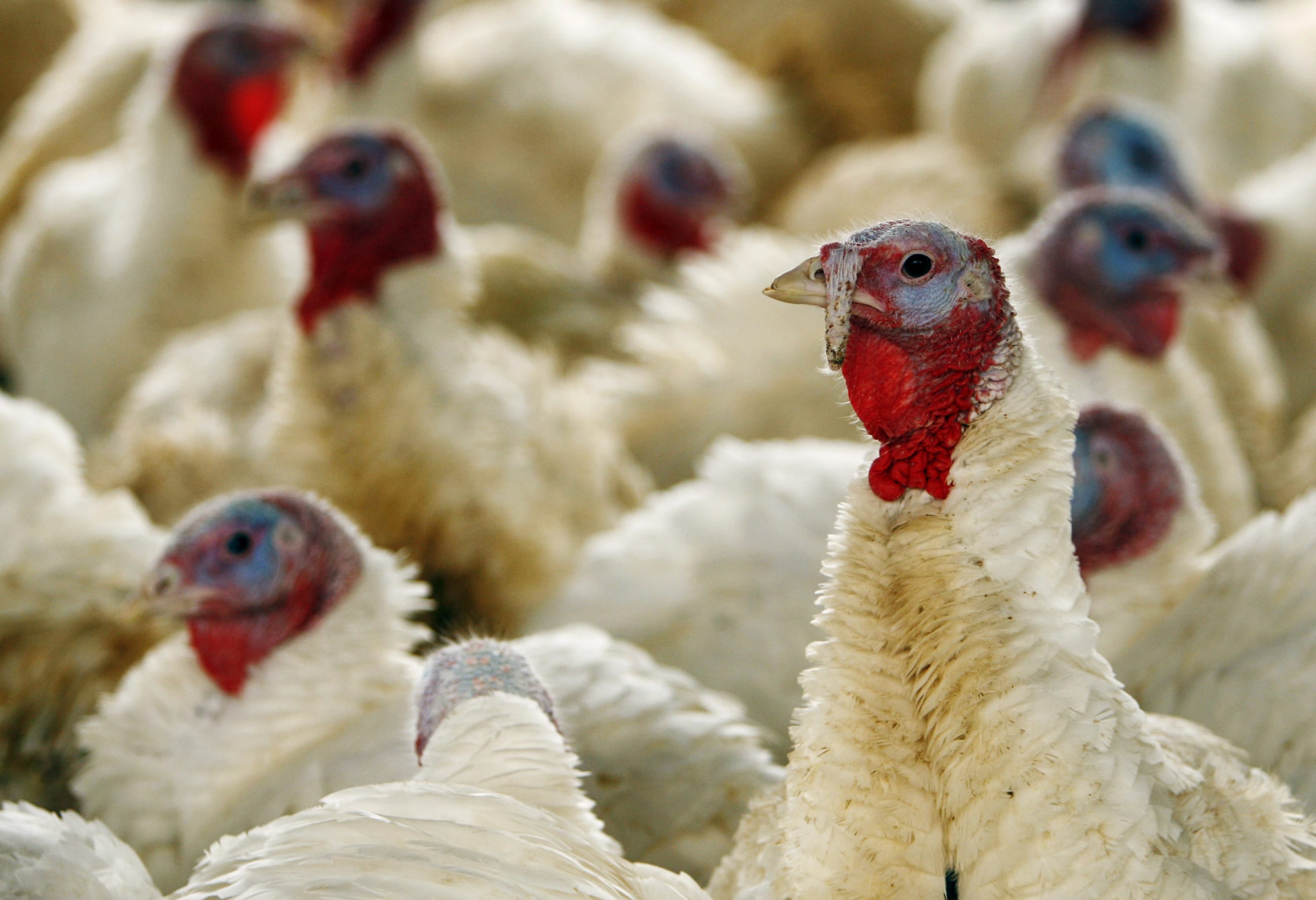
Turkeys stand in their pen at the Seven Acres Farm in North Reading, Massachusetts, on November 21, 2007, one day before the Thanksgiving holiday in the United States. REUTERS/Brian Snyder
by Nsikan Akpan
October 24, 2025
Another bird flu season has arrived for North America’s poultry farms, and the early signs do not look promising.
Since September 1, an early start for flu season, outbreaks have wiped out 1.2 million turkeys from farms supplying meat for delis and dinner tables. This toll is nearly 20 times more than what occurred during the same time frame in 2024. Likewise, chicken farms producing consumer eggs have lost 5.5 million hens, or twice as many as at the beginning of last year’s severe run of bird flu.
The timing is unfortunate as the United States approaches Thanksgiving, a period of communal feasts when consumer shopping for turkeys and eggs rises. Turkey inventories are already strained because of bird flu-related losses that have accumulated this calendar year.
“Over 2.2 million turkeys have been affected by HPAI [highly pathogenic avian influenza] so far in 2025,” said Bernt Nelson, an economist with American Farm Bureau Federation, who, in early October, released a market analysis about the U.S. turkey industry. Citing the U.S. Department of Agriculture (USDA), Nelson reports that farmers have raised 195 million turkeys in 2025—the lowest tally in 40 years.
Meanwhile, estimates released in August showed that U.S. egg-laying flocks were on the cusp of recovering from the devastation wrought during the beginning of 2025.
October’s human case in Mexico, potentially contracted via a chicken roaming a courtyard, underscores the risks farmers face if exposed to infected fowl. The 23-year-old woman was hospitalized.
 Exposing the Big Game