
Preliminary numbers show the disease was detected in samples from 117 deer statewide in 2025
By Andrew Weeks
January 10, 2026 at 2:01 PM
News Reporting
It was a wintry weekend when Erik Hildebrand scouted for deer in one of Minnesota’s hunting zones. He was there for a late-season deer hunt, scheduled for Dec. 19-21, which was to help control the spread of chronic wasting disease.
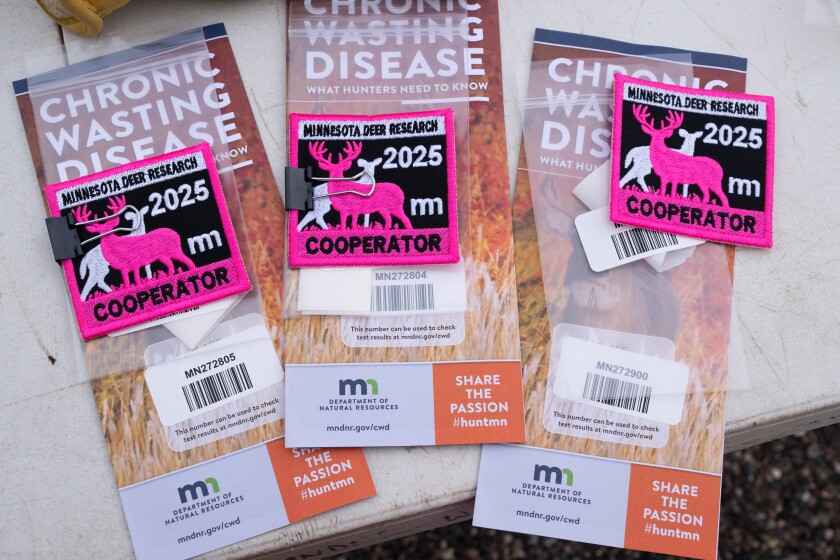
It was not mandatory that hunters have their deer tested, but it was appreciated if they did.
Keep Watching
1
North Dakota’s New Boat Registration – 12-24-2025 HD (1).mp4North Dakota’s New Boat Registration – 12-24-2025 HD (1).mp4
Read More
Hildebrand, wildlife health supervisor with the Minnesota Department of Natural Resources, wanted to participate for his own sporting interests but also to observe. At the time, he didn’t know how the yearly late-season hunt would shape up.
“Weather seems to be the biggest driver of participation by hunters,” he said. “I was down in the southeast during the hunt and, boy, did we have some really cold and windy temperatures. … It was challenging.”
Despite the inclement weather, however, preliminary numbers show that hunter success rates were up from what they were in recent years.
In 2023 and 2024, for instance, harvested deer numbers were 507 and 869, respectively. This past December saw 1,074 deer in the late-season hunt.
The special hunt was only for specific zones — all of them in the southeast portion of the state, but the disease testing and management practices that take place in these zones can impact other areas of the state because CWD spreads from deer to deer, traveling to other parts of Minnesota and beyond.
On site, Hildebrand said he saw about 40 deer heads submitted for testing where he was, but hunters could use mail-in kits or partner programs, “so samples could still be trickling in over the next couple of weeks or so,” he said in late December.
Hunting zones
Chronic wasting disease in Minnesota was first documented in the southeast zones in 2016, Hildebrand said. Three deer tested positive for the disease that year, prompting the late-season hunts.
The prevalence rate there has increased to more than 5%, according to Paul Burr, acting big game program coordinator with Minnesota’s DNR. “So it’s quite high. But the rest of the state is very, very low,” he said, noting a prevalence rate in the north of less than 1%. “We do have areas where the disease has popped up, unfortunately, such as the western part of the state where it borders North Dakota and South Dakota.”
In total, 492 deer have tested positive for chronic wasting disease statewide since 2010, when one deer tested positive. With one exception (2020), each year the number has increased. According to DNR numbers, the state recorded 67 deer that tested positive for CWD in 2023. The following year, it had jumped up to 108. Preliminary numbers for 2025 show the disease was detected in samples from 117 deer statewide, most of them from southeast Minnesota. Only one sample tested positive outside an existing CWD management zone.
“We’ve never experienced this many in our state,” Hildebrand said. “Hopefully it doesn’t go higher next year, but time will tell. And really, we need help from hunters. We need samples to get a good finger on the pulse of the apparent prevalence.”
 Exposing the Big Game