
Scientists said approximately 60 marine mammals are currently being tested for suspected influenza infection across multiple laboratory systems.Bird Flu Outbreak in California Spreads to Other Animals | NTD
By
Bird Flu Outbreak in California Spreads to Other Animals | NTD
Published: 3/14/2026, 11:13:34 PM EDT
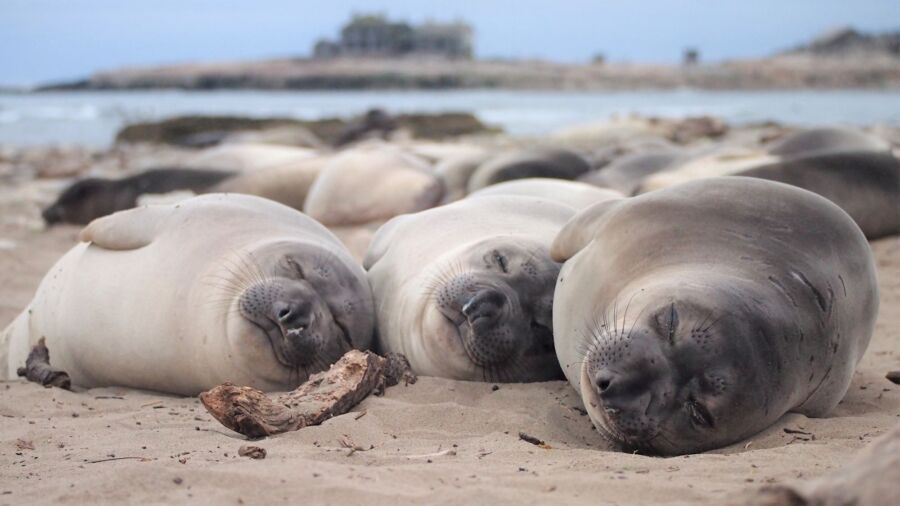
A deadly strain of bird flu has swept through a colony of northern elephant seals at a Northern California state park, killing dozens of marine mammals and jumping to at least two other species, including the endangered southern sea otter. Scientists are calling the dilemma a troubling and fast-moving outbreak.
The virus, highly pathogenic avian influenza H5N1, was first detected in mid-February at Año Nuevo State Park in San Mateo County, where weanling elephant seal pups were spotted convulsing and dying along the shoreline. Since then, it has claimed the lives of roughly 47 seals—pups and large adult males alike—and has now been confirmed in a sea otter and a California sea lion, according to wildlife researchers and public health scientists who held a media briefing on March 12.
In all, laboratory testing has confirmed H5N1 infection in 16 elephant seals. But the true scope of the outbreak is almost certainly larger. Scientists said approximately 60 marine mammals are currently being tested for suspected influenza infection.
“We know there are more animals with signs of infection that we have sampled that are being tested across the different laboratory systems,” said Christine Johnson, director of the EpiCenter for Disease Dynamics at the UC Davis Weill School of Veterinary Medicine’s One Health Institute. “There are likely more animals that will be updated on in the coming weeks.”
The first alarm was raised on Feb. 19 and Feb. 20, when researchers observed multiple newborn elephant seal pups dead or having seizures at Año Nuevo. UC Santa Cruz scientists quickly collected samples from seven sick and dead animals and sent them to UC Davis, where initial tests confirmed influenza A subtype H5. The USDA’s National Veterinary Services Laboratory subsequently confirmed the presence of the highly pathogenic H5N1 strain.
In the weeks that followed, the virus spread—or at least revealed itself—in new species and new locations. On Feb. 26, UC Santa Cruz researchers discovered a dead southern sea otter. A postmortem examination conducted by the California Department of Fish and Wildlife confirmed H5N1 on March 5. Days later, on March 9, the USDA confirmed the virus in an adult male California sea lion found dead near Año Nuevo on Feb. 27 by the California Academy of Sciences.
Johnson said the multi-species spread was not a surprise. “It’s not at all unusual that this outbreak is impacting additional species, like we are seeing in the new cases with a sea otter and a sea lion,” she said. “H5N1 outbreaks affect a wide range of birds and mammals, and these animals all share the near-shore ecosystem. It is especially tragic when infections impact less-common species like the southern sea otter.”
Patrick Robinson, director of the Año Nuevo Reserve at UC Santa Cruz, painted a picture of what researchers have witnessed on the ground. The death rate among large adult male elephant seals—animals that virtually never die on beaches in normal years—has been strikingly abnormal. Meanwhile, pup mortality is running roughly four times higher than the same period last year.
Drone surveys of elephant seals on the Farallon Islands, off the coast of San Francisco, suggest the toll there may be even worse—approximately three times higher than mortality observed along the shoreline at Año Nuevo, Robinson said.
There is, however, one silver lining. Adult female elephant seals appear to have been spared. About 80 percent of the females had already departed the area on their foraging migration before the outbreak began in mid-February. “To date, no female elephant seals have been observed to be symptomatic or dead,” Robinson said.
While all confirmed cases remain within San Mateo County, scientists have detected infections slightly north and south of Año Nuevo in dead animals found on public beaches, raising concern the virus may be expanding its footprint.
The risk of H5N1 transmission to humans remains very low, scientists said. Still, the public is urged to stay away from sick or dead marine mammals and to keep pets at a distance. Dead or distressed marine mammals on the West Coast can be reported to the NOAA Fisheries West Coast Region Stranding Hotline at (866) 767-6114.
 Exposing the Big Game