New Anti-hunting Book now Available!

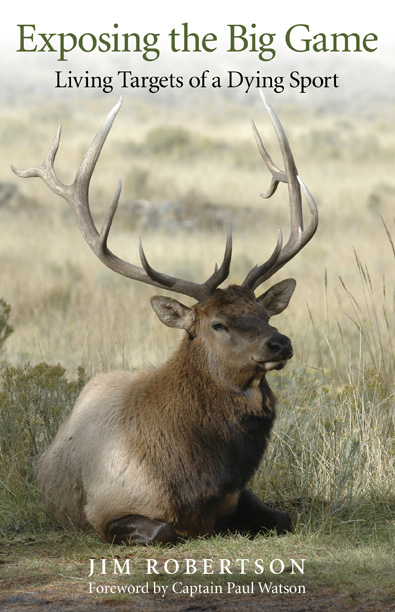
Exposing the Big Game: Living Targets of a Dying Sport is now available!

To order through Amazon, follow the link on the right hand column here: http://www.earth-books.net/books/exposing-the-big-game

For signed copies, contact me at exposingthebiggame@gmail.com

Here’s the back cover text:

During the Nineteenth century, a serial killer known as Buffalo Bill terrorized the American West, shooting and dismembering his victims, who numbered in the thousands. But no special agents from the F.B.I. headquarters in Quantico were sent to stop Bill, or the procession of copycat killers who joined in the fun. The carnage was endorsed and encouraged; the victims, though gregarious, caring and benign, were nonhuman after all.

A holocaust to the tenth power, 60 million bison, a species once synonymous with the Great Plains, were massacred in a shameful era that nearly brought an end to them, along with elk, wolves, grizzlies, prairie dogs and every other animal hunters could get a bead on.

Still more shocking is that nowadays hunting is considered a sport. Modern hunters feel no remorse for the onslaught, nor empathy for the victims. Indeed, they are targeting those very same species with glee.

Exposing the Big Game takes on hunting and defends the animals with equal passion, while challenging the readers to reexamine their stance on killing for sport.


Image

Living off the Land: another Excuse for Sport Hunting

Hunters often claim, “I’m not a sport hunter; I eat what I shoot,” as though the end (the act of consuming a carcass) justifies the means (the unnecessary killing of a wild animal).These people choose to live in areas where “game” is abundant, often because local wildlife agency policies have eliminated natural predators or favored one species of grazer over another. As ruralites, they pretend they are “living off the land,” practicing a pseudo-subsistence lifestyle. Whenever a person has all the modern conveniences at their disposal—a truck with GPS, a cell phone, a four-wheeler, a cooler full of beer and groceries and a warm house or shack to go home to—they aren’t really hunting to keep from starving, they are in fact just sport hunters in disguise. I should know, I was nearly sucked down that slippery slope once myself.

Years ago, I went through a brief live-like-an-Indian phase and enrolled in an “Aboriginal Life Skills” course— the same one that the author of “Clan of the Cave Bear” later took to learn how Cro-Magnon and Neanderthal man may have lived. For me, it was not so much an anthropological study but more of a wilderness survival course.  Our final assignment:  a ten-day back-country excursion armed only with a blanket, a knife and an ample supply of biscuit roots and wild onions gathered prior to the expedition. Although our tribe of modern-day abos had plenty of the nutritious tubers to go around, much of our time was spent out hunting for animals to roast in the fire pit.

I carved a bow out of a young juniper tree and the class instructor lent me one of his blunt-tipped arrows. With this mighty weapon, I shot a harmless chipmunk. The arrow didn’t kill the poor soul outright, but knocked him to the ground, wounded and trembling. I had to finish him off with a club like some brutal character from a cave-man story. I was praised by the folks back in camp, but felt anything but pride for my feat.  The tiny morsel of chipmunk flesh was cooked in a rock oven, along with a porcupine the teacher’s assistant clubbed to death that same day.

We were taught how to tan animal skins using deer brains, fashion knives and arrowheads out of obsidian and build crude wooden shelters; but the main lesson I learned from the course was that we didn’t need to be slaying animals in order to survive. We were acting like a bunch of sport hunters out playing games at the expense of the resident wildlife.

The thing that brought that message home with clarity was when some of our group started baiting deadfall traps for the mink we occasionally saw along the banks of the river we fished. Mink meat is practically inedible, but their fur is quite a prize for those wanting a treasure to show off to others. Trapping the mink was not aiding our existence; it was another form of recreational carnage.

Ultimately, what I gleaned from the experience was something almost too taboo to suggest: I realized that even primitive societies must have had times when their relatively austere hunting practices provided them with far more resources than they ever needed for basic subsistence. They were no longer killing simply for survival; at some point humans started doing it with a motivation nearer to that of a sport or trophy hunter. (Only later did I discover that prehistoric man used fire to drive animals off cliffs, resulting in the annihilation of whole herds or the extinction of entire species.)

 Modern people who claim to want to “participate in nature,” but depend on technology at every turn to spare them any physical discomfort, are actually just sport hunters at heart. A bear lives off the land, chipmunks (except for the regulars at my bird feeder) live off the land, moose live off the land, but today’s hunters live off grocery stores and burger joints—sporadically supplementing their hoard with the spoils of their latest sport-disguised-as-subsistence hunt.

The First to Go

“We cause pain and suffering and apologize to no one.”

Another quote from an unrepentant, sadistic serial killer defending his fellow psychopaths’ right to manipulate and exploit others? 

Well, if by psychopathic serial killer you mean someone who kills repeatedly without conscience or empathy for his victims, then yes.

The quote is an edited version of a comment to the press by the vice president of the Montana Trappers Association. The entire statement went: “We trappers do cause pain and suffering to animals and apologize to no one.” Sure, as far as “sportsmen” go, trappers are the cruelest of the cruel, but this guy must have one over-inflated sense of entitlement to publically blurt out something this shallow, narcissistic and utterly absent of regret.

A lack of remorse or guilt, lack of empathy, grandiosity and shallow emotions are all key traits of psychopaths, according to the Psychopathy Checklist, spelled out by Robert D. Hare, PhD, author of Without Conscience: The Disturbing World of the Psychopaths Among Us.

If a society were ever to practice pre-emptive incarceration based on a given person’s potential to do harm to others, trappers would be the first to go.

Wolves Added to Long List of Montana Trapping Victims

The state of Montana is in the process of adding wolves to their long list of species targeted by trappers. A wolf is a highly intelligent and social sentient being; the amount of torture that trapped individuals are subjected to is immeasurable.   

Anyone who has seen the harrowing ordeal suffered by an animal caught in a leg-hold trap would be appalled and outraged that trapping is still legal in states like Montana. But many people are simply unaware of the terrible anguish and desperation a trapped animal goes through.

They have never heard the cries of shock and pain when an animal first feels the steel jaws of a trap lock down onto his leg; never looked into the weary eyes of a helpless victim who has been caught in a trap for days and nights on end; never come across a leg that an animal had chewed off in order to escape a deadly fate, nor stopped to think how tormented and hopeless she must have felt to take that desperate action. And they have never seen an animal struggling through her life on three legs.

Compassionate people everywhere must add their voice to the rising call to end this barbarity for good. 
  

For information on the proposed wolf trapping season in Montana and where to send your comments, please visit Footloose Montana.org:

http://www.footloosemontana.org/trapping-season-2011-12/alerts/

Travesty of Justice

Over the weekend, Sea Shepherd’s Captain Paul Watson was arrested in Germany on a warrant issued by Costa Rica for a bogus ten-year-old “violation of ships traffic” that allegedly occurred when Sea Shepherd encountered a shark finning operation run by a Costa Rican ship. Arresting someone like Paul Watson, who has dedicated his entire life to defending the life of our oceans against illegal and destructive acts, calls into question the very notion of justice in today’s world.

In his foreword to my book, Exposing the Big Game, Captain Watson writes:

“There is only one vicious creature stalking the wilderness and that is the hominid primate that has become a divine legend in its own mind. The enemy is us and the real challenge is to subdue the destructive urges within each of us and to channel those urges in the direction of affirming life and not taking it. The primitive man is a killer ape, the evolved man or woman is a shepherd protecting life.

“The cruelty and destruction that humans have inflicted upon each other is surpassed only by the cruelty and destruction humans have inflicted upon the non-human citizens of this world. …

“It’s time to make peace with our fellow citizens, to live in harmony with them and to understand that those who today club seals, harpoon whales, shoot bears, trap beaver, hook a shark, or blast a goose with a shotgun will be viewed in the future in the same light as we now view slavers, warlords, gangsters and politicians.”

Obviously not the words of a dangerous criminal, though perhaps the words of someone who could be considered a danger to a corrupt and vicious system. We need people like Paul Watson to shine the light on the real criminals of the world and expose their crimes against the thousands of voiceless victims of an over-consumptive society.

For updates and information on how you can help:

http://www.seashepherd.org/

And to sign the petition to free Captain Watson:

http://www.thepetitionsite.com/663/009/291/release-paul-watson/

What’s Next, a Murderer’s Heritage Act?

By allowing and encouraging blood sports, society puts itself at risk, for under close examination the line between species is grey and rooted in personal bias.  The serial killer, Zodiak, just one example of a hunter who turned his sights on his own species, called his victims “the most dangerous game.”

Now, don’t get me wrong, I’m not for a minute suggesting that since there’s scarcely any genetic difference between humans and non-humans, people should view the human animal just as they would any other prey. No, that would be Zodiak’s argument. What I’m saying is that NO animal should be reduced to the level of mere object to be “harvested” at will. It’s a blatant double-standard that killing people is “murder” while slaying an animal is “sport.” Both are murder. Perhaps society doesn’t want to admit how many murderers, or people capable of murder, are out there. 

Human society is by no means at the apex of its evolution—a fully evolved species would have made peace with their fellow animals. Living the lie that a false dichotomy is valid only encourages rationalizations that won’t hold up under scrutiny; it also encourages people like Zodiak to move laterally across the arbitrary species barrier and turn to hunting humans.

In one of his infamous letters to the press, Zodiak wrote, “School children make nice targets,” and threatened to shoot them “as they come bounding out” of the school bus. Certainly not the kind of behavior we should enshrine with an outlandish act of Congress such as the “Sportsman’s Heritage Act” now before the Senate. What’s next, a Murderer’s Heritage Act?

The Highest Reward

In a biosphere rife with anthropogenic ruination, it’s hard for any bona fide misanthrope to avoid the lure of self-loathing. The more one learns about the amount of planetary destruction human beings are responsible for, the stronger one can feel a need for redemption through doing whatever possible to lend nature a helping hand. It’s a task which scarcely sees compensation; sometimes the highest reward is the satisfaction of doing something hands-on to directly help individual animals in need (often the result of being in the right place at the right time).

My wife and I found ourselves at that right time and place Sunday morning at 6:00 a.m., when our dog, Honey, let it be known that it was time for a break in our travels and we pulled into a nearly deserted Fred Meyer parking lot. Typical of American super-store complexes, nearly every square inch of land and water for acres around was paved-over; the only tiny strip of greenery for Honey to do her business was a narrow, sparsely planted bed of shrubbery between the store and a bank. To Honey’s surprise, before she could find sweet relief in the beauty bark separating the shrubs, out marched a mother mallard and her entourage of day-old ducklings.

Since there was no shelter suitable for a duck, let alone a whole family, the mother led her defenseless offspring out across the barren expanse of asphalt in search of any remaining waterway. They stuck to her side like glue, but each tiny duckling dropped behind when it was their turn to scale the steep curbs that broke up the vast wasteland. We feared for their safety, as one wrong turn would take them all into the middle of a four-lane highway. She seemed to have a sense of which way to waddle to find water, but they undoubtedly needed our help in stopping traffic along the way. Without our gently guiding the duck family away from the thoroughfare, there surely would have been some kind of tragedy: either a mother losing one or more of her young, or a clutch of dependent babies losing their mother.

Lady mallard urgently and continuously quacked encouragement to keep them moving steadily along the length of the entire city block. Meanwhile, I scouted ahead and located a small pond across a side street behind a tire shop, so we ushered the family through the alley between the shopping center and the tire shop, stopping a truck and car so the brood could cross the street.

When she saw the oasis, her quacking intensified, but the ducklings were tiring and had difficulty ascending the final curb barrier. They all made it, except for one—an extra-tuckered out straggler. My wife gave him the final boost he needed so he could catch up and he tumbled through the grass to join the others down at the welcome pool below. The mother savored a long, celebratory drink from the pond, and though the youngsters had never even seen water before, they took to it instantly. They were clearly right at home.

Across the country, ever more shopping centers and parking lots are being built on top of drained wetlands and other important wildlife habitats.  Though we may feel powerless to stop urban sprawl, at least we can sometimes be in the right place at the right time to help a few individual animals.

Something Serious to Protest

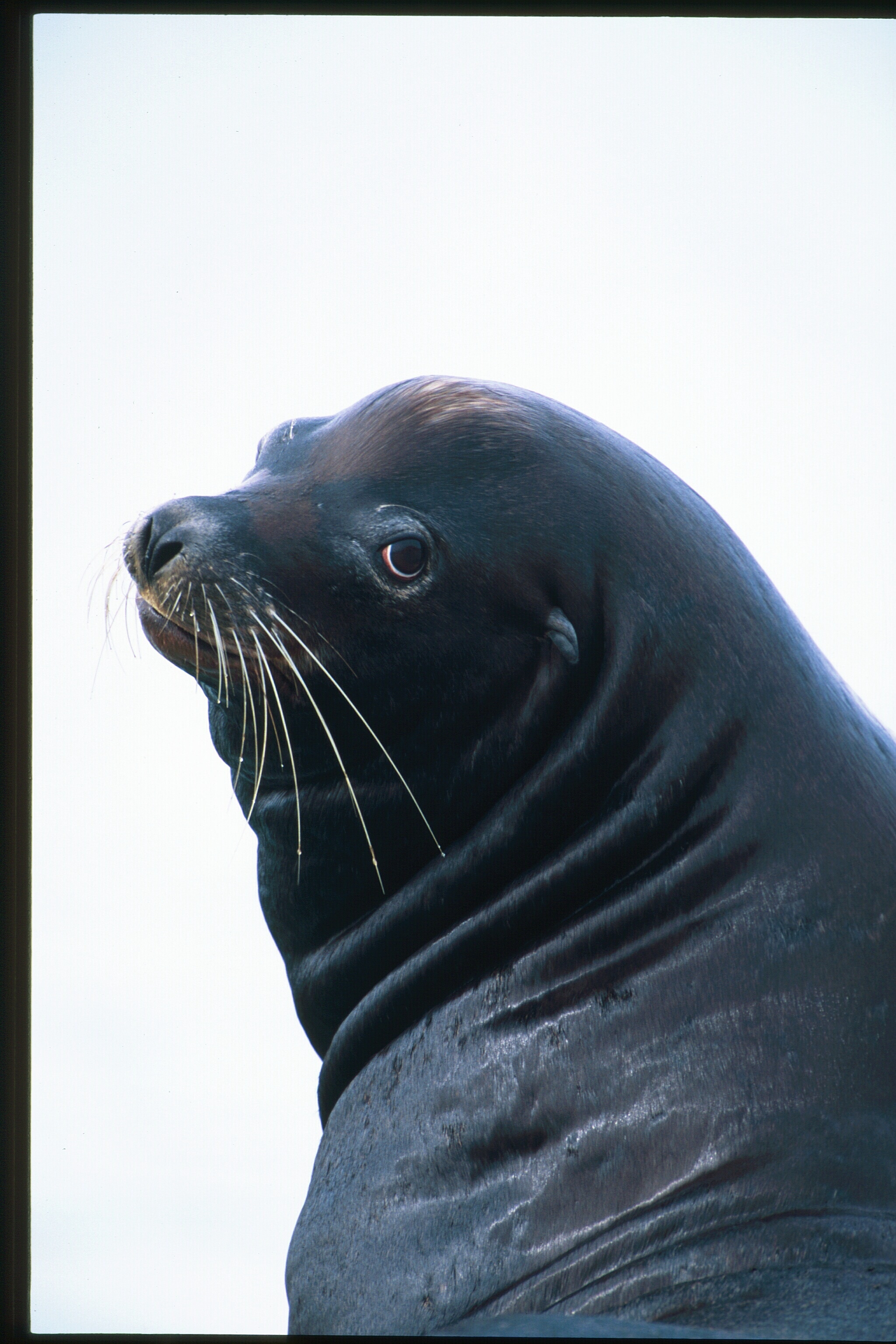
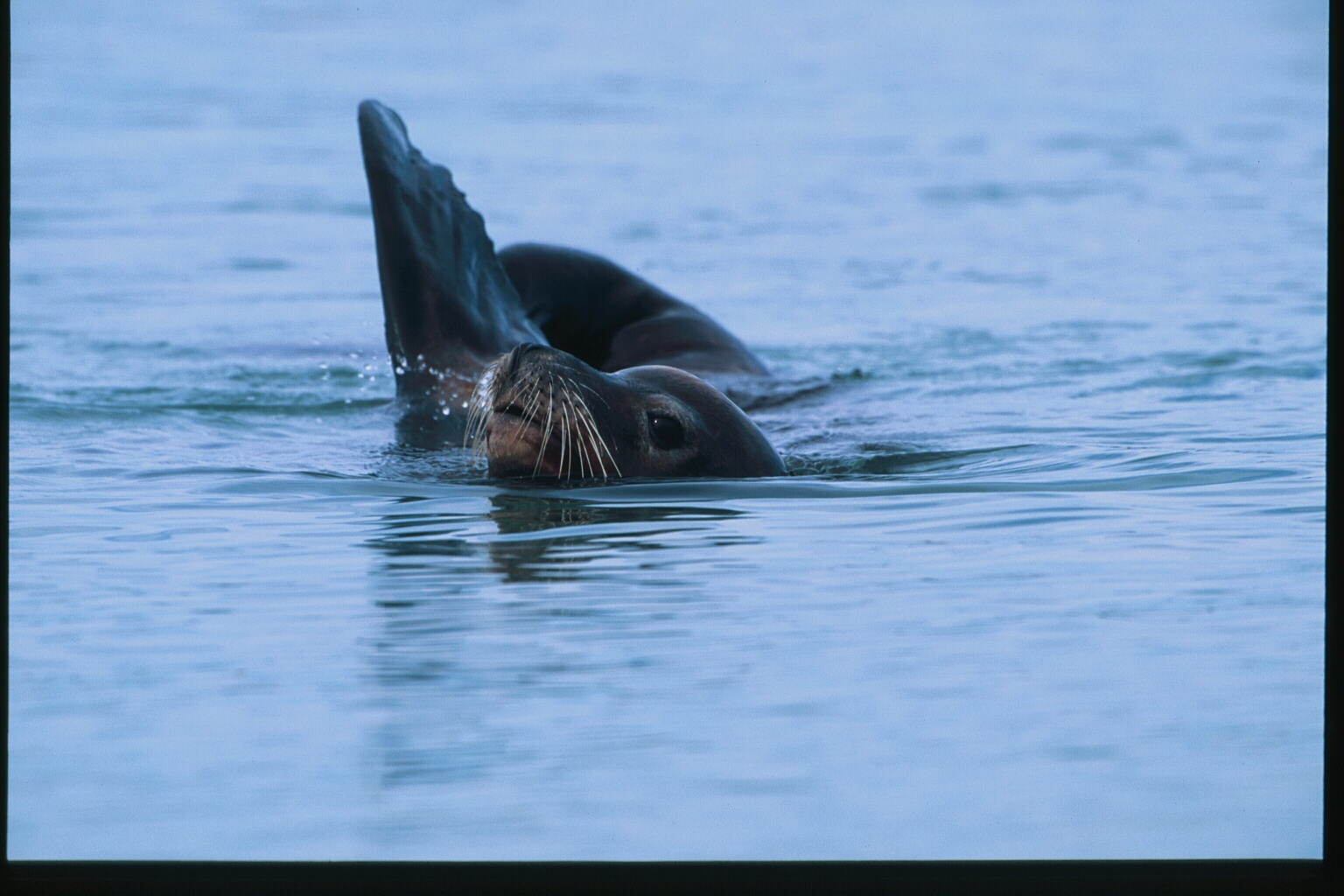
On Friday, May 4, my wife and I stopped at the East Moring Basin on the Columbia River in Astoria, Oregon, to see the sea lions who spend the daytime hours hauled out on one of the floating docks there. It’s always a treat to watch their antics and to hear the raucous roaring of competitive bulls mouthing off to anyone who might try to wriggle in and crowd their personal space. As expected we heard bellowing as soon as we arrived, but this time the sea lions had something serious to protest: an unfortunate herd-mate had been trapped and was being held down tightly and tormented by a group of strange and menacing two-leggers wearing orange raingear, one of whom pulled out a hot iron and repeatedly branded the restrained sea lion. As the victim struggled, acrid smoke from his burning flesh drifted for a hundred yards across the harbor.

The searing pain of the branding may have been temporary, but now the sea lion is branded in the figurative sense of the word as well, and his troubles are just beginning. With the numbers viciously burned onto the animal’s back, the Oregon Department of Fish and Wildlife thus has a clever way to recognize him. Later, they will decide whether or not to add him to their annual hit list of 92 sea lions they plan to kill if they reach the man-made dam that impedes the ancient migration route of spawning salmon.

It speaks volumes about the trusting nature of sea lions that they are willing to return to Astoria year after year. Since its establishment in 1811 as a hub for the booming, bloody fur trade, Astoria has been the scene of countless crimes against marine animals, including sea lions, who were killed along the Oregon coast by the thousands—exclusively for lamp oil. 

Image

Charles M. Scammon—whaler, sealer, mariner and infamous discoverer and exploiter of the gray whale birthing lagoons in Baja California—devoted a chapter to sea lions in his book, The Marine Mammals of the Northwestern Coast of North America: Together with an account of the American Whale-Fishery. He begins that chapter with the lines, “Among the numerous species of marine mammalia found upon the Pacific coast of North America, none excite more interest than the sea lion;” Scammon goes on to describe an average day in the life of the pitiless sealers, and the last day ever for a group of sea lions. “On the south coast of Santa Barbara Island was a plateau, elevated less than a hundred feet above the sea, stretching to the brink of a cliff that overhung the shore, and a narrow gorge leading up from the beach, through which the animals crawled to their favorite resting-place. Several unsuccessful attempts had been made to take them; but, at last, a fresh breeze commenced blowing directly from the shore, and prevented their scenting the hunters, who landed some distance from the rookery, then cautiously advanced, and suddenly, yelling and flourishing muskets, clubs, and lances, rushed up within a few yards of them, while the pleading creatures, with lolling tongues and glaring eyes, were quite overcome with dismay, and remained nearly motionless. At last, two overgrown males broke through the line formed by the men, but they paid the penalty with their lives before reaching the water. A few moments passed, when all hands moved slowly toward the rookery, which had slowly retreated. This maneuver is called “turning them” and, when once accomplished, the disheartened creatures appear to abandon all hope of escape, and resign themselves to their fate. The herd at that time numbered 75, which were soon dispatched by shooting the largest ones, and clubbing and lancing the others, save for one young sea lion, which they spared to ascertain whether it would make any resistance by being driven over the hills beyond. The poor creature only moved along through the prickly pears that covered the ground, when compelled by his cruel pursuers; and, at last, with an imploring look and writhing in pain, it held out its fin-like arms, which were pierced with thorns, in such a manner as to touch the sympathy of the barbarous sealers who put the sufferer out of its misery with the stroke of a heavy club.”

Scammon ends his chapter with the prediction that the Pacific Coast sea lions “…will soon be exterminated by the deadly shot of the rifle, or driven away to less accessible haunts.” Today the few sea lions who have managed to hold on are again under attack, this time for the crime of daring to survive despite industrial scale over-fishing depleting their only food source.

A Natural Reaction

Like the Grinch, I hate noise.  

My detestation for din is rooted in an awareness of what it usually portends.

There are a lot of loud sounds in the natural world: a pond full of enthusiastic frogs, an energetic waterfall or the crashing of ocean breakers. But these are still relatively pleasing to the ear. Noise is a word that, to my mind, usually describes something man-made: an un-muffled car or motorcycle revving its engine, a loaded logging truck using compression to slow down for a corner, a monotonous jackhammer, Ted Nugent’s screeching voice or, of course, gunfire. I suppose there are a few natural sounds that could rival man’s machinery—a major earthquake or perhaps a volcano going off. But, like the sources of anthropogenic racket, these are the upshot of highly destructive processes.

Being the adaptable, accomplished noisemakers they are, sometimes people can be conditioned to thinking they actually enjoy things that should be unsettling to their senses—a burst of firecrackers or a Ted Nugent concert. But most animals are naturally stressed or panicked by the nerve-racking report of a high-powered rifle or a bombardment of blasts. It’s not just that they have keener senses; they instinctively know that such noise spells danger.

A lot of dogs experience extreme anxiety from fireworks or the blare of gunfire, often because they have an intimate or innate understanding of their destructive capabilities. We adopted an older dog from a shelter in Montana whose mortal fear of firearms must have been the result of someone using her as a target in her earlier life. Keiko would tremble every time she heard a gunshot; she’d seek shelter and would be inconsolable until the shooters had called a cease fire.

One winter morning during duck hunting season, a crazed, relentless volley of shots was too much for her. She ran off, and though we looked for her everywhere for weeks, we never saw her again.

Image

How the Grinch Stole Hunting Season

Every hunter
Down in Hunt-ville
Liked hunting season a lot…
 

But the Grinch,
Who lives just North of Hunt-ville,
Did NOT!
 

The Grinch hated hunting! The whole hunting season!
Now, please don’t ask why. There are many good reasons.
It could be that hunter’s heads weren’t screwed on quite right.
It could be, perhaps, that their belts were too tight.
But I think that the most likely reason of all
May be that their hearts were two sizes too small.
 

“They’re cleaning their guns!” the Grinch snarled with a sneer.
“Tomorrow is hunting season! It’s practically here!”
Then he growled, with his grinch fingers nervously drumming,
“I MUST find a way to keep hunting season from coming!”
For, tomorrow, he knew…
 

…All the Hunt-girls and boys
Would wake up bright and early. They’d rush for their toys!
And then! Oh, the noise! Oh, the noise! Noise! Noise! Noise!
That’s one thing he hated! The NOISE! NOISE! NOISE! NOISE!
 

Then the hunters, young and old, would sit down to a feast.
And they’d feast! And they’d feast!
And they’d FEAST! FEAST! FEAST! FEAST!
They would carve up the body of some poor forest beast
Which was something the Grinch couldn’t stand in the least!

I MUST stop hunting season from coming!
…But HOW?”
 

Then he got an idea!
A brilliant idea!
THE GRINCH
GOT A WONDERFUL, KINDHEARTED IDEA!
 

“I know just what to do!” The Grinch Laughed in his throat.
And he made a quick Santy Claus hat and a coat.
And he chuckled, and clucked, “What a great Grinchy trick!
With this coat and this hat, I’ll look just like Saint Nick
And I’ll slide down their chimneys, empty bags in my fist,
And I’ll steal all their fucking ammo!”