
As all good Sunday sermons should be, this one is about love.
Specifically, the misuse, abuse or perversion of the word “love,” as in “I love guns,” “I love hunting,” or when a hunter says, “I love wildlife.” In other words, any “love” that takes place over the barrel of a gun. I’m talking about the kind of “love” that would be better described as obsession, covetousness or, simply, the egomaniacal urge to possess.
Interestingly, some people (such as psychopaths) who are incapable of actually feeling benevolence towards others, act as if they know the meaning of the elusive “L” word. The terms “trophy wife” and “trophy house” are becoming increasingly popular, but if you care about someone or something just because you own them, it’s not the same as caring about them for who or what they are.
Hunters often claim to care about wildlife—to cherish the animals that they want to kill—but they’re confusing actual human emotions with an avaricious urge to manipulate, dominate and control (the three underlying behaviors of a serial killer, according to former FBI profiler John Douglas).
Hunting is not an act of love, it’s a hate crime. Killing animals for sport is nothing short of abuse. As studies have clearly shown, animal cruelty often leads to domestic abuse and other crimes along the violence continuum.
The serial killing of wildlife is certainly not a healthy expression of love.
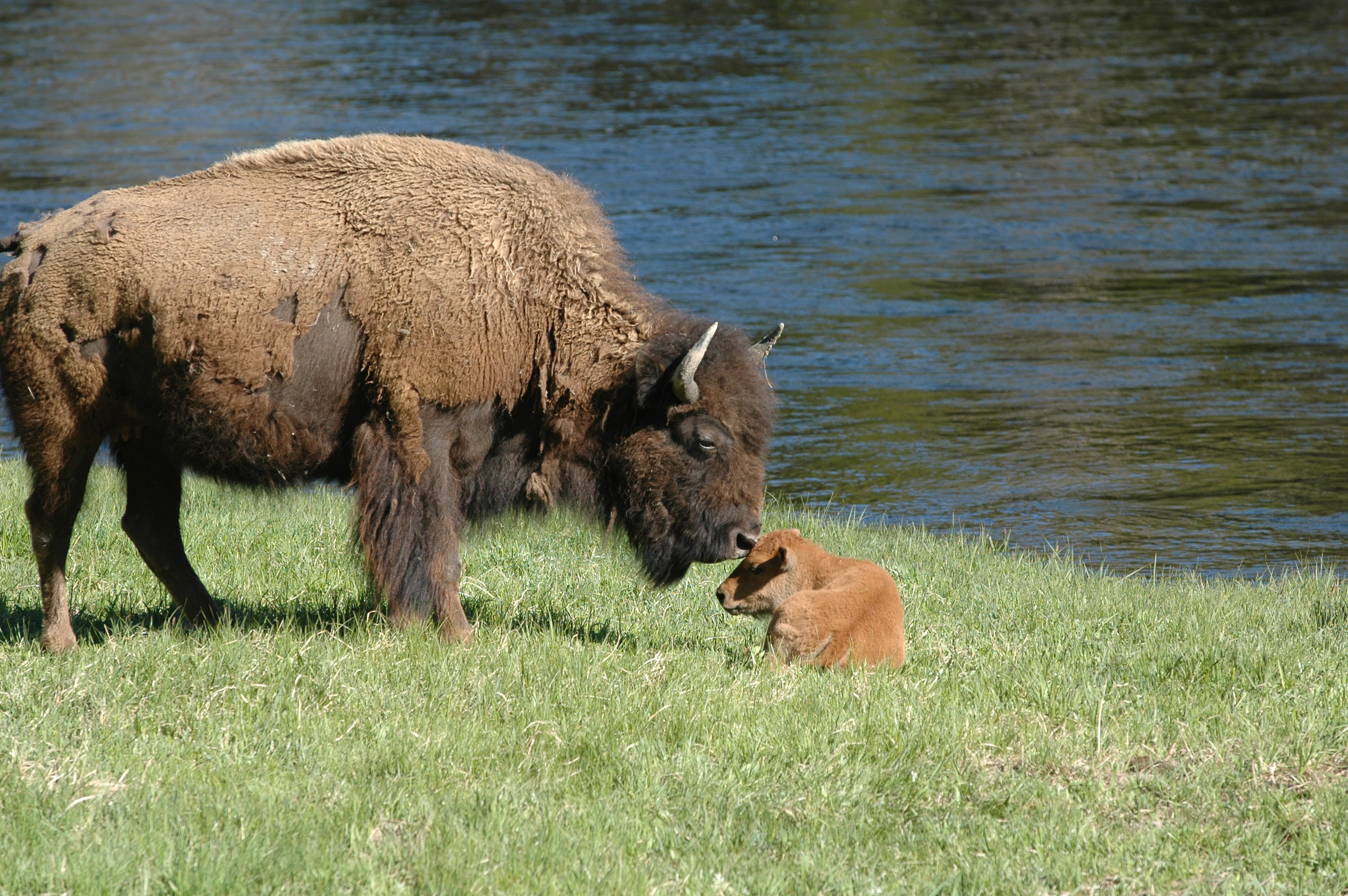
Text and Wildlife Photography ©Jim Robertson
 Exposing the Big Game
Hunters love wildlife like pedophiles love children.
You said it Maureen (thanks, I forgot to;)
After MONTHS of agonizing research, tears and Hope, I received this response. Carbon copy of the typical Politician 😦
Am I naive to expect more from this Country / World??
The following is CC. I sent the original to Friends.
The White House, Washington
October 22, 2012
Dear Danielle:
Thank you for sharing your thoughts with me. I have heard from many Americans concerned about environmental issues—from pollution control and clean energy to the well-being of our national parks and wildlife. America’s natural resources and landscapes are among our Nation’s most precious treasures, and we have an obligation to protect them for future generations.
That is why my Administration is taking action to preserve and restore our land, water, and air. Through the American Recovery and Reinvestment Act, I increased funding for hazardous waste cleanup, wastewater and drinking water infrastructure construction, and projects that improve our Nation’s parks and wildlife refuges. I also signed the Omnibus Public Land Management Act—the most extensive expansion of land and water conservation in more than a generation.
To further safeguard our natural heritage and historic landmarks, I was proud to launch the America’s Great Outdoors initiative. Building on input from tens of thousands of people across our country, my Administration is joining with communities, landowners, sportsmen, businesses, and partners at every level of government to reconnect Americans with the natural world and lay the foundation for a more sustainable planet.
We have taken important steps to reduce the harmful emissions that contribute to climate change and pollute our water and air. We are reducing harmful air emissions through clean energy technology, energy efficiency measures for our buildings and appliances, and achievable pollution standards that are reducing toxic pollutants and saving lives. As part of this effort, we set the first-ever national limits for mercury and other toxins from power plants, which will prevent up to 11,000 premature deaths, 4,700 heart attacks, and 130,000 cases of childhood asthma symptoms each year.
We also developed historic fuel economy standards that will double the fuel efficiency of cars and light trucks by 2025, saving consumers $1.7 trillion at the pump while also substantially reducing carbon pollution and oil consumption. We have also established the first-ever national fuel economy and greenhouse gas emission standards for commercial trucks, vans, and buses built in 2014-2018.
My Administration has made the largest clean energy investments in American history. As a result, we have helped the United States nearly double our renewable energy production from sources like wind and solar since I took office—employing thousands of Americans in the process—and supporting American innovation and manufacturing. In addition, I have repeatedly called on Congress to eliminate the wasteful tax breaks for the oil and gas industry, which would save American taxpayers $4 billion per year.
We all share the responsibility to help protect the air we breathe, the water we drink, and the land that supports and sustains us, and my Administration remains committed to tackling these and other tough environmental problems. I encourage you to learn more about our efforts at http://www.WhiteHouse.gov/energy/our-environment. You can also read about the America’s Great Outdoors initiative at http://www.AmericasGreatOutdoors.gov.
Thank you, again, for writing.
Sincerely,
Barack Obama
John Douglas.
There are no words.
His Brain almost Imploded?
Right, from too much empathy
Nice blog Jim, a great read.
Thanks Amy, glad you enjoyed it.
Well said, Jim.
I am looking forward to reading your book. I am waiting for the book Warehouse and USPS to get moving.
I’m glad to hear you have a book on order Danielle, sorry it’s taking so long. Hope it’s worth the wait for you!
Do you think hunters ever hunt for good reasons? I ask because yesterday I wrote on my own blog about deer stalking in Britain. Researching that post, I learned how many people believe that shooting deer is necessary to control their populations now that our ancestors have hunted all the large predators to extinction.
Personally I’ve no desire to hunt. But I know people who do it for several reasons which seem good to me. I think enjoying it is weird but I also think that enjoying it makes people more likely to do it cleanly.
Please forgive me for not linking to your blog in my post about deer stalking. I’d like more people to read you. I didn’t post the link purely because my post was getting long and I decided to keep the UK focus in it.
The short answer is no, there’s never a good reason.
I know that alot of people who do it are genuinely convinced of the necessity of hunting for this or that reason, but if you’re able to get past seeing animals as objects and think of them as individuals, the justifications hunters use for killing them wear pretty thin.
Most places that have deer also have some sort of predatory species that has evolved along with them. All that’s necessary is for people to get out of the way and let nature take its course, or in some cases help the process along by reintroducing wolves, etc.
I have long thought that hunting and killing is done by people who are sexually inadequate so take it out on those unable to stop them.
That fits in with the serial killer analogy.
What have you come across, in your research, Jim, about how to deal with huge populations of deer in an urban setting?
What do you suggest in these cases? Yes, they’ve encroached upon the deer population, but the towns’ lawns and gardens have given them much more food than usual and their populations have grown exponentially. As well, natural predators will not come near the town– at least not in the same way.
So they end up with does attacking dogs and people (of course to protect their fawns they believe) and, having been attacked by a doe, I can tell you, it’s no fun.
Of course, they also have no lawns or gardens left– not as big of a deal, but it is a problem if kids can’t play in their yards.
Again, I get that it begins as a human-made problem, as so much is, but other than culling (and I hate that word almost as much as the action, what should they propose?
I’m hoping that you do have a plan so that I can start encouraging its implementation.
There are a lot of alternatives to lethal culling, Diane, as you are probably aware, such as immunocontraceptives. Google it or search the Fund for Animals, or C.A.S.H or Friends of Animals’ sites (they all have worked on the issue of animal overpopulation), and/or visit the Voluntary Human Extinctinction Movement (VHEMT) site, for humane answers to the human overpopulation crisis.
The bottom line is, as you said, it’s a human-made problem and it’s up to humans to come up with humane ways to deal with it. Our species is invasive, overpopulated and destroying habitats for others, but we wouldn’t want someone jumping to a knee-jerk “cull them” reaction every time humans reach their carrying capacity in a given area. It’s speciesist to think that deer should face lethal culling for sucessfully adapting to the unnatuarally overcrowded human world.
Honestly though, we are all speciesist to some degree. So is each species. It’s how Nature continues evolution.
What I’m looking for is not so much prevention (although it is SO important and needs to be addressed as soon as we encroach) but rather, how to deal with it once it’s happened. After the fact, so to speak.
I’d like to have an alternative to culling– and then do the contraceptives since they were not done proactively–(although they, along with spaying and castrating companion animals– important as they are- are in and of themselves speciesist). Have you seen any studies about translocation or something along that line?
Never mind… I just thought since you were into this area much more than I, you might have already done the leg work on this. But I’ll find some time to go and have a look around those sites.
Thanks!
You’ll find that different groups have different responses, for example, FOA is against the use of immunocontraceptives. They and others feel that wildlife overpopulation problems are often overstated (in part by hunters wanting justification for their sport). I would add that there shouldn’t be a one-size fits all solution, since each area has a different set of circumstances. In places like BC, or the western US, the natural predators are still being killed off to allow for more for more hunters’ success (in Montana the hunters are complaining because wolves make the elk wilder and therefore harder for them to hunt). I tend to be more cynical about areas where humans have claimed every square inch for themselves and are not willing to share with native grazers. When I hear complaints like, “Oh my, the deer, elk and geese are pooping on our golf course,” I have a hard time relating to their problems. If I don’t seem to spend enough time and energy helping to solve these kind of issues, it’s because I don’t see how the complete take over of the land by one dominate species will be a long-term problem for the Earth to deal with. Sooner or later, nature will find a way to bring everything back into balance. Hopefully it won’t be too chaotic for all of life when it happens…
Working for Biodiversity, I also have a problem with golf courses. Migratory birds focus on GREEN LANDSCAPE with WATER and WETLANDS. You create an Environment, be prepared to share that Ecosystem with our fellow Species. It is not Rocket Science, but good Common Sense 🙂
“You create an Environment, be prepared to share that Ecosystem with our fellow Species.” Great line, do you mind if I use it in my next post? I’ll credit you for the quote, if you want…
PLEASE!!!! We are on the same Team 🙂
Thanks Danielle!
No thanks needed, Jim. I have been an advocate for Life since I was a little one.
The World is Changing.
The Title of your Research says all 🙂
No credit needed. Our fellow Species do not ask for credit to live, neither do I 🙂
Reblogged this on Committee to Abolish Sport Hunting Blog.