Pray for Snow Drought

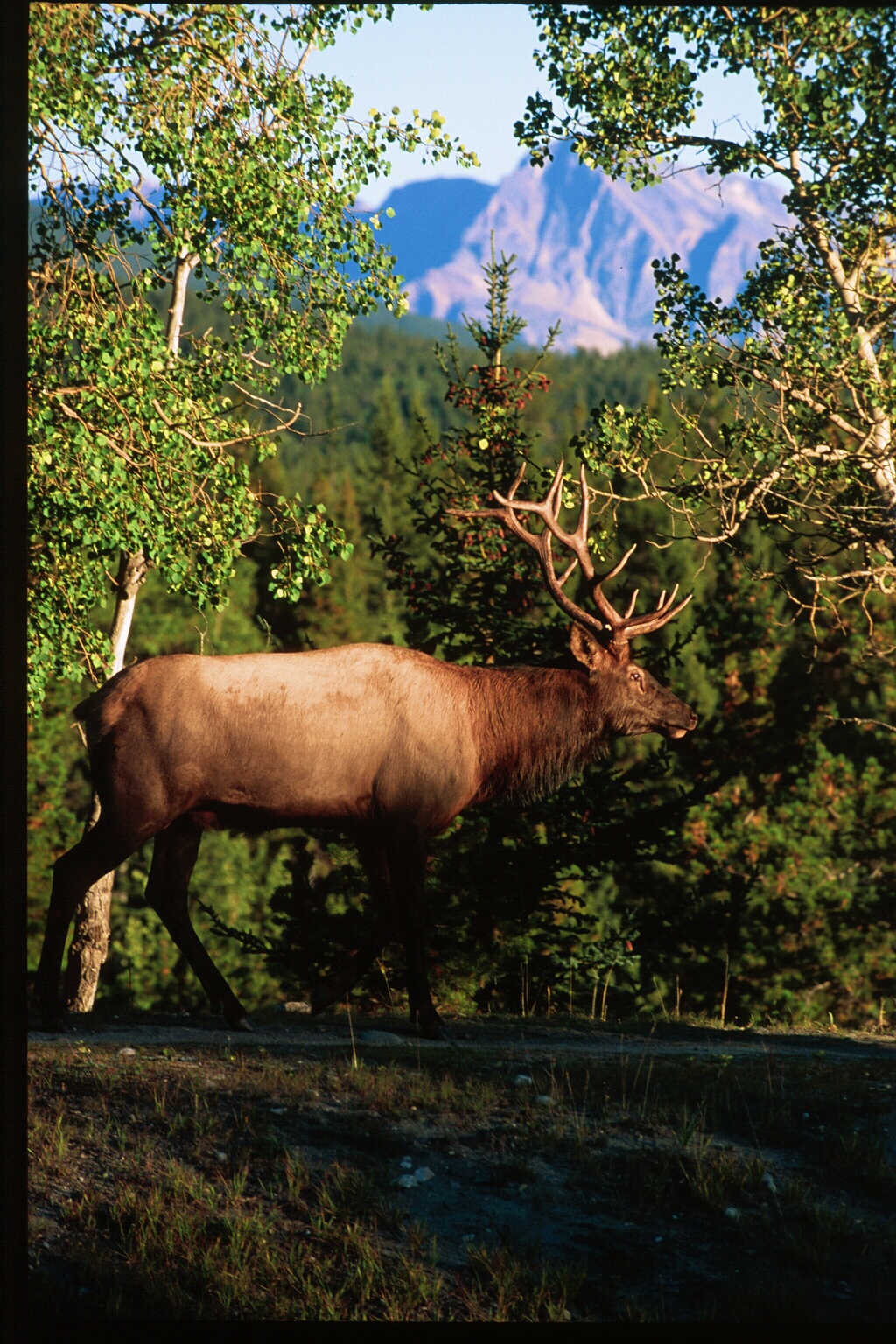
The customary mantra for those of us who have who have spent much time in search of powder to ski in the semi-arid mountains of Montana is, “Pray for snow!”  Consequently, I never thought I’d catch myself chanting, “Pray for Snow Drought,” but after reading the Montana Fish, Wildlife and Parks department’s “2012 elk hunting outlook,” a late winter is what I’m praying for—for the elk’s sake. You’ll see what I mean as you read their outlook (and pay no attention to their glib use of depersonalizing words like “harvest” or “hunting opportunities” for the senseless murder of noble beings like elk—psychopaths can’t help themselves):

“There are elk in Montana’s hills and if the big sky drops some snow hunters could be in for a banner season in many areas.

“’Most hunters are going to find elk populations in good physical shape and will benefit from liberal hunting opportunities,’ said Quentin Kujala, Montana Fish, Wildlife & Parks’ wildlife sections coordinator in Helena. ‘If the weather cooperates, and if hunters do their homework and line up access early where it’s needed, we’d expect very good harvest numbers by season’s end in late November.’

“Montana’s general, five-week long, elk hunting season opens Oct. 20.

“Kujala noted that cold and snowy conditions should lead to elk hunting success, while mild weather usually spells lower elk harvests, despite additional elk-hunting permits and more liberal seasons. ‘We’re all hoping the weather tips to hunters’ favor this fall,’ Kujala said.”

All? Not me! Not the elk! Sorry, Mr. Kujala, those of us who care about elk are praying that Montana’s current drought conditions last well into November.

Checking their regional population rundown, it’s clear that—despite the occasional natural wolf predation that sportsmen are quick to freak out over—elk are doing pretty well in the state. According to Montana FWP, “Biologists say elk numbers are at or above management objectives in most hunting districts.” “…the milder winter of 2011-2012 led to good calf recruitment…” “Elk populations are healthy and growing. Elk populations are solid.” and “The biggest challenge for hunters continues to be finding access.”

Whether it’s wolves competing for “their” elk “harvests” or a few darned private land owners who won’t let hunters kill animals on their properties, it seems like hunters and their game department lackeys always have something to bitch about.

Text and Wildlife Photography ©Jim Robertson

Hunting Perverts Kids’ Natural Affinity for Animals

In yesterday’s post I mentioned that the serial killer, Keith Hunter Jesperson, first got his taste for killing animals at the early age of six. I bring this up again because of the fact that our potential vice president-to-be intends for his 10 year-old daughter to get her first taste for killing deer this fall.

Candidate Paul Ryan said in a recent interview with the Safari Club International: “Lately, I’ve had the great pleasure of introducing my children to the hunt.  I have some two-seated ladder stands, so I take my kids with me for deer gun season (one at a time of course).  I also take my kids pheasant and duck hunting.”

Children are impressionable and easily influenced in their pre-teens. What kind of person wants his daughter to imprint on the killing, death and dismemberment of a creature as beautiful as a deer, duck or pheasant before she’s even old enough to date—let alone drive a car? And what kind of society encourages its children to learn to blast living beings out of existence? Are we trying to send a message to our youngsters that non-human life has no value and that an animal’s death is meaningless? Or are we purposefully trying to recruit more serial killers like Keith Hunter Jesperson, Jeffry Dahmer, Zodiak or Alaskan trophy hunter, Robert Hansen, who began their fledgling murder careers by killing animals?

The media has largely joked-off Paul Ryan’s plan to corrupt his little girl with killing, but when there are innocent lives at stake, it’s no laughing matter. In some cases it’s the hunting industry and their state game department puppets that are to blame for pushing kids into the killing fields earlier and earlier. Although no state issues a driver’s license to anyone less than 16 years old, most states don’t even have a minimum age for shooting at an animal with a gun.

In direct answer to the drop in sportsmen’s numbers over the years, meddlesome state game departments are encouraging grade-schoolers to get a taste for killing (thereby perverting their natural affinity for animals). For example, Alabama opens deer season two days early for children under the age of 16 (so they’ll have a better crack at “bagging” one), and Maine holds a “Youth Deer Day,” allowing pre-season bow hunting for children ages 10 to 16.

Farley Mowat, author of Never Cry Wolf and A Whale for the Killing, wrote the following about his indoctrination to hunting in his foreword to Captain Paul Watson’s Ocean Warrior:

“Almost all young children have a natural affinity for other animals, an attitude which seems to be endemic in young creatures of whatever species. I was no exception. As a child I fearlessly and happily consorted with frogs, snakes, chickens, squirrels and whatever else came my way.

“When I was a boy growing up on the Saskatchewan prairies, that feeling of affinity persisted—but it became perverted. Under my father’s tutelage I was taught to be a hunter; taught that “communion with nature” could be achieved over the barrel of a gun; taught that killing wild animals for sport establishes a mystic bond, “an ancient pact” between them and us.

“I learned first how to handle a BB gun, then a .22 rifle and finally a shotgun. With these I killed “vermin”—sparrows, gophers, crows and hawks. Having served that bloody apprenticeship, I began killing “game”—prairie chicken, ruffed grouse, and ducks. By the time I was fourteen, I had been fully indoctrinated with the sportsman’s view of wildlife as objects to be exploited for pleasure.

“Then I experienced a revelation.

“On a November day in 1935, my father and I were crouched in a muddy pit at the edge of a prairie slough, waiting for daybreak.

“The dawn, when it came at last, was grey and sombre. The sky lightened so imperceptibly that we could hardly detect the coming of the morning. We strained out eyes into swirling snow squalls. We flexed numb fingers in our shooting gloves.

“And then the dawn was pierced by the sonorous cries of seemingly endless flocks of geese that cam drifting, wraithlike, overhead. They were flying low that day. Snow Geese, startling white of breast, with jet-black wingtips, beat past while flocks of piebald wavies kept station at their flanks. An immense V of Canadas came close behind. As the rush of air through their great pinions sounded in our ears, we jumped up and fired. The sound of the shots seemed puny, and was lost at once in the immensity of wind and wings.

“One goose fell, appearing gigantic in the tenuous light as it spiralled sharply down. It struck the water a hundred yards from shore and I saw that it had only been winged. It swam off into the growing storm, its neck outstreched, calling…calling…calling after the fast-disappearing flock.

“Driving home to Saskatoon that night I felt a sick repugnance for what we had done, but what was of far greater import, I was experiencing a poignant but indefinable sense of loss. I felt, although I could not then have expressed it in words, as if I had glimpsed another and quite magical world—a world of oneness—and had been denied entry into it through my own stupidity.

“I never hunted for sport again.”

There is a 50-50 chance that an avid (and possibly rabid) bow hunter, who is taking “great pleasure” in perverting his young children’s natural affinity for animals, could become our next vice president. Let’s hope Mitt Romney doesn’t lend Ryan his magic underpants for the upcoming debate with Vice President Biden. Our family values are really at stake this time.

Text and Wildlife Photography ©Jim Robertson

Some People Simply Like to Kill Other Animals

In the title of an October 2nd post to his blog column in Psychology Today, University of Colorado evolutionary biology professor Marc Bekoff, PhD, asked, “Do Some People Simply Like to Kill Other Animals?”

The answer seems to me a foregone conclusion.

Bekoff writes, “Many know that Mark Zuckerberg, founder of Facebook, made a pledge in May 2011 only to eat meat he hunted so that he could be ‘thankful for the food I have to eat.’ Of course, it’s not obvious that he has to eat other animals… Surely, in the arena of who, not what, winds up in our mouth, Mr. Zuckerberg and others are not my moral compass. It’s always good to remember that a significant percentage of the food we eat was once sentient beings who cared deeply about what happened to them and to their friends and family. They should be referred to as “who” not “that” or “what.” So, when someone wants to talk about a meal it’s a matter of who’s for dinner, not what’s for dinner.”

His post included the subheading, “‘Ethical hunting’ raises numerous difficult and sticky issues,” about which Bekoff states, “I see no reason to kill other animals for a meal that isn’t needed. Every time I read an essay about “ethical hunting” it makes me reflect on a number of different and challenging issues. One that comes up time and time again is that maybe some people simply like to kill other animals and then offer a wide variety of excuses about their lust for blood (consider also the unrelenting war on wildlife including the wanton killing of wolves, the man who used a trapped wolf for target practice…)”

Sea Shepherd’s Captain Paul Watson backs up the assertion that some people enjoy killing other animals, “Behind all the chit-chat of conservation and tradition is the plain simple fact that trophy hunters like to kill living things.”

But no one makes the case as clearly as hunters themselves. One anonymous thrill-killer recently posted the following shocking admission to an animal advocacy site: “What i like to do as a hunter is go in the woods and kill everything possible and let my dogs chew on it. I once shot a deer and it layed in the creek and i had to shoot it again in the head while it was crying and it kicked me lol when i stuck my knife in its belly so my brother cut its throat it was soo funny. Me and my uncle was guttin one he told me to hold its head and when i did he pushed on its belly and made it bahh at me and scared the crap out of me haha. Hunting is awesome like when you see a herd of deer and just start firing right in the middle and then go and see how many different blood trails there are.”

Prairie dog hunting is a popular “sport” that can in no way be defended as “ethical” or necessary for subsistence (people don’t eat them). Private ranches offer “sportsmen” the chance to kill prairie dogs to their heart’s content—for a fee. The following is an ad for a typical prairie dog hunting excursion: “We approach the edge of a prairie dog town and set up and shoot for an hour or two or until the prairie dogs start getting scarce, then we pull up and drive over the hill and continue prairie dog hunting…after you get tired of the carnage, it‘s also fun to try shots over 1000 yards.”

Note that the ad uses the word “fun,” laying to rest any doubt that they enjoy the killing. So, why shouldn’t people be allowed to have their fun? Beyond the obvious answer that their animal victims are not enjoying this “sporting” behavior, society at large should discourage this kind of conduct for public safety reasons.

Keith Hunter Jesperson’s history of aggression toward animals began when he was only six. An avid hunter and part-time serial killer, Jesperson got his first taste of killing living beings by bashing in the heads of gophers. He discovered that he enjoyed it. Later, while living with his parents in a mobile home park in Washington State, he started killing larger animals. He would beat stray dogs and cats to death with a shovel, strangle them with his bare hands, or shoot them with his BB gun. His proud father bragged to others about how Keith had gotten rid of the stray cats and dogs in the trailer park.

“All this did is spawn in me the urge to kill again,” Jesperson told an interviewer. “I began to think of what it would be like to kill a human being. The thought stayed with me for years, until one night it happened. I killed a woman by beating her almost to death and finished her off by strangulation,” he said.

Keith Jesperson is by no means the first hunter to go on to become a serial killer of humans. As long as we enshrine hunting in books, magazines, cable TV shows and acts of Congress, there will always be people wanting to expand their species hit list to include our own.

Text and Wildlife Photography ©Jim Robertson
Nabeki's avatarHowling For Justice

Wolves are wild dogs and dogs are domesticated wolves.

“Wayne (1993) elucidated the genetic affinities of three of the members of this canid division, as follows: “The domestic dog is an extremely close relative of the gray wolf, differing from it by at most 0.2% of mtDNA sequence…. In comparison, the gray wolf differs from its closest wild relative, the coyote, by about 4% of mitochondrial DNA sequence.” To summarize, these data suggest the following: (1) gray wolves and coyotes are closely related; and (2) gray wolves are 20 times more closely related to dogs than they are to coyotes”….Dr. Robert K. Wayne, canid biologist

Our dogs are wolves closest relatives, they can breed and produce puppies. Though dogs have been domesticated for thousands of years they still retain many of their wolf-like qualities and behaviors, which is demonstrated in the video, The Wolf In Your Living Room.  It begs…

View original post 464 more words

There Was Magic in the Underwear

There was magic in the air last night—magic underpants, that is. Mitt Romney must have been wearing a crisp new pair for the debate. It’s not likely he would have beaten an intelligent, popular incumbent president without them.

Special skivvies aside, Mitt’s disregard for the environment showed through in the first few minutes with the line, “I like coal” and his promise to approve the Keystone pipeline. It was if he was saying, “Bring it on!” to the disastrous impacts of global warming. And by boasting about having five sons, he was clearly thumbing his nose at the problem of over-population.

For the sake of the natural world, Mr. Romney should trade in his magic undies for a crystal ball—or a dose of reality. Maybe then he’ll be able to see what rampant coal and shale oil extraction and burning are doing to the Earth and the atmosphere and how unbridled breeding is threatening this, the one and only planet we’ll ever know.

Text and Wildlife Photography ©Jim Robertson

Ignorance is Such Selfish Bliss

Practically every day I receive ignorant comments from hunters which reinforce my theory that—despite their overweening attitude—their understanding of the science of biology is inherently lacking. Just yesterday I trash-canned a comment from a defensive sportsman who obliviously declared, “You might be related to primates, but I’m not,” before going on to accuse me of being ignorant!

Another well-worn classic hunter excuse I hear on a weekly basis—one that must be a contender for the top ten feeblest rationalizations for hunting of all time—is some variation of the ridiculous notion that, “Our sharp teeth are proof that we’re meant to be carnivores.” I could go on all day refuting this absurd figment, but I don’t want to bore the educated reader with something so off-base. (If you happen to be one of those who consider that statement an accepted truth, please take some time to look it up and learn a little about physical anthropology and humankind’s ancestry.)

The history of how Homo sapiens became the species we are today harkens back a bit farther than 10,000 years (as young-Earth creationists believe) or even 100,000 years, as those who tout the caveman diet might suppose. Every species here today has an extensive backstory. As you may well know, we all started out as sea creatures at one time (long before the first biped sharpened the first stone for butchering carrion).

During the reign of the dinosaurs, all of us mammals were rodent-sized creatures who scurried about and tried to stay out from under foot. After the extinction spasm that ended the dinosaur’s days, mammals had a chance to flourish and diversify. Some went through more radical changes than others.

Whales were once wolf-like mammals that returned to the sea between 60 and 37 million years ago, in the early Eocene epoch, eventually becoming the largest animal ever to grace the oceans or the Earth. In terms of physical changes, our species’ story is nowhere near as dramatic as that of the whales. But as far as our impact on all other life forms, it’s a doozy.

No other species of animal has come from such humble beginnings as a tree shrew, progressed through the monkey-types and on to forest-dwelling apes, only to climb down out of the acacia and kill off the largest, mightiest or most numerous of species. But rather than weighing on our species’ collective conscience, it’s gone to our collective head, in the form of an over-inflated ego that is a key trait of the genus Homo. No other species can claim responsibility for changing the Earth’s climate to the detriment of all life or—Homo sapiens’ crowning achievement—causing a planet-wide mass extinction event.

As blissful as it must be to have our collective head in the clouds, when it comes to human origins, it’s critical that we come down to Earth once in a while and keep ourselves informed of reality, lest ignorance facilitate our own demise.

Text and Wildlife Photography ©Jim Robertson