Hunting is Legal Animal Cruelty

When is an act of cruelty to animals not considered a crime?

When it’s committed in the name of sport.

“Injuring or killing any animal, outside of its permitted hunting season, is a crime.”

That quote was from Putnam County SPCA Chief Ken Ross, in response to the shooting of a Canada goose by a man annoyed that geese leave their droppings in an area where human children might play. The entire quote read: “In New York State, all animals are protected under cruelty statutes. Injuring or killing any animal, outside of its permitted hunting season, is a crime” (my emphasis added).

Clearly, even in a state as progressive as New York, “sportsmen” like hunters, fishers and trappers are given a free pass to get away with the crime of animal cruelty. At the risk of undermining the few laws currently in existence protecting non-humans, it’s time to recognize the tradition of hunting as nothing more than legalized cruelty to animals.

Text and Wildlife Photography ©Jim Robertson, 2013. All Rights Reserved

Text and Wildlife Photography ©Jim Robertson, 2013. All Rights Reserved

Scientists Should Wake Up and Smell the Fish Farts

When studying something which can be tested in a lab, scientists don’t hesitate to employ the tried and true formula: if it looks like shit, and smells like it, chances are it’s actually shit. When it comes to literal excrement, some scientists are real whizzes. Even without a DNA test, they can tell you with near-certainty through which species of animal’s anus a particular scat has passed. But when it comes to animal sentience, some scientists still don’t know shit (pardon my French—throughout).

Thanks to his creator, author Arthur Conan Doyle, the criminologist Sherlock Holmes famously pointed out that, “If you’ve eliminated all other possibilities, whatever remains must be the truth.” Well, scientists have spent centuries toying with every other possibility to avoid the obvious fact that non-human animals are conscious, thinking, feeling beings.

Incredibly, there are some who’re still grappling with the question: “Are animals aware?” What the fuck—of course they’re aware! Most animals are far more aware of their surroundings than the average human, for that matter.

The science of animal behavior has come a long ways from the dark days of Rene Descartes, thanks to the likes of Donald Griffin, Marc Bekoff and other pioneers in the study of cognitive ethology. Just last summer, an international group of prominent neuroscientists meeting at the University of Cambridge issued “The Cambridge Declaration on Consciousness in Non-Human Animals,” The document stated that “humans are not unique in possessing the neurological substrates that generate consciousness,” and concludes that numerous documented animal behaviors must be considered “consistent with experienced feeling states.”

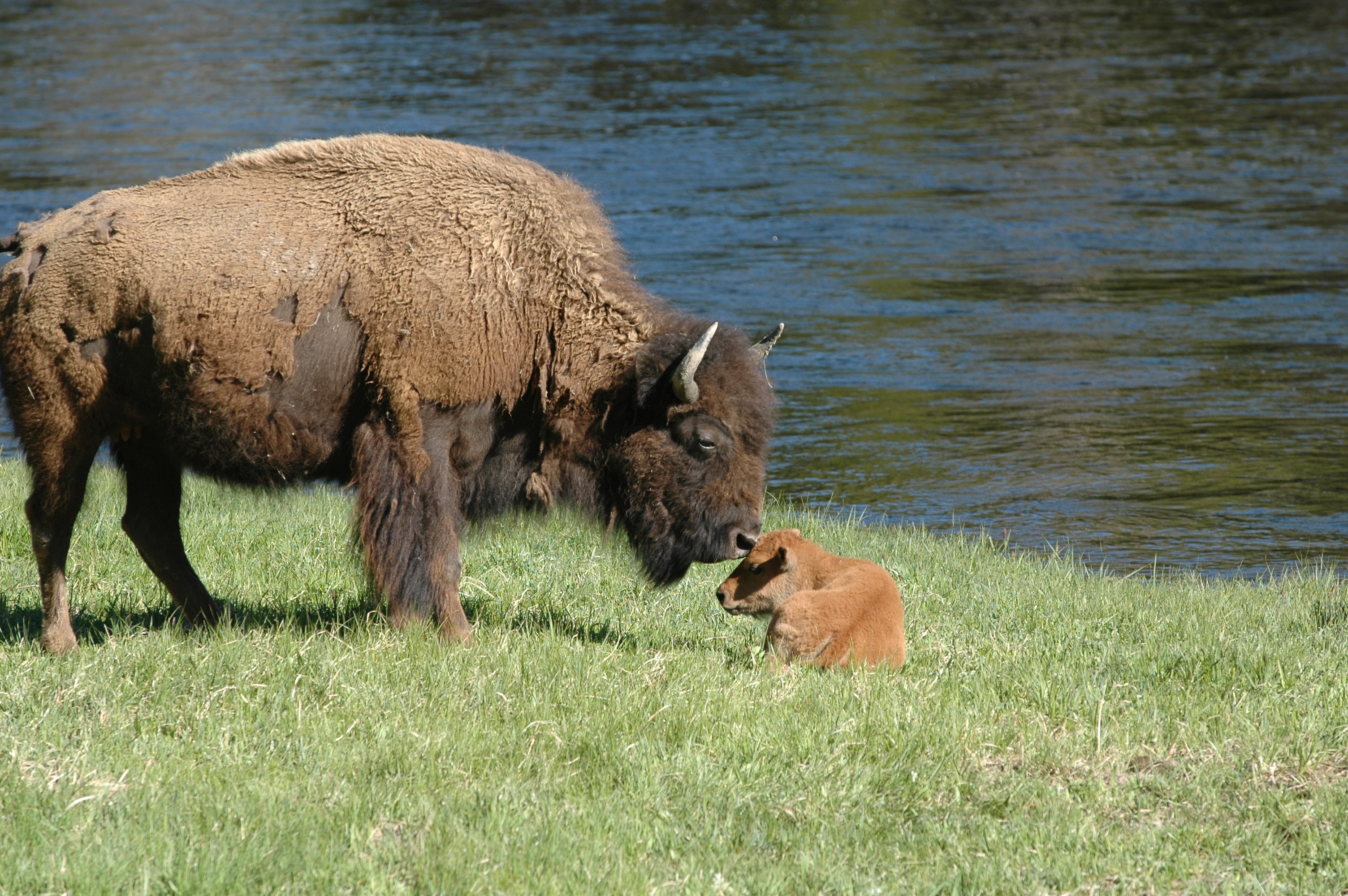
Having witnessed remarkably intelligent actions on the part of individuals throughout the animal kingdom—from the family dog leaping to his feet at the whispered mention of a “walk” or “car ride,” to a herd of wild bison mourning over the remains of their dead—my response to the Cambridge Declaration on Consciousness in Non-Human Animals is, “Well duh, tell us something we don’t know.”

Speciously, the Cambridge Declaration drew an arbitrary line and left the world of fishes out in the cold when it comes to animal consciousness. Far too many of today’s “behaviorists” still ascribe to the long outdated notion of fish the way science had long thought of all non-human animals—as automatons: mindless machines going through life without any more than random responses to stimuli.

Now I’m in no way anti-science—far from it, in fact—I just think that sometimes a scientist will spend an exorbitant amount of time chasing his or her tail when the answer they’re looking for is as plain as the nose on their face.

Take the question of animal communication, for example. We all know whales and dolphins are able (when they can find a quiet stretch of ocean—devoid of the deafening drone of ships or navy sonar) to communicate with one another through songs or clicks, respectively. But lately observers have learned that even fish have devised clever ways to keep in touch. According to an article entitled “Fish Farts: Herring Use Flatulence To Communicate” in the Huffington Post, apparently some types of herring pass gas to “speak” to each other without alerting other fish.

Researchers Bob Batty, Ben Wilson and Larry Dill made that Nobel Prize-worthy discovery after studying Pacific and Atlantic herring in Canada and Scotland, noting (importantly) that the gas is not caused by the digestive process. Instead, the fish swallow air from the surface and emit it through a small opening near their bung holes. Thus, profound as they may be, the bubbles aren’t really farts in the stinky, human sense.

So, it seems to me a bit arrogant to write an entire class of animal life out of a “Declaration on Consciousness in Non-Human Animals.” Granted, herring may not be flatulent enough to recite the Preamble to the Constitution, but then, as Georg Christoph Lichtenberg wrote, “Only a man can draw a self-portrait, but only a man wants to.”

Time for skeptical scientists to wake up and smell the sentience when it comes to fish.

images

Don’t Hate Trophy Hunters yet? Read on…

Super-rich kill bears for ‘sport’

TOM NEWTON DUNN
in Russia

The Sun: 12th January 2011

THE World Conservation Union has upped the Asiatic black bear’s status to “vulnerable to extinction”.

Conservationists estimate there are just 50,000 left in the world.

Also known as the Tibetan black bear, the Himalayan black bear, or moon bear, they have a thick black coat and a white V marking on their chest.

They grow to about 6ft and males weigh up to 150kg. They can live up to 25 years.

They eat berries, grass, seeds, nuts, honey and some meat.

Of the world’s eight species of bear, six are at risk of extinction.

Only the American black bear and European brown bear are considered safe.

Black Bear photo Copyright Jim Robertson

Black Bear photo Copyright Jim Robertson

In a sickening execution, a blood-crazed millionaire blasts an endangered bear to death as it hibernates.

Given no chance, the rare beast is woken in its den, terrorised and shot at point-blank range.

The grinning “hunter” then poses proudly next to its blood-drenched corpse for a twisted souvenir snap.

Hundreds of Asiatic black bears have been killed this winter in the vast forests of Siberia. And all for nothing more than sick thrills and a prized trophy hide.

The massacre of these majestic animals has become big business, flying in the face of international conventions which outlaw it, The Sun can reveal.

Yet it is not just rich Russians who are happy to exterminate their own national symbol. Well-heeled clients from Britain, the US, Germany, Spain, Poland and Finland have also booked Asiatic black hunting trips in the past year, we have discovered.

Such slayings were illegal for years, but Russian president Vladimir Putin has now relaxed his country’s ban on killing the species, to appease the super-rich.

Hunting the bears remains strictly illegal in the other countries where they live, including India, China and Japan.

Like most bears, the Asiatic black hibernates from December to the end of February, when winter snows begin to melt. Many of the females killed as they hibernate are pregnant, as they breed in the summer and autumn, ready to give birth in the spring.

In an exposé of the barbaric practice, we posed as would-be hunters to obtain shocking video footage of three recent hunts.

In an office off a busy central Moscow street, The Sun was offered a four-day trip to depart in a week’s time — with FOUR Asiatic black kills guaranteed — for the sum of £16,000.

The hibernating bears had already been located in deep forests outside the city of Khabarovsk, 3,500 miles east of Moscow.

A travel business named Slavic Trophy Club is one of a handful in Moscow that take bear hunters to the killing fields.

Slavic Trophy Club’s Nikolai Lynkov assured us: “They are there ready and waiting for you. I can promise you four kills for sure, maybe six if you are lucky.

“It is legal in Russia to hunt Asiatic black bears. There is no problem with that. You just have to be 18 years old.”

The persecuted bears do not die a quick and painless death.

To coax them out of their dens into the waiting gunman’s firing line, organisers resort to extraordinarily cruel tactics.

Lynkov explained: “We know where the bears are because we pay local people to keep track of them.

“They like to hibernate in hollow tree trunks but sometimes it is not easy to get them out.

“Don’t worry though, they always come — even if we have to cut them out.”

On one of the hunts we have video footage of, it took workers 20 minutes of torture to force a bear to climb out of its tree trunk into the sights of the hunter, standing 15 metres away.

At first, two men jabbed the animal with sharpened spears through a hole cut in the tree’s base. When that didn’t work, one of them threw a smoke grenade into the trunk in a bid to choke the bear out. That too failed, so oily rags were lit to set fire to the den. Then several pistol rounds were fired to scare the bear into movement.

Only when the workers began to chainsaw through the hollow trunk to get at the bear did it finally climb the trunk and emerge. On reaching the top, the bleary-eyed giant gave a chilling roar once it saw its pursuers.

It made a desperate last attempt to scamper off to safety — but was gunned down in the snow after only a few paces.

For an extra £800, Slavic Trophy Club promised to skin any bear we killed, make it into a rug, and fly it to London.

Or for £4,000 we could have the whole beast stuffed and shipped instead. Some hunting firms openly trade in the twisted “sport” in the West.

Sergei Shushunov is a Russian-American who runs the Russian Hunting Agency from his home town of Glencoe, Illinois. When we approached him posing as rich hunters he also promised to organise for us the killing of a bear woken from hibernation.

Trying to justify the activity, Shushunov said: “Denned bear hunting in Russia is as old as trapping. In old times it required nothing but a spear. The adrenaline rush can be incredible.”

Hunting Asiatic bears was legalised in Russia four years ago. Bored of slaughtering the more common brown bear, oil and gas-rich Russians craved a special trophy for the walls of their gaudily decorated homes and offices.

With soft and long fur, an Asiatic bear’s hide is highly prized because of the rarity of the animals.

Their numbers are now so depleted, they are all but impossible to find in the wild — which is why hunts resort to killing them in their dens.

Animal campaigners last night demanded that ministers act on The Sun’s investigation and lobby President Putin to stop the barbaric hunting.

International wildlife charity the Born Free Foundation said: “This simply has to stop. The Asiatic black bear is highly endangered, under constant assault in the wild throughout the continent, and even incarcerated in tiny cages in China to be milked for stomach bile, which is used in medicine there.

“We should all demand at the highest levels of government that Russia immediately stops all hunting of wild bears. Until then, there will be a price on the head of every wild bear in the country.”

The World Conservation Union’s bear expert Dr David Garshelis said: “There is a threat that the Asiatic black bear may soon be extinct in entire countries. We are very worried.

“It is alarming to hear that this is happening in Russia. The ethics of exactly how it is done is also a concern.

“There is clearly no sport in this practice at all. We are very pleased you have made this report.”

t.newtondunn@the-sun.co.uk

View photos and video of Sick hunters gun down bears; Gunmen laugh as they target bears; Sitting duck … terrified bear scrambles from it’s burning den into the killer’s sights Here: http://www.thesun.co.uk/sol/homepage/news/762288/News-Endangered-bears-Killed-for-sport.html#ixzz2TChxbdV4


Fish are sentient. No more excuses

Veganism is Nonviolence's avatarVeganism is Nonviolence

Do fish feel pain?
By Gentle World

FAIR USE NOTICE

 “…the way humans readily project their emotions and intentions into some animals and not others is itself a cause for concern. Few people have much fellow feeling for fish even though many fish are long-lived, have complicated nervous systems and are capable of learning complicated tasks.”

—Professor Patrick Bateson, Professor of Ethology
 University of Cambridge

From salmon making the long journey from river to ocean and back, to goldfish swimming circles around a small pond, the inner lives of fishes are a mystery that scientists are only beginning to unravel. One of the key elements they are searching for is the extent to which each fish is sentient or, more specifically, how they process what we would call a “painful” sensation (such as a hook cutting into their lip.)

On this journey, scientists have discovered that fish have nerve structures…

View original post 970 more words

Backyard Butchering: Loving Animals to Death

Yesterday I received the following comment to my post, All Meat is the Product of Cruelty and Exploitation… “How can you argue with those whose response is: ‘In the natural world animals kill other animals for food and in a most painful and cruel way and if I choose to raise my animals on my own property allowing them to live in a free and natural manner just as they would live in the wild that only differs in that they have shelter from the elements should they choose to use it and they are not kept in pens or tied but in large open barns and that at some point they will be killed as quickly and humanely as possible to be eaten by my family and the excess sold to others. I love animals but choose to eat them as well. I believe that how I treat them and kill them is better than they would live in the wild and their deaths much less horrible than being ripped apart alive as is the case in the wild’. What can you say to that?”

…to which I replied: First of all, it sounds like someone has been watching too many “nature” programs that revel in prolonged scenes of wildlife predation. Most cases of natural predation happen much faster; in many cases the prey are killed instantly.

In my book, Exposing the Big Game, I wrote about a wolf kill I witnessed in Yellowstone: “Suddenly they tore out after a young mule deer who had risked leaving the cover of the forest for the lure of an open meadow. The inexperienced doe didn’t stand a chance against the incredible, greyhound-like speed of the determined wolves. One quickly caught her by the hind leg, bringing her down, and a split second later the other had her by the throat. In less than a heartbeat, a living, breathing deer was reduced to a lifeless carcass.” Not a pretty sight, but much more the norm than the horrible scenarios depicted for entertainment on cable T.V. shows.

The hypothetical argument you spelled out (above) begins by raising the naturalist fallacy, which I covered in the post, Top Ten Retorts to Hunters’ Fallacies (just substitute hunter for animal farmer/rancher):

# 9) Animals kill other animals, so we can too.
That’s an example of what’s known as the naturalistic fallacy—the notion that any behavior that can be found in nature is morally justifiable. But wolves and other natural predators need to hunt to survive, humans don’t—for them it’s nothing more than a thrill kill. Human beings have moved beyond countless other behaviors such as cannibalism or infanticide, so why can’t some people tear themselves away from hunting?

A quote from author Robert Franklin Leslie adds to this:
“It is not important that a hawk takes a robin, that a bear robs a grouse nest. That is Nature’s own salient way even if we don’t understand it…Wilderness life has gone on that way since the beginning, and the prey has withstood the predation. But when man steps in…the very soul of Nature cringes for having endowed one of her creatures with intelligence disproportionate to responsibility.”

Backyard animal farming is nothing but the revival of Old World animal husbandry, from which modern-day factory farming is an unfortunate upshot. Both the factory farmer and the backyard butcher breed animals for the sole purpose of killing them when the time is ripe. They don’t raise the animals just because they love them and want to give them a good life, and raising them does nothing to eliminate any suffering that might go on in the wild between natural predator and prey (unless a person’s intent is to eliminate all natural relationships between wild animals, and there would be a lot of suffering on the predator’s part as the human strives to eliminate them).

Killing farmed animals “quickly and humanely” is easier said than done. At some point the animal knows that the human they trusted intends to hurt or kill them, as they probably would have seen it happen to one or more of their herd-mates. And the act of ending a healthy animal’s life so you can eat their flesh is cruel no matter how you slice it, especially since people do not have to eat meat to live a long, healthy life. And in fact, a lifetime of meat-eating is unhealthy for the human primate. Also from the Top Ten list mentioned above:

8) Humans are carnivores, look at our canine teeth.
Human teeth are designed primarily for chewing plant-based foods, like our primate cousins do. Humans “fangs” are teensy compared to those of gorillas, who are strict vegetarians and only show them to appear fierce. Also, our intestinal tract is long to allow for the slow digestion of high-fiber foods, while true carnivores have short intestines as needed to process meat and dispose of the resulting toxic wastes quickly.

7) Wild game (or free-range) meat is health food.
All animal flesh is rife with cholesterol throughout, and the protein in animal flesh is acidic, causing bone calcium losses as it is metabolized. According to the American Dietetic Association, a diet high in animal products has been linked to obesity, diabetes, colon and other cancers, osteoporosis, kidney stones, gallstones, diverticular disease, hypertension and coronary artery disease. New studies have found that another culprit in causing heart disease may be a little-studied chemical that is burped out by bacteria in the intestines after people eat meat.

Again, wolves and other predators need to eat meat to survive—modern humans do not. Natural predators don’t hate their prey, but they don’t pretend to love them either.

Forget the 4-H Club—you can’t really claim to “love” an animal you plan to someday kill, butcher and consume.

DSC_0331

All Meat Is the Product of Cruelty and Exploitation

A German serial killer, Fritz Haarmann, known as the “Butcher of Hanover,” cut his victims’ bodies into strips of flesh and sold them as pork. Here in North America, third-generation Canadian pig farmer and serial killer of 49 women, Robert Pickton, ground the bodies of his victims into sausage and sold it in packages or gave it out to friends.

While it’s appalling that folks who acquired meat from Pickton may have ingested human flesh, it is equally unsettling that they didn’t notice. To the taste buds it seems meat is meat. This tragedy was just one of many recent incidents that should make people rethink their carnivorous ways.

On a related note, according to an article by Cindi Avila with NBC News, Whole Foods admitted to accidentally reversing labels on two salads sold at its stores, a curried chicken salad and a vegan version called curried “chick’n” salad, last Tuesday and Wednesday at some 15 of its locations in the Northeast (including Connecticut, Maine, Massachusetts, New Jersey and New York). “The switched labels means it is highly likely someone who made a conscious choice not to eat animal products wound up doing so, through no fault of their own.”

To the ethical vegetarians who inadvertently ingested chicken flesh, the stomach-churning physical response of revulsion was on par with those of the pork-eaters who learned they’d cannibalized. Now, you might be asking yourself, “How can anyone compare eating chicken or pork to cannibalizing human flesh?”

The NBC article makes the clarifying point, “It may be hard for meat-eaters to understand, but this is a way of life that simply doesn’t involve compromise or mistakes. That’s especially the case for those of us who are vegetarian or vegan because of animal-welfare reasons or those who choose this for religious reasons.”

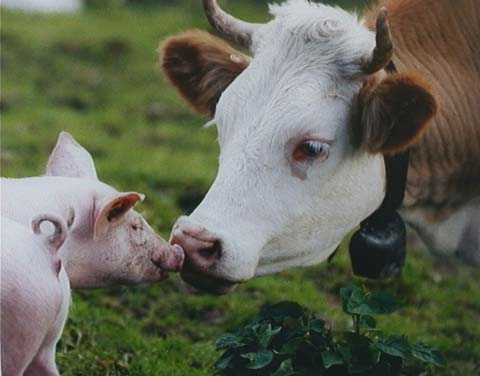
Pigs, like humans, cows and chickens, are capable of experiencing joy, affection, and pleasure. However, on hog farms, they are treated like unfeeling machines, confined in tiny stalls and fed growth-accelerating drugs that often cause lameness. Their teeth are cut with pliers, and their tails are cut off-without anesthetic. At the slaughterhouse, they are hung upside down and bled to death-often while they are fully conscious. Whether flesh comes from the victim of a serial killer or from a pig, a cow, or a chicken, it is the product of cruelty toward a thinking, feeling being who experiences pain and fear and wants to live free of exploitation.

In light of all this, why are people still eating meat? One common answer goes something like this: “I’m a human—superior to other beings—I’m entitled.” But a sense of entitlement is one of the trademark rationalizations that serial killers use to justify their wrongdoings, and grandiosity is also symptomatic of psychopathy, according to Canadian psychologist and author of Without Conscience: The Disturbing World of the Psychopaths Among Us, Robert D. Hare, Ph.D. Other symptoms outlined on Dr. Hare’s “psychopathy checklist,” such as shallow emotions and a lack of empathy or remorse, aid the killer—or meat-eater—in disregarding the suffering of his or her victims.

Psychopathic serial killers objectify their victims and consider their victims’ self-interests insignificant. The same rationale is called into play when one thinks of pigs only as “pork,” cows as “beef,” or chickens as “poultry,” without thought of the individuals or their suffering.

Both Canada and the U.S. have had recent cases of mad cow disease. As a result, we saw news footage of downer cows, too sick to walk, being dragged by chains into slaughterhouses. Press coverage of avian flu outbreaks reveal the intensely overcrowded conditions of chickens on factory farms-tens of thousands of animals cooped up in their own filth, each with less space than a standard sheet of typing paper. Besides being warned of health risks, consumers are finally learning about some of the cruelties endured by the animals they know only as “roasts” or “drumsticks.”

It is never too late to examine our actions and re-evaluate our food choices accordingly. By respecting the interests of all sentient beings, we are not akin to the conscienceless killers that plague our society. The only way to ensure that you are not supporting grotesque violence and cruelty against animals, or benefiting from their suffering, is to adopt a plant-based diet.

524958_3325028303604_654533903_n